

Dolce Vita Without Limits: A Wheelchair User’s Guide to Italy

Planning Your Italian Escape

Italy is a dream destination for many, offering a breathtaking mix of Roman history, Renaissance art, and world-class gastronomy. While its ancient cobblestone streets and hilltop villages might seem daunting at first glance, Italy has made impressive progress in accessibility. With a bit of strategic planning and “pazienza” (patience), you can experience the magic of the Mediterranean just as easily as anyone else.

The key to a successful trip to Italy is understanding that accessibility varies significantly between the modern north and the more traditional south. However, national laws now mandate that all public buildings and transport must be accessible, which has opened up many doors for disabled travelers.

Essential Resources:
  • Village for All (V4A): An Italian organization that provides “Quality Assurance” for accessible tourism, offering detailed information on hotels and resorts that have been personally audited.
  • Kim Can Travel: A specialized travel agency focusing on accessible Italian itineraries, including private adapted transfers and guided tours.
  • Legal Benefits: Just like in France and the UK, having a disability ID or a medical certificate is vital. In Italy, disabled visitors (and often one companion) frequently receive free entry to state-run museums, such as the Uffizi Gallery or the Colosseum, without needing to wait in the middle of the main queue.
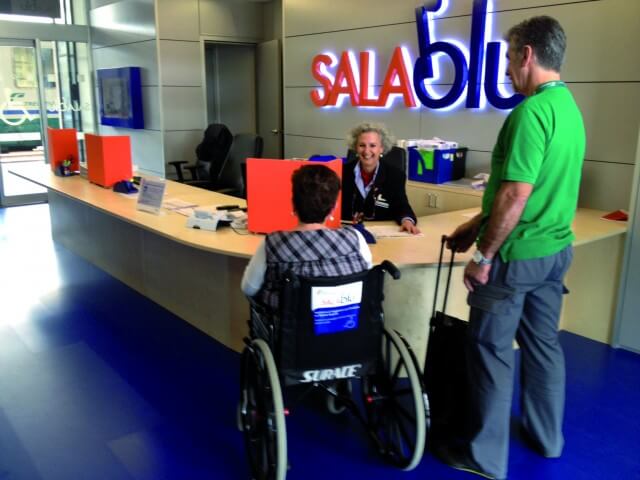
  • Public Transport (Trenitalia): For seamless travel between major cities, the Sala Blu service by Trenitalia offers dedicated assistance for passengers with reduced mobility at over 330 stations across Italy.
Practical Tips for a Smooth Journey
  1. Public Toilets: Look for the “Bagno per disabili.” In cities, the best accessible toilets are often found in large department stores (like Rinascente), museums, or high-speed train stations.
  2. Dining: Most Italian restaurants have outdoor seating (“al fresco”), which is perfect for avoiding narrow indoor doorways. If you need to eat inside, it is worth calling ahead to check if the restroom is on the ground floor.
  3. Charging: If you use a power chair, Italy uses the standard European Type C/F plugs. Ensure you have a heavy-duty transformer if your charger isn’t dual-voltage.
  4. Access Italy App: This digital tool provides real-time information on accessible routes and barrier-free attractions in major historic centers like Rome, Florence, and Venice. 

The “Aperitivo” Culture:  Embrace the slower pace. Italian culture is very social, and people are generally very helpful. Don’t hesitate to ask for “aiuto” (help) if you encounter a sudden step or a heavy door.

Navigating the Land of History


The Trenitalia network is arguably the best way to travel between major cities like Rome, Florence, Milan, and Venice. The high-speed Frecciarossa trains are fully equipped with dedicated wheelchair spaces and accessible restrooms.

  • Sala Blu: This is a crucial service provided at 330 stations across Italy. You can book assistance (boarding, ramps, luggage) via the “Sala Blu” hubs at least 24 hours in advance. They are professional, reliable, and make train travel a breeze.

Air and Sea

All major Italian airports offer “ADR Assistance” for passengers with reduced mobility. If you are heading to the islands (Sicily or Sardinia), modern ferries are equipped with lifts and accessible cabins, though it is always best to book these well in advance.

Top Accessible Destinations
Rome: The Eternal City
Rome is surprisingly manageable despite its age.
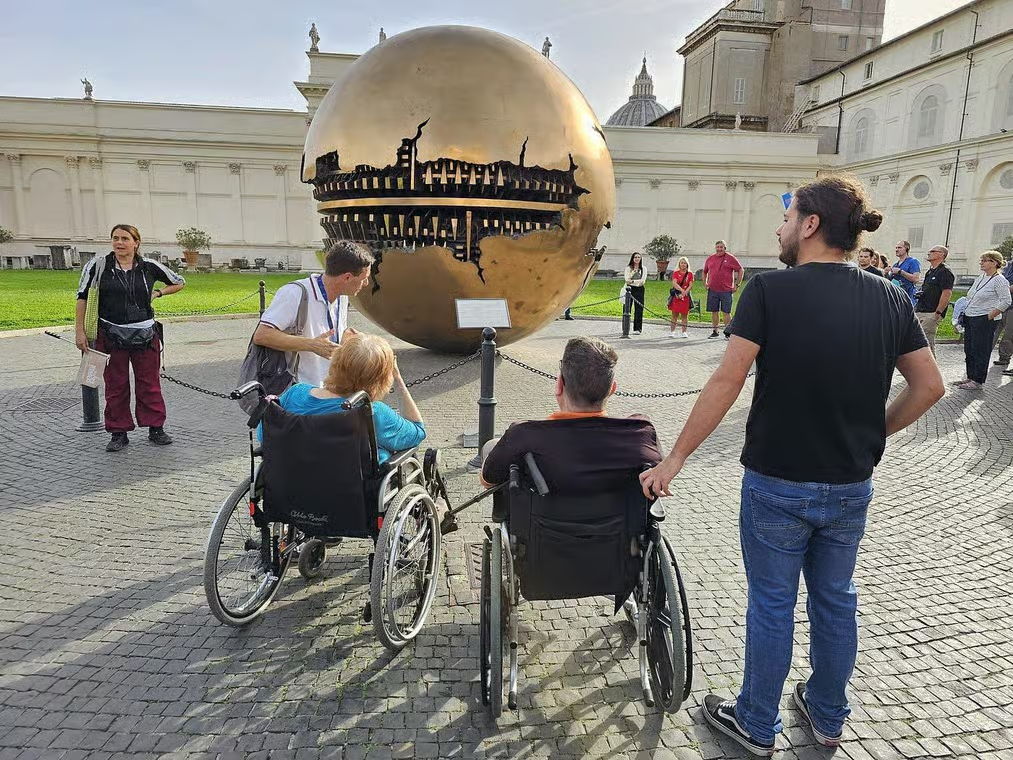
  • The Vatican Museums: They are almost entirely accessible with lifts and specific routes. Wheelchairs are available for rent free of charge at the entrance.
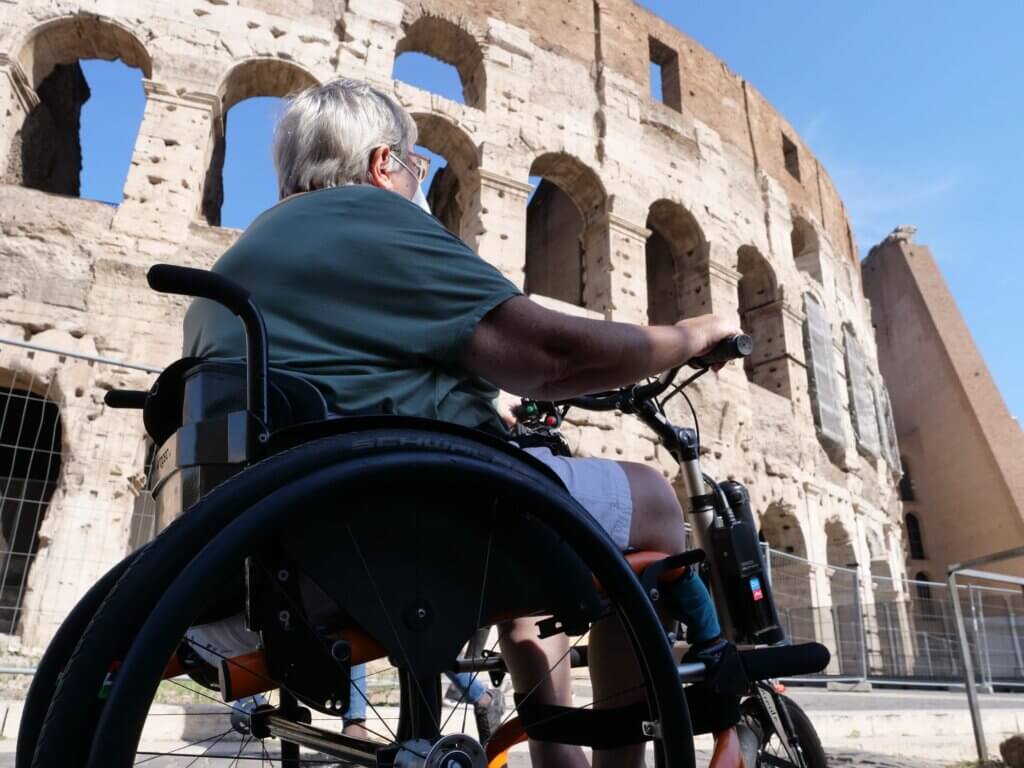
  • The Colosseum: A modern elevator has been installed, allowing wheelchair users to access the upper tiers to enjoy the view over the arena.
  • The Pantheon: The entrance is flat and easy to navigate, though the surrounding square has some uneven stones.
  • The Trevi Fountain: A dedicated ramp on the side of the square allows visitors in wheelchairs to reach the lower level for a close-up view of this baroque masterpiece.
  • Castel Sant’Angelo: This historic fortress features a modern elevator and smooth ramps, providing access to its fascinating museum levels and the panoramic terrace overlooking the Tiber.
Florence:

Florence is flat and compact, making it one of the most wheelchair-friendly cities in Italy.

  • Uffizi Gallery and Accademia: Both are fully accessible with elevators. To see Michelangelo’s David, there is a dedicated lift and ramp.
  • The Duomo: While you cannot climb the dome, the main cathedral is accessible via a side entrance.
Milan:
    • The Milan Cathedral (Duomo) is fully accessible.
    • The iconic San Siro Stadium and the Galleria Vittorio Emanuele II offer barrier-free paths, ensuring a smooth experience for exploring sports and luxury.
    • Most major museums provide specialized assistance and modern ramps.
Venice: The City of Bridges

Venice is often thought to be impossible for wheelchairs, but this is a myth!

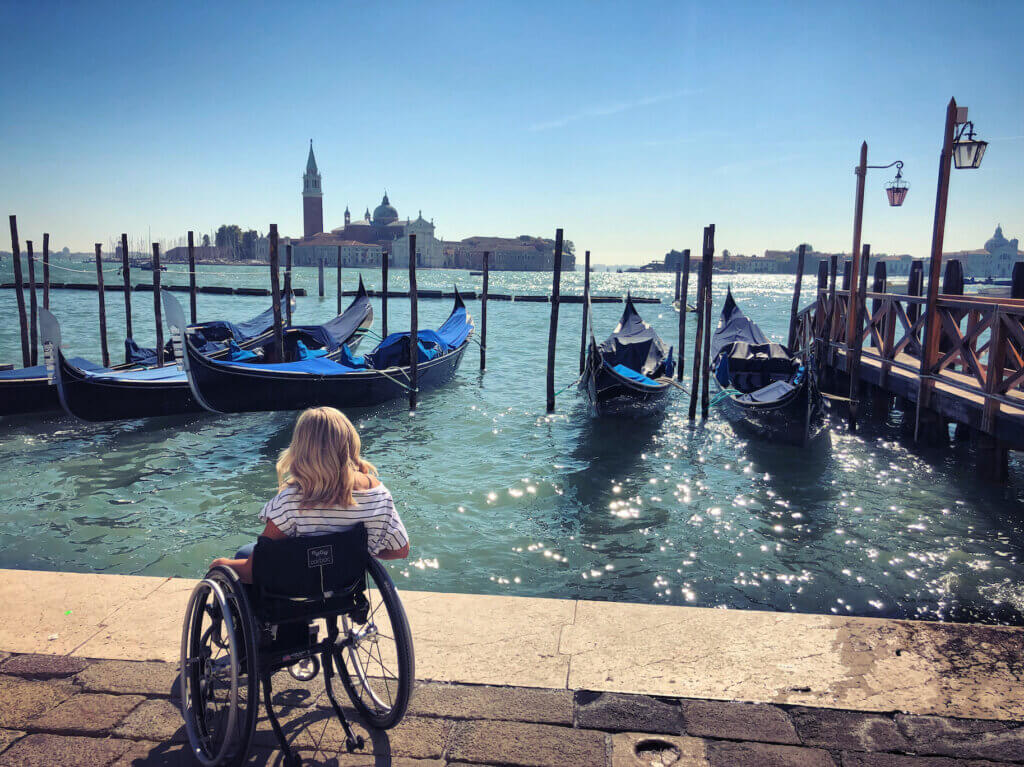
  • Vaporetto (Water Bus): Lines 1 and 2 are largely accessible and offer a great way to see the Grand Canal. Wheelchair users pay a significantly discounted fare (around €1.50).
  • Accessible Bridges: The city has installed ramps on several key bridges, and many areas around St. Mark’s Square are flat. Use the “Venezia Unica” accessibility map to find routes that avoid stairs.

The Italian Lakes

Lake Garda and Lake Como offer beautiful accessible promenades. Many of the lake ferries are equipped with ramps, allowing you to hop between picturesque towns while enjoying the mountain views.

Conclusion

Italy is a sensory feast that should be available to everyone. While the historic nature of the country presents some physical barriers, the combination of the Sala Blu train service, the generosity of the local people, and the increasing modernization of major sights makes it a fantastic destination for wheelchair users. Whether you are gazing at the Sistine Chapel or enjoying a gelato in a Tuscan piazza, Italy will leave you enchanted. 

The key to a successful Italian adventure lies in preparation and utilizing the growing network of accessible resources. As the country continues to invest in barrier-free infrastructure for 2026 and beyond, the gap between ancient charm and modern accessibility is closing. By focusing on major hubs and pre-booking specialized services, you can navigate this Mediterranean gem with confidence. Italy isn’t just a place to see; it’s an experience to be felt, and now more than ever, its beauty is open to all. Buon viaggio! 

Related posts

Temple of Speed Monza

The Autodromo Nazionale Monza is one of the most hallowed venues in motorsport, home to the Italian Grand Prix and often referred to as the “Temple of Speed” (Tempio della Velocità). The circuit tour allows fans to literally follow in the footsteps of legends.

Read More »

Timeless Journey

Rome’s historic center (Centro Storico) is a living, breathing museum. It is home to iconic landmarks like the Pantheon and the Trevi Fountain. Narrow, cobblestone streets lead from Renaissance palaces to Baroque piazzas. As of 2026, the center is largely a pedestrianized zone, successfully preserving its timeless, authentic atmosphere.

Read More »

The Raging Bull’s Den

Experience the pinnacle of Italian engineering at the Lamborghini Factory in Sant’Agata Bolognese. This 45-minute guided tour offers a rare look at assembly lines where expert craftsmen hand-build supercars like the Revuelto and Urus. Combine your visit with the Automobili Lamborghini Museum to explore decades of iconic design.

Read More »
Scroll to Top