



Israel Travel Guide: Cities, Heritage, Nature & Culture

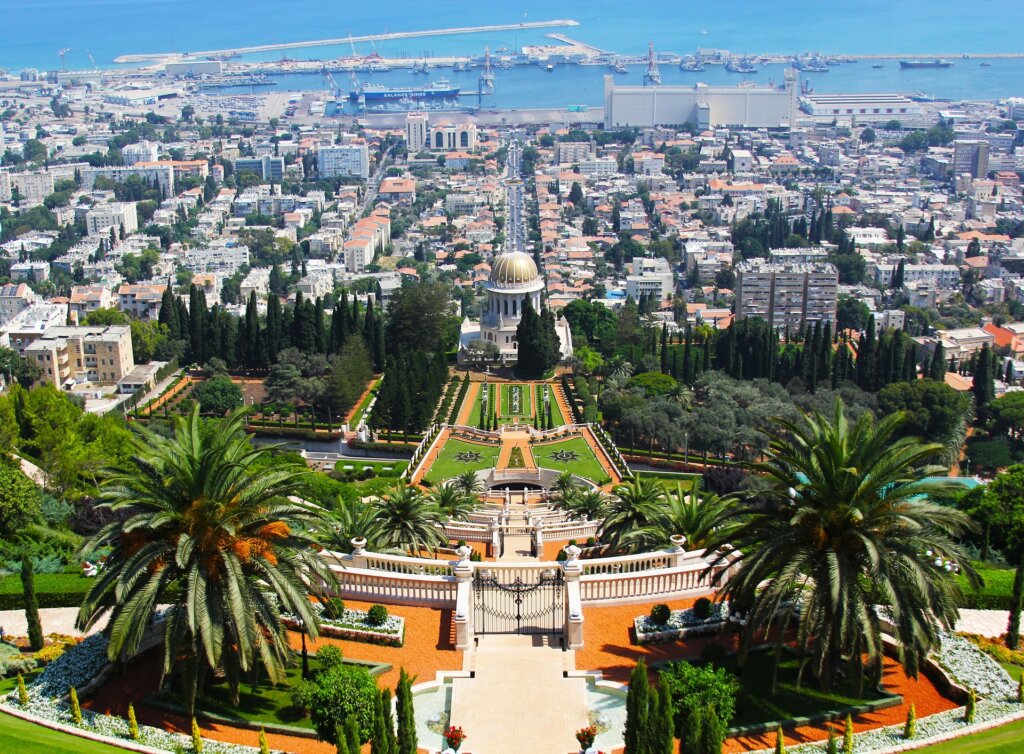
Israel travel guide: Bahá’í Gardens and the golden-domed Shrine of the Báb overlooking Haifa and its Mediterranean harbour

Israel brings together historic cities, Mediterranean neighbourhoods, religious traditions and desert landscapes within a relatively small area. Jerusalem, Tel Aviv, Haifa and Akko offer distinctly different experiences, while the Dead Sea, Galilee and Negev introduce landscapes that deserve time beyond a quick sightseeing stop.

This Israel travel guide connects those destinations with architecture, contemporary culture and food, alongside practical information on transport and accessibility. Planning also requires attention to current security conditions: the places described here are ideas for an itinerary, and their suitability depends on official advice, local restrictions and operating conditions at the time of travel.

English is commonly used in visitor services, although its availability varies between businesses and locations. Hebrew and Arabic are part of the country’s everyday linguistic landscape, alongside languages brought by immigrant communities.

For entry, visitors travelling on passports from visa-exempt countries generally need approval through the official ETA-IL system before departure. Travellers who require a visa follow a different process. Check the requirements for your nationality and passport rather than assuming that visa-free travel means no advance application is necessary.

Basic Facts at a Glance

  • Capital: Jerusalem; its status and boundaries remain internationally disputed.
  • Region: Middle East, on the eastern Mediterranean coast.
  • Population: Approximately 10.2 million, according to Israel’s Central Bureau of Statistics in April 2026.
  • Official language: Hebrew; Arabic has special legal status.
  • Currency: Israeli New Shekel, abbreviated ILS or NIS.
  • Time zone: UTC+2 in winter and UTC+3 during daylight saving time.
  • Emergency numbers: Police 100, ambulance 101 and fire service 102.
  • Emergency alerts: Download the official Home Front Command app (Pikud HaOref) and enable notifications and location services to receive alerts relevant to your location, along with instructions on what to do. Search for “Home Front Command – Official App” in your phone’s app store.

Climate and When to Visit

Weather varies considerably between the Mediterranean coast, Jerusalem’s higher elevation and the southern desert. Coastal summers are hot and often humid, while the Negev and Dead Sea region can experience intense heat. Jerusalem generally has cooler evenings, and winter can bring cold weather as well as rain.

Spring and autumn often provide more comfortable conditions for combining cities with outdoor visits. However, heatwaves can occur outside summer, and the Jewish holiday calendar can affect accommodation demand, attraction hours and transport. Check both the weather and holiday dates when choosing your itinerary. Winter can suit city museums and some southern destinations, but desert excursions require particular attention to forecasts. Flash floods can develop in dry streambeds even when rain falls elsewhere in the catchment. A clear sky at your starting point is not sufficient evidence that a canyon route is safe.

Cities, Heritage and Religious Places

Jerusalem rewards a focused itinerary rather than an attempt to cover every important place in one day. Within the Old City, the Western Wall, Church of the Holy Sepulchre and Haram al-Sharif/Temple Mount reflect the city’s significance to Judaism, Christianity and Islam. Access arrangements differ between sites, and some visits involve restricted hours, security checks or rules concerning dress and conduct. Leave time for the streets and neighbourhoods around the major landmarks. Jerusalem’s slopes, stone paving and crowded passages can make a short distance more demanding than it appears on a map. Combining a historic area with a museum or market visit can provide a more varied day than moving continuously between religious sites.

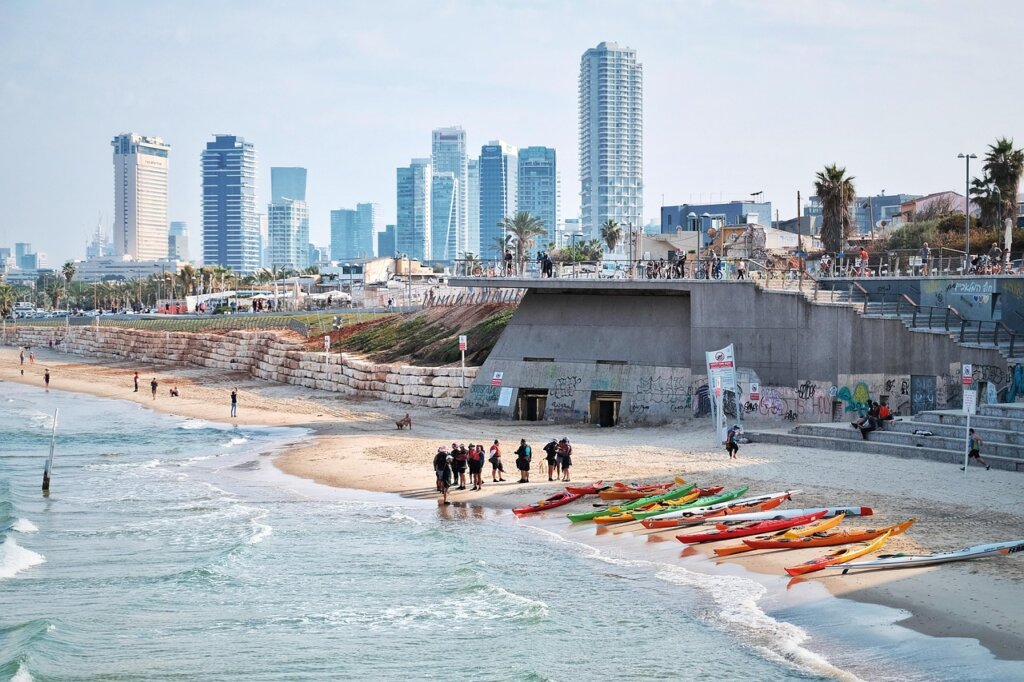
Tel Aviv offers a different urban experience, with Mediterranean beaches, neighbourhood cafés and a waterfront promenade. Nearby Jaffa adds an older port setting, historic streets and galleries. The two work well together, but allow for the walking distance and summer heat when deciding how much to explore on foot.

Haifa’s hillside setting shapes both its views and its transport needs. The Bahá’í Gardens are a major landmark, while the German Colony and surrounding neighbourhoods offer another perspective on the city. Confirm which garden areas and tours are available before visiting; the terraces do not form an unrestricted public walking route.

Akko, also known as Acre, brings together Crusader remains, Ottoman architecture, markets and a working coastal town. Its historic attractions are best understood as layers of different periods rather than a single preserved medieval city. Several destinations mentioned here have UNESCO recognition, connecting them with the places explored in our World Heritage collection.

Architecture and Contemporary Culture

Tel Aviv’s White City introduces the architectural ideas of the Modern Movement, often described broadly as Bauhaus architecture. Its significance lies in a collection of buildings and the way international design principles were adapted to local urban and climatic conditions. Looking at balconies, shading and the relationship between buildings and streets adds context to a neighbourhood walk.

Contemporary architecture provides a different point of interest at the Tel Aviv Museum of Art. The Herta and Paul Amir Building forms part of the museum complex, alongside collections and changing exhibitions that place Israeli art in conversation with international work. Check the current programme and visitor notices when planning your visit, as galleries and entrances may be affected by temporary closures or building work.

Colourful kayaks on a sandy beach in Tel Aviv, with the waterfront promenade and modern skyline behind them

Jerusalem’s museums offer opportunities to move beyond religious sightseeing, including art, archaeology and exhibitions about the city’s history. Across the country, galleries, theatres, music venues and film programmes reveal cultural life that an itinerary centred entirely on ancient sites would miss.

For an evening performance, check the language as well as the programme. Dance and instrumental music may be easier to enjoy without Hebrew, while theatre and film screenings can depend on subtitles or surtitles. Smaller cultural venues can also provide a useful reason to explore neighbourhoods beyond the main sightseeing areas.

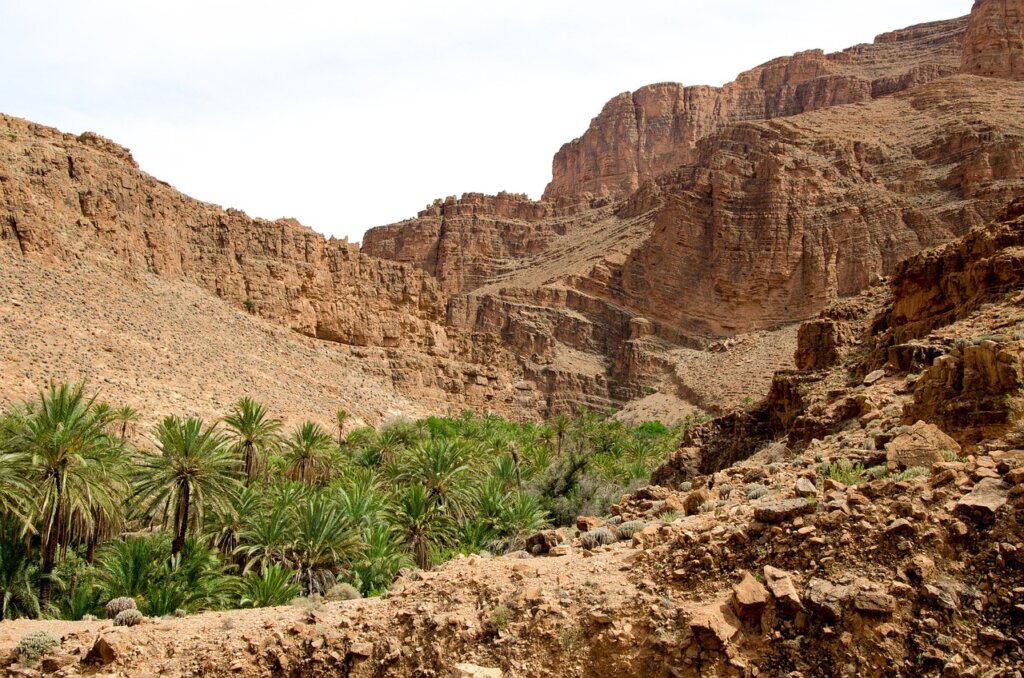
Palm trees growing in a rocky desert canyon beneath layered cliffs in Israel

Natural Landscapes: The Dead Sea, Galilee and Negev

The Dead Sea combines an unusual bathing experience with a stark desert setting. Choose an authorised bathing beach with appropriate facilities and follow the instructions provided there. Avoid entering the water from an unregulated stretch of shoreline, where access conditions and sinkhole hazards can make apparently convenient locations unsuitable.

Masada can add archaeological context to a stay in the Dead Sea region. Its elevated setting also makes the choice of entrance and route important: a cable-car visit and an exposed hiking ascent are very different experiences. Consider heat, mobility and comfort with heights when deciding how to visit.

Around the Sea of Galilee, also called Lake Kinneret, religious sites, lakeside settlements and landscapes can be combined without treating the region solely as a pilgrimage destination. Choose a manageable part of the lake area and check current access and security conditions before adding more distant northern excursions.

In the Negev, Makhtesh Ramon is a large erosion landform, rather than a crater created by a meteorite or volcano. The landscape around Mitzpe Ramon offers viewpoints and opportunities to explore desert geology. Short walks, guided excursions and longer hikes require different levels of preparation, so choose an activity that matches your experience and the forecast.

Eilat adds a Red Sea setting, with beaches and opportunities to experience marine life. For national parks and reserves, consult the Israel Nature and Parks Authority for site information, reservations and visitor updates. Follow marked routes, respect wildlife and treat heat and flood warnings as reasons to change the plan.

Food, Markets and Everyday Traditions

Food in Israel reflects Jewish communities from different parts of the world, Palestinian and other Arab culinary traditions, and wider regional influences. Hummus, falafel, shawarma and chopped salads are familiar everyday foods, while bakeries, home-style restaurants and contemporary kitchens reveal a much broader range of cooking.

Sabich typically combines fried aubergine, egg and accompaniments in pita, while shakshuka pairs eggs with a seasoned tomato base. Market visits can introduce breads, olives, spices and seasonal produce alongside prepared food. A neighbourhood lunch or bakery stop often fits naturally into a sightseeing day without requiring a separate food tour.

Dietary arrangements differ between establishments. A kosher restaurant follows rules that affect ingredients, food preparation and, in many cases, opening times; other restaurants operate differently. Vegetarian, vegan and allergy-related needs should still be discussed directly with staff rather than inferred from a dish’s name.

Shabbat, from Friday evening to Saturday evening, influences everyday life as well as travel. Some neighbourhoods become quiet, while others retain an active café and restaurant scene. Markets and shops may close earlier on Friday, so plan essential purchases and meals around the location where you are staying.

Freshly fried falafel balls piled in a metal serving tray
Israeli red wine beside a wooden gift box containing spices, sweets and other local food products
Grilled arayes pita stuffed with minced meat, served with tomato salad and tahini sauce

Getting Around and Accessibility

Rail services connect Ben Gurion Airport with major destinations including Tel Aviv, Jerusalem and Haifa, while buses extend the network to many other towns. Jerusalem and the Tel Aviv metropolitan area also have light-rail services. Check the complete journey, including the distance from the station to your accommodation or attraction.

The Rav-Kav travel card is widely used for public transport, and supported mobile ticketing applications provide another payment option. Ticketing, validation and transfer arrangements depend on the service. Visitors should also check eligibility before relying on age-related discounts or free travel available to residents.

Most regular public transport stops for Shabbat and major Jewish holidays, although exceptions and limited local alternatives exist. Friday services often finish before sunset, and Saturday services resume according to the operator’s timetable. Confirm your actual route rather than planning around sunset alone.

A rental car can help with scattered rural destinations, but city parking, traffic and restricted roads may outweigh that convenience during an urban stay. For occasional excursions, compare a guided trip or arranged transfer with the cost and practical demands of keeping a car throughout the holiday.

Accessibility varies between individual routes and attractions. Modern museums, transport facilities and adapted beaches can provide useful options, while Jerusalem’s slopes, historic paving and archaeological sites require more detailed planning. Our Israel accessibility guide for wheelchair users covers destinations, transport and services in greater depth.

When booking, describe the features you need: step-free entrances, lift dimensions, accessible bathrooms or boarding assistance. A place described as accessible may still involve a difficult approach, a long distance between facilities or areas that cannot be reached by wheelchair.

Israel Travel Guide: Safety and Practical Planning

Security information checked on 4 October 2026. Conditions can change quickly, and restrictions differ by region. At the time of this review, the UK government’s Israel travel advice advises against travel to specified areas and warns of wider regional escalation and disruption. Read your own government’s advice before booking and again before departure, and confirm that your insurance covers the planned itinerary.

During a visit, follow the instructions of Israel’s Home Front Command, including current alert and protected-space guidance. Ask your accommodation where the designated protected space is and how to reach it. Keep flight plans under review, as transport and airspace restrictions can change at short notice.

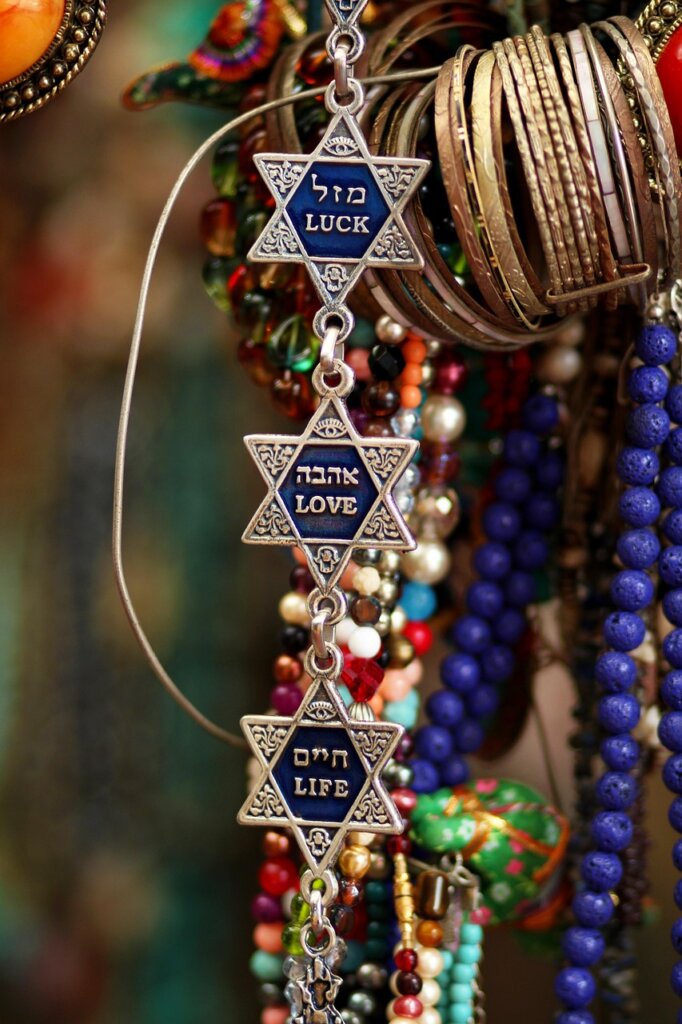
Star of David pendants inscribed with “Luck” and “Love” in Hebrew and English, displayed beside bangles and colourful beads

Security screening is part of travel through airports and many public venues. Allow the time recommended by your airline and keep travel documents available. Avoid demonstrations and comply with closures, checkpoints and instructions from local authorities.

For everyday planning, accommodation, restaurants and transport can account for a substantial budget. Compare the total cost of each base rather than its room rate alone. Carry a payment alternative, keep valuables secure in crowded places and check whether essential services will be available during weekends and holidays.

A first itinerary might combine Jerusalem and Tel Aviv with one additional region, subject to current advice. Give that region enough time to justify the journey rather than adding the Dead Sea, Galilee and Eilat as consecutive brief stops. Distances may look modest on a map, but traffic, heat, opening hours and security arrangements all affect what is realistic in a day.

Related posts

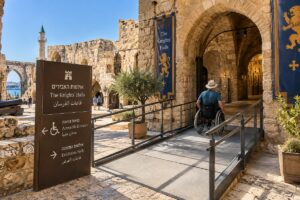
Wheelchair user entering the Knights’ Halls in Akko via an accessible ramp

Holy Land: Accessible Travel Guide

Israel offers many accessible travel options, although conditions vary between destinations. Modern transport can be relatively straightforward, while historic areas require more planning. This guide looks at Jerusalem, Tel Aviv and beyond, including transport and attractions.

Read More »
Scroll to Top