
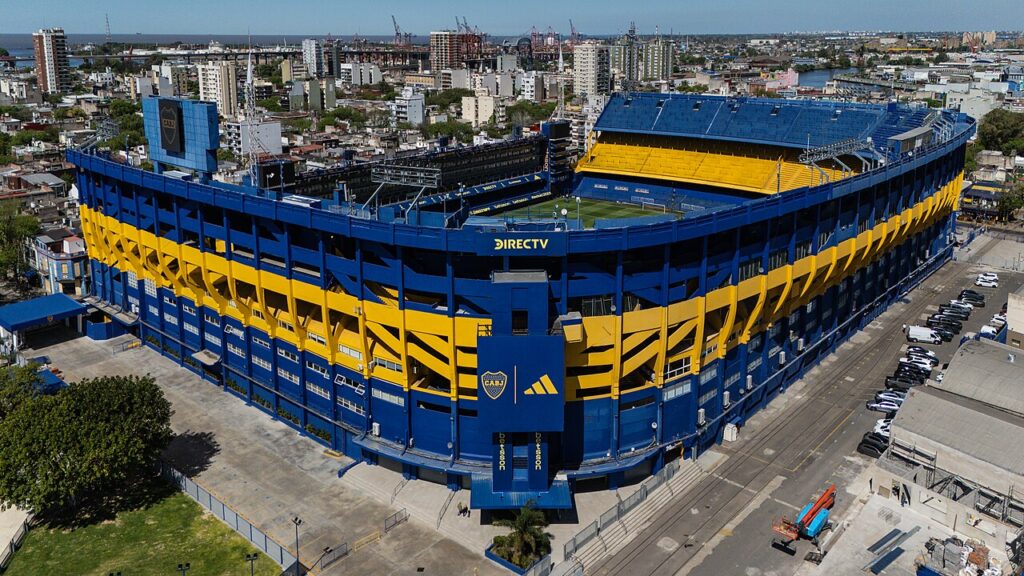


Aerial view of La Bombonera in the La Boca neighborhood of Buenos Aires

La Bombonera Stadium Tour: Inside Boca Juniors’ Famous “Chocolate Box”

In the colourful La Boca neighbourhood of Buenos Aires stands one of the world’s most recognisable football stadiums: Estadio Alberto J. Armando, better known as La Bombonera — “The Chocolate Box.” Home to Boca Juniors, the stadium is famous for its unusually steep stands, compact design and close connection to Argentine football culture.

You don’t have to be a Boca Juniors supporter to find La Bombonera interesting. The museum and stadium experience offer a glimpse into the history of the club, the passion surrounding Argentine football and the extraordinary relationship between this stadium and the neighbourhood around it.

If unusual sporting venues interest you, you can find more experiences in our Stadium Tours collection.

The Tour Experience: Museo de la Pasión Boquense

The Museo de la Pasión Boquense introduces visitors to more than a century of Boca Juniors history and the distinctive blue-and-gold culture surrounding the club. The museum itself is self-guided, with trophies, historic shirts, multimedia displays and a 360-degree cinema designed to capture some of the emotion surrounding Boca Juniors.

The museum tells the story of the club rather than simply displaying silverware. For visitors who want to understand why Boca occupies such an extraordinary place in Argentine football, it provides useful context before seeing the stadium itself.


Museum, Express Visit or Stadium Tour?

This is probably the most important thing to understand before booking: not every ticket gives you the same access to La Bombonera.

The museum can be visited independently. The Visita Express adds a short guided stadium visit of around 10 minutes, while the Estadio Tour lasts around 50 minutes and provides much broader access to the stadium. The exact areas included can change, so check the current description of each option when booking.

If seeing La Bombonera from inside is one of your main reasons for coming, choose the ticket according to the stadium access it actually includes rather than assuming that museum admission covers everything.

Buying La Bombonera Tickets Online

Tickets can be reserved online through the official Museo de la Pasión Boquense website, where the currently available visit types, times and prices are displayed. The museum also provides current visitor information and FAQs, making this the source we would use rather than relying on prices or schedules quoted by third-party travel sites.

Official Museo de la Pasión Boquense tickets and visitor information

Bring your booking confirmation and identification with you. If you are using a discounted ticket, also bring the documentation required to prove eligibility.

Opening hours and stadium access can change because of first-team training, matches or other club activities, so we would check the official information again shortly before the visit.


Recommended Time to Visit

If we were planning our own visit, we would probably choose a weekday morning. This leaves enough time to explore the surrounding La Boca neighbourhood afterwards and provides some flexibility if the museum and stadium experience takes longer than expected.

La Bombonera and Caminito make a natural combination, so we would allow at least half a day for this part of Buenos Aires. The brightly painted buildings, street art and history of La Boca deserve some time of their own rather than becoming simply a backdrop to the stadium.

If Buenos Aires is part of a wider trip, our Argentina travel guide can help put this visit into a broader itinerary.

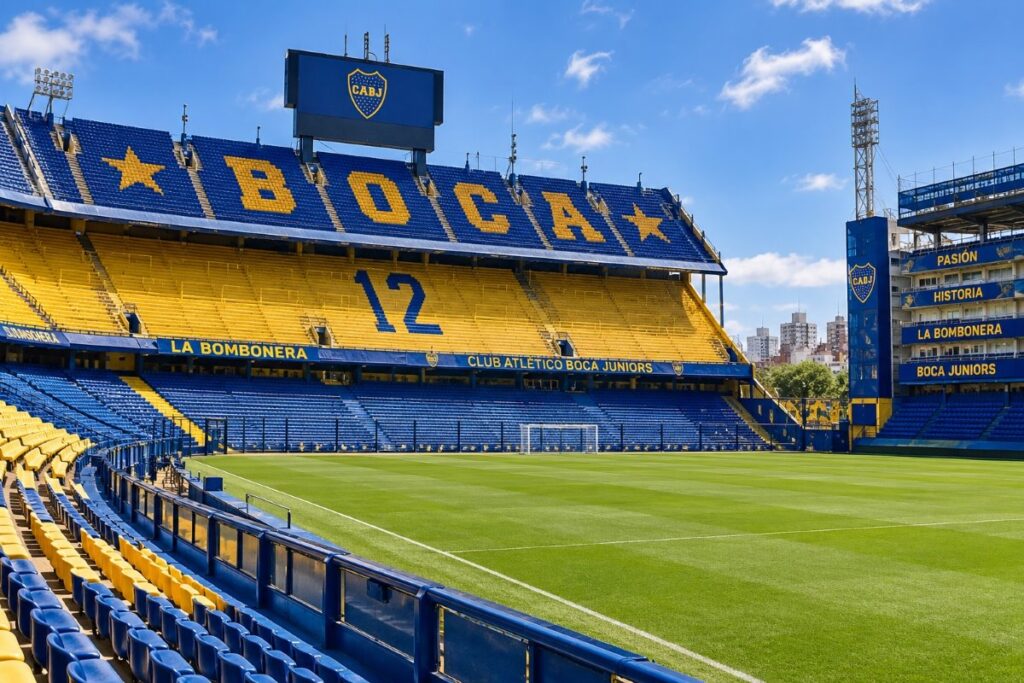
La Bombonera stadium interior with steep blue and yellow Boca Juniors stands

How to Get to La Bombonera

La Bombonera is located at Brandsen 805 in La Boca, within walking distance of Caminito. There is no subway station immediately beside the stadium, although buses serve the surrounding area.

For a first visit, we would probably use a taxi or ride-hailing service if travelling directly from central Buenos Aires. Public transport is another option, but rather than publishing individual bus numbers that may eventually become outdated, we recommend checking a current journey planner when you travel.

Is La Boca Safe for Visitors?

La Boca is one of Buenos Aires’ most visited neighbourhoods, but it is worth thinking about where and when you walk rather than treating the entire district as one large tourist zone.

Buenos Aires’ official tourism information recommends exploring La Boca’s main visitor areas during the day and advises against wandering around the neighbourhood at night. We would therefore plan La Bombonera and Caminito as a daytime visit.

Official Buenos Aires visitor information

Normal big-city precautions are sensible: keep phones, cameras and other valuables secure when you are not using them, and use a taxi or ride-hailing service if you are uncertain about walking through unfamiliar streets.


Accessibility at La Bombonera

Accessibility is one area where we would plan ahead rather than make assumptions. The City of Buenos Aires lists the Museo de la Pasión Boquense as accessible for visitors with motor disabilities, but this does not automatically mean that every part of the Express Visit or full Stadium Tour is step-free.

That distinction matters because access to different parts of the stadium may involve stairs. The current official tour information does not provide enough detail for us to confidently say that every area included in the full tour is wheelchair accessible.

If you use a wheelchair or have difficulty with stairs, contact the museum before booking and ask specifically which parts of your chosen tour will be accessible on the date of your visit.

For more practical planning ideas, see our Wheelchair Accessible Travel – Wheeling Abroad section.

Costs and Booking

La Bombonera can be visited through the Museo de la Pasión Boquense, with different options depending on the access available at the time. The museum itself is self-guided, while stadium access may be offered as part of a separate stadium tour. The museum is currently open daily from 10:00 to 18:00, with the ticket office closing at 17:30. Opening hours and stadium access can change on match days or for special events, so it is worth checking the latest information before travelling to La Boca.

Ticket prices can change, particularly in Argentina, so rather than relying on prices quoted in older travel guides, we recommend checking the current options when planning your visit.

Our tip: If seeing the inside of La Bombonera is important to you, check specifically that your chosen ticket includes stadium access, rather than admission to the museum only.

Recommended Time to Visit

If we were planning our own visit, we would probably choose a weekday morning. Starting at La Bombonera earlier in the day would leave plenty of time to explore the surrounding La Boca neighbourhood afterwards without turning the visit into a rushed stop between other attractions.

The stadium is close to Caminito, so the two make a natural combination. Rather than visiting La Bombonera simply to take a photograph and leave, we would allow at least half a day for this part of Buenos Aires. That gives you time for the museum and stadium experience, a walk through the colourful streets around Caminito and perhaps a relaxed lunch or coffee along the way.

If photography matters to you, daylight is another reason not to leave the area until late in the day. La Boca’s brightly painted buildings, street art and distinctive architecture are part of the experience, not just the backdrop to the stadium.

Why Is La Bombonera So Steep? The Famous Vertical Stand

One of La Bombonera’s most distinctive features is its almost vertical side. Its unusual shape developed from a practical constraint: the stadium occupies a tight urban site in La Boca, leaving far less room to expand outwards than at a conventional football ground.

The result is an extraordinarily compact stadium with steep stands and one side that looks completely different from the others. Instead of another conventional large grandstand, stacked boxes rise beside the pitch, creating the asymmetrical profile that makes La Bombonera instantly recognisable.

The architecture also helps explain why photographs from outside do not tell the whole story. The unusual geometry becomes much easier to understand when you see how tightly the stands, boxes and pitch fit together inside the stadium.


A Stadium That Is Still Changing

La Bombonera is not a frozen historic monument. Boca Juniors continues to improve the stadium, with recent work affecting entrances, circulation areas and sections of the stands.

There are also larger plans ahead. Boca Juniors’ approved budget for July 2026 to June 2027 includes funding for the first stage of an integrated expansion and improvement plan for La Bombonera, making this a stadium that may continue to evolve significantly over the coming years.


Fun Facts & Star Insights

  • The Story Behind the Colours: Boca Juniors’ famous blue and yellow are linked to one of the club’s best-known stories. According to club tradition, the founders decided to adopt the colours of the flag of the next ship to enter the port of La Boca. That ship was Swedish, giving Boca the blue-and-yellow combination that has since become recognised around the world.
  • The Stadium That “Moves”: La Bombonera is famous for the way its stands seem to vibrate when supporters jump and celebrate together. This inspired the saying “La Bombonera doesn’t tremble, its heart beats.” Whether the sensation lives up to the legend is something we would very much like to experience for ourselves one day.
  • Maradona and Boca Juniors: Diego Maradona first joined Boca Juniors in 1981 and helped the team win the Argentine league title that year. He later returned for the final stage of his playing career, leaving a connection between Maradona, Boca and La Bombonera that remains part of the stadium’s identity.
Diego Maradona mural in La Boca with La Bombonera stadium in the background

Is the La Bombonera Stadium Tour Worth It?

We haven’t visited La Bombonera yet, so we won’t pretend to give you a first-hand verdict. Based on what the museum and stadium experience offer, however, this is firmly on our Buenos Aires list.

What interests us is not simply Boca Juniors or its trophies. La Bombonera tells part of the story of Buenos Aires, La Boca and the extraordinary place football occupies in Argentine life. Its unusual architecture and relationship with the surrounding neighbourhood make it much more interesting to us than a museum devoted only to a football club.

For someone interested primarily in Boca Juniors history, the museum may be enough. We would choose the full Stadium Tour if it is available, because that is the experience that best reveals what makes La Bombonera different from other famous football grounds.

Would we include La Bombonera in our own Buenos Aires itinerary? Absolutely. And when we finally visit, we’ll come back to this article and tell you how the real experience compared with our expectations.

Related posts

Al Nassr supporters during a night match at Al-Awwal Park in Riyadh

The Ultimate Al Nassr Stadium Tour

Al-Awwal Park in Riyadh is Al Nassr’s home ground and one of Saudi Arabia’s best-known football venues. The stadium tour offers a behind-the-scenes look at areas such as the players’ tunnel, dressing room and press conference facilities. It also provides an interesting glimpse into the rapidly developing football culture of Saudi Arabia.


Read More »
Exterior of Old Trafford with Manchester United signage

Old Trafford Stadion Tour

At Old Trafford, a guided tour and the Manchester United Museum take you beyond matchday. Walk through areas including the dressing room, players’ tunnel and dugouts, discover the club’s history, and find practical information on accessibility, transport and planning your visit to Manchester’s famous football ground.

Read More »
Bayer Leverkusen fan inside the BayArena stadium

BayArena Stadium Tour

A behind-the-scenes tour takes you inside Bayer Leverkusen’s BayArena. Visit areas such as the players’ tunnel, pitchside, press conference room and VIP sections while discovering the character of one of Germany’s most compact modern football grounds. You’ll also find tips for planning your visit well in advance.

Read More »
Scroll to Top