Rimac Automobili
In Croatia, Rimac develops electric performance cars through battery technology and in-house engineering. This guide examines the work behind the Nevera and explains what visitors should check before planning a visit.

Wolfsburg is a city whose identity is unusually closely connected to one company. Volkswagen has been building cars here for decades, and the enormous factory beside the Mittelland Canal still dominates both the landscape and the story of the city.
For visitors, however, there are two different experiences to understand: Autostadt and the Volkswagen Factory Tour. They sit next to each other and are closely connected, but they are not the same thing.
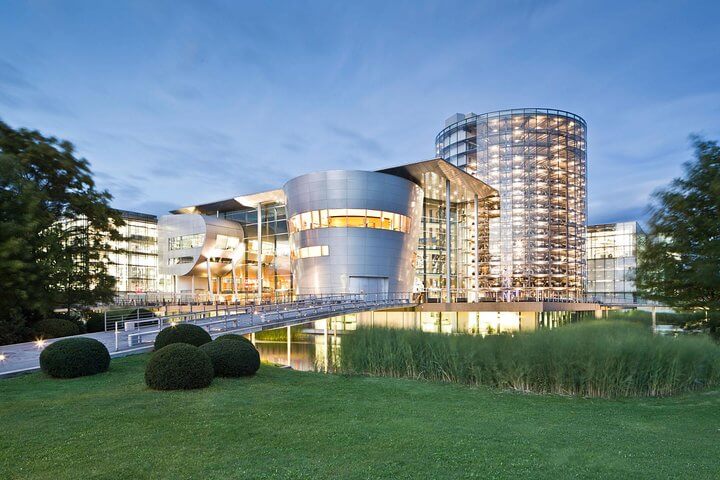
Autostadt is Volkswagen Group’s visitor complex, with exhibitions, brand pavilions, museums, restaurants and the distinctive glass Car Towers. The factory tour, on the other hand, takes you into the working Volkswagen plant to see parts of the actual production process. If you are interested in how things are made rather than simply looking at finished products, that distinction matters.
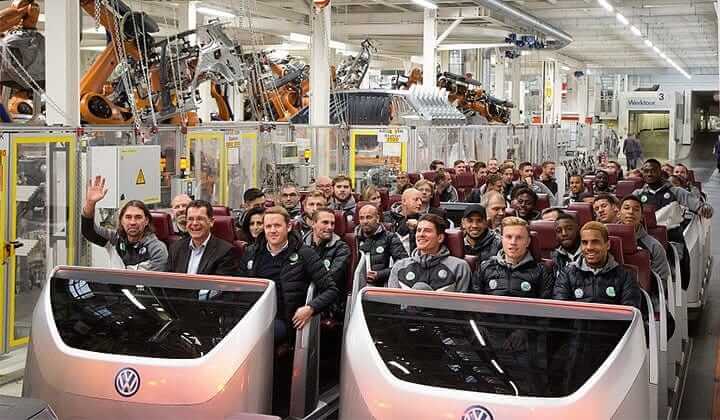
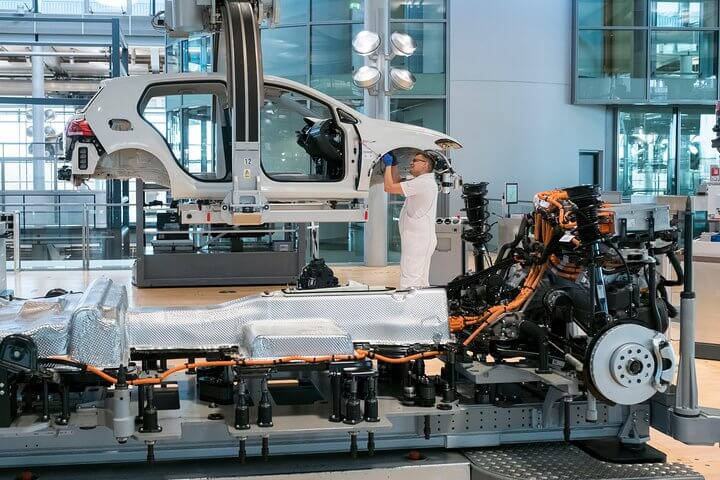
The factory visit lasts up to one hour and takes visitors through parts of Volkswagen’s Wolfsburg production facility. Rather than walking independently through the plant, visitors travel through the production environment on the factory tour vehicle.
The purpose is not to present a polished exhibition about car manufacturing. You are looking at parts of an operating factory and seeing some of the stages involved in turning individual components into completed vehicles.
That difference is what makes the experience interesting.
Modern car production combines enormous industrial scale with processes that have to work in carefully coordinated sequences. What looks relatively simple when you see a finished Volkswagen on the road becomes much more complicated when you see how many individual operations are involved in producing it.
The exact experience can vary because this is a working factory rather than a static attraction. Volkswagen tours operate only when production conditions allow, and routes can be changed or tours cancelled at short notice.
This is the part we would plan carefully. The factory tour operates Monday to Friday, subject to availability and factory production schedules. Tours are not offered during factory holidays, and production requirements can result in changes or cancellations. The experience lasts a maximum of about one hour, and children must be at least six years old to participate.
The current official information is not completely consistent about advance booking. The dedicated English factory-tour page says guests may book through the online shop or obtain a place on the day, subject to availability. The Autostadt FAQ says day visitors should ask at the Welcome Desk on the day of their visit. The German factory-tour page currently lists available places for non-vehicle-collection visitors at €15, booked at the Welcome Desk subject to availability.
For that reason, we would check the current booking procedure directly with Autostadt shortly before visiting, rather than relying on an older blog post or assuming that a factory-tour place is included with general admission.
Visitors must also carry photo identification. Restrictions apply to bags and other belongings taken onto the tour, so check the latest rules before arriving.
The regular Autostadt day ticket is separate. At the time of writing, admission costs €21 for adults, €17 reduced, and €11 for visitors aged 6–17, with family tickets also available. Children under six enter Autostadt free of charge.
If the factory is your main reason for coming to Wolfsburg, we still would not plan to arrive, take the one-hour tour and immediately leave.
Autostadt deserves more time than that.
A half day is the minimum we would allow, while a full day makes more sense if you want to combine the factory with the museum, pavilions, Car Towers and grounds without constantly watching the clock.
If the factory tour is particularly important to you, plan the rest of the day around it rather than the other way around. Production-dependent tours are the least flexible part of the visit.
Wolfsburg is also well connected by rail, so Autostadt can work as part of a wider German itinerary without requiring an overnight stay for every visitor.
It is easy to treat Autostadt and the Volkswagen plant as one attraction, but they offer quite different experiences.
Autostadt is a large visitor destination built around cars, mobility, design and the Volkswagen Group. You can explore brand pavilions, see historic vehicles, visit exhibitions, walk through the landscaped grounds and see the famous glass Car Towers.
The factory tour is the industrial part of the visit. It takes you beyond the visitor complex and into Volkswagen’s working production environment.
For us, the combination is much more interesting than either experience in isolation.
Autostadt explains how Volkswagen presents cars and mobility to the public. The factory shows something else entirely: how cars are actually produced.
If factory tourism interests you, this contrast is also worth comparing with our Airbus Factory Tour in Toulouse, where aircraft production creates a very different industrial experience.
Even without the factory, there is plenty to explore.
The ZeitHaus focuses on automotive history rather than only Volkswagen, making it particularly interesting if you enjoy seeing how car design and technology developed over time.
The individual brand pavilions provide another perspective. Instead of concentrating on manufacturing, they show how different Volkswagen Group brands interpret design, technology and their own identities.
Then there are the Car Towers.
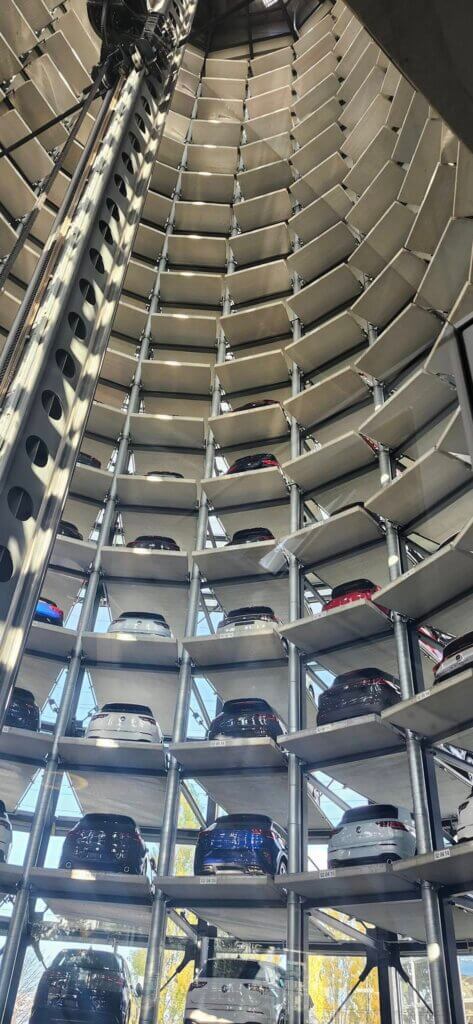
The two cylindrical glass towers are among Autostadt’s most recognizable structures and are used in Volkswagen’s vehicle delivery system. A separate Tour and Tower experience includes a visit to one of the brand pavilions followed by a ride inside a Car Tower to a height of 48 metres.
This is a good example of why it helps to understand the different experiences before buying tickets. A Factory Tour, an Autostadt guided tour and a Tour and Tower experience are three different things.
You do not necessarily need to do all three.
Wolfsburg is particularly convenient for visitors arriving by train.
From Wolfsburg Hauptbahnhof, you can already see Autostadt, and the entrance is only a short walk across the Stadtbrücke. This makes a factory-focused day trip possible without needing a car.
If you are driving, Autostadt has several visitor parking areas. Current parking charges and daily maximums are published on the official website, so it is worth checking them before travelling.
The factory tour itself has a specific meeting point. Visitors should arrive 15 minutes before departure at the ServiceHaus parking area, from where a shuttle takes participants to the factory.
That last detail is worth remembering. Arriving at Autostadt on time is not quite the same thing as arriving at the factory-tour meeting point on time.
Autostadt itself provides accessible facilities, including wheelchair-accessible toilets in several buildings. Reduced admission is also available to visitors with disabilities.
However, accessibility should be checked experience by experience rather than assuming that every activity within Autostadt has the same conditions.
For example, the Car Tower portion of the Tour and Tower experience is specifically listed as unsuitable for wheelchair users and people with walking disabilities.
The current factory-tour information does not give us enough detail to make a confident general statement about accessibility for visitors with reduced mobility. If this affects you or someone travelling with you, we recommend contacting Autostadt directly before booking.
For more practical information on planning trips around mobility needs, explore our wheelchair-accessible travel guides.
That depends on what you expect from Wolfsburg.
If your interest is mainly in seeing beautiful classic cars, Autostadt and the ZeitHaus may already give you what you want. If you are interested in how cars are actually produced, the factory adds an entirely different layer to the visit.
You do not have to be a Volkswagen enthusiast.
In fact, factory visits are often most interesting when you stop thinking about the brand and start looking at the process. A familiar object that we normally see parked outside a supermarket suddenly becomes the result of an enormous chain of engineering, logistics, machinery and human work.
That is also why the Volkswagen experience fits so well into a broader factory-tour itinerary. Compare it with aircraft production at Airbus, hand-built performance cars in Italy or chocolate production in Switzerland, and the products could hardly be more different.
The interesting question remains the same:
How is this actually made?
For us, that is reason enough to look behind the factory doors.

In Croatia, Rimac develops electric performance cars through battery technology and in-house engineering. This guide examines the work behind the Nevera and explains what visitors should check before planning a visit.

An Airbus factory visit in Toulouse reveals the scale and coordination behind aircraft assembly, with components arriving from across Europe. Learn what the visitor tours cover, how access is arranged and why this part of France became an aviation centre.
Lamborghini’s Sant’Agata Bolognese site brings production and automotive history together. Find out what the factory tour and museum cover, how to book, and what to consider when planning a visit to Italy’s Motor Valley.