


Joie de Vivre Without Barriers: Exploring France by Wheelchair

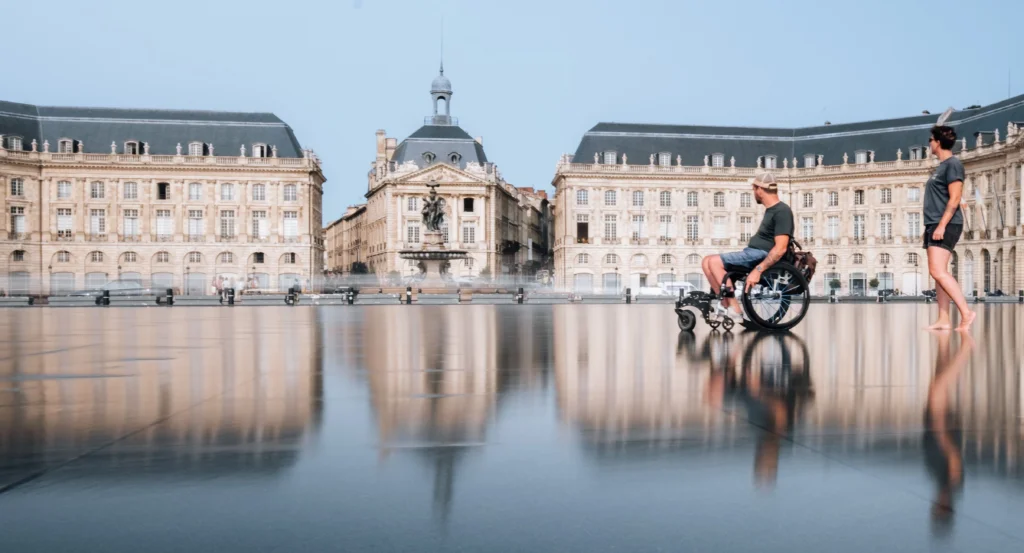
Welcome to France, a country synonymous with romance, world-class cuisine, stunning landscapes, and rich history. While France, like many European nations, features a blend of modern accessibility and historical infrastructure challenges (such as narrow streets and ancient buildings), significant efforts are continuously being made to ensure disabled visitors can experience its charm. Planning ahead is crucial, but a memorable and comfortable journey is entirely within reach. A new unified free number, 0 800 10 20 20, was launched in January 2026 to simplify all transport-related inquiries for the Île-de-France region, directing users to the appropriate accessibility services. 

Effective preparation is the key to a seamless trip. France has robust disability discrimination laws, and most modern facilities are well-equipped.

In 2026 several organizations and specialized services assist disabled tourists in France by ensuring accessibility, providing specialized transport, and offering personalized travel planning.
  • Tourisme & Handicap: This is the official French state label for accessible tourism. You can search their database for over 4,000 sites—including hotels, restaurants, and museums—that have been certified for specific accessibility needs (motor, visual, auditory, or mental).
  • Paris je t’aime (Paris Tourist Office): They provide a dedicated guide for disabled visitors and list specialized travel agencies that organize tailor-made, accessible tours in the Paris region. 
Key Planning Resources:
  • Accessible Travel Agencies: Consider using specialist tour operators like Finding France or Access Tourisme Service
    , who can arrange adapted transfers, audit hotel rooms for specific needs (like roll-in showers), and plan accessible itineraries.
  • Documentation: Bring along proof of your disability (a doctor’s note or government ID). This often grants you and a companion free or significantly reduced entry to most museums and attractions.
  • Packing Essentials: Don’t forget your medication, a UK-to-EU plug adapter (France uses Type E sockets), a spare charger for your wheelchair, and comprehensive travel insurance.
  • Accommodation specifics: When booking, always verify the specifics of “accessible” rooms. Request photos of the bathroom and shower to ensure it meets your requirements (e.g., grab bars, shower seat, ample turning space). Many hotels, especially chains like B&B HOTELS, offer dedicated rooms with appropriate facilities. ANAÉ (Association Nationale d’Appui à l’Émancipation) maintains dedicated vacation centers in France, such as those in Hyères and Pralognan-la-Vanoise, which are fully adapted for tourists with motor, visual, or auditory disabilities. These 2026-ready accommodations offer not only accessible rooms but also specialized recreational activities, including adaptive skiing and water-accessible equipment, to ensure an inclusive travel experience.
Navigating France: Transport Tips

France’s public transport is a mix of highly accessible modern systems and older, more challenging infrastructure.

Air Travel and Airports

All French airports provide free assistance for passengers with reduced mobility (PRMs). It is mandatory to book this service through your airline at least 48 hours in advance. You are entitled to bring up to two pieces of mobility equipment free of charge, though you will likely use an airport wheelchair for boarding.

 National Rail (SNCF)

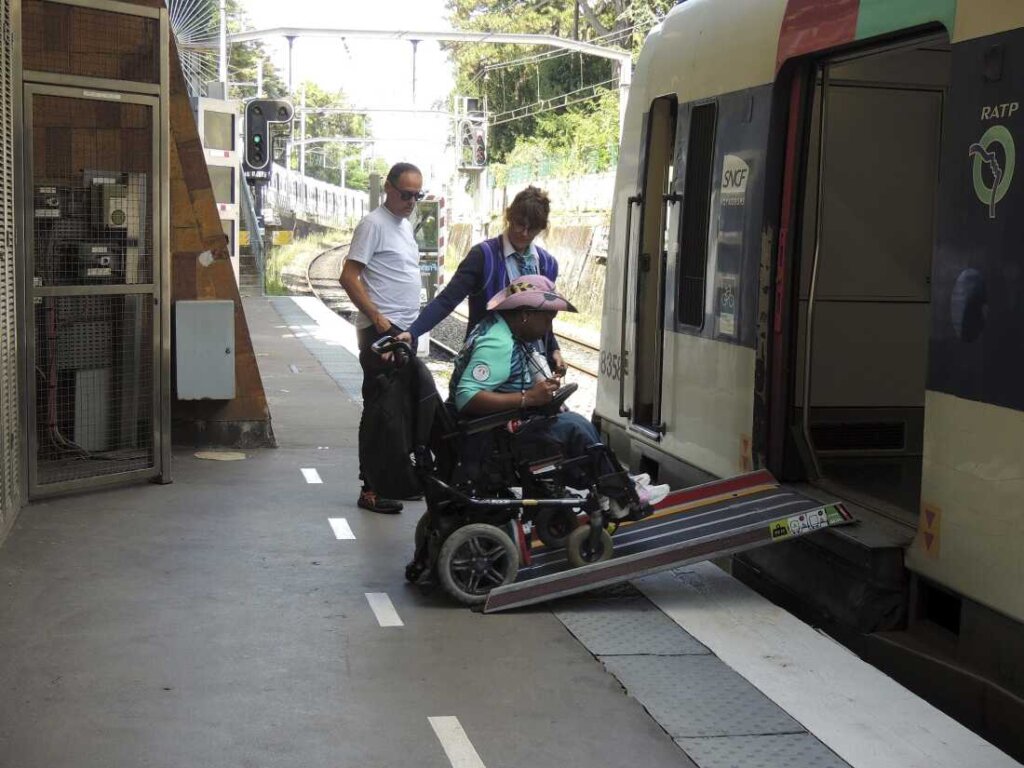
The high-speed TGV and Intercités trains are an excellent way to travel between cities. They offer dedicated wheelchair spaces and a free service called Accès Plus. This service provides staff assistance for boarding, navigating stations, and disembarking. You must book Accès Plus at least 24 hours before your journey.

The national rail network is the most efficient way to travel between regions.
  • Assist’enGare: Since late 2025, this is the single point of contact for all station assistance in France. Staff assist you from the station entrance to your seat and with one piece of luggage (up to 15kg).
    • Booking: Request assistance at least 24 hours before departure (48 hours for international or complex regional trips) via the website or by calling 32 12 in France or +33 9 72 72 00 92 from abroad.
  • Fares & Seating: Wheelchair users on TGV INOUI trains are systematically placed in First Class while paying a Second Class fare. Companions (up to 3 people) may also receive significant discounts, ranging from 30% to 100% depending on the traveler’s disability card.
Intercity Buses
While older buses may have limitations, major long-distance carriers have modernized their fleets:
  • FlixBus: Offers hydraulic lifts and designated spaces for two wheelchairs per bus. You must notify them at least 36 hours in advance.
  • BlaBlaCar Bus: Provides priority boarding and accessible seating. Booking 36 hours in advance is required to ensure equipment availability. 
Accessible Car Rentals & Private Transport
  • Handynamic: Specializes in renting Wheelchair Accessible Vehicles (WAVs), including minivans with ramps and cars with hand controls, across France.
  • Wheeliz: A peer-to-peer rental platform specifically for adapted vehicles, allowing you to rent directly from owners at lower rates (starting around €45/day).
  • G7 Access: A dedicated taxi fleet in Paris and surrounding areas with over 600 adapted vehicles for non-folding wheelchairs. 
  • Getting Around Paris

    Buses and Trams: The bus network is the most accessible option in Paris. All buses are low-floor and equipped with ramps. Tram lines are also fully accessible and easy to use independently.

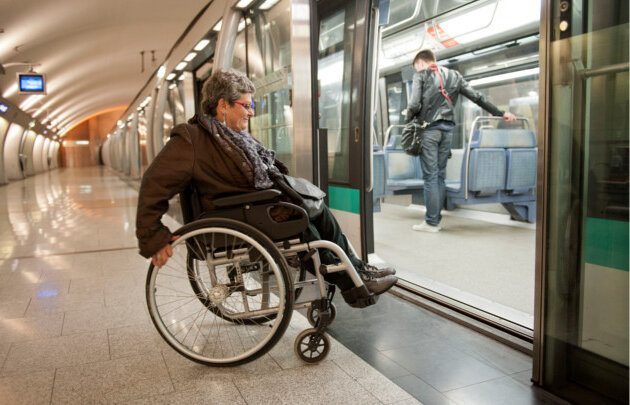
    Metro and RER: The historic Parisian Metro network is largely inaccessible due to stairs and a lack of elevators. However, Metro Line 14 is fully automated and entirely accessible with elevators at every station. The RER suburban trains are more accessible, with elevators to platforms, but staff assistance (via Accès Plus) is required to deploy a manual ramp for boarding the train itself.

    Taxis: Traditional Parisian taxis are not typically accessible. You’ll need to book an accessible van through a specialist service in advance.

Exploring Accessible France

France’s major tourist sites are generally well-adapted for wheelchair users.

Paris

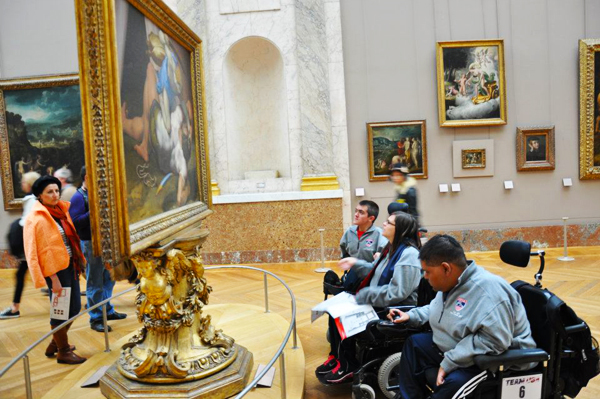
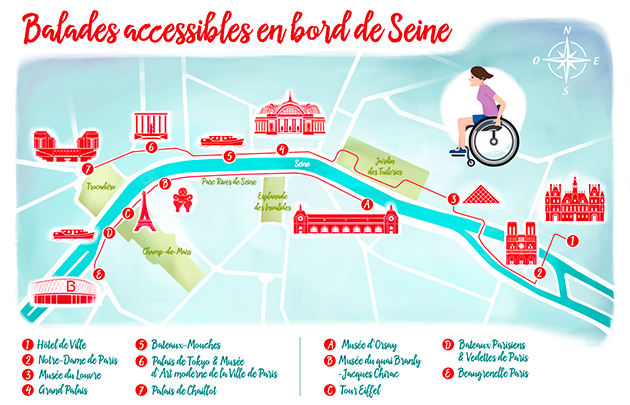
    • The Louvre Museum: A surprisingly accessible experience. Enter via the elevator at the Pyramid entrance to reach the main lobby and access different wings via lifts.
    • The Eiffel Tower: The first and second floors are accessible via lift. The summit is also accessible to wheelchair users via an elevator from the north pillar.
    • Musée d’Orsay: Housed in a former train station, this museum is highly accessible, with a dedicated entrance and lifts to explore the impressive Impressionist collection.
    • Arc de Triomphe: Lifts can take you to the top for panoramic views of the Champs-Élysées. The challenge here is reaching the Arc itself; you’ll need a drop-off directly at the monument, as the pedestrian underpass has stairs.

Beyond Paris

  • The Palace of Versailles: Just outside Paris, much of the main palace and ground-floor gardens are accessible, with lifts available. Check the official website for specific access routes.
  • The French Riviera: Cities in the South like Nice, Cannes, and Marseille offer accessible guided tours and beautiful seaside promenades.
  • The Loire Valley: Some châteaux, like the Château de Chambord, are making efforts toward better accessibility.
  • For people with limited mobility PRMs, numerous sports are possible, including off-road wheelchair descents, gentle or competitive hiking, paragliding, sleigh rides or electric Joëlette rides, canyoning, rafting, skiing and more.

Related posts

The World’s Most Legendary Luxury Train

Orient Express offers a once-in-a-lifetime experience where the romance of pre-war Europe truly comes to life. The unparalleled gastronomy, private steward service, and breathtaking landscapes transform the journey into an unforgettable adventure that goes far beyond mere transportation.

Read More »

Touching the Sky

The Airbus Factory Tour in Toulouse provides a breathtaking look at aerospace engineering. From panoramic galleries, visitors witness the assembly of the A350 XWB, seeing massive components join into flight-ready jets. It is a unique opportunity to experience the scale and precision of global aviation production firsthand.

Read More »
Scroll to Top