Australia’s Most Iconic Coastal Drive
Australia brings together coastal cities, tropical reefs and ancient landscapes. Our guide covers regional highlights, culture and practical tips on seasons, transport and accessibility.

The Orient Express is one of the most famous names in railway history. Since its first journey in 1883, it has become associated with elegant carriages, international travel and the golden age of European rail.
But there is an important distinction. The original Orient Express was a scheduled international railway service whose routes changed considerably over its long history. Today’s Venice Simplon-Orient-Express is a luxury train operated by Belmond, using restored historic carriages to recreate part of that earlier era.
The story began with Belgian entrepreneur Georges Nagelmackers and the Compagnie Internationale des Wagons-Lits (CIWL). His ambition was to create comfortable long-distance rail travel across a Europe still divided by borders and different railway systems.
The first Express d’Orient service began in 1883, with the official inaugural journey leaving Paris on 4 October for Constantinople, today’s Istanbul.
The early journey was not yet a direct train all the way from Paris to Constantinople. Passengers travelled by rail to Giurgiu in Romania, crossed the Danube, continued by train to Varna in Bulgaria and completed the final section by ship.
Despite those transfers, the service represented a major change in international travel. Sleeping and dining cars made it possible to cross large parts of Europe with a level of comfort that had previously been difficult to achieve.
The 1920s and 1930s became the period most strongly associated with the Orient Express legend. International sleeping-car services linked major European cities, while elaborate interiors and restaurant cars attracted diplomats, aristocrats, businesspeople and wealthy travellers.
The Orient Express name also became part of popular culture.
Agatha Christie’s 1934 novel Murder on the Orient Express gave the train an enduring association with mystery and intrigue. Numerous film and television adaptations later introduced the story — and the train — to new generations.
The railway changed significantly after World War II. Political borders shifted and commercial aviation offered a much faster alternative for long-distance European travel.
The Orient Express did not disappear all at once. Its routes and services were gradually altered and shortened.
A major milestone came in 1977, when the direct Paris–Istanbul service ended. Other services continued to use the Orient Express name afterwards, but the great cross-European journey most closely associated with the historic train had come to an end.
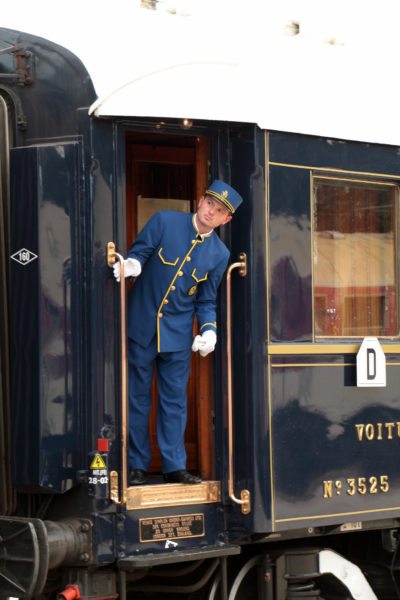
The train most travellers now associate with the historic legend is the Venice Simplon-Orient-Express, operated by Belmond.
Rather than functioning as an ordinary scheduled railway service, it offers luxury journeys aboard restored vintage carriages, including vehicles dating from the 1920s.
Accommodation begins with the traditional Historic Cabin, which has seating during the day and upper and lower berths at night. These cabins have a washbasin, while toilets are shared at the end of the carriage.
Suites provide private bathrooms and more space, while Grand Suites add larger living areas and additional services.
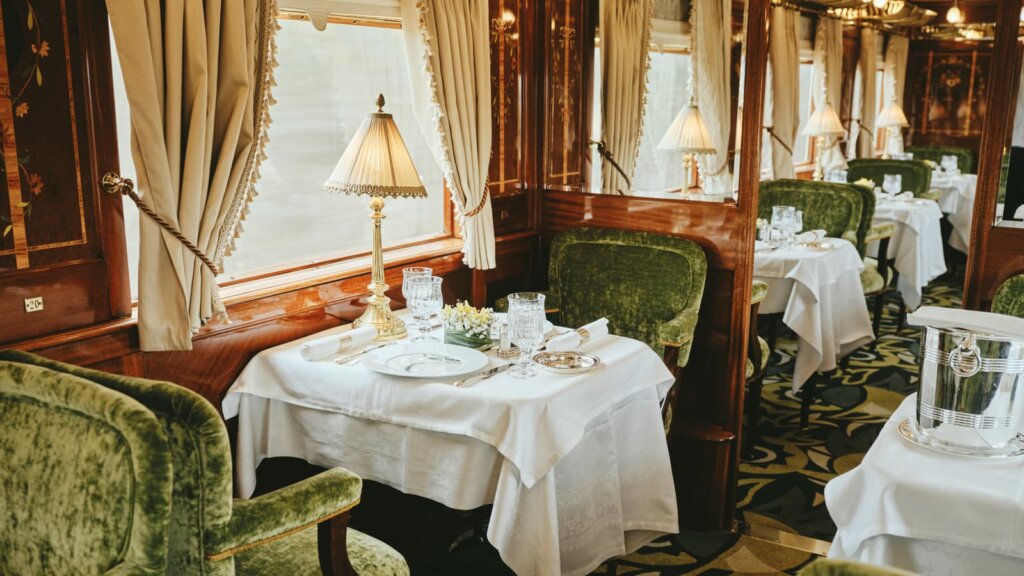
Life outside the cabin centres on three restaurant cars and the Bar Car. Dining is included on the journeys, along with selected wines and 24-hour steward service.
Evening meals are formal occasions. Belmond asks passengers to wear formal evening attire, although black tie itself is not compulsory. Smart daywear is appropriate during the day, while jeans are not permitted aboard the train.
Routes and departure dates vary by season, but the current programme includes several journeys connected with the historic image of the Orient Express.
The Paris–Venice journey is one of the best-known introductions to the train. In 2026, it is an overnight trip, departing Paris in the afternoon and arriving in Venice the following day.
With one night aboard, it provides the full dining and sleeper-train experience without the time commitment of the longer itineraries.
The Paris–Budapest journey is also scheduled as a one-night trip in 2026.
Budapest has a particularly strong historical connection with the Orient Express story. The Hungarian capital lay on important eastbound routes linking Western Europe with the Balkans and Constantinople.
Prague has appeared in Venice Simplon-Orient-Express itineraries, although individual routes change between seasons.
Travellers specifically interested in Prague should therefore check the current timetable rather than assume that a Paris–Prague journey operates every year. Budapest and Vienna are among the other Central European cities served by current itineraries.
The Paris–Istanbul journey comes closest to recreating the geographical sweep associated with the historic Orient Express.
The 2026 itinerary lasts five nights and includes Budapest and Bucharest before reaching Istanbul. Three nights are spent aboard the train, while hotel stays and excursions form part of the wider itinerary.
This makes it quite different from the shorter European journeys: it is a multi-day travel experience combining the train with stops along the historic eastbound route.
Check the current Venice Simplon-Orient-Express routes and departure dates on the official Belmond website.
How Much Does It Cost?
There is no single Orient Express fare. Prices depend on the route, departure date, cabin category and availability.
As a useful indication rather than a permanent price list, a Paris–Venice journey in a Historic Cabin is listed from £4,275 per passenger for selected 2026 departures at the time of writing. Suites, Grand Suites and longer itineraries cost considerably more.
Because fares can change with availability, it is better to check the current price for a specific departure rather than rely on an older published fare.
See current fares and availability directly with Belmond.
It depends on what you want from a railway journey. If spectacular scenery is the main reason you want to travel by train, Europe offers far less expensive alternatives. Switzerland’s Bernina Express, for example, puts Alpine landscapes and remarkable railway engineering at the centre of the experience.
The Venice Simplon-Orient-Express offers something very different. You are paying for access to historic carriages, elaborate dining, personal service and an unusually formal style of rail travel.
For travellers fascinated by railway history and the atmosphere of early 20th-century luxury travel, that combination can make it a remarkable experience. If the priority is simply travelling between European cities or enjoying beautiful scenery from a train window, the price is much harder to justify.

Australia brings together coastal cities, tropical reefs and ancient landscapes. Our guide covers regional highlights, culture and practical tips on seasons, transport and accessibility.

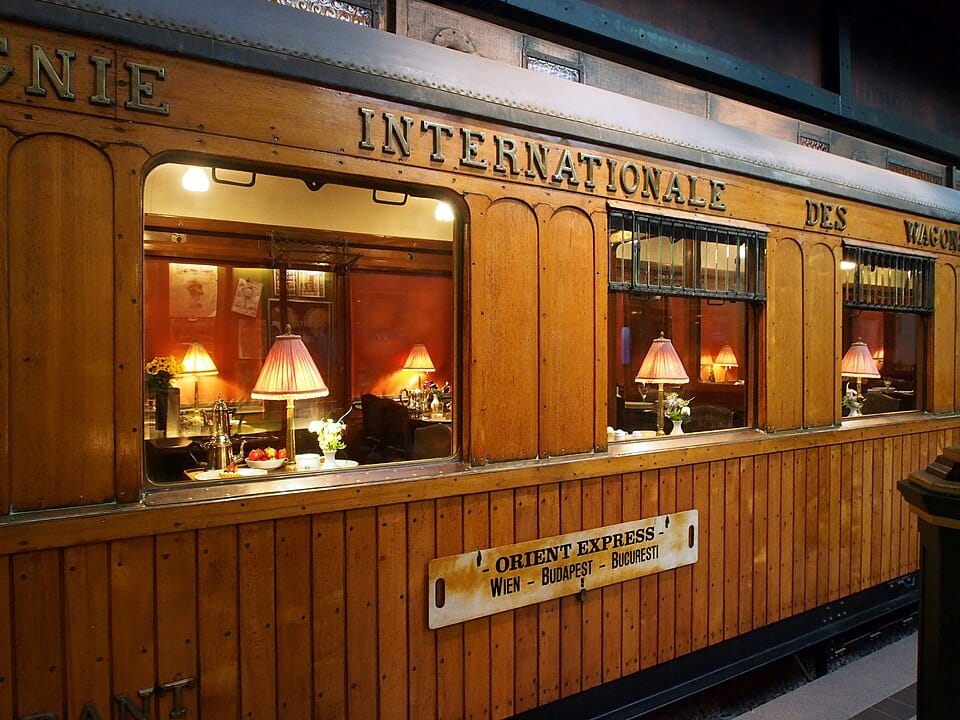
The Bernina Express crosses the Alps through high mountain scenery and remarkable railway engineering. This guide follows the changing landscape from glaciers to valleys and helps you decide how to experience the route.
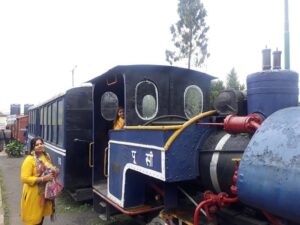
The Darjeeling Himalayan Railway climbs through West Bengal on a historic narrow-gauge line. Learn what makes its engineering distinctive, where Batasia Loop and Ghoom fit into the route, and how to choose a train journey.

Route 66 is America’s legendary road trip, stretching from Chicago to California through eight states. Discover historic towns, desert landscapes, classic roadside landmarks and surviving sections of the Mother Road, plus practical tips for planning the journey and experiencing the Route 66 centennial in 2026.

Grand Canyon Railway offers a historic train journey from Williams, Arizona, to the South Rim. Travel through changing Northern Arizona landscapes, discover the railway’s Wild West entertainment and vintage carriages, and arrive at the historic Grand Canyon Depot just a short walk from the canyon rim.