Route 66: The Ultimate American Road Trip

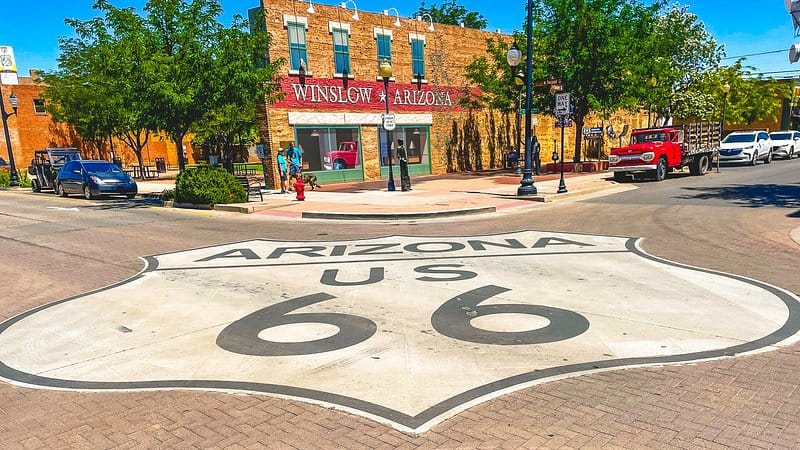
Historic Route 66 road trip through Winslow, Arizona

Few journeys are as deeply embedded in popular culture as the Route 66 road trip. Created in 1926, the highway crossed roughly 2,400 miles of the United States, linking Chicago with Southern California through eight states.

More than a road, it became a symbol of migration, mobility and the American road trip — a landscape of neon signs, diners, motels, desert highways and small towns that entered literature, music and film. Although officially removed from the U.S. Highway System in 1985, much of its story survives along roads now marked Historic Route 66. In 2026, the Mother Road celebrates its 100th anniversary.

A Road That Shaped American Travel

Route 66 was established in 1926 as part of the developing U.S. numbered highway system, bringing together existing roads across Illinois, Missouri, Kansas, Oklahoma, Texas, New Mexico, Arizona and California.

During the 1930s, it became closely associated with people travelling west during the Dust Bowl and Great Depression. John Steinbeck gave the road one of its most enduring names when he called it the “Mother Road” in his 1939 novel The Grapes of Wrath. The novel — and its 1940 film adaptation — helped embed Route 66 in American cultural memory.

After World War II, the road acquired a different identity. Increasing car ownership and leisure travel brought motorists to service stations, motor courts, restaurants and roadside attractions. Businesses competed for attention with neon signs, unusual architecture and increasingly imaginative reasons to stop.

The Interstate Highway System gradually changed that world. Faster roads bypassed towns that had depended on passing motorists, and Route 66 was eventually removed from the U.S. Highway System in 1985. Preservation efforts followed, helping save surviving road sections, buildings and landmarks. The National Park Service Route 66 history provides a deeper look at this transformation.

If that story sounds familiar, there is a good reason. Pixar turned a similar idea into the fictional town of Radiator Springs in Cars. The filmmakers travelled Route 66 while researching the movie, drawing inspiration from the landscapes, communities and people they encountered. Radiator Springs became an accessible version of a very real Route 66 story: what happens to roadside communities when the traffic moves elsewhere.

From Chicago to California: Landscapes and Landmarks

Part of Route 66’s appeal is how dramatically America changes around the road. The journey begins in Chicago before crossing the agricultural landscapes and small towns of Illinois. Missouri brings St. Louis and the Ozarks, followed by Route 66’s short passage through Kansas.

Oklahoma has one of the strongest Route 66 identities, with surviving roadside architecture and attractions such as the Blue Whale of Catoosa. Beyond Oklahoma, the landscape opens across the Texas Panhandle, where Cadillac Ranch near Amarillo has become one of the route’s most recognizable pieces of public art.

New Mexico introduces high desert, adobe architecture and towns such as Tucumcari, where neon signs and surviving motels preserve some of Route 66’s mid-century atmosphere.

Arizona brings another dramatic change. Route 66 crosses Petrified Forest National Park, the only national park in the National Park System containing a section of Historic Route 66. Remnants of the former road corridor can still be seen inside the park, and the National Park Service guide to Historic Route 66 at Petrified Forest explains what remains.

Farther west, Seligman played an important role in the modern Route 66 preservation movement, while Oatman combines mining-town history with one of the road’s more unusual street scenes.

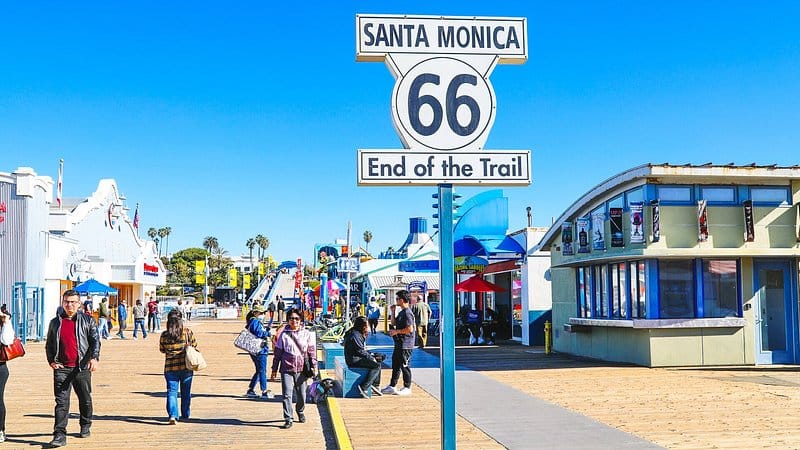
Route 66 End of the Trail sign at Santa Monica Pier

 California brings the final transformation: long stretches through the Mojave Desert followed by the enormous urban landscape of Greater Los Angeles and, for many modern travellers, the Pacific.

The “End of the Trail” sign on Santa Monica Pier has become a symbolic finishing point for today’s Route 66 journeys. It should not be confused with one immutable historical endpoint, however, because the highway’s alignments and western terminus changed during its lifetime.

Planning and Driving Your Route 66 Road Trip

There is no longer one continuous U.S. Route 66 that you can simply enter into a navigation system and follow from Chicago to California. Historic alignments survive as local streets, frontage roads and designated Historic Route 66 sections, while modern Interstates often run close to the old road. The highway itself had multiple alignments during its history, so following Route 66 today means choosing between surviving sections rather than simply staying on one road.

GPS can favour the fastest modern highway rather than the historic alignment, so a Route 66-specific map or guide is useful alongside normal navigation. Interstates are practical when you need to cover distance, but remaining on them for the entire journey means bypassing much of the old road’s character. The historic motels, filling stations, diners and small-town main streets are precisely the places for which leaving the fastest route becomes worthwhile.

A complete Route 66 road trip deserves time. Around two to three weeks gives you considerably more freedom for spontaneous stops, historic sites and older alignments without turning the trip into a race from one overnight stop to the next.

You do not have to travel the entire route. Arizona and New Mexico work particularly well for travellers drawn to Southwestern landscapes and Route 66 nostalgia, while regional journeys through Illinois, Missouri or Oklahoma reveal a different side of the road’s history. Spring and autumn are generally easier seasons for a long-distance trip, but there is no single perfect weather window for the whole route. Chicago, the higher elevations of New Mexico and Arizona, and the Mojave Desert can experience very different conditions at the same time. Summer deserves particular care in the desert Southwest because of extreme heat, while winter can bring snow and freezing conditions to higher-elevation sections.

Accommodation is another part of the experience. Historic motels can add real character to a Route 66 journey, but many are small properties with limited capacity. Combining a few classic roadside stays with conventional accommodation makes a longer itinerary easier to manage.

If California forms a larger part of your journey and mobility is a consideration, our California on Wheels guide provides additional planning information for accessible travel in the state.

Route 66 by Train?

There is another way to experience part of the same American corridor. The Amtrak Southwest Chief runs between Chicago and Los Angeles, travelling through landscapes and communities closely associated with Route 66, including Albuquerque and Flagstaff.

It is not a railway version of Route 66. The train does not follow every historic road alignment, and most classic roadside attractions still require a car. Instead, it offers a different perspective on the same broad east-west corridor that has carried road and rail travellers for generations.

The railway connection becomes particularly interesting in northern Arizona. Travellers can connect towards Williams and continue aboard the Grand Canyon Railway to the South Rim of Grand Canyon National Park.

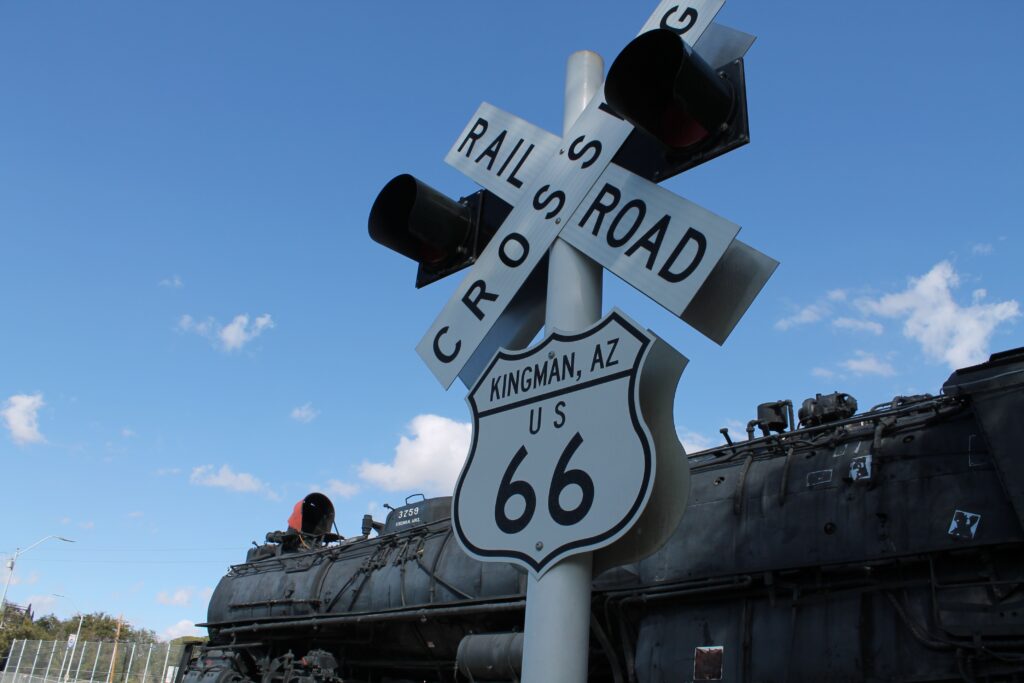
Route 66 railroad crossing sign in Kingman, Arizona

Route 66 at 100: The 2026 Centennial

As the Mother Road reaches its historic 100-year milestone, the anniversary is being marked by special events and projects across the eight Route 66 states. Congress created the U.S. Route 66 Centennial Commission to recommend activities appropriate for commemorating Route 66’s 100th anniversary.

For travellers visiting in 2026, the centennial creates opportunities to encounter exhibitions, festivals, organized road journeys and local celebrations connected with the anniversary. Because individual events and dates can change, the official Route 66 Centennial website is the best place to check current activities while planning a journey.

The centennial is a bonus rather than the only reason Route 66 matters. Its history, landscapes and roadside culture will still be there when the birthday celebrations are over.

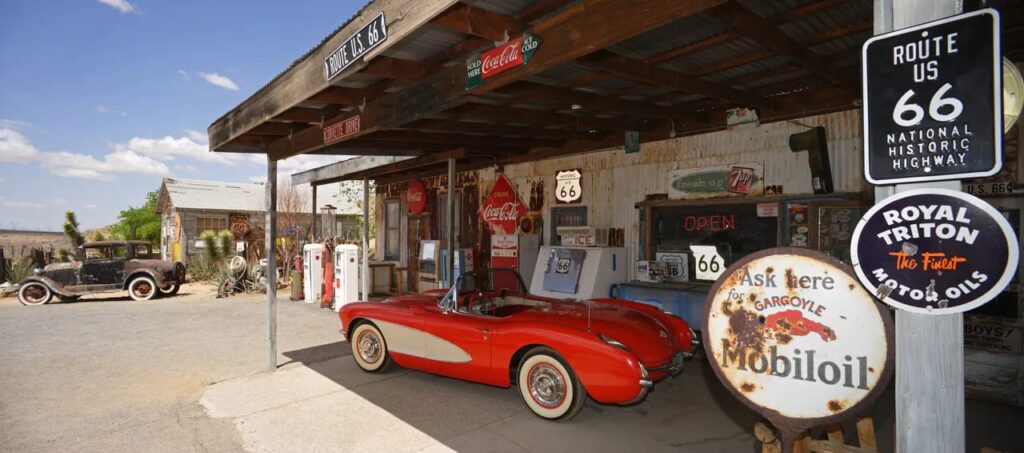
Historic Route 66 sign with vintage roadside gas station signs

Sonsy Verdict

Route 66 is easy to romanticize, but the journey becomes more interesting when you do not expect every mile to look like a vintage postcard. Some sections are beautifully preserved. Others are ordinary local roads, faded commercial strips or stretches where little remains of the highway’s celebrated past. A restored neon motel may sit not far from an abandoned service station or a modern Interstate interchange. That unevenness tells much of the story.

Route 66 has been celebrated in literature, photography, film and music, including Bobby Troup’s 1946 song “(Get Your Kicks on) Route 66,” which helped make the highway part of American popular culture. Its influence stretches from Steinbeck’s Depression-era migration story to the fictional world of Radiator Springs. But the real road is more interesting than the mythology alone. What survives today is a patchwork of working towns, preserved landmarks, abandoned businesses and changing landscapes — traces of almost a century of American travel. If your priority is simply reaching California as efficiently as possible, there are much faster ways to cross the country. Route 66 is not really about reaching the end of the road. It is about discovering how much of its story still survives along the way.

Related posts

Traveler checking a map beside a car during a coastal road trip in Victoria, Australia

Australia’s Most Iconic Coastal Drive

Drive one of Australia’s most spectacular coastal routes, from surf towns and rainforest to limestone cliffs and the Twelve Apostles. The Great Ocean Road combines dramatic scenery, fascinating history and the freedom of a classic road trip.

Read More »

Swiss Mountain Tracks

The Bernina Express crosses the Alps through high mountain scenery and remarkable railway engineering. This guide follows the changing landscape from glaciers to valleys and helps you decide how to experience the route.

Read More »

Darjeeling Himalayan Railway

The Darjeeling Himalayan Railway climbs through West Bengal on a historic narrow-gauge line. Learn what makes its engineering distinctive, where Batasia Loop and Ghoom fit into the route, and how to choose a train journey.

Read More »
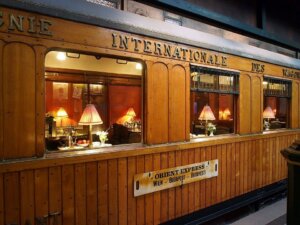
Historic Orient Express dining car with original wooden interior

Orient Express

The Orient Express has defined luxury rail travel for more than a century. Discover its fascinating history, how the Venice Simplon-Orient-Express recreates the experience today, the classic routes from Paris to Venice and Istanbul, what life aboard is really like, current costs, and whether this legendary train journey is worth it.

Read More »
Grand Canyon Railway steam locomotive in Arizona

Grand Canyon Railway

Grand Canyon Railway offers a historic train journey from Williams, Arizona, to the South Rim. Travel through changing Northern Arizona landscapes, discover the railway’s Wild West entertainment and vintage carriages, and arrive at the historic Grand Canyon Depot just a short walk from the canyon rim.

Read More »
Scroll to Top