Golden Sunshine, No Barriers: California on Wheels

California by wheelchair – traveller enjoying a sunny coastal view

Exploring California by wheelchair can include everything from major cities and Pacific beaches to theme parks and national parks, but the state’s size and variety make advance planning important. Accessible public transport, adapted attractions, beach wheelchairs and national park facilities make many of the state’s highlights possible to experience, while steep streets, long distances and changing terrain can still create challenges. From San Francisco and Los Angeles to the beaches of San Diego and the landscapes of Yosemite, the key is understanding which parts of a trip work well on wheels and where more preparation is needed.

California by Wheelchair: What Accessibility Really Looks Like

The Americans with Disabilities Act (ADA) provides an important legal framework for accessibility across the United States. Hotels, transport systems, attractions and other public facilities are subject to accessibility requirements, but that does not mean every building, hotel room or visitor experience will work equally well for every wheelchair user. The official ADA regulations provide more detailed information about accessibility requirements in the United States.

This distinction is particularly important when booking accommodation. Hotels must provide information about accessible rooms and their features, but “accessible” can cover different configurations and may not include every feature an individual traveller needs. When a particular feature is essential, confirm it directly with the hotel rather than relying on the word “accessible” alone.

Getting Around California

California is enormous, and San Francisco, Los Angeles, San Diego and Yosemite may all appear on the same itinerary despite the substantial distances between them. For a multi-stop trip, an adapted rental vehicle can provide considerably more flexibility than relying entirely on public transport. Accessible vehicle rental companies operate in California, although availability, equipment and pickup locations should be confirmed well before travelling.

Parking rules also deserve some preparation. California has designated accessible parking spaces and blue-curb parking, but international visitors should not assume that a disability permit issued abroad automatically provides every California parking privilege. The California DMV provides current information about Disabled Person parking placards, including options available to eligible visitors.

Golden Gate Bridge and San Francisco Bay viewed from above

San Francisco: Accessible, but Those Hills Matter

San Francisco demonstrates why accessibility cannot be judged simply by looking at public transport. The transport network offers extensive wheelchair access, while the geography of the city can present a much greater obstacle, particularly for someone travelling independently in a manual wheelchair. Choosing routes carefully and using public transport to bypass some of the steepest streets can make a significant difference.

BART is one of the most useful options. All BART stations have accessible elevators and wider fare gates, while trains provide level boarding. Elevator availability is worth checking before travelling because an out-of-service elevator can affect an otherwise accessible route; the BART Accessibility Guide provides general information, while BART also publishes real-time elevator status. Muni buses provide another way of avoiding some of San Francisco’s steep streets. The historic F-Line streetcars can also accommodate wheelchair users, although boarding arrangements vary between stops and vehicles. Accessible platforms and lifts are used at different locations, so check the SFMTA information about access on historic streetcars when planning a journey on the F-Line.

Golden Gate Bridge

The Golden Gate Bridge can be one of the easier major San Francisco sights to experience on wheels, with paved pedestrian areas and spectacular views over the bay. The greater challenge may be reaching the bridge and navigating the surrounding viewpoints rather than the bridge crossing itself. Before setting out, check which pedestrian walkway is open and which approach best suits your mobility requirements.


Alcatraz Island

Alcatraz is surprisingly workable for many wheelchair users despite the island’s steep terrain. The National Park Service operates the Sustainable Easy Access Transport (S.E.A.T.) tram between the dock and the Cellhouse area for visitors with mobility impairments, which makes a significant difference because the route from the dock rises approximately 130 feet (40 metres) over just a quarter of a mile (0.4 km). The Cellhouse also has an elevator providing access to its second level, although other areas of the island include steep routes and stairs, so check the National Park Service Alcatraz accessibility information before visiting.

Downtown Los Angeles skyline with palm trees at dusk

Los Angeles: Distances Are the Real Challenge

Los Angeles presents almost the opposite problem to San Francisco. Hills exist, but for many visitors the greater challenge is the sheer scale of the metropolitan area, with Downtown, Hollywood, Santa Monica and the major theme parks spread across a very large area. Choosing accommodation according to the places you actually intend to visit can therefore save considerable travel time.

Public transport has become increasingly useful for wheelchair users. LA Metro states that its buses and rail system are wheelchair accessible, with ramps, walkways or elevators providing access to rail platforms. Elevator outages can still affect a planned route, so it is sensible to check current conditions through the LA Metro Accessibility Guide before setting out.

San Diego: Beaches and Easier Coastal Travel

San Diego combines relatively mild weather with long waterfront areas, making it an attractive California stop for travellers who prefer flatter outdoor environments. One particularly useful feature is the availability of beach wheelchairs, which use wide tyres designed for surfaces where ordinary wheelchairs would struggle. The City of San Diego operates a Beach Wheelchair Program, including access at Mission Beach, although availability and procedures should be checked before travelling.

Elsewhere along the California coast, facilities vary from beach to beach. Some locations provide beach wheelchairs, accessible boardwalks or beach-access mats, while others may offer little practical access beyond the paved promenade. California State Parks provides accessibility information for individual locations, so researching the specific beach is more useful than assuming that facilities will be consistent along the coast.


San Diego Zoo

San Diego Zoo is large and hilly in places, so accessibility here is not simply a question of whether ramps and accessible routes exist. Distance and gradients can also affect how practical different areas are for individual visitors. Wheelchair users should therefore check the zoo’s current accessibility information and transport options before visiting and allow more time than they might expect from looking at the map alone.

Boardwalk through Yosemite Valley with waterfall and granite cliffs

Yosemite: Spectacular, but Check the Route

California’s accessible experiences are not limited to cities. Yosemite National Park provides accessible viewpoints, facilities, transport and sections of trail that can bring wheelchair users remarkably close to some of the park’s best-known landscapes. However, descriptions such as “paved” should not automatically be interpreted as “flat,” making detailed route information particularly important.

The Lower Yosemite Fall Trail, for example, is paved, but accessibility varies along the loop. The eastern section provides the more accessible approach to the viewing area, while the western section includes a steeper gradient that may make assistance necessary for some visitors. This is a useful example of why surface type alone does not provide enough information to judge whether a trail will work for a particular wheelchair user.

The Yosemite Valley shuttle provides another useful way of moving between major locations, with wheelchair lifts and securement areas available on accessible vehicles. Mobility-device size restrictions can apply, while weather, construction, snow and seasonal changes can also affect an otherwise accessible itinerary. Before choosing trails and stops, consult the National Park Service Yosemite accessibility information rather than relying only on general trail descriptions.

Theme Parks: Accessible Does Not Always Mean No Transfer

California’s major theme parks have extensive accessibility programs, but individual attractions can have very different requirements. An accessible entrance does not necessarily mean that a visitor can remain in their wheelchair throughout the experience, and some attractions require transfers into ride vehicles. Checking the attractions that matter most before buying tickets can therefore provide a much more realistic picture of what a day in the park will involve.

At Disneyland Resort, guests may use manual wheelchairs, powered wheelchairs and qualifying mobility devices throughout much of the resort, while attractions are classified according to whether visitors can remain in their wheelchair or need to transfer. Disney also provides several queue-access options, including Disability Access Service (DAS) for eligible guests. DAS should not be understood as a general priority or skip-the-line service, so current procedures should be checked through Disneyland Resort wheelchair and ECV information before visiting.

At Universal Studios Hollywood, accessibility and transfer requirements similarly vary between attractions. Some visitors using powered mobility devices may need to transfer to a standard wheelchair for parts of the experience, while individual ride vehicles can require a further transfer. Universal publishes accessibility information for individual attractions, making it worth checking the requirements of specific rides rather than relying on a general description of the park as accessible.

Wheelchair user moving through an accessible hotel interior

Choosing Accessible Accommodation

California has a huge range of accommodation, but location can be just as important as the room itself. An accessible hotel room at the top of a steep San Francisco street, for example, may not be ideal for someone travelling independently in a manual wheelchair, while in Los Angeles an accessible hotel far from the attractions you want to visit can create a different problem. Looking at the hotel and its surroundings together provides a much better picture of whether it will actually work for your trip.

When booking, consider confirming:

  • step-free access from the street or parking area;
  • bathroom configuration and shower type;
  • space beside and around the bed;
  • bed height if transfers are important;
  • accessible parking;
  • elevator access;
  • access to breakfast areas, pools and other facilities you plan to use.

If any feature is essential, contact the accommodation directly rather than relying only on an “accessible room” filter on a booking platform. Photos can also be useful, but they rarely show measurements, gradients or the amount of manoeuvring space clearly enough to answer every accessibility question. Asking specific questions before booking is usually easier than discovering a problem after arrival.

Practical Planning for Wheelchair Users

Check Your Charger Before Travelling

The United States generally uses 120V/60Hz electricity and Type A and B plugs, but this does not automatically mean that a European power-wheelchair charger requires a voltage transformer. Many modern chargers accept a broad input range such as 100–240V, 50/60Hz, in which case a suitable plug adapter may be all that is needed.

Before travelling, check the input information on the charger itself or consult the manufacturer’s specifications. If the charger does not support the U.S. voltage and frequency, contact the wheelchair or charger manufacturer for advice rather than buying a transformer based on wattage alone. This is worth checking well before departure, particularly if the wheelchair is essential for independent mobility throughout the trip.

Distances Can Be Deceptive

California is larger than many visitors expect, and distances that look manageable on a map can translate into substantial travel days. Trying to combine San Francisco, Yosemite, Los Angeles and San Diego in a short itinerary can mean spending a surprising amount of the holiday moving between destinations rather than enjoying them.

For wheelchair users, those transfers may also involve arranging an adapted vehicle, confirming accessible transport or allowing extra time for rest stops and equipment. Fewer bases and slightly longer stays can therefore make the trip both easier and more enjoyable, especially when accessible services need to be booked in advance.

Check the Terrain, Not Just the Attraction

An attraction described as accessible does not necessarily mean that the entire journey to and around it will be straightforward. A museum may have a step-free entrance while the surrounding streets are steep, a national park trail may be paved but have demanding gradients, and a beach may offer an accessible promenade without providing a practical route across the sand.

When researching a destination, look at the complete journey rather than only the accessibility statement on the attraction’s website. Parking or public transport, the approach to the entrance, gradients and surfaces, accessible toilets and the route through the site can all affect the experience. Google Street View can also be useful for checking hotel entrances, pavements, kerbs and the terrain immediately around an attraction before travelling.

For more destination-specific planning, our Wheelchair Accessible Travel guides look at these practical differences in other destinations too.


What Can Still Be Difficult?

Accessibility standards cannot remove California’s geography, and steep gradients, sand, uneven natural surfaces and long distances can still determine whether a particular route is practical. Older buildings and historic districts may require more planning than modern attractions, while temporary lift outages, construction or seasonal conditions can change an otherwise accessible route. These limitations do not necessarily make a destination unsuitable, but they are worth identifying before they become unexpected obstacles during the trip.

Most importantly, wheelchair accessibility is individual. A route that works comfortably with a powered wheelchair may be demanding independently in a manual chair, while transfer requirements can make an attraction practical for one visitor but unsuitable for another. Treating accessibility information as a starting point rather than a simple yes-or-no label makes it easier to build an itinerary around your own requirements.


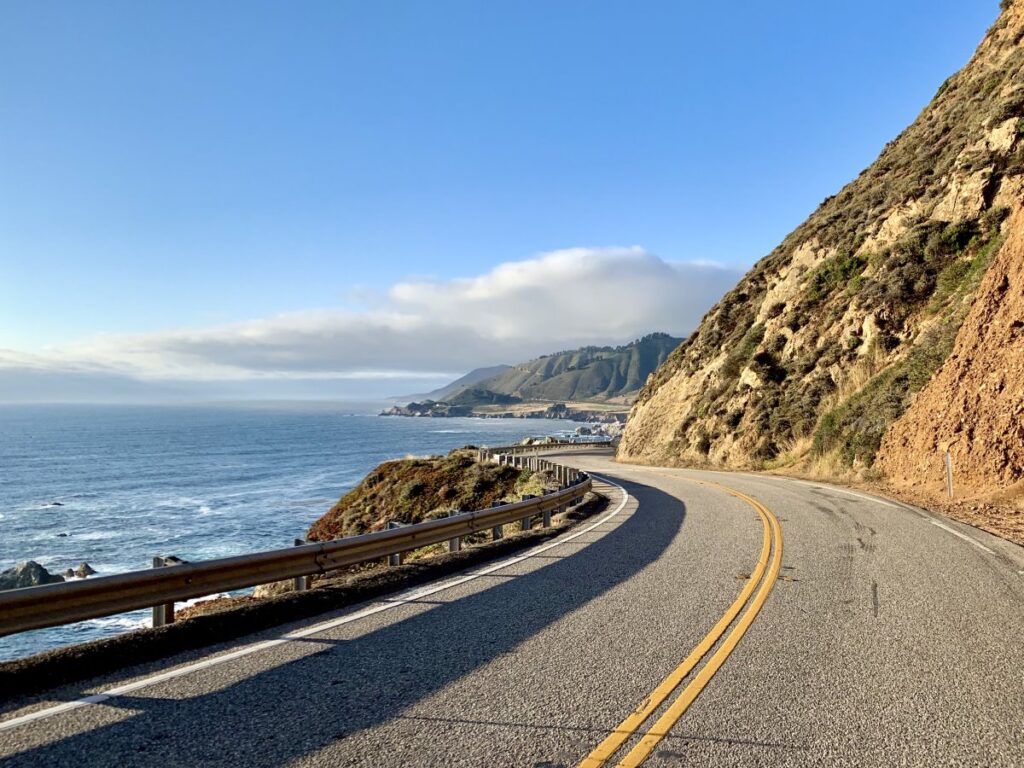
Scenic coastal highway along the California coastline

Is California Worth It for Wheelchair Users?

California offers wheelchair users an unusually varied mix of cities, coastline, major attractions and natural landscapes. The strongest experiences are not necessarily those advertised simply as “accessible”, but those where transport, terrain and facilities have been considered together. Distances are large, gradients matter and accessibility can change from one location to the next, but with realistic preparation California can offer a remarkably varied trip without limiting the itinerary to conventional accessible attractions.

For more ideas, explore our Wheelchair Accessible Travel guides, including France by Wheelchair, Wheelchair Accessible Italy and Wheelchair Accessible Israel.

Related posts

Wheelchair user boarding an accessible black cab in London

The Accessible UK

Plan wheelchair travel across the UK with guidance on transport, attractions and historic places. From London and the rail network to countryside visits, this guide covers accessibility resources, Changing Places toilets and practical steps that can make a trip easier to organise.

Read More »
Wheelchair user entering the Knights’ Halls in Akko via an accessible ramp

Holy Land: Accessible Travel Guide

Israel offers many accessible travel options, although conditions vary between destinations. Modern transport can be relatively straightforward, while historic areas require more planning. This guide looks at Jerusalem, Tel Aviv and beyond, including transport and attractions.

Read More »

Accessible France by Wheelchair

Historic towns and older attractions can make wheelchair travel in France challenging. This guide looks at accessible transport, railway assistance, accommodation and major sights, with practical advice on accessibility and what to consider before your journey.

Read More »

Wheelchair Accessible Italy

Italy can be rewarding to explore by wheelchair, although historic streets, steps and older buildings can create challenges. This guide looks at accessible transport, railway assistance and major attractions, with practical information for planning visits to destinations such as Rome and Milan.

Read More »
Scroll to Top