Joie de Vivre Without Barriers: A Wheelchair User’s Guide to Accessible France

Wheelchair user exploring accessible France in Bordeaux

France can be wonderfully rewarding to explore by wheelchair, but accessibility varies considerably from one place to another. Modern transport hubs and major museums may be impressively adapted, while a medieval street, château or small-town hotel can present an entirely different reality.

That contrast does not make France a destination to avoid. It simply makes preparation more important.

From accessible museums in Paris and seaside promenades on the Mediterranean to adapted train travel between major cities, there are plenty of ways to build a comfortable itinerary. The key is knowing which parts of the journey need checking before you arrive – and where a little flexibility can make all the difference.

Planning Your Accessible France Trip

One of the best starting points is France’s official Tourisme & Handicap label. More than 4,000 tourism providers across the country carry the designation, covering accommodation, attractions and other tourism services. The system distinguishes between different accessibility needs rather than treating disability as a single category.

The label is useful, but it should not replace checking the details that matter to you personally. An “accessible room”, for example, may still have a bed at the wrong height, insufficient turning space or a bathroom layout that does not suit your needs.

Before booking accommodation, ask for specific measurements or recent photographs if necessary. Check the entrance as well as the room itself: a perfectly adapted bathroom is little help if the building has an unexpected step at the front door.

Historic centres deserve the same advance research. Cobblestones, steep streets and narrow pavements can sometimes be a bigger obstacle than the attraction you have travelled to see.

For more destination ideas and practical advice, explore our wheelchair-accessible travel guides.

Accessible Tours in France: Do You Need One?

You do not necessarily need an organised accessible tour to visit France. Paris and several major French cities can be explored independently if accommodation and transport are planned carefully.

A specialist operator becomes more useful when an itinerary involves multiple transfers, rural areas, adapted vehicles or attractions where accessibility is complicated. This can also be worthwhile for travellers who need specific equipment or want hotel rooms and routes checked before arrival.

The important distinction is between convenience and necessity. An accessible tour can remove much of the logistical work, but independent travel remains a realistic option for many wheelchair users.

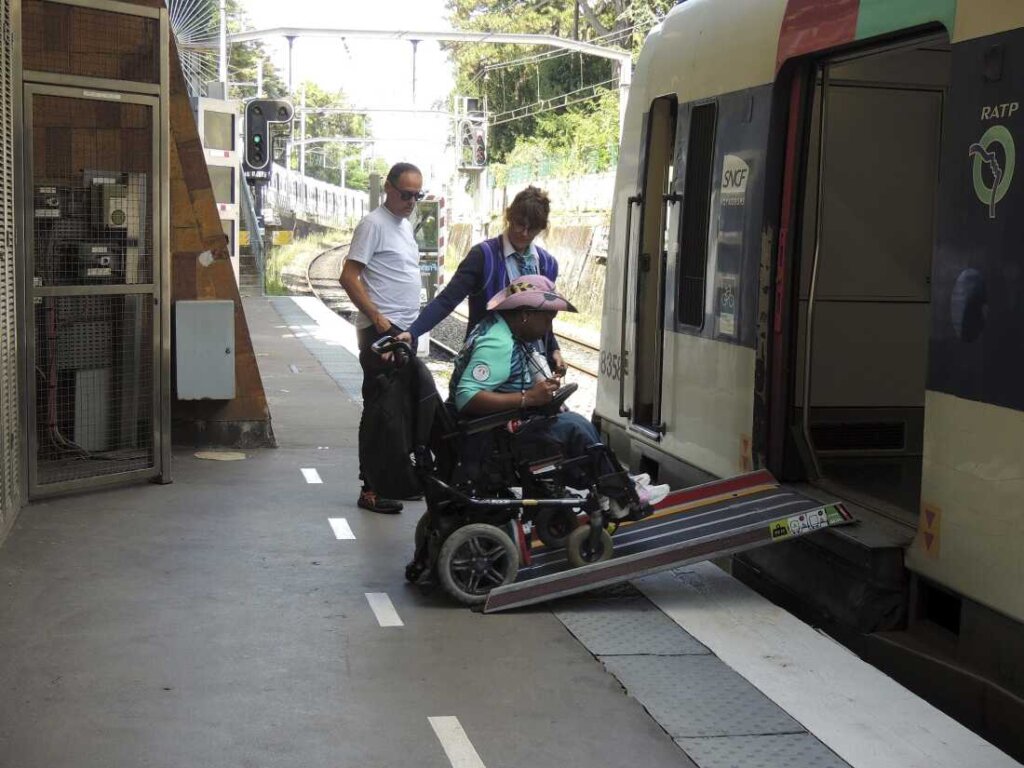
Wheelchair user boarding an accessible SNCF train with a ramp in France

Travelling Around France by Train

Rail can be one of the easiest ways to cover long distances without repeatedly transferring in and out of cars.

France’s TGV and Intercités services include facilities for passengers with reduced mobility, but assistance procedures should be checked when booking. The old Accès Plus information still found on some travel websites is no longer the main system for station assistance.

SNCF now uses Assist’enGare for assistance with boarding, moving through the station and leaving the train. Arranging assistance in advance is particularly sensible when a ramp, lift or staff support is required.

When planning a multi-city itinerary, do not look only at whether the train itself is accessible. Check the departure and arrival stations too. A journey is only as practical as its least accessible connection.

Flying to France with a Wheelchair

Passengers with reduced mobility are entitled to assistance at EU airports, including help through the terminal and during boarding. Airlines should be informed in advance about the assistance required, particularly when travelling with a powered wheelchair or other mobility equipment.

For electric wheelchairs, provide the airline with the battery type, dimensions and weight when requested. Do not assume that every airline handles mobility equipment in exactly the same way.

On arrival, another question becomes equally important: how will you get from the airport to your accommodation?

In Paris, Metro Line 14 provides an accessible connection between Orly Airport and the city. Charles de Gaulle is served by wheelchair-accessible RER B stations. Not every airport transport option is suitable for wheelchair users, so checking the actual route before travelling matters.

Smaller airports can sometimes simplify the airport experience, but onward accessible transport needs just as much attention. Our guide to secondary airports looks at when choosing a smaller airport can make sense.

Getting Around Paris by Wheelchair

Paris presents one of the clearest examples of France’s accessibility contrasts.

The historic Metro remains difficult for wheelchair users. Despite improvements and newer accessible stations, Line 14 is currently the only Metro line that is accessible from one terminus to the other, with 21 accessible stations. Extensions of other lines have added accessible stations, but that does not make the entire lines wheelchair accessible.

Fortunately, the Metro is not the only option.

Paris bus lines are accessible, and the urban tram network is another useful option. RER services can also make travelling across the city and wider region easier, although assistance requirements should still be checked for the specific journey.

For planning individual journeys, the Île-de-France Mobilités accessible journey planner is particularly valuable because it can provide accessibility information for each stage of a route. Check the route shortly before setting out. An accessible station with an out-of-service lift may suddenly require a completely different journey.

Accessible Attractions in Paris

Paris’s street network may require planning, but several of its headline attractions have made substantial accessibility adaptations.


Louvre Museum

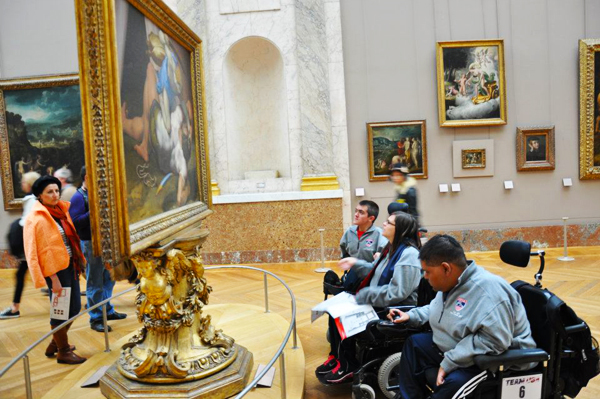
The Louvre provides step-free routes through its collections, lifts between levels, accessible toilets and wheelchairs that can be borrowed free of charge. Staff assistance is also available.

The size of the museum is arguably as important as its physical accessibility. Trying to cover the Louvre in one visit is tiring for almost anyone, so choosing a few galleries in advance can make the experience far more enjoyable.


Eiffel Tower

Wheelchair users can reach the first and second floors by lift, giving access to the views that make the Eiffel Tower one of Paris’s essential experiences.

The summit, however, is not accessible to wheelchair users because of evacuation and safety constraints.

That distinction is worth knowing before buying tickets: “Eiffel Tower accessible” does not mean that every visitor can reach every level.

Wheelchair users viewing artworks inside the Louvre Museum in Paris

 Musée d’Orsay

The Musée d’Orsay is one of the easier major Paris museums to consider. Its exhibition spaces and visitor services are accessible to people with reduced mobility, with lifts, ramps, automatic doors and adapted toilets available.

For anyone interested in Impressionism, it combines a major collection with considerably less logistical uncertainty than many historic attractions.

Arc de Triomphe

The Arc de Triomphe requires a little more planning.

The normal underground pedestrian passage is not wheelchair accessible. Visitors with reduced mobility instead use a designated vehicle drop-off approach.

A lift normally provides access towards the museum and panoramic terrace, but lift availability should be checked on the official website shortly before visiting. Temporary maintenance can substantially change what is accessible.


Versailles: Accessible, but Distances Matter

The Palace of Versailles is a good example of why accessibility cannot be reduced to a simple yes-or-no label.

Accessible routes and lifts make the areas of the palace open to visitors possible to explore by wheelchair. The greater challenge can be the scale of the estate. Reaching the Trianon Estate from the main palace, for example, involves a considerable distance through the gardens and park.

Fortunately, you do not have to cover all of it under your own power.

The little train travels between several key points in the estate, including the Grand Trianon and Petit Trianon. Wheelchair users can use the service with assistance from the driver, and the train can accommodate a limited number of wheelchairs.

Another useful option is Versailles’ small electric vehicles, similar to golf carts. Some are specially equipped to carry wheelchair users, making them particularly useful for exploring the extensive gardens and park or reaching the Trianon Estate without covering the entire distance manually.

These options make Versailles considerably more manageable, but it is still worth deciding which parts of the estate matter most to you before setting out. Availability and operating conditions can change, so check the current information when planning your visit.

In other words, Versailles requires planning for distance as much as architecture.

Beyond Paris: Where to Consider Going

France becomes much more varied once you leave the capital, and choosing the right destination. It can have a greater impact on accessibility than choosing individual attractions.


The French Riviera

Nice can be a particularly attractive base for wheelchair travellers because its long seafront provides a very different environment from France’s medieval centres.

The region also makes it possible to combine city sightseeing with coastal scenery without building an itinerary entirely around historic monuments.

The older quarters of Riviera towns are another matter. Narrow streets, gradients and uneven surfaces mean that a destination can be accessible overall while individual neighbourhoods remain difficult.

Normandy

Normandy can work well for travellers interested in history, coastal scenery and the D-Day sites, but it is also a region where transport planning becomes more important.

Distances between sights can make an adapted vehicle or organised excursion useful, particularly outside the larger towns. Historic centres and coastal locations should be checked individually rather than assuming one accessibility standard across the region.

Loire Valley

The Loire Valley requires more selective planning.

Its châteaux were built centuries before modern accessibility standards, and adaptation varies substantially from one property to another. Do not assume that because the grounds or ground floor are accessible, the entire château will be.

At Château de Chambord, for example, wheelchair users can access the ground floor, reception areas, adapted facilities and French gardens, but the upper floors of the château are not wheelchair accessible.

For the Loire, choosing the right châteaux is therefore more useful than trying to build an itinerary around the most famous names alone.

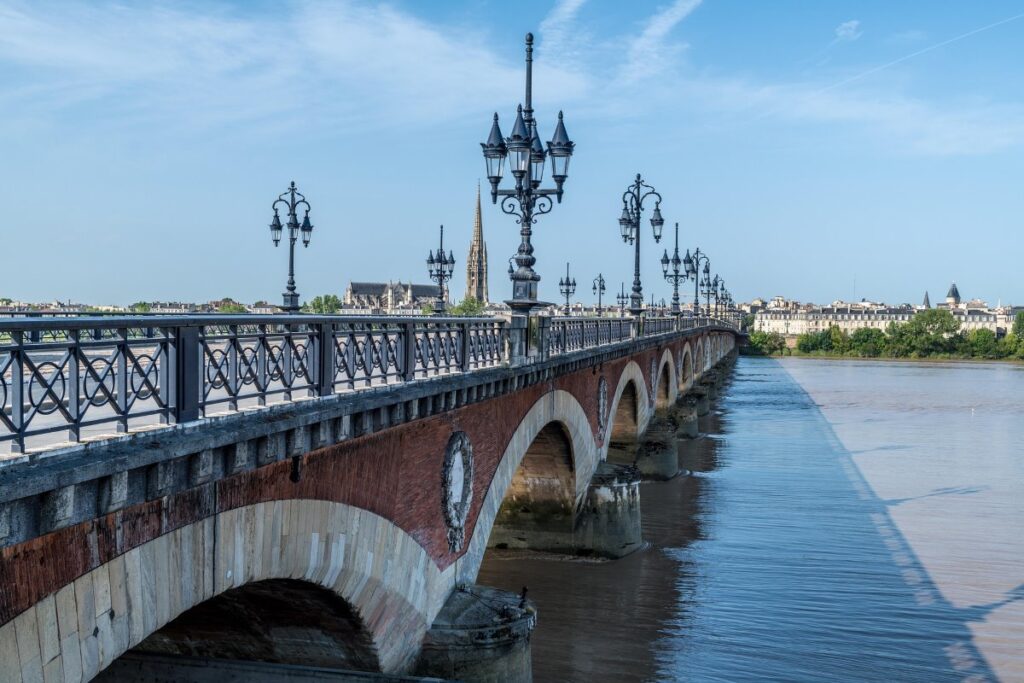
Historic stone bridge over the Garonne River in Bordeaux, France

Bordeaux and Southwestern France

Bordeaux is worth considering for travellers who want a French city experience beyond Paris. Its combination of city attractions, riverfront spaces and regional connections makes it an interesting alternative to an itinerary focused entirely on the capital.

Southwestern France also gives us a useful reminder that accessible travel in the country is not limited to Paris.

If your route takes you towards Toulouse, our Airbus factory tour guide also explains an important accessibility limitation to know before planning a visit.

Sometimes a carefully chosen regional itinerary can be easier to manage than trying to fit every famous French attraction into one trip.

What to Check Before You Book

Rather than relying on the word accessible, check the parts of the journey that could actually stop you from using a place: entrance steps, door width, bathroom layout, lift dimensions, gradients and the route between public transport and the entrance.

For historic towns, Street View and satellite imagery can be surprisingly useful for spotting steep approaches, cobbled streets or an entrance that is less straightforward than the hotel’s photographs suggest.

And always recheck critical infrastructure shortly before travelling. Lifts break, construction changes routes and accessibility arrangements at historic monuments can change temporarily.


Is France a Good Destination for Wheelchair Users?

Yes – but choosing the right itinerary matters more than trying to make every famous French destination fit.

France combines some genuinely good accessibility with infrastructure that can still be frustrating. Modern trains, accessible buses and trams, major museums and newer transport systems make many journeys straightforward. Historic Metro stations, old town centres, château staircases and uneven streets provide the counterbalance.

The best approach is not to eliminate every possible obstacle. It is to identify the few obstacles that could disrupt your trip and solve those before you leave home.

Do that, and France offers far more than an accessible version of a conventional holiday. Parisian art, Mediterranean promenades, Loire landscapes, regional food and centuries of history can all remain part of the experience.

The joie de vivre is still there. The route to it just deserves a little more planning.

Related posts

Wheelchair user boarding an accessible black cab in London

The Accessible UK

Plan wheelchair travel across the UK with guidance on transport, attractions and historic places. From London and the rail network to countryside visits, this guide covers accessibility resources, Changing Places toilets and practical steps that can make a trip easier to organise.

Read More »
Wheelchair user entering the Knights’ Halls in Akko via an accessible ramp

Holy Land: Accessible Travel Guide

Israel offers many accessible travel options, although conditions vary between destinations. Modern transport can be relatively straightforward, while historic areas require more planning. This guide looks at Jerusalem, Tel Aviv and beyond, including transport and attractions.

Read More »

California on Wheels

Travel through California by wheelchair, from San Francisco and Los Angeles to San Diego and Yosemite. This guide looks at accessible transport, accommodation, attractions and terrain, with planning advice to help you assess each destination before setting out.

Read More »

Wheelchair Accessible Italy

Italy can be rewarding to explore by wheelchair, although historic streets, steps and older buildings can create challenges. This guide looks at accessible transport, railway assistance and major attractions, with practical information for planning visits to destinations such as Rome and Milan.

Read More »
Scroll to Top