
Wheelchair Accessible Israel: A Practical Travel Guide

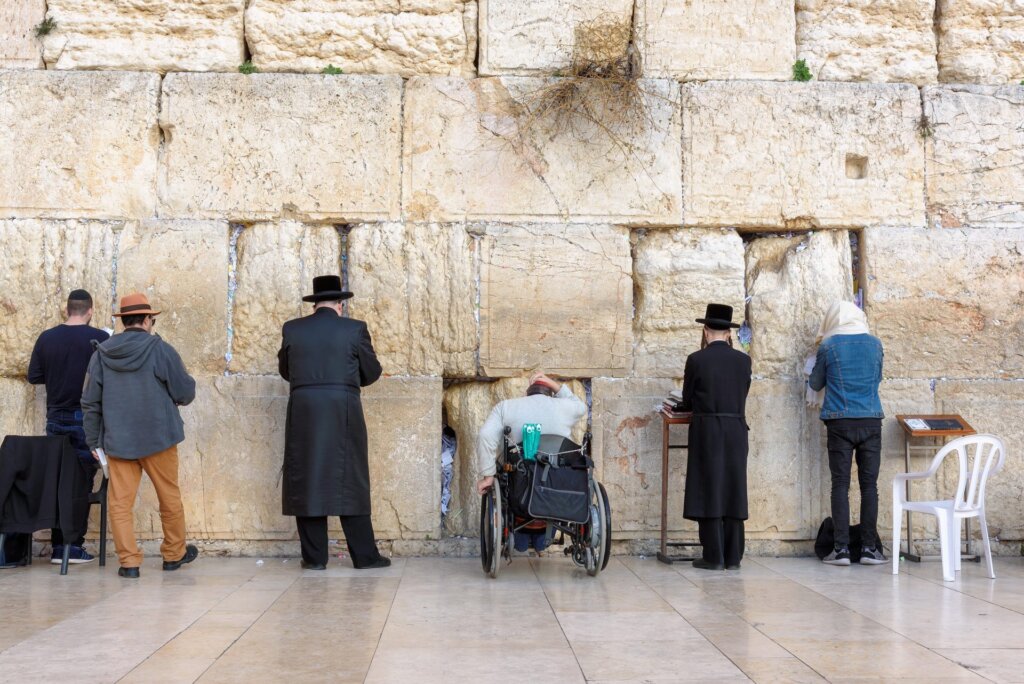
Wheelchair user praying at the Western Wall in Jerusalem

Travelling around Israel with a wheelchair can be easier than its ancient cities and varied terrain might suggest, but accessibility differs considerably between destinations. Modern transport systems, newer buildings and many major attractions provide accessible facilities, while historic streets, archaeological sites and steep terrain can still present significant challenges.

This guide looks at those differences from a practical perspective. We cover transport, major destinations, historic sites and useful resources, with particular attention to where wheelchair users may encounter difficulties and what is worth checking before travelling.

Accessibility can change and individual requirements vary, so arrangements should always be confirmed directly with transport operators and attractions when step-free access or other specific facilities are essential.

For more destination ideas and general travel information, explore our Israel travel guide.

Planning an Accessible Trip to Israel

Planning ahead is particularly important when travelling around Israel with limited mobility. Accessibility requirements apply to many public buildings, services and outdoor public spaces, but the actual conditions visitors encounter can still vary considerably – especially in historic areas and older buildings.

Two organizations can be particularly useful when preparing an accessible trip:

Access Israel: The organization maintains an accessible travel guide covering subjects including public transport, accessible attractions, hotels, beaches, equipment rental and other practical services. It is a useful starting point for checking accessibility before visiting a particular place.

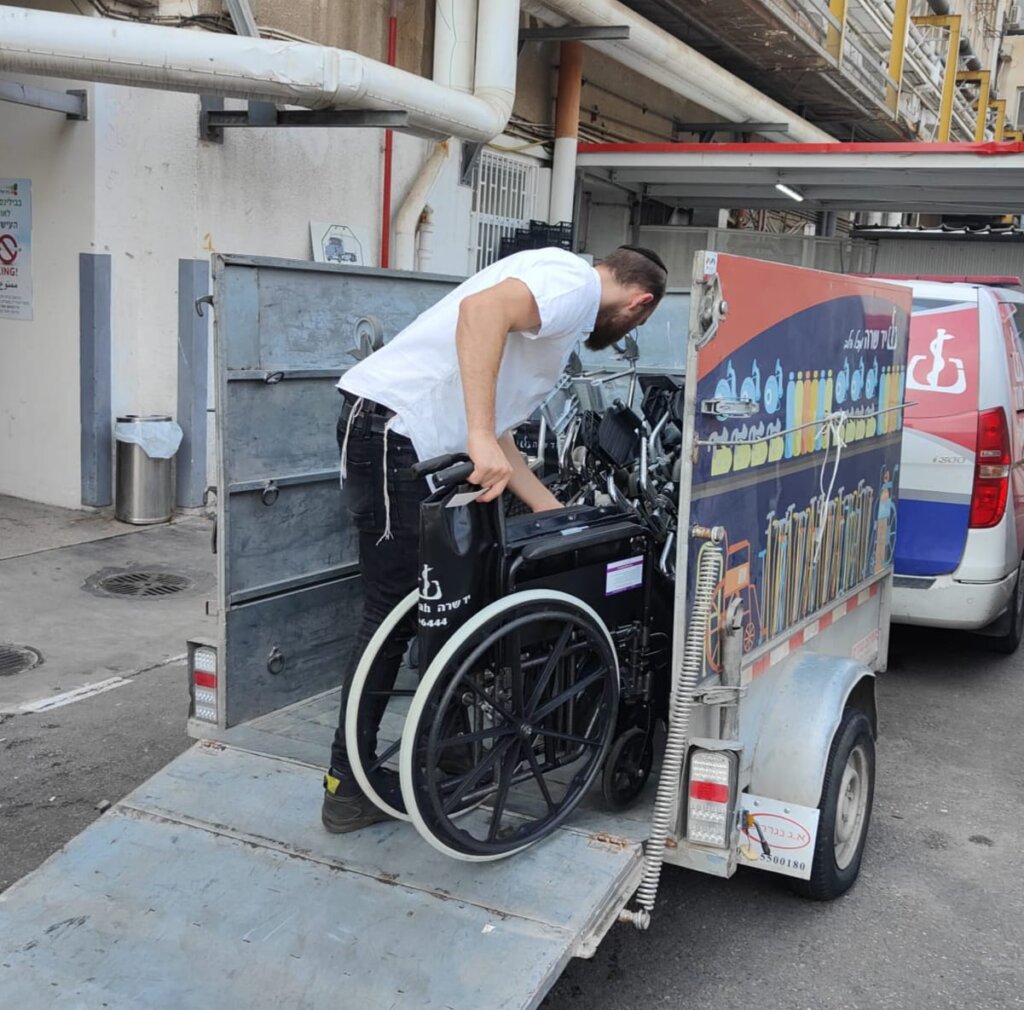
Yad Sarah: Visitors who need mobility or medical equipment during their stay can arrange loans of wheelchairs and other equipment through Yad Sarah. Its tourist services can also assist with adapted transportation, including airport transfers, and in some cases equipment can be delivered to a hotel or residence. Deposits, fees and advance notice vary depending on the service.

Because individual accessibility needs differ, it is still worth confirming the specific features you require directly with your accommodation, attraction or transport provider before travelling.

Wheelchair being loaded onto an adapted mobility equipment trailer in Israel

Transport: Getting Around Israel

Ben Gurion Airport provides assistance services for passengers with reduced mobility. Travelers who require assistance should notify their airline in advance; at the airport, ground-handling staff can provide support through check-in, security, passport control and boarding.

Israel Railways connects Ben Gurion Airport with major destinations including Tel Aviv, Jerusalem and Haifa. Accessible facilities and assistance are available for passengers with disabilities, although travelers who require help boarding or leaving a train should check the current arrangements with Israel Railways before travelling.

Tel Aviv: Much of central Tel Aviv is relatively flat, and accessible public transport includes city buses and the Dankal Red Line light rail. Nevertheless, pavement conditions, construction and individual bus stops can affect a wheelchair journey, so route planning is still worthwhile.

Jerusalem: The city’s steep terrain makes wheelchair travel more challenging, but the Jerusalem Light Rail provides an important accessible transport option through the city. Historic areas, particularly within the Old City, require more careful planning.

Buses: Israel’s urban public transport accessibility regulations require accessible buses and adapted facilities, although conditions at individual stops and routes can vary.

Taxis and private transport: Wheelchair-accessible vehicles are available, but travelers who need a ramp or lift-equipped vehicle should arrange one in advance rather than relying on finding one at a taxi rank.

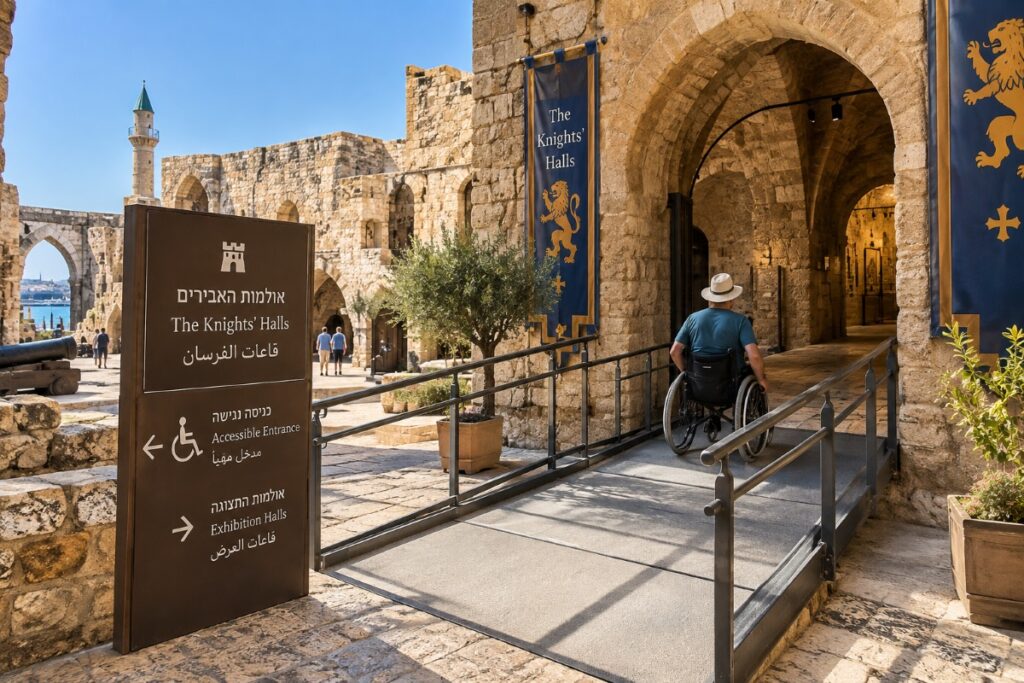
Wheelchair user entering the Knights’ Halls in Akko via an accessible ramp

Northern Israel: Accessible Places to Visit

Northern Israel combines historic cities, religious sites and natural landscapes, but accessibility varies considerably between attractions. Some major visitor sites have adapted routes and facilities, while historic architecture, steep terrain and uneven surfaces can still limit access. Checking the exact route before visiting is particularly important here.

Old Akko (Acre): Several of Akko’s major historic attractions have accessibility adaptations. The Knights’ Halls are wheelchair accessible except for the Escape Tunnel and Prisoners Hall. Accessible parking, ramps, lifts and toilets are also available at selected sites in the Old City. Because conditions differ between attractions, the Old Akko visitor centre recommends contacting staff in advance to plan an appropriate accessible route.

Haifa and the Bahá’í Gardens: Haifa’s steep terrain requires some planning, and the entire terraced Bahá’í Gardens cannot be explored by wheelchair. However, the Gardens provide a specially adapted accessible route with paved surfaces and views towards the Shrine of the Báb and the upper terraces. Accessible tours can also be arranged in advance. The standard Upper Terraces Tour includes 750 stairs and is not suitable for visitors with walking difficulties, so wheelchair users should use the designated accessible visiting options instead.

Tiberias and the Sea of Galilee: Tiberias can be a practical base for exploring the Sea of Galilee, but accessibility around the lake varies by location. Rather than assuming that the entire lakeshore is wheelchair accessible, check the facilities at the particular beach, nature reserve or attraction you plan to visit.

Capernaum (Kfar Nahum): The historic site on the northwestern shore of the Sea of Galilee provides accessibility adaptations that allow wheelchair users to explore significant parts of the visitor area. Accessible facilities include adapted routes and visitor infrastructure, making Capernaum one of the more practical archaeological and religious sites to consider around the lake.

Jerusalem: Exploring the City by Wheelchair

Jerusalem requires more planning than many modern cities because of its hills, historic streets and ancient buildings. At the same time, accessibility improvements have made several of the city’s major attractions considerably easier to visit. Wheelchair users should still plan individual routes rather than assume that the entire Old City is step-free.

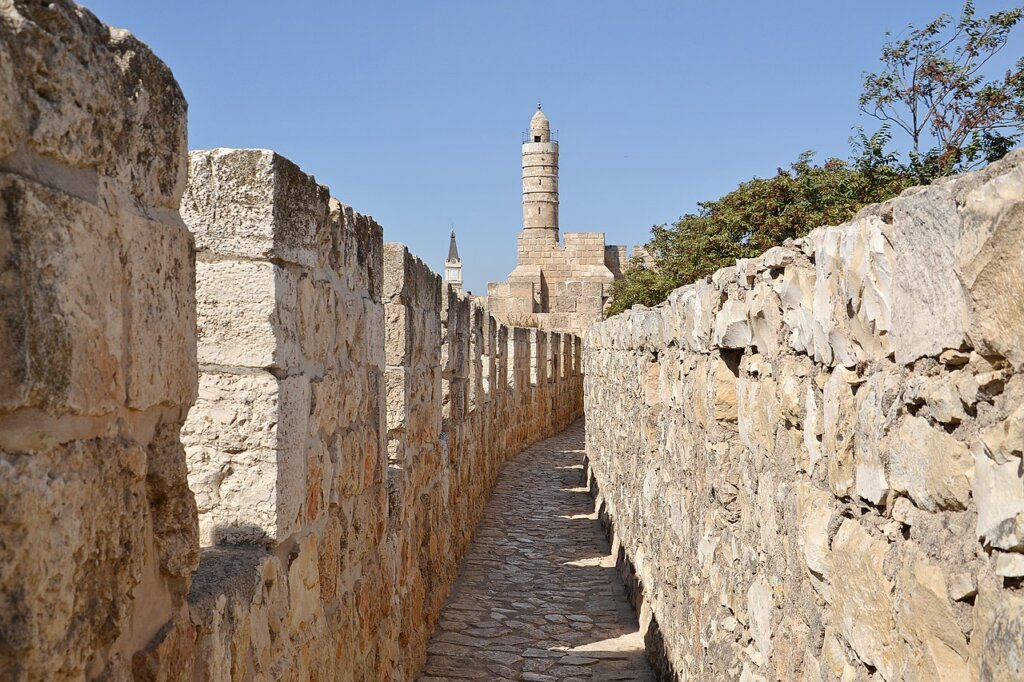
Narrow stone-paved path through the historic Old City of Jerusalem

Jerusalem Old City: Accessible routes have been developed through parts of the Old City, but steep slopes, uneven surfaces, steps and narrow passages remain in some areas. Check the route to individual attractions before setting out.

Western Wall: The Western Wall Plaza can be reached by wheelchair, making it one of the Old City’s major historic and religious sites that can be included in an accessible itinerary.

Tower of David: The renovated museum beside Jaffa Gate has made extensive accessibility improvements. Its exhibition galleries are accessible, with elevators, wheelchair lifts, ramps and wide passageways. Some historic areas remain physically inaccessible, including the observation point at the top of Phasael Tower, for which the museum provides a 360-degree virtual alternative.

Museums and memorial sites: Major attractions outside the Old City, including the Israel Museum and Yad Vashem, provide accessibility facilities for visitors with limited mobility. For Yad Vashem, visitors can also specify accessibility requirements when arranging a visit.

Mahane Yehuda Market: The market can be included in an accessible Jerusalem itinerary, but it is a busy working market rather than a controlled attraction. Crowds and surrounding streets can make movement more difficult, so quieter visiting times may be preferable for wheelchair users.

Tel Aviv: Beaches, Culture and Accessible City Travel

Tel Aviv is generally easier to navigate by wheelchair than Jerusalem, thanks to its relatively flat terrain and modern urban infrastructure. Accessibility can still vary between individual streets, businesses and attractions, so specific destinations are worth checking in advance.

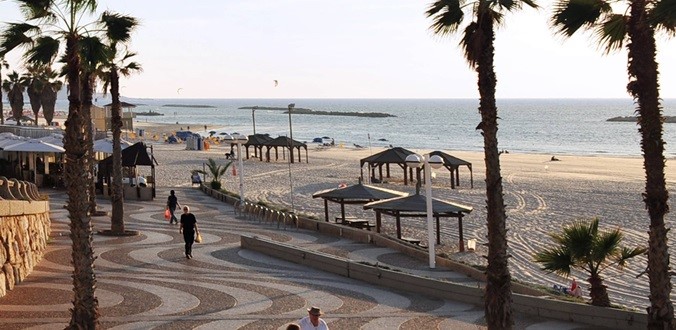
Tel Aviv beachfront promenade with a wide paved walkway beside the Mediterranean

Beaches and the promenade: Tel Aviv has made accessibility improvements across its municipal beaches, including adapted routes, shaded areas and equipment to help visitors reach the water. Hilton Beach is particularly well equipped, with accessible toilets, showers, shaded areas and access towards the shoreline. Beach conditions and available facilities can change, so check the specific beach before visiting.

Tel Aviv Museum of Art: The museum provides extensive accessibility facilities, including accessible entrances and routes, adapted toilets and wheelchairs that visitors can borrow free of charge during their visit.

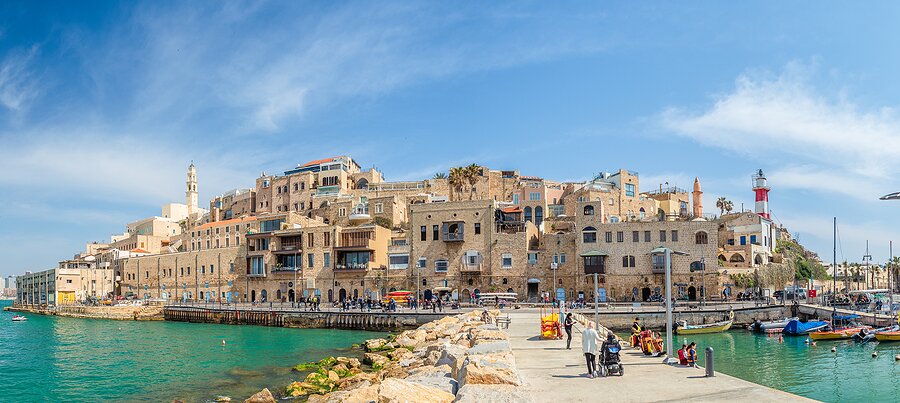
Markets and Jaffa: Carmel Market, Jaffa and other busy historic or commercial areas are worth approaching more cautiously. Even where the main route is step-free, crowds, narrow passages, uneven paving and individual shop entrances can affect wheelchair access. Rather than treating an entire district as accessible, plan around the particular places you want to visit.

Southern Israel: Accessible Desert Experiences

Southern Israel offers several opportunities to experience the desert landscape and historic sites by wheelchair, but accessibility in natural areas often extends to only part of a site. Conditions can also change following floods or other weather events, so checking current information before travelling is particularly important in this region.

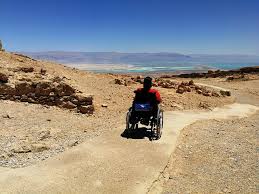
Wheelchair user following an accessible path at Masada overlooking the Dead Sea

Dead Sea and Ein Bokek: Ein Bokek is one of the more practical places for wheelchair users who want to experience the Dead Sea. The central beach is adapted for visitors with disabilities, with an accessible route towards the water and wheelchairs available from the lifeguard station. Several beaches in the Ein Bokek and Hamei Zohar hotel area also provide accessible facilities.

Masada National Park: The eastern entrance on the Dead Sea side provides the most practical option for wheelchair users. The visitor centre and public areas are accessible, and the cable car and bridge provide wheelchair access to the plateau. Adapted paths provide access to many of the major sites on the summit, although some areas involving stairs cannot be reached by wheelchair.

Ein Gedi Nature Reserve: An adapted wheelchair-accessible route runs through part of Wadi David. Access to natural areas can change following flood damage, so check the reserve’s current trail status before visiting. The nearby Ein Gedi Antiquities site provides another accessible option, including adapted access to the ancient synagogue.

Eilat: Several designated bathing beaches have accessibility adaptations. Depending on the beach, these include routes to the waterline, accessible toilets and showers, adapted shaded areas, and floating chairs available from lifeguard stations. Because facilities differ between beaches, check the specific beach rather than assuming that the entire coastline provides the same level of access.

Timna Park: North of Eilat, Timna Park provides accessible facilities at its Visitor Center and adapted access to several of its geological and archaeological attractions. Accessible parking is available near selected sites, while facilities at areas including Solomon’s Pillars, The Arches and the Lakeside Complex have also been adapted for visitors with disabilities. Not every part of the desert park is wheelchair accessible, so visitors should check the current accessibility information when planning their route.

Practical Tips for Accessible Travel in Israel

1. Plan Around Shabbat: Most public transport does not operate from Friday afternoon until Saturday evening, and services are also reduced or suspended during major Jewish holidays. If you rely on accessible public transport, check schedules carefully and arrange alternative transportation in advance when necessary.

2. Describe Your Accessibility Needs Clearly: When booking accommodation, transport or attractions, be specific about what you require rather than simply asking whether a place is “accessible.” For example, ask about step-free entrances, roll-in showers, doorway widths, lifts or space beside the bed. A short written description of your requirements can also be useful when travelling.

3. Expect Difficult Terrain in Historic Areas: Accessibility improvements have made parts of Jerusalem’s Old City easier to navigate, but stone paving, slopes, steps and narrow passages remain. Check the accessible route to the specific attraction you want to visit rather than assuming that the shortest route will also be wheelchair accessible.

4. Arrange Airport Assistance in Advance: Passengers who need mobility assistance at Ben Gurion Airport should notify their airline before travelling. Ground-handling staff can provide assistance through the airport process, including security screening, passport control and boarding. Wheelchair users who cannot pass through a metal detector can be screened manually.

Is Israel Wheelchair Accessible?

Israel can be a rewarding destination for wheelchair users, but the answer to whether it is accessible is not a simple yes or no. Modern transport systems, adapted beaches and many major museums and attractions provide good accessibility, while ancient cities, archaeological sites and natural landscapes can present very different challenges.

The key is to plan around specific places rather than entire destinations. Jerusalem’s Old City, Akko, Masada and the Sea of Galilee all demonstrate the same pattern: one route or part of an attraction may be accessible while another is not.

That does not mean these places should be avoided. It means checking the details before you travel, contacting attractions when necessary and allowing some flexibility in your itinerary. With that preparation, wheelchair users can experience a remarkable range of Israel’s historic sites, cities, beaches and landscapes.

Looking for more destination ideas? Explore our Wheelchair Accessible Travel guides for practical accessibility information from around the world.

Old Akko waterfront promenade beside the historic stone buildings

Related posts

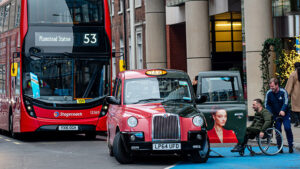
Wheelchair user boarding an accessible black cab in London

The Accessible UK

Plan wheelchair travel across the UK with guidance on transport, attractions and historic places. From London and the rail network to countryside visits, this guide covers accessibility resources, Changing Places toilets and practical steps that can make a trip easier to organise.

Read More »

Accessible France by Wheelchair

Historic towns and older attractions can make wheelchair travel in France challenging. This guide looks at accessible transport, railway assistance, accommodation and major sights, with practical advice on accessibility and what to consider before your journey.

Read More »

California on Wheels

Travel through California by wheelchair, from San Francisco and Los Angeles to San Diego and Yosemite. This guide looks at accessible transport, accommodation, attractions and terrain, with planning advice to help you assess each destination before setting out.

Read More »
Scroll to Top