
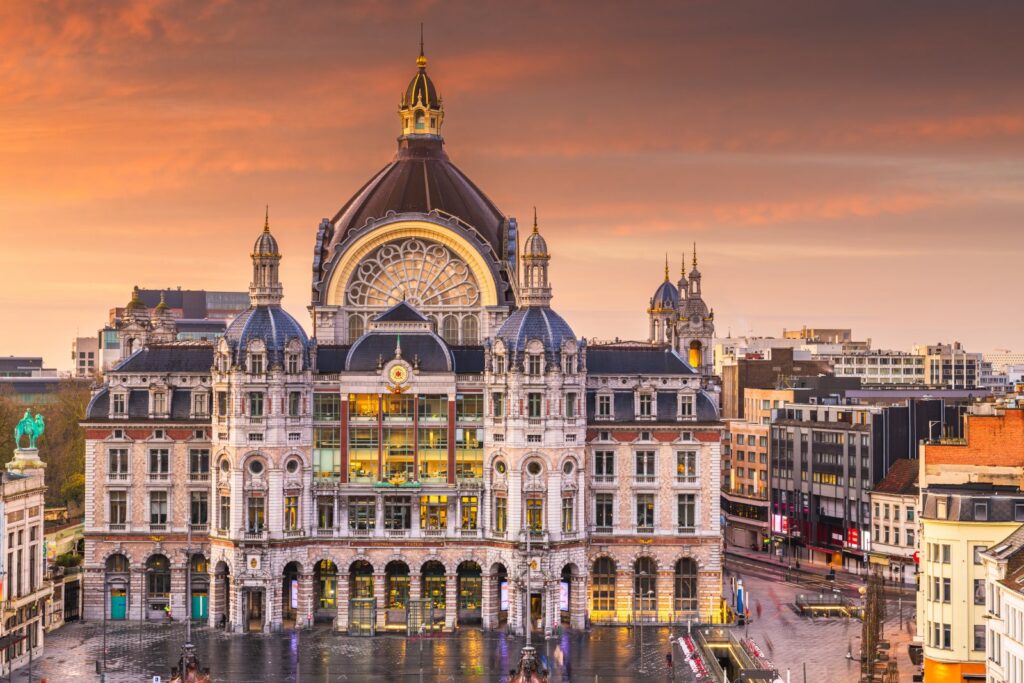

ALT: Antwerp Central Station at sunset, with its grand dome and illuminated historic façade overlooking the square.

Antwerp Central Station: Engineering Beneath the Grandeur

Antwerp Central Station rewards two different kinds of curiosity. Look up, and you find a monumental railway building with a grand dome, elaborate stonework and an immense iron-and-glass roof. Look down through its modern interior, and you discover trains arriving on levels stacked beneath one another.

The connection between those views makes Antwerpen-Centraal especially interesting. Its engineering story concerns how a historic terminus gained an underground route through the city while retaining the architecture that makes arriving here feel like an occasion. For travellers interested in how places work, the station deserves time beyond the few minutes needed to catch a train.

Antwerp Central Station and Its Railway Cathedral

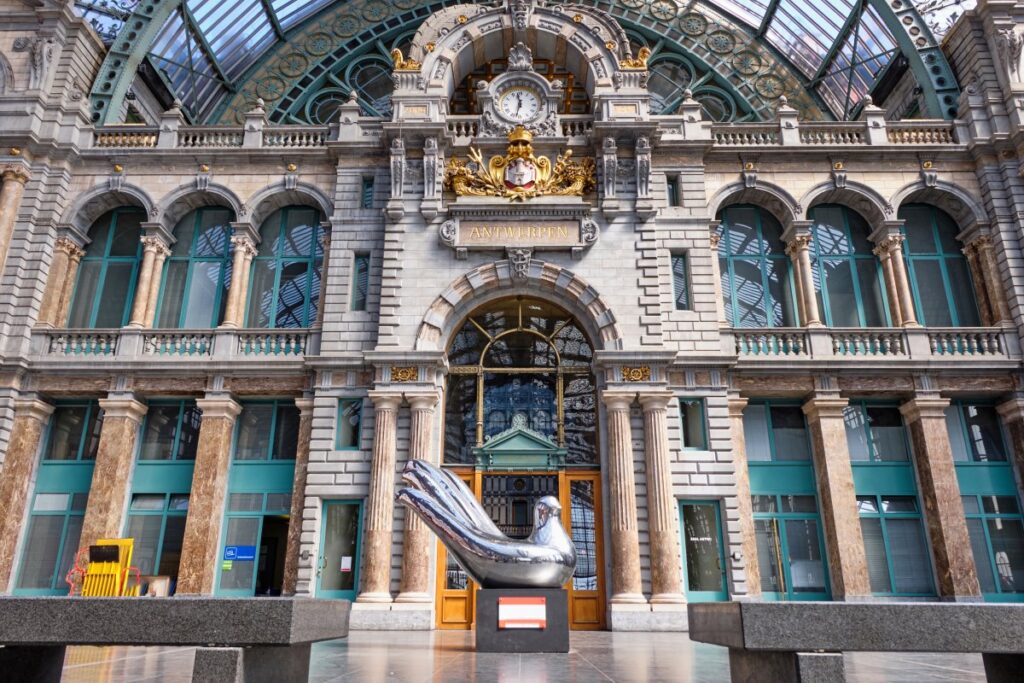
The historic passenger building opened in 1905 and was designed by Louis Delacenserie. Its monumental staircase, richly worked stone and domed hall explain the station’s familiar nickname: the Railway Cathedral. The architecture gives an everyday activity — entering a station — the sense of approaching an important civic building.

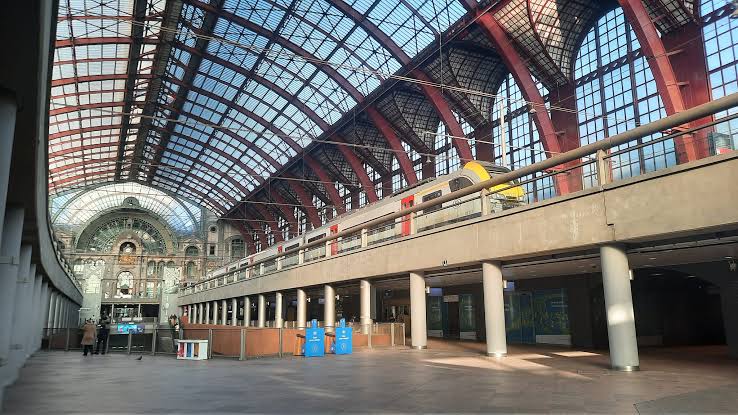
The train shed was a separate engineering achievement. Designed by Clément Van Bogaert, its iron-and-glass structure rises approximately 44 metres above the tracks. That height served a practical purpose in the steam age, helping smoke and steam disperse while the roof sheltered passengers. Train World’s illustrated station history explains the relationship between these two parts of the building.

Seen together, the entrance hall and train shed express different ambitions. One celebrates the city through architectural detail; the other creates a large, protected space for railway operations. Taking time to examine both makes the visit more rewarding than stopping for a photograph of the staircase alone.

Ornate interior façade of Antwerp Central Station, with a clock, gilded decorations and a bird sculpture beneath the glass roof.

Why a Beautiful Terminus Needed to Change

A terminus brings trains to the end of their route through a station. Services continuing beyond it must reverse direction or use another route. That arrangement can work well, but it becomes a constraint when a railway needs more capacity and faster connections across a city.

Antwerp’s modernisation addressed that problem by creating a north–south railway connection beneath the city. A tunnel approximately 3.8 kilometres long allowed trains to pass beneath Central Station and continue north. The modern station design, led by Jacques Voncke, also introduced an atrium bringing daylight towards the deepest platforms.

The significance is easy to understand even without a technical background. Engineers changed the station’s role within the railway network while preserving its historic public face. The building remained a destination in its own right, and the railway gained a route through it.

Building Beneath a Working Railway

Excavating beneath an existing station introduces a different set of challenges from building on an empty site. The structures above need support, the ground must be controlled, and construction has to coexist with the railway’s daily operations.

A technical account published by the International Tunnelling Association describes maintaining railway service during the Antwerp works, with a requirement to keep at least three platforms available. It also explains the use of reinforced-concrete diaphragm walls and the construction of two single-track tunnel tubes beneath the city.

These details give the project its real scale. The difficult part involved the sequence of work: creating space below, supporting what stood above and allowing passengers to continue travelling. The engineering achievement included the temporary arrangements that made the permanent transformation possible.

Train on an upper platform at Antwerp Central Station, beneath the arched steel and glass roof, with the concourse below.

Understanding the Station’s Stacked Levels

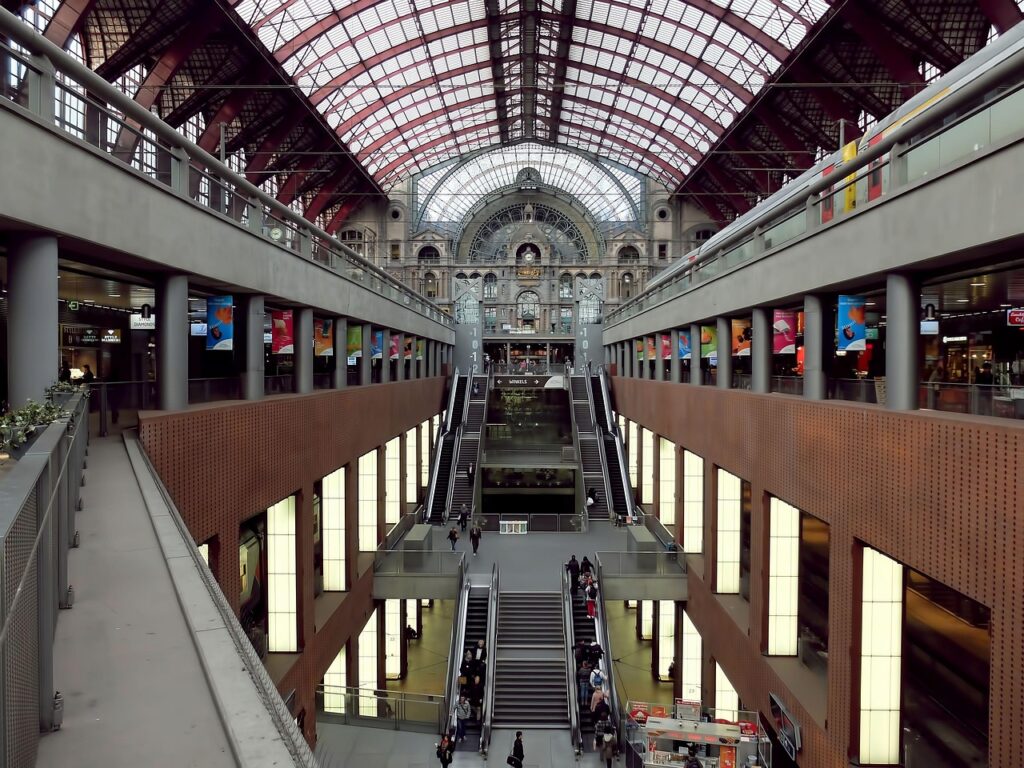
Antwerp Central’s railway tracks occupy three levels within a station arranged over four principal levels, including the passenger concourse. The distinction matters: four floors do not mean four separate layers of railway tracks.

The layout combines terminating tracks on the upper and intermediate railway levels with through tracks at the bottom. Altogether, the rebuilt station has 14 platform tracks. The lowest railway level connects to the tunnel, allowing trains to continue beneath Antwerp instead of ending their journey at the historic station.

For visitors, the open interior makes this arrangement unusually legible. From an appropriate public viewpoint, follow the escalators and bridges with your eyes and observe how the different floors relate to one another. What might sound complicated in a written description becomes easier to understand when you can see the station’s depth.

The Engineering Work Continues

The underground transformation was a major milestone, but a working station keeps evolving. Rails, fixings and track geometry need renewal even when the surrounding architecture remains familiar.

In a project completed in stages, with the final phase in spring 2026, contractor Swietelsky renewed 2.3 kilometres of track on the station’s upper railway level. Its account of the Antwerp Central track renewal describes replacing 16,000 fasteners, using three-dimensional surveying and bringing construction materials into the station by train.

That last detail is particularly revealing. Working above street level limited ordinary road deliveries, so the railway itself became the construction supply route. It is a useful reminder that the station’s engineering story continues in the careful maintenance that passengers rarely notice.

The station’s engineering also shapes its appearance after dark. In 2020, Antwerp decided to renew its architectural lighting, replacing ageing, energy-intensive floodlights. Designed by Susanna Antico Lighting Design Studio, the scheme uses more than 360 LED luminaires to reveal the façades, towers and domes, giving the station a distinctive presence in the evening cityscape.

Schréder’s project account explains how discreetly positioned fixtures and adjustable lighting levels balance architectural impact with energy efficiency. For visitors, an evening view from De Keyserlei or Koningin Astridplein adds another perspective on the railway cathedral.

Antwerp Central Station’s multilevel atrium, with escalators connecting the floors beneath the arched steel and glass roof.

What to Notice During a Visit

We would allow around 45–60 minutes for an unhurried architectural look, separate from any time needed to board a train. Begin with the historic entrance hall and staircase, then examine the train shed before exploring the public circulation areas around the modern atrium.

Try looking for relationships rather than collecting individual details. How does the ornamental hall lead towards the tracks? Where does daylight enter? How do passengers move between floors? These questions turn a beautiful building into an understandable piece of infrastructure.

For photographs, an interior view showing the stacked levels communicates the engineering story particularly well. A second image of the historic hall provides the architectural context. Keep circulation routes clear, respect any posted restrictions and remain within areas open to passengers and visitors.

The station also has a literary connection. In W. G. Sebald’s novel Austerlitz, the narrator first encounters the title character in Antwerp Central’s waiting hall. Their conversation explores architecture, history and the ideas expressed by monumental buildings. For readers, this adds another layer to a visit: the station becomes a setting for reflecting on memory and the passage of time.

Planning a Comfortable Visit

Use Antwerpen-Centraal when searching railway timetables. NS International’s station guide provides information for travellers arriving from the Netherlands. Check your actual service and departure platform rather than assuming that a particular train always uses the same level.

The station has lifts and escalators, but changing floors can still add distance and time to a journey. If stairs are difficult or you need help boarding, consult SNCB’s assistance information for travellers with reduced mobility before travelling. Assistance arrangements depend on the journey, train equipment and individual needs.

Antwerp Central makes an engaging first stop in the city because the arrival itself offers something to explore. For a wider itinerary, our Belgium travel guide connects this railway landmark with the country’s cities and cultural attractions. Here, a few extra minutes between trains can reveal how historic architecture continues to serve a changing railway.

Related posts

Channel Tunnel illustration showing Eurostar and LeShuttle trains beneath the English Channel, with Folkestone and Coquelles marked above.

London–Paris via the Channel Tunnel

Discover the engineering behind the Channel Tunnel, from its three-tunnel design to the exhibition in Coquelles and Samphire Hoe’s reclaimed coastline. Explore the story beneath the sea, meet its builders, and see how this connection transformed train travel between London and Paris.
Read More »
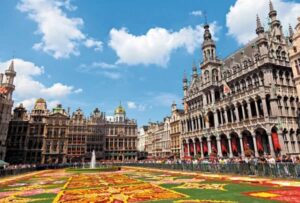
Colourful flower carpet in Brussels’ Grand Place, surrounded by ornate historic buildings

Belgium: Beyond the Postcard

Belgium brings together canal cities, chocolate traditions, wooded valleys and unexpected engineering heritage. From Brussels and Bruges to Antwerp and the Ardennes, our guide covers local flavours, train travel, accessibility and choosing a comfortable base.

Read More »

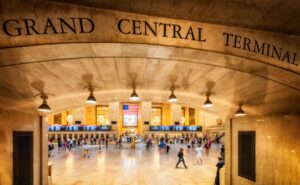
Grand Central Terminal: New York Icon

Grand Central Terminal combines a monumental public space with a working railway. Its electric tracks, two underground platform levels and hidden systems explain how the station keeps New York moving. Follow the engineering story, then look up at the Main Concourse ceiling and discover the details you can still see during a visit.

Read More »
Scroll to Top