
Grand Central Terminal: The Engineering Behind a New York Icon

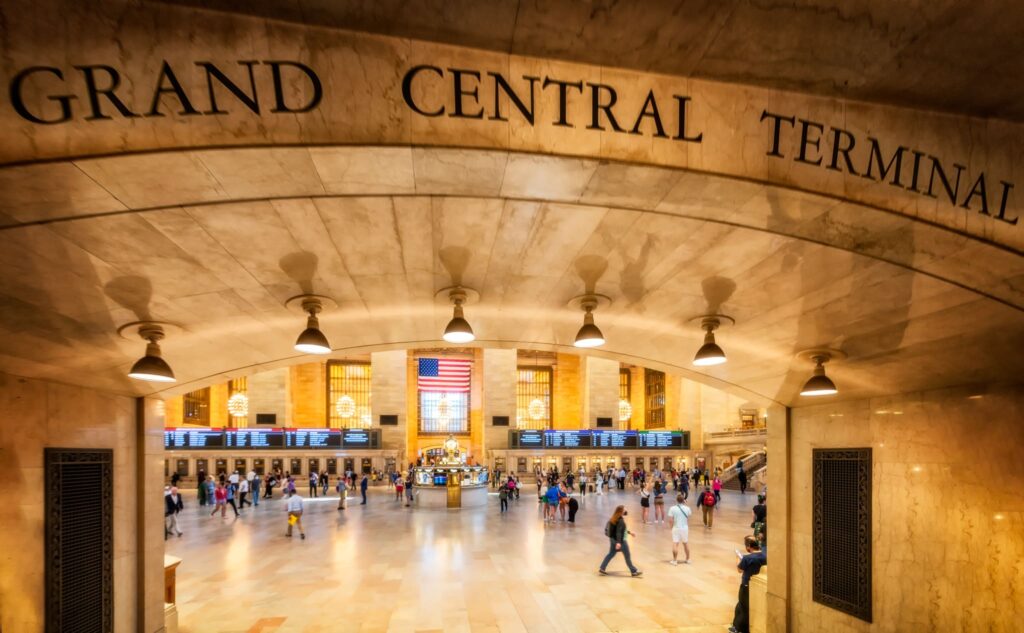
View through the Grand Central Terminal entrance arch into the Main Concourse, where travellers pass the central information booth

Grand Central Terminal is easy to admire as one of New York’s great architectural landmarks. Behind its Beaux-Arts façade and famous Main Concourse, however, lies an engineering achievement that is far less visible: a railway built beneath a growing city and kept in use for more than a century.

The terminal that opened in 1913 changed the relationship between trains and Midtown Manhattan. Its tracks disappeared below streets and buildings, while the great public rooms above them gave passengers a memorable entrance to the city. Grand Central remains a working transport hub, which makes its history something visitors can still experience rather than simply read about.

From Steam Trains to a City Above the Tracks

A deadly railway collision in 1902 exposed the dangers of steam operations in congested Manhattan and accelerated plans for electrification. Transforming the railway required new locomotives, power supplies and track infrastructure while trains still had to run. When the present Grand Central Terminal opened on February 2, 1913, more than 150,000 people visited on its first day.

Electric trains removed the smoke associated with steam locomotives and made a covered railway far more practical. Tracks that had once occupied valuable surface land could be placed beneath streets and buildings. The emerging Terminal City included hotels and offices built around this new arrangement, among them the Biltmore Hotel, Commodore Hotel and Graybar Building.

Grand Central did more than serve a growing Midtown. Its railway design helped create space for Midtown to grow. Outside the terminal, the busy streets reveal little of the infrastructure operating beneath them.

Grand Central is one of the places in our Engineering Landmarks collection where visitors can see how an ambitious technical solution reshaped a city.

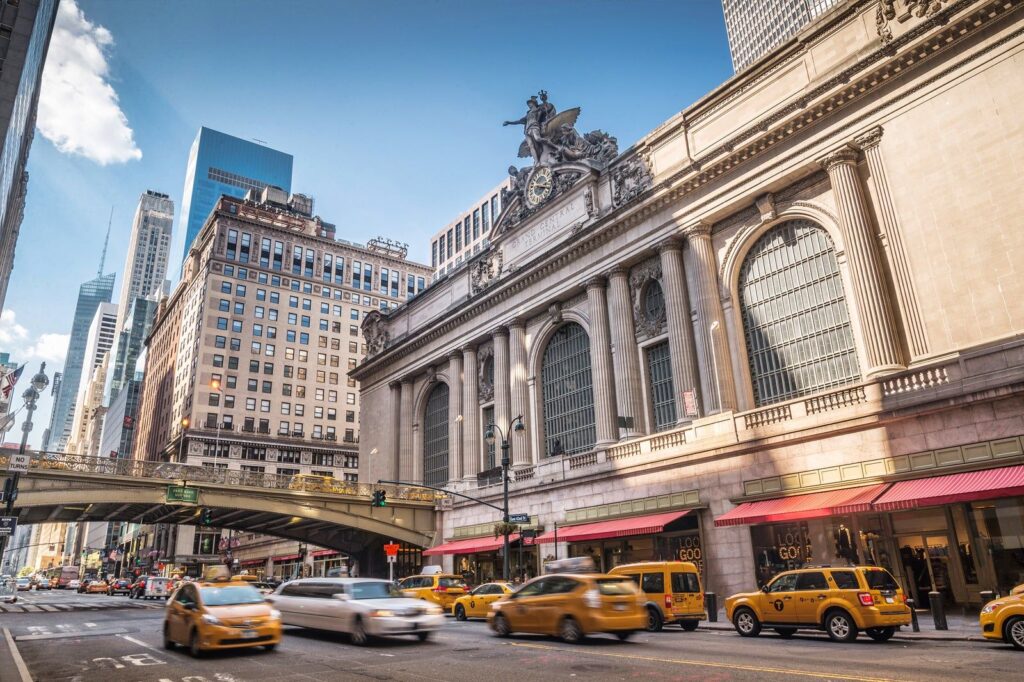
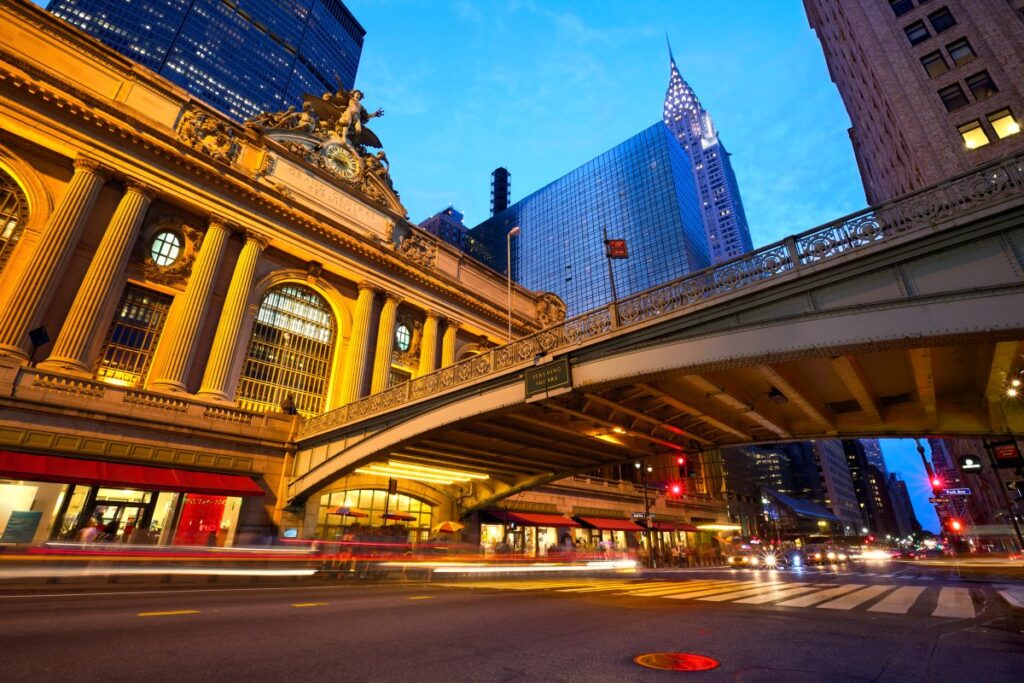
Grand Central Terminal’s façade and Park Avenue Viaduct, with yellow taxis passing below

The World’s Largest Platform Count, Hidden Underground

Grand Central holds a world record for the number of railway platforms: 44 platforms, served by 67 tracks, on two underground levels. The upper level has 41 tracks and the lower level 26.  It is difficult to reconcile that scale with what you see from the Main Concourse. Passengers disperse towards platforms on different levels, while streets and buildings continue above the trainshed. The famous room is only the most visible part of a much larger system. Keeping this vast system running also takes people: train crews, dispatchers, maintenance and cleaning teams, security staff and employees who help passengers find their way. Much of their work happens out of sight, just like the tracks beneath the Main Concourse.

Water presents another, less visible engineering challenge. North of the terminal, streets and sidewalks form the roof of the underground trainshed. As its century-old waterproofing deteriorated, water reached the steel structure below. The MTA is rebuilding the roof section by section, renewing the waterproofing beneath streets that most people cross without realising trains are directly below them. For more journeys shaped by railway engineering, explore our Steel Rails, Open Skies collection.

Power infrastructure was hidden below as well. An underground electrical substation known as M42 supplied electricity for the terminal and its railway tracks. Its secluded location later generated dramatic stories, including the claim that Nazi agents were sent specifically to destroy it during the Second World War. The FBI did thwart a German sabotage mission in 1942, but the available evidence does not establish M42 as one of its designated targets.

Grand Central’s underground story did not end with the original terminal. In 2023, Grand Central Madison opened deeper beneath the complex, bringing Long Island Rail Road trains directly to Manhattan’s East Side. The addition shows how a protected historic landmark can continue to expand as a working railway. Visitors can descend into the new station, where the scale of its construction becomes part of the journey.

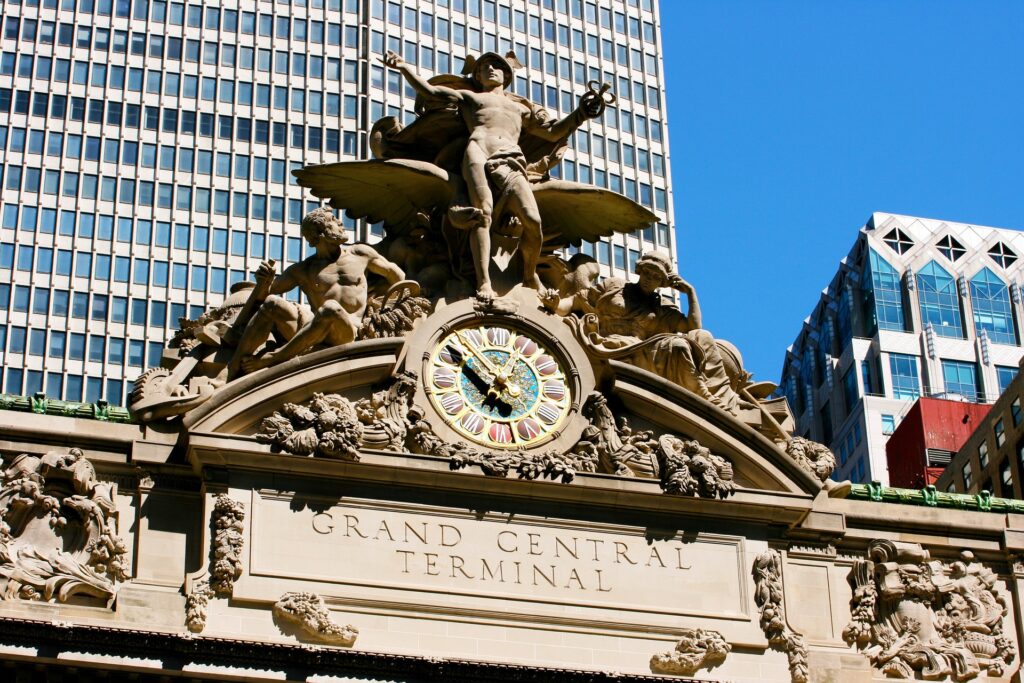
Sculptures surrounding the clock above the Grand Central Terminal entrance, with the building’s name carved below

Why Grand Central Survived

Grand Central’s preservation story begins partly with a loss elsewhere in Manhattan. The original Pennsylvania Station opened in 1910, three years before the present Grand Central Terminal. Demolition of Penn Station’s monumental above-ground building began in 1963; trains continued to use the underground station as Madison Square Garden and other development rose above it.

Public outrage helped strengthen New York’s preservation movement. The city established its Landmarks Preservation Commission in 1965, and Grand Central gained landmark protection in 1967. That protection soon faced a test when Penn Central pursued plans for an office tower above the terminal.

Jacqueline Kennedy Onassis became one of the most prominent supporters of the effort to save Grand Central. The dispute reached the United States Supreme Court, which upheld the city’s application of its landmarks law in 1978. New York had lost one great railway building and chose to protect another.

There is a striking tension in that history. The railway’s engineering had made development over its tracks possible, but the value of building above Grand Central also threatened the landmark. Its survival allowed the terminal to remain both a protected building and an active part of the transport network.

A Working City Within the City

Grand Central’s commercial materials cite more than 750,000 daily visitors. That is a visitor figure, not a count of railway passengers alone: people also come through the complex for the subway, shops, restaurants, work and sightseeing. Handling those movements is an engineering task in its own right. Platforms, passageways, street exits and connections to other services must distribute people through a building that also functions as a public destination. From this perspective, the Main Concourse is more than a magnificent room. It is the centre of a circulation system.

The COVID-19 pandemic briefly reversed its familiar rhythm. Metro-North ridership fell sharply, and normally crowded spaces became unusually quiet, yet trains still had to carry healthcare staff and other essential workers. Cleaning intensified. To help passengers find more room for distancing, Metro-North used data from the trains’ suspension systems to measure the load carried by each car and estimate how many people were aboard. TrainTime displayed the resulting seating estimates before trains arrived. A measurement made beneath each car became practical guidance for passengers.

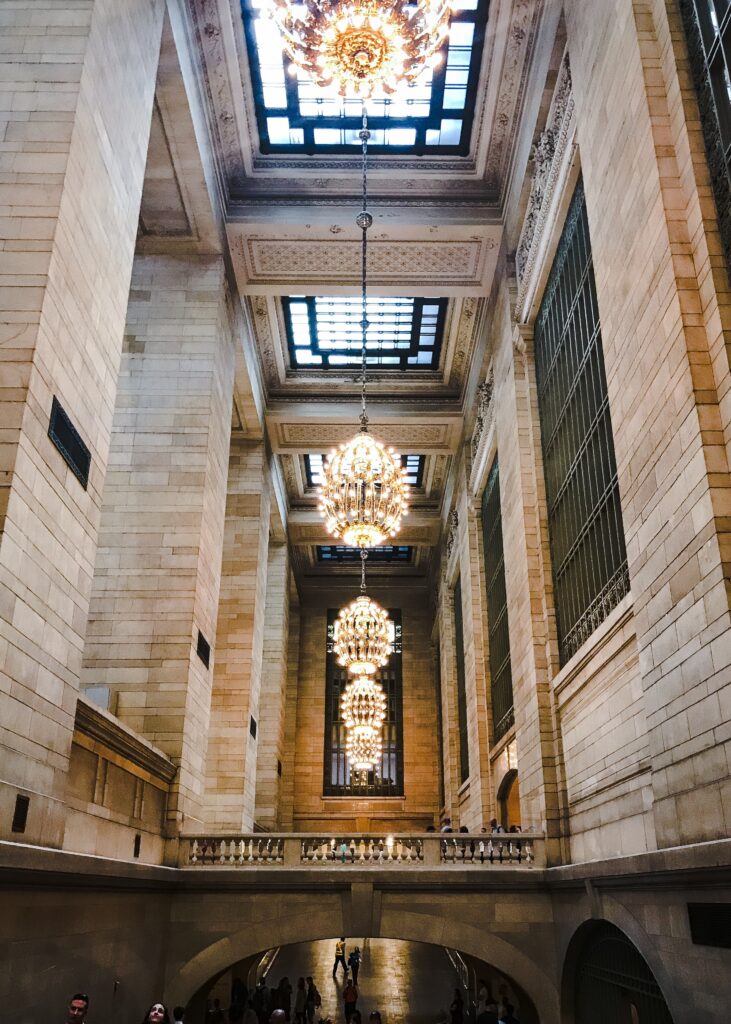
Chandeliers at Grand Central Terminal
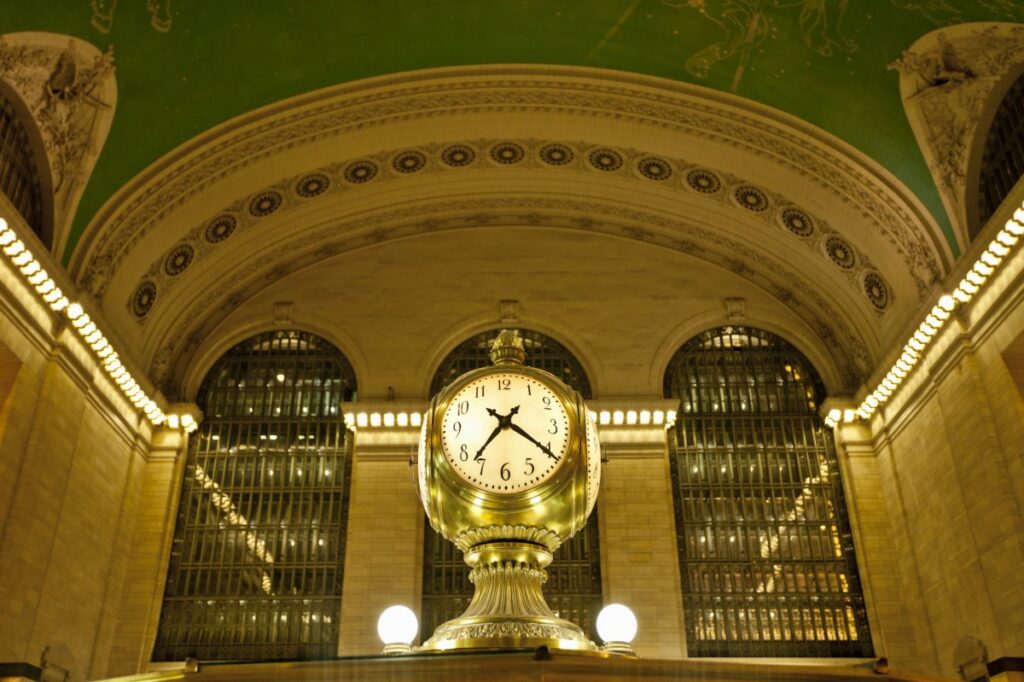
Clock above the information booth in Grand Central Terminal’s Main Concourse, with arched windows and the celestial ceiling behind it.

Details You Can See, Hear and Experience

Grand Central’s engineering is not confined to its tracks. Look up in the Main Concourse and you will see the celestial ceiling, with its constellations and illuminated stars. A small dark patch was deliberately left during its restoration to show how the surface had looked before cleaning. It is often described as a reminder of decades of indoor smoking, although accumulated grime had more than one possible source.

Look more closely at the light fixtures and you will notice exposed bulbs. Electric light was a conspicuous sign of modernity when the terminal was built. The Vanderbilt family’s New York Central Railroad financed the terminal and its electric railway, and the building did not hide that new technology. Acorns and oak leaves elsewhere in its decoration refer to the family’s motto: “From an acorn, a mighty oak shall grow.”

The lighting story has continued into the present. Some stars in the celestial ceiling now use LED illumination. Across New York’s subway system, the MTA has also been replacing older station lighting with LEDs, improving visibility while reducing energy use. Near the Oyster Bar, the tiled arches of the Whispering Gallery offer an entirely different experience. Two people standing in diagonally opposite corners can speak towards the wall and hear each other across the space. It is a memorable reminder that the terminal’s architecture can be heard as well as seen.

Grand Central has also acquired stories about places visitors cannot enter. The underground M42 electrical substation is part of its operational history, while Track 61 has long attracted stories linked to Franklin D. Roosevelt. Neither is a stop on the public guided tour. Tours promising Grand Central’s “secrets” may tell these stories, but visitors should not expect access to restricted railway infrastructure.

When the Terminal Becomes a Stage

A building designed around the movement of people has repeatedly attracted filmmakers and performance artists.

In 2008, more than 200 participants in Improv Everywhere’s Frozen Grand Central stood motionless in the Main Concourse for five minutes. Commuters continued around them, then paused to understand what was happening. In a place built for constant movement, stillness became the spectacle.

Film has used the same space in different ways. Cary Grant’s character passes through Grand Central in Alfred Hitchcock’s North by Northwest. In The Fisher King, the ordinary movement of commuters becomes a vast waltz across the Main Concourse. Engineers designed how people move through Grand Central; artists occasionally turn that movement into choreography.


Planning Your Visit

Grand Central Terminal stands at 89 East 42nd Street in Manhattan. Metro-North trains use the historic terminal, and subway lines 4, 5, 6, 7 and S connect at Grand Central–42nd Street. Give yourself time to look beyond the Main Concourse. Find the Whispering Gallery, study the ceiling and lighting, and step outside to consider how much of the railway lies beneath the surrounding streets. Grand Central Madison, the newer Long Island Rail Road terminal below the historic complex, offers a different experience; we explore its construction, long escalators and contemporary art in our separate Madison article.

The historic terminal has public elevators and ramps, Braille and large-print information, and assisted-listening systems at the Main Concourse information booth and ticket windows. Because the connecting transport systems were built at different times, travellers who rely on step-free routes should check the MTA’s current accessibility information before travelling.

For a guided introduction to the historic building, visitors can book the official Grand Central Terminal tour through its tour page. The published walking tour lasts approximately 90 minutes and covers public areas and architectural highlights.

Illuminated Grand Central Terminal beside the Park Avenue Viaduct at dusk, with the Chrysler Building in the background

Our Verdict

Grand Central Terminal is easy to remember for its celestial ceiling, famous clock and Beaux-Arts architecture. Spend longer here, though, and the achievement beneath those details becomes clearer: an electric railway built into the heart of Manhattan that still carries people through the city more than a century later.

That railway is also a public place used by enormous numbers of people every day. During our visit, the visible cameras and surveillance notices gave us a greater sense of security, even late in the evening. Feeling more at ease, we could linger in the Main Concourse and watch what makes Grand Central special: the constant movement of life through its monumental space.

Visit for the architecture, then stay long enough to discover the railway, the people and the engineering that keep it moving.

Related posts

Grand Central Madison concourse with curved arches, track signs and a mosaic artwork.

Grand Central Madison New York

Explore Grand Central Madison beneath Manhattan, from its deep platforms and long escalators to the engineering that made the station possible. Discover the contemporary mosaics and digital art that make the journey through New York’s newest rail terminal an experience in itself.

Read More »

The Hoover Dam

Discover Hoover Dam, one of America’s great engineering landmarks. Explore how engineers diverted the Colorado River, cooled millions of cubic yards of concrete and built a structure that still controls water and generates power today — while tours, exhibitions and viewpoints reveal the remarkable story behind its construction.

Read More »
Race car in front of crowded grandstands at Circuit of the Americas

Circuit of the Americas

Austin’s Circuit of the Americas is home to the United States Grand Prix, but race weekends are only part of its story. This guide covers COTA Tower, driving experiences, Bike Nights and other ways to visit, with practical advice for planning time at this Texas motorsport destination.

Read More »
Scroll to Top