Hoover Dam: Inside an American Engineering Landmark

Few structures demonstrate the scale and ambition of twentieth-century American engineering as clearly as Hoover Dam.

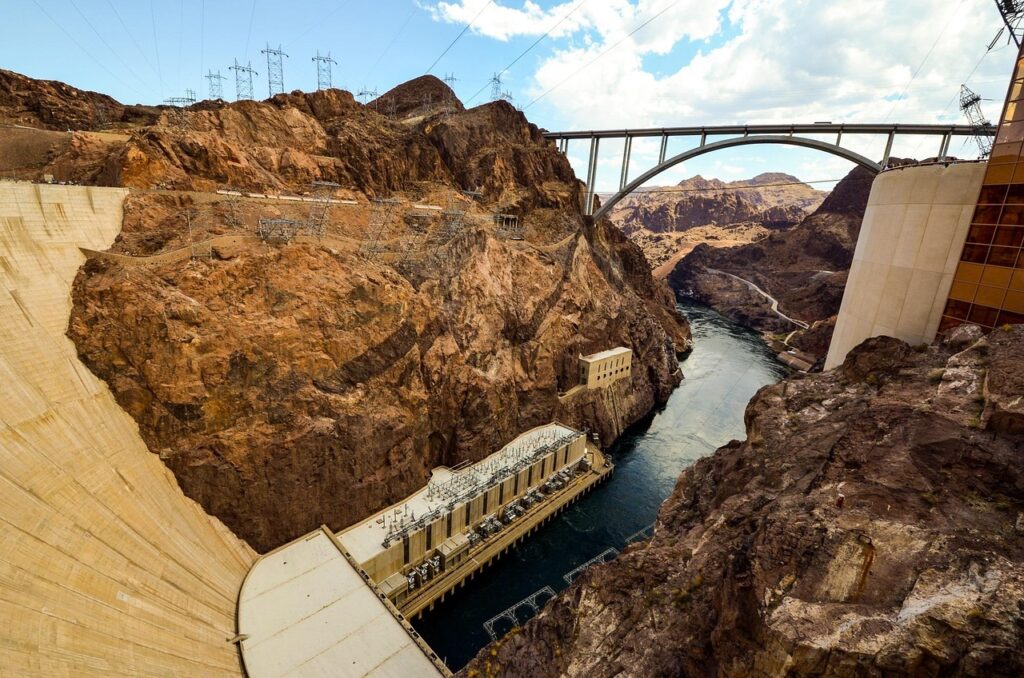
Rising from Black Canyon on the Colorado River between Nevada and Arizona, the enormous curved concrete wall seems almost inseparable from the surrounding rock. Yet everything about this landscape was transformed to make the dam possible. The river had to be diverted, canyon walls stripped back to solid rock, millions of cubic yards of concrete placed and cooled, and an entirely new community created for the people building it. More than nine decades later, Hoover Dam is still working.

What makes it particularly interesting for travelers, however, is that this is not an engineering landmark you can only admire from a distance. Visitor exhibits, guided tours, observation areas and the nearby Memorial Bridge allow you to explore the structure from several perspectives and understand something of the extraordinary construction story behind it.

That combination of engineering and visitor experience makes Hoover Dam a natural starting point for our Engineering Landmarks collection.

Building the Impossible

The idea of controlling the lower Colorado River developed long before construction began. Flooding threatened agricultural communities, while growing settlements across the Southwest needed a more dependable water supply. At the same time, the river represented an enormous potential source of hydroelectric power.

The Boulder Canyon Project Act of 1928 authorized the project that would eventually produce Hoover Dam.

Construction began in the early 1930s, during the Great Depression, when thousands of people were searching for work. More than 21,000 men would work on the project over the course of construction, with more than 5,000 employed at the site during peak periods. Before the dam itself could rise, engineers faced an obvious problem:


How do you build a massive concrete wall in the middle of a flowing river?

The answer was to move the Colorado temporarily out of the way. Four enormous diversion tunnels were excavated through the canyon walls. Once they were ready, temporary cofferdams helped channel the river through the tunnels, leaving the construction site between them sufficiently dry for work on the dam to proceed. The canyon presented another challenge. Loose and unstable rock had to be removed from the steep walls before the dam could be anchored securely to solid rock. Workers known as high scalers descended the canyon walls on ropes to drill, blast and clear the rock — one of the most dangerous jobs on the project.

Only then could the great concrete structure begin to take shape.

How Do You Cool a Mountain of Concrete?

Hoover Dam contains approximately 3.25 million cubic yards of concrete in the dam itself, with considerably more used across the wider dam and powerplant complex.

But engineers could not simply pour one enormous block of concrete into Black Canyon. Concrete generates heat as it cures. In a structure this massive, a single continuous pour would have retained heat for an extraordinarily long time, while uneven cooling could have produced damaging cracks. The solution was ingenious.

Instead of one monolithic pour, the dam was constructed from a series of interlocking concrete blocks. Pipes were embedded within the concrete and chilled water circulated through them to remove heat and accelerate cooling. Once individual sections had cooled sufficiently, the joints between them were grouted.

Concrete placement for the dam ran from June 1933 to May 1935.

The resulting structure rises 726.4 feet (221.4 metres) from its foundation and stretches 1,244 feet (379 metres) along its crest. At the time, it was the tallest dam in the world. President Franklin D. Roosevelt dedicated the project in September 1935, when it was known as Boulder Dam. The Hoover Dam name was officially restored by Congress in 1947.

More Than a Wall Across the Colorado

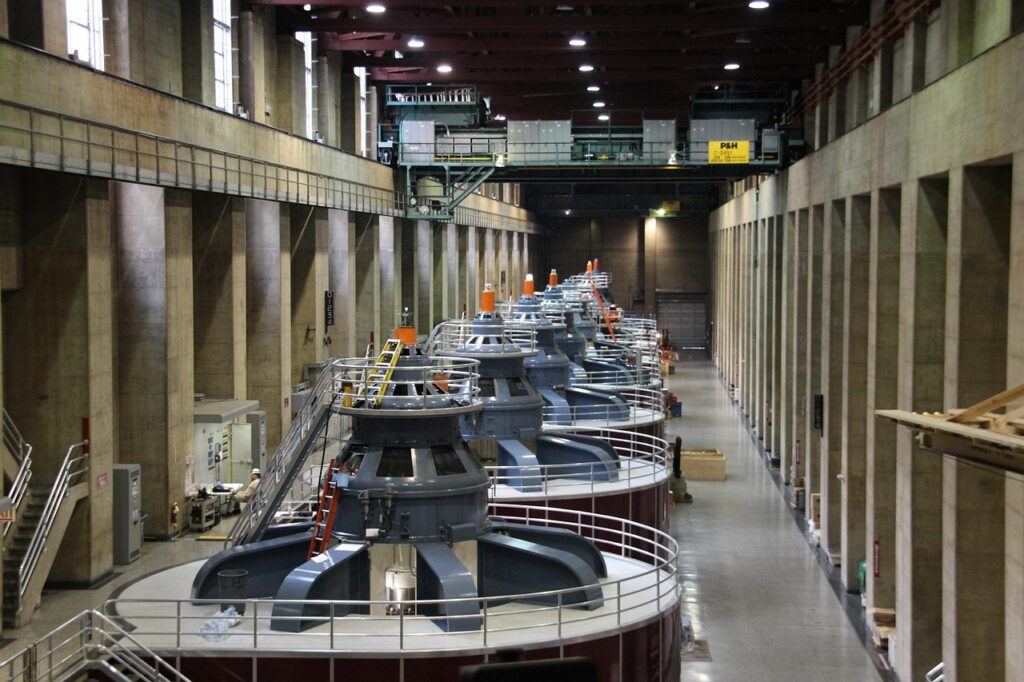
The scale of Hoover Dam makes it easy to concentrate on the concrete, but the dam was never built simply to create an enormous barrier. Its wider purpose included flood control, water storage and hydroelectric power generation. Behind the dam, the Colorado River formed Lake Mead. Water entering the powerplant passes through huge penstocks to turbines connected to generators before returning to the river downstream. The powerplant eventually developed 17 main generating units, and the facility remains an operating part of the region’s infrastructure. This is one reason visiting Hoover Dam is different from visiting an industrial monument whose original purpose has disappeared. The engineering you see is not simply historical.

The dam is still doing the job it was designed to do. Its construction also had far-reaching consequences for the development of the American Southwest, allowing greater control over Colorado River water and providing hydroelectric power to communities across the region. At the same time, the Colorado River is now at the center of increasingly complex questions about water availability, allocation and long-term demand. Seeing the dam today therefore provides not only a window into the engineering ambitions of the 1930s, but also a physical introduction to one of the most important water systems in the western United States.

Art Deco in the Desert

Hoover Dam was designed as infrastructure, but its creators also understood that a project of this scale would become a public monument. That is visible in its Art Deco details, from the intake towers and elevator structures to sculptural and decorative elements around the Nevada side of the dam.

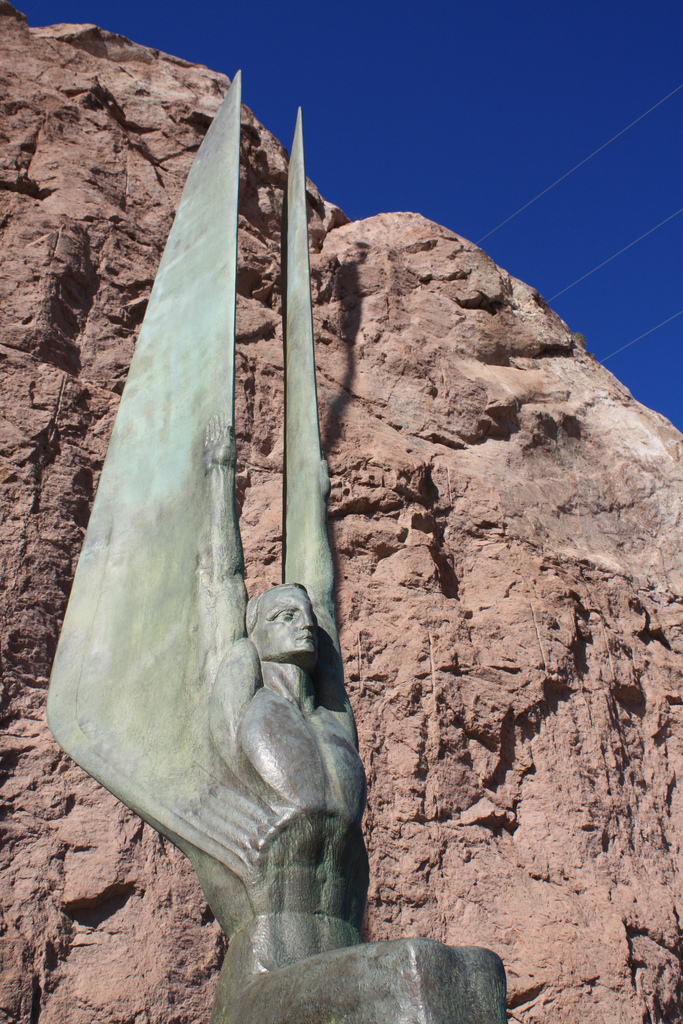
The most recognizable are Oskar J. W. Hansen’s Winged Figures of the Republic.

Two monumental bronze figures, each around 30 feet high, flank a 142-foot flagpole. They stand on polished black diorite bases, surrounded by a terrazzo floor incorporating a celestial map showing the position of the stars at the time of the dam’s dedication on September 30, 1935. Hansen also created other artistic elements around the site, including work commemorating those who died during the construction project. These details change the character of the place. Hoover Dam was not treated merely as a machine for controlling water and producing electricity. Architecture, sculpture and engineering were deliberately combined to create something monumental.

Take time to look at these features rather than walking directly from the parking area to the viewpoints. They are part of the story of how Americans in the 1930s wanted a project of this scale to be understood.

The View from the Memorial Bridge

To understand Hoover Dam from the outside, cross to the Mike O’Callaghan–Pat Tillman Memorial Bridge. Opened in 2010 as part of the Hoover Dam Bypass, the bridge carries highway traffic high above the Colorado River downstream from the dam. A pedestrian walkway provides one of the clearest views of Hoover Dam and Black Canyon. The perspective is particularly useful after visiting the dam itself. From the crest, you experience the enormous concrete structure beneath your feet. From the bridge, you can finally step back far enough to see how the dam fits into the canyon — and appreciate the scale of both the natural landscape and the engineering intervention. The bridge is therefore more than a convenient photography stop. It helps make the geography of the entire project understandable.


Accessibility at Hoover Dam

Much of the Hoover Dam visitor experience is accessible, although the combination of outdoor areas, slopes, distances and tour environments means it is worth planning ahead. The Visitor Center and observation areas provide accessible facilities, and elevators are an important part of the visitor experience. Wheelchairs are also available to rent at the parking garage.

Visitors who require sign-language interpretation for guided tours can request it in advance. Tour scripts are also available on request.

Not every visitor will need or want to take a guided tour. The dam crest, visitor facilities and viewpoints can still provide a substantial experience, while the Memorial Bridge offers another perspective on the site.

Because accessibility arrangements and individual tour requirements can change, check the official visitor information before arriving, particularly when travelling with a wheelchair or other mobility limitations.

For broader advice on planning accessible trips, our Wheelchair Accessible travel guides cover destinations and attractions where practical mobility information can make a significant difference.

Going Inside Hoover Dam

One of the strongest reasons Hoover Dam belongs among our Engineering Landmarks is that visitors can explore how the structure actually works. The Bureau of Reclamation operates the visitor facilities and tours. Depending on the experience selected and current availability, visitors can explore exhibits about the dam or descend into parts of the complex on guided tours.

The Visitor Center provides an overview of the Colorado River system, the dam’s construction and its operation, while the observation areas reveal the relationship between the dam, Lake Mead, Black Canyon and the bypass bridge.

The visitor experience became considerably stronger in 2025, when the Hoover Dam Exhibit Center reopened following a major renovation. Its newer interactive displays place greater emphasis on the people who built the dam as well as its engineering, using visual, tactile and audio elements to tell their stories. Guided experiences can take visitors deeper into the structure and powerplant, making the enormous scale of machinery, tunnels and internal spaces much easier to understand than it appears from the crest.

Tour arrangements and access can change, so check the Bureau of Reclamation’s current Hoover Dam tours and visitor information before travelling rather than relying on old ticket prices or tour schedules.

Planning Your Visit from Las Vegas

Hoover Dam lies roughly 30 miles southeast of Las Vegas, making it an easy addition to a stay in the city. Driving time varies with traffic, but the journey generally takes less than an hour. Boulder City is nearby and can also be incorporated into the trip. The community itself is closely connected with the Hoover Dam story: it was developed to house workers and their families during construction. The desert climate deserves more attention than the relatively short distance from Las Vegas might suggest. A significant part of a Hoover Dam visit can be outdoors, and summer temperatures can become extreme. Comfortable walking shoes, sun protection and water are important, particularly if you intend to walk across the dam and visit the Memorial Bridge.

Security screening applies to the Visitor Center and tour areas. Personal belongings are inspected, and certain items are prohibited, so checking the current rules before setting out can prevent unnecessary problems.

Allow enough time to experience Hoover Dam from more than one angle. The Visitor Center explains the project, an interior tour can reveal the machinery and spaces hidden inside it, the crest conveys the physical scale, and the Memorial Bridge provides the view that puts everything together. Hoover Dam is impressive from a photograph.

It becomes far more interesting when you understand the problems its engineers had to solve — and can stand inside, above and beside the structure they created.

Related posts

Grand Central Madison concourse with curved arches, track signs and a mosaic artwork.

Grand Central Madison New York

Explore Grand Central Madison beneath Manhattan, from its deep platforms and long escalators to the engineering that made the station possible. Discover the contemporary mosaics and digital art that make the journey through New York’s newest rail terminal an experience in itself.


Read More »

Grand Central Terminal: New York Icon

Grand Central Terminal combines a monumental public space with a working railway. Its electric tracks, two underground platform levels and hidden systems explain how the station keeps New York moving. Follow the engineering story, then look up at the Main Concourse ceiling and discover the details you can still see during a visit.

Read More »
Race car in front of crowded grandstands at Circuit of the Americas

Circuit of the Americas

Austin’s Circuit of the Americas is home to the United States Grand Prix, but race weekends are only part of its story. This guide covers COTA Tower, driving experiences, Bike Nights and other ways to visit, with practical advice for planning time at this Texas motorsport destination.

Read More »

Alaska Cruise

Alaska cruises range from Inside Passage round trips to one-way Gulf of Alaska voyages. Compare ports, glaciers and inland connections, with practical advice on seasons, wildlife viewing and choosing excursions that suit your pace.

Read More »

The Ultimate American Road Trip

Route 66 is America’s legendary road trip, stretching from Chicago to California through eight states. Discover historic towns, desert landscapes, classic roadside landmarks and surviving sections of the Mother Road, plus practical tips for planning the journey and experiencing the Route 66 centennial in 2026.

Read More »
Grand Canyon Railway steam locomotive in Arizona

Grand Canyon Railway

Grand Canyon Railway offers a historic train journey from Williams, Arizona, to the South Rim. Travel through changing Northern Arizona landscapes, discover the railway’s Wild West entertainment and vintage carriages, and arrive at the historic Grand Canyon Depot just a short walk from the canyon rim.

Read More »
Scroll to Top