

House of Guinness Filming Locations You Can Visit

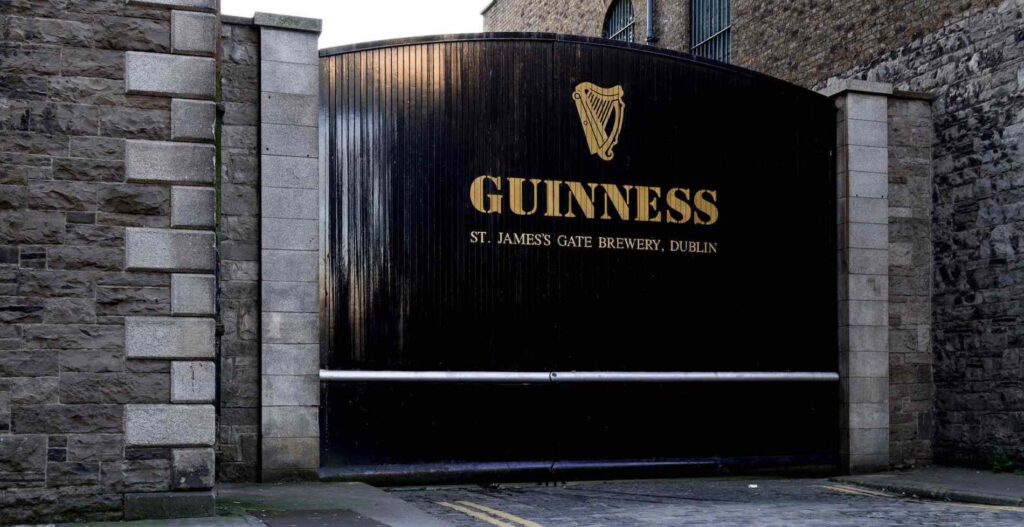
Guinness St James’s Gate Brewery entrance in Dublin

Netflix’s House of Guinness is rooted in 19th-century Dublin, beginning after the death of Sir Benjamin Guinness in 1868. Yet much of the city seen on screen was created elsewhere. With relatively little of modern Dublin resembling its Victorian appearance, the production turned largely to North West England and North Wales, using historic streets, industrial docks and grand estates to recreate the period.

For travellers, the result is more than a collection of recognisable sets. Many of these locations have substantial histories of their own, from Liverpool’s maritime heritage to the industrial and colonial story behind a Welsh castle.

Liverpool: Victorian Dublin on Screen

Liverpool provided many of the buildings and streets used to construct the series’ version of Dublin, making it the most rewarding place to explore several House of Guinness locations in one trip.

  • Croxteth Hall – The Guinness Family’s Dublin Home: The former home of the Earls of Sefton stands in for Iveagh House, the Guinness family residence in Dublin. Both exterior and interior spaces were used, including the Grand Staircase, corridors and several rooms. Beyond its screen role, the estate offers a historic house, extensive country park and Victorian walled garden. Check the official Croxteth Hall and Country Park visitor information before planning your visit.
  • The Georgian Quarter: Falkner Square, Mount Street and surrounding streets became parts of residential Dublin. Their Georgian terraces and historic street pattern made them particularly suitable for a drama set in the 19th century.
  • Sefton Park Palm House: The Victorian glasshouse provided a completely different setting for scenes involving Arthur Guinness. Opened in 1896 and surrounded by Sefton Park, it remains one of Liverpool’s most distinctive historic structures.
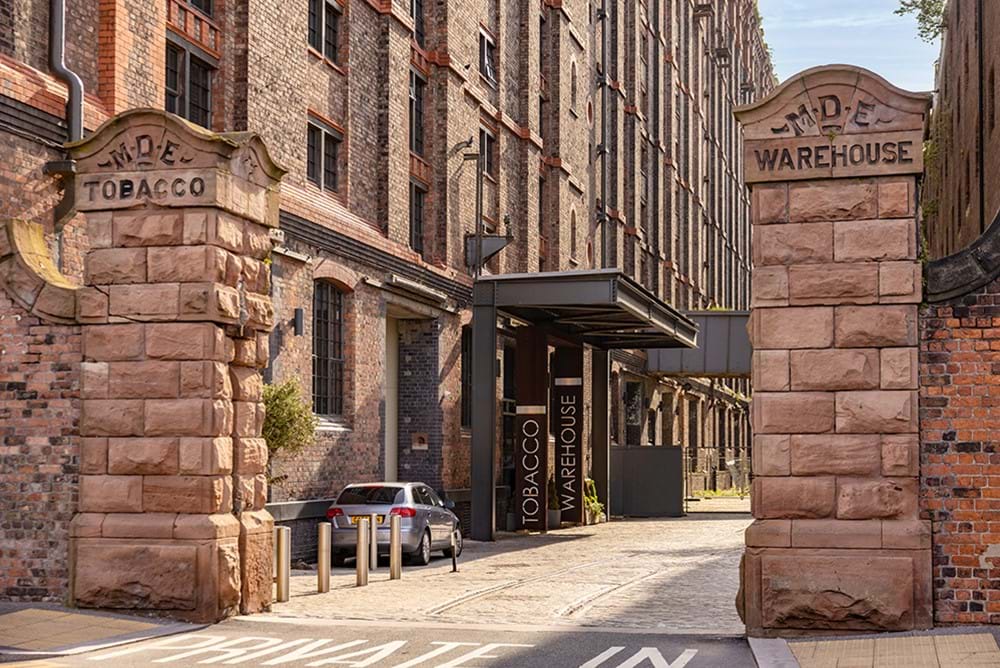
  • Stanley Dock – Recreating the Guinness Brewery: The vast dock complex supplied the industrial setting for the brewery, with warehouses, cobbled spaces, workshops and other areas transformed into factory floors, offices and yards. Opened in 1848 during Liverpool’s expansion as a major port, Stanley Dock brings genuine industrial architecture to the fictional brewery.
  • St George’s Hall and St George’s Quarter: The neoclassical landmark appears inside and out, with the Great Hall, former prison cells, corridors and courtroom all used during production. Outside, St George’s Quarter and William Brown Street provided the setting for Benjamin Guinness’s funeral procession, protests and public gatherings. Current access and tour information is available from the official St George’s Hall website.
Stanley Dock Tobacco Warehouse in Liverpool, a House of Guinness filming location

Manchester and Stockport: From Dublin to New York

The production also used Greater Manchester, but not always to represent Ireland.

Parts of Manchester’s Northern Quarter, including Dale Street and surrounding streets, were transformed into 19th-century New York, reflecting the series’ storyline beyond Dublin. Period signs, market stalls, carriages and street dressing temporarily concealed the modern city.

Nearby Stockport played a different role. Its historic Underbanks area, with narrow streets and older buildings, was adapted to represent parts of Victorian Dublin. The contrast illustrates how the production assembled its fictional world from several real cities rather than attempting to recreate everything in one place.

Penrhyn Castle: The Real Castle Behind Ashford Castle

One of the most impressive locations lies near Bangor in North Wales. Penrhyn Castle was used to represent Ashford Castle, the Guinness family’s Irish country residence. Completed in the early 19th century for the Pennant family, Penrhyn was deliberately designed in a neo-Norman style that made the building appear much older. Its monumental architecture and extravagant interiors provided an appropriate setting for the wealth surrounding the Guinness dynasty.

The real history, however, is considerably more complex. The Pennant family’s wealth was connected both to the North Wales slate industry and to sugar plantations in Jamaica that relied on enslaved labour. The estate is therefore not simply an example of Victorian grandeur, but a place where architecture, industrial power, labour history and colonial wealth intersect.

Today, the National Trust manages Penrhyn Castle and Garden, where visitors can explore the castle, collections, gardens and surrounding estate.

If historic houses transformed for television interest you, our Bridgerton filming locations guide explores another collection of real British estates, palaces and streets that became part of a fictional world.

Planning Your House of Guinness Journey

Liverpool is the easiest base for a filming-location trip, with several sites concentrated in and around the city. St George’s Hall and the Georgian Quarter can be combined on foot, while Stanley Dock and Croxteth Hall require separate journeys from the centre.

Manchester and Stockport can form another stage of the trip, particularly for travellers interested in the industrial history and architecture of North West England. Penrhyn Castle is better treated as part of a North Wales itinerary rather than a quick detour from Liverpool. There is also another direction you can take the story. If the series inspires you to explore the Guinness legacy in Dublin itself, our Guinness Storehouse Dublin guide looks at St James’s Gate, including the difference between the Storehouse visitor attraction and the experience that takes visitors inside parts of the working brewery.

Opening arrangements at historic properties can change with the season, conservation work and private events, so check official visitor information before travelling.

For more real places discovered through film and television, explore our Cinematic Destinations collection.

Related posts

Channel Tunnel illustration showing Eurostar and LeShuttle trains beneath the English Channel, with Folkestone and Coquelles marked above.

London–Paris via the Channel Tunnel

Travel beneath the English Channel and discover the engineering behind the Channel Tunnel. Explore its three-tunnel design, meet the construction story at Coquelles’ heritage centre, and visit Samphire Hoe’s reclaimed coastline. Then consider how this remarkable connection changed the London–Paris journey — and the choice between taking a train and flying.


Read More »
Wheelchair user boarding an accessible black cab in London

The Accessible UK

Plan wheelchair travel across the UK with guidance on transport, attractions and historic places. From London and the rail network to countryside visits, this guide covers accessibility resources, Changing Places toilets and practical steps that can make a trip easier to organise.

Read More »
Exterior of Old Trafford with Manchester United signage

Old Trafford Stadion Tour

At Old Trafford, a guided tour and the Manchester United Museum take you beyond matchday. Walk through areas including the dressing room, players’ tunnel and dugouts, discover the club’s history, and find practical information on accessibility, transport and planning your visit to Manchester’s famous football ground.

Read More »

Bridgerton Filming Locations

Discover the real places behind Bridgerton, from Bath’s elegant Georgian streets to grand country estates and royal palaces across England. These filming locations are more than beautiful backdrops: they reveal centuries of architecture, aristocratic life and social history, making them fascinating destinations even for travellers unfamiliar with the Netflix series.

Read More »
Exterior of Wembley Stadium with its iconic arch

Wembley Stadium Tour

Step inside Wembley Stadium, one of Britain’s most recognisable sporting landmarks. Visit the England dressing room, players’ tunnel, pitchside areas and Royal Box while discovering the history behind this iconic venue. From its famous arch to unforgettable football moments, the tour offers a fascinating look behind the scenes.

Read More »

Silverstone Circuit Tour

Silverstone is the historic home of the British Grand Prix, with more to see than the circuit itself. Compare the tour, Silverstone Museum and Heritage Track Trail, then find out which areas visitors can access, what activities are available and what to check before planning your trip.

Read More »
Scroll to Top