Norwegian Fjords Cruise
Norway’s fjord routes explore western inlets, while northern itineraries reach Arctic landscapes. Compare Geiranger, Flåm, Lofoten and Tromsø, including seasonal light, shore excursions and rules in protected fjords.

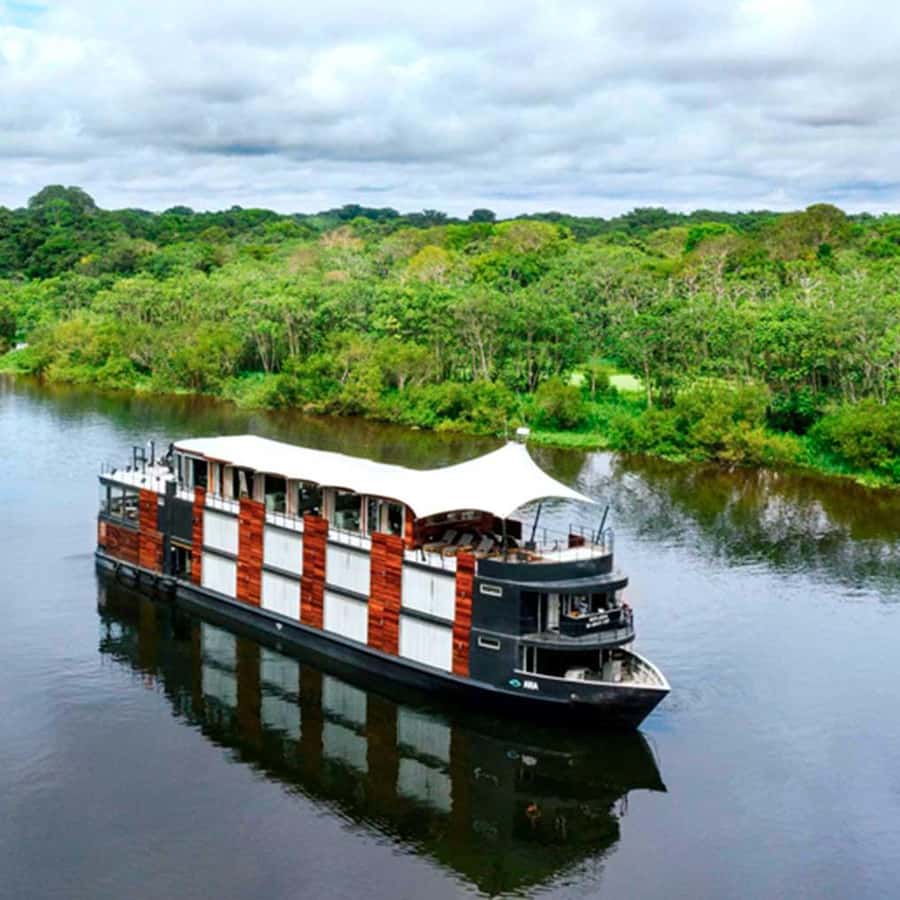
An Amazon River cruise offers a very different kind of journey from a conventional ocean cruise. Instead of moving between major ports, much of the experience takes place on the river itself and its tributaries, where rainforest, flooded forest, wildlife and riverside communities shape the journey. But the Amazon is vast, and there is no single standard cruise route. Two of the most important gateways are Iquitos in Peru and Manaus in Brazil, and the experiences they offer can be surprisingly different. Understanding that geography is the best place to start when choosing your journey.
The first decision is not which ship to book, but which part of the Amazon you want to explore.
Iquitos is one of the principal gateways to the Peruvian Amazon. From here, travellers can continue into the river system towards areas including the Pacaya-Samiria National Reserve, an enormous protected landscape of rivers, lakes, wetlands and seasonally flooded forest.
Many itineraries use small skiffs for excursions away from the main vessel. These smaller boats can enter narrow tributaries and flooded forest, making wildlife observation a central part of the experience. Pink river dolphins are among the region’s best-known inhabitants, while monkeys, macaws, caimans and numerous other species may also be encountered.
Wildlife sightings are never guaranteed, however. The rainforest is not a zoo, and patience is part of the experience.
For information about visiting the protected area, authorised tour operators and its different routes, see the official Pacaya-Samiria National Reserve website.
Manaus offers a different introduction to the Amazon. The large city stands on the Rio Negro, close to its confluence with the Solimões River.
One of the region’s most distinctive natural sights is the Meeting of the Waters, where the dark Rio Negro and the lighter, sediment-rich Solimões flow alongside each other before gradually mixing.
Downstream from their confluence, the river is known in Brazil as the Amazon.
Cruises and river expeditions from Manaus may explore the Rio Negro and surrounding tributaries, flooded forests and smaller waterways, often using smaller boats for excursions.
The region also offers a striking contrast between the vast scale of the main rivers and the quieter channels of the surrounding forest, giving travellers different perspectives on the Amazon landscape.
Wildlife is one of the strongest reasons to choose an Amazon River cruise, but expectations should remain realistic.
Pink and grey river dolphins can sometimes be seen from boats, while excursions into tributaries and forest areas may reveal monkeys, sloths, macaws, toucans, kingfishers, caimans and an extraordinary variety of smaller animals.
A good naturalist guide can make an enormous difference. Many rainforest animals are remarkably difficult to spot without experienced eyes, and understanding what you are seeing adds considerably to the experience.
Jaguars also live in the Amazon basin, but they are elusive animals. Seeing one should be regarded as an exceptional encounter rather than an expected part of an Amazon cruise.
There is no single perfect season for an Amazon River cruise. Changing rainfall and river levels alter both the landscape and the way travellers explore it. Around Iquitos and Pacaya-Samiria, wetter months bring higher rivers and expand the areas of flooded forest that can be explored by boat. As water levels recede, more riverbanks and forest trails become accessible, changing the possibilities for excursions and wildlife observation.
These conditions are part of the attraction rather than simply a question of good or bad weather. Travelling during periods of higher water can mean deeper exploration by boat, while lower water can provide more opportunities to explore on foot.
Seasonal patterns also vary across the enormous Amazon basin. Conditions around Iquitos should therefore not be treated as a timetable for cruises departing from Manaus or other parts of Brazil.
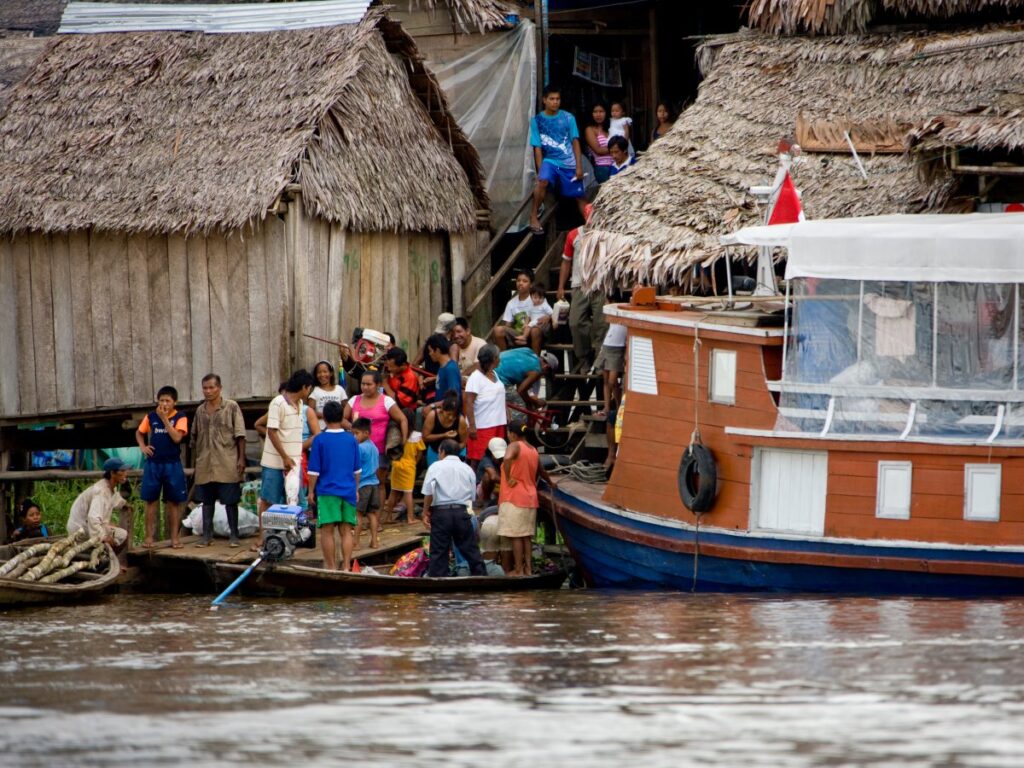
Some Amazon itineraries include visits to riverside or Indigenous communities. These experiences can provide insight into life in a region where rivers remain fundamental transport routes and where fishing, agriculture and forest resources continue to influence everyday life.
However, the quality of community visits varies. Before booking, it is worth asking how visits are organised, whether the community participates in deciding what visitors experience, and how tourism revenue benefits local residents.
It is also useful to distinguish between different communities rather than treating everyone living in the Amazon as Indigenous. The region contains Indigenous peoples with distinct cultures and languages as well as many other riverine communities with different histories and identities.
Responsible tourism should create an opportunity to learn rather than turn local people into part of the scenery.
The Amazon is generally hot and humid, but packing for the region is more about protection than bringing large quantities of clothing.
Health recommendations depend on the country and the exact part of the Amazon you visit. Yellow fever vaccination is recommended for travellers to many Amazon regions, while malaria prevention may also be relevant.
Entry requirements and medical recommendations are not the same thing. For example, yellow fever vaccination is recommended for Peru’s Loreto region, which includes Iquitos, but it is not currently a general entry requirement for Peru. Recommendations can also change, so check current guidance before departure.
For up-to-date information, consult official travel-health guidance for Peru or Brazil, and discuss your itinerary with a qualified healthcare professional when appropriate.
It is also worth examining the daily programme carefully before choosing a cruise. Look beyond the number of days and check how much time is actually devoted to wildlife excursions, walking and community visits.
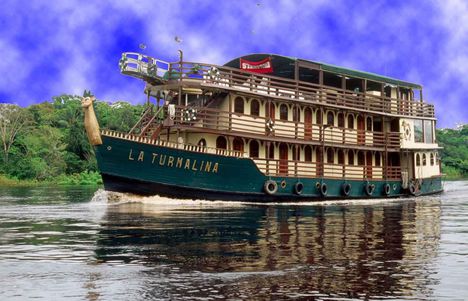
An Amazon River cruise is one occasion when the vessel and the route cannot be considered separately. Larger riverboats can provide more space and facilities, while smaller expedition vessels may offer a more intimate experience and different excursion possibilities.
If wildlife and rainforest exploration are your priorities, look closely at the daily programme and the number of guided excursions rather than choosing a cruise simply by cabin size or onboard amenities.
Most importantly, decide which Amazon you want to experience. The flooded forests and waterways around Iquitos and Pacaya-Samiria provide one perspective; Manaus and the vast Rio Negro system provide another.
The Amazon is too large and diverse to be reduced to a single cruise experience — and that is precisely what makes choosing the route so interesting.
For more journeys where the route is part of the destination, explore our Cruising the Globe collection.

Norway’s fjord routes explore western inlets, while northern itineraries reach Arctic landscapes. Compare Geiranger, Flåm, Lofoten and Tromsø, including seasonal light, shore excursions and rules in protected fjords.

A Danube cruise links historic cities with changing landscapes across Central and Eastern Europe. Compare route choices, including Budapest, Belgrade and the Iron Gates, and consider how much time each itinerary allows ashore.
Mediterranean cruises can follow Western or Eastern routes, each with different ports and travel rhythms. Compare city visits, island stops and time ashore so the itinerary matches your interests and the amount of walking you enjoy.