Mediterranean Cruise: Routes, Ports and Practical Advice

Mediterranean cruise ships docked along the Croatian coast

A Mediterranean cruise can connect ancient cities, coastal landscapes and very different cultures within a single journey. One itinerary might combine Barcelona, southern France and Italy, while another follows the Adriatic towards Croatia, Greece and the Aegean.

That variety is also what makes choosing a Mediterranean cruise more complicated than it first appears. Western and Eastern routes offer noticeably different experiences, and even ports advertised under famous city names may be some distance from the places you actually want to visit. Understanding the geography of the itinerary is therefore more useful than simply counting how many ports appear on the schedule.

Choosing Your Mediterranean Cruise Route

Mediterranean itineraries are commonly grouped into Western and Eastern routes, although individual cruises frequently combine destinations from both regions.

Western Mediterranean cruises often include ports in Spain, France and Italy, with Barcelona and Rome among the major destinations. Barcelona combines Gothic streets with the distinctive architecture of Antoni Gaudí, while Mallorca adds a very different island landscape. Marseille provides access to Provence and the southern French coast. Italy can occupy several days of the same itinerary. Naples provides access to one of southern Italy’s most fascinating historical regions, including Pompeii and the landscape around Mount Vesuvius, while other Italian ports open the way to Rome, Tuscany and the country’s Mediterranean coast.

If your journey includes several Italian stops — or you are considering extending your stay before or after the cruise — our Italy Travel Guide provides a broader introduction to the country. Spain can work equally well as an extension to a Mediterranean cruise, particularly when Barcelona is the departure or arrival port. Our Spain Travel Guide explores more of the country beyond its Mediterranean coastline.

Eastern Mediterranean  itineraries often shift the emphasis towards the Adriatic, Greek islands and ancient sites of the Aegean.

Dubrovnik is one of the most recognisable Adriatic ports, with its fortified historic centre overlooking the sea. Croatia’s coastline can also bring other ports and islands into Mediterranean itineraries, making our Croatia Travel Guide useful for travellers who want to explore beyond a single port day. In Greece, Piraeus serves as the principal port for Athens, while island itineraries may include destinations such as Santorini, Mykonos, Rhodes or Crete.

Some Eastern Mediterranean routes continue towards the Turkish Aegean coast. Kuşadası is particularly important for travellers interested in archaeology because it provides access to Ephesus, one of the great surviving cities of the ancient Mediterranean.

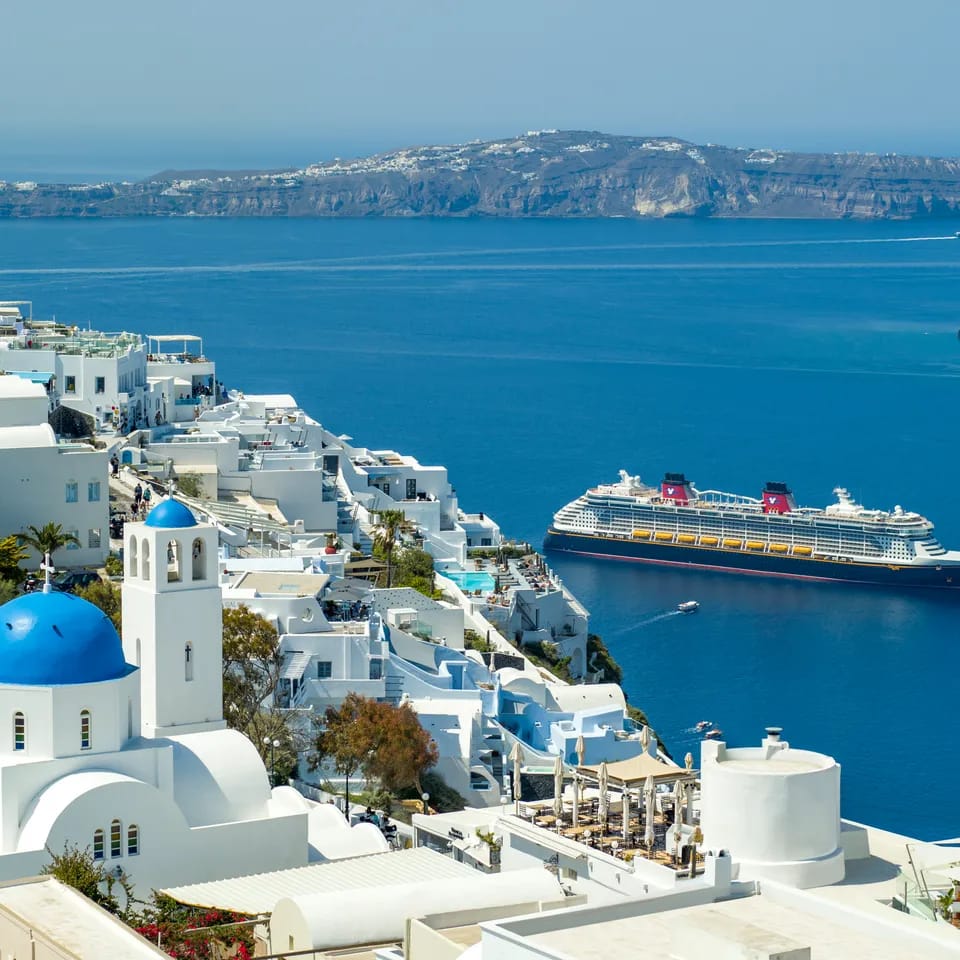
Cruise ship approaching Santorini during a Mediterranean cruise

Ports Are Not Always Where You Think

One of the most important details to check before choosing a Mediterranean cruise is the location of the actual port. A destination listed as Rome normally means the ship docks at Civitavecchia, on the coast outside the Italian capital. Similarly, cruises advertising Florence commonly use Livorno as their port.

In Greece, cruise ships visiting Athens generally use Piraeus, a major port city in its own right and the historic maritime gateway to the Greek capital. This matters because the journey between ship and destination can consume a substantial part of a port day. Two itineraries with the same number of stops may therefore offer very different amounts of useful sightseeing time.

Before booking, look at the actual port rather than only the destination name printed on the itinerary. For Civitavecchia in particular, the official Port Mobility Civitavecchia website provides information about cruise terminals, transport and connections.

History and Culture Along the Route

Few cruise regions connect as many layers of history within relatively short distances. A Western Mediterranean journey might take you from Roman remains to medieval quarters, Renaissance cities and modern architecture within a few days. In Naples, the archaeological sites around Mount Vesuvius reveal an ancient world preserved by one of history’s most famous volcanic eruptions. Rome brings together monuments from the Roman Empire, later Christian history and centuries of European art.

Farther east, Dubrovnik’s stone walls preserve the legacy of the former Republic of Ragusa, while Athens places visitors within reach of the Acropolis and some of the most influential surviving monuments of ancient Greece.

Ephesus adds another perspective. Once an important port city, its surviving streets and monumental buildings reflect centuries of Hellenistic, Roman and early Christian history. The Library of Celsus and Great Theatre are among its best-known remains, while the wider archaeological site has been on the UNESCO World Heritage List since 2015. This is one of the strengths of cruising the Mediterranean: the ports are not simply a sequence of coastal resorts. They can connect civilisations that traded, competed and influenced one another across the same sea for thousands of years.


Food as Part of the Journey

Food changes remarkably quickly as a Mediterranean itinerary moves from one region to another. In Catalonia, a port day might involve tapas, seafood or a local market. Provence introduces herbs, olive oil and southern French traditions, while Italy can change dramatically between regions: the food of Naples is not the food of Tuscany or Rome. Along the Adriatic, Croatian coastal cooking combines seafood, olive oil and regional influences shaped by centuries of maritime trade. Greek ports bring another range of flavours, from meze and grilled fish to regional cheeses and dishes that vary considerably between the mainland and islands.

Continue towards Turkey and the culinary landscape changes again. Rather than treating food as another attraction to tick off a list, consider using at least one port day to explore a market, family-run restaurant, food workshop or regional producer. It can reveal as much about a destination as a major monument.

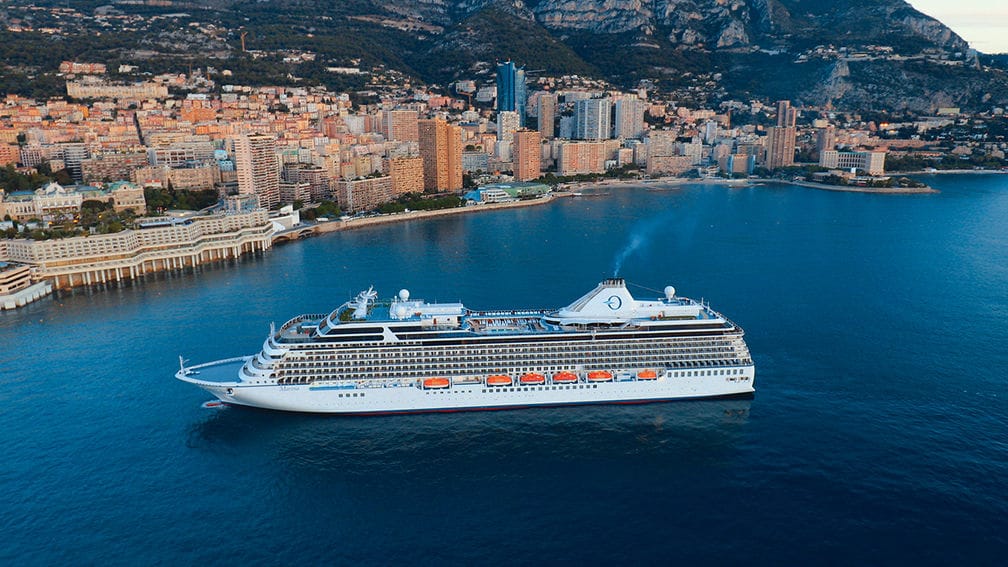
Cruise ship in a Mediterranean port during the summer season

When to Cruise the Mediterranean

Mediterranean cruising is strongly associated with summer, but there is no single best time for every traveller or every itinerary.

Spring can bring comfortable conditions for exploring cities and archaeological sites, although weather can still be variable and the sea may feel cool in some areas.

Summer offers long days and generally warm conditions, making it particularly attractive for travellers interested in beaches and island destinations. It is also the busiest period in many major Mediterranean destinations, and high temperatures can make intensive sightseeing tiring.

Autumn can provide another attractive balance, with warm conditions lingering in many southern destinations after the busiest part of the European summer has passed. Weather becomes less predictable as the season progresses.

The right choice therefore depends on the itinerary. Someone planning long days exploring Rome, Athens and Ephesus may have different priorities from a traveller choosing a cruise mainly for Greek islands and beaches.

What to Wear and Pack

Mediterranean cruise packing should reflect what you plan to do ashore rather than an imagined Mediterranean dress code.

Comfortable walking shoes are particularly important. Historic centres often involve cobblestones, steps and uneven archaeological surfaces, and a port day can easily involve several hours on foot. Lightweight clothing works well during warm weather, but an additional light layer can be useful for windy decks, cooler evenings and air-conditioned interiors. Sun protection is important throughout the warmer months. A hat, sunglasses, sunscreen and refillable water bottle can make long sightseeing days considerably more comfortable.

Religious sites may have their own clothing requirements. Churches, monasteries, mosques and other places of worship can require visitors to cover shoulders or legs, so check the rules for the specific sites on your itinerary rather than relying on one general dress rule for the entire Mediterranean. Shipboard evening dress codes vary between cruise lines and vessels, so check your own cruise information before packing formal clothing.


Planning Your Port Days

A Mediterranean itinerary can look deceptively easy on a map. In practice, a successful port day depends on the combination of distance, transport and time ashore. Start by checking the ship’s arrival and departure times. Then look at the distance between the cruise terminal and the attraction you actually want to visit. Some ports are relatively easy to explore independently, while others require a train, bus, taxi or organised transfer before the sightseeing even begins. Always include that transfer time when deciding how much you can realistically see during a port call.

Avoid trying to see everything during a single stop. A port day often works better when it focuses on one or two experiences rather than a rushed list of landmarks. Crowd management is another consideration in heavily visited destinations. Dubrovnik, for example, developed its Respect the City programme to reduce the pressures associated with intensive tourism and improve the management of visitors around its historic centre.

Travellers can help by respecting local guidance and remembering that the places visited by cruise passengers are also living communities. Allow some margin when exploring independently. The ship’s departure time is fixed, and transport delays can turn an ambitious itinerary into a stressful race back to the port.

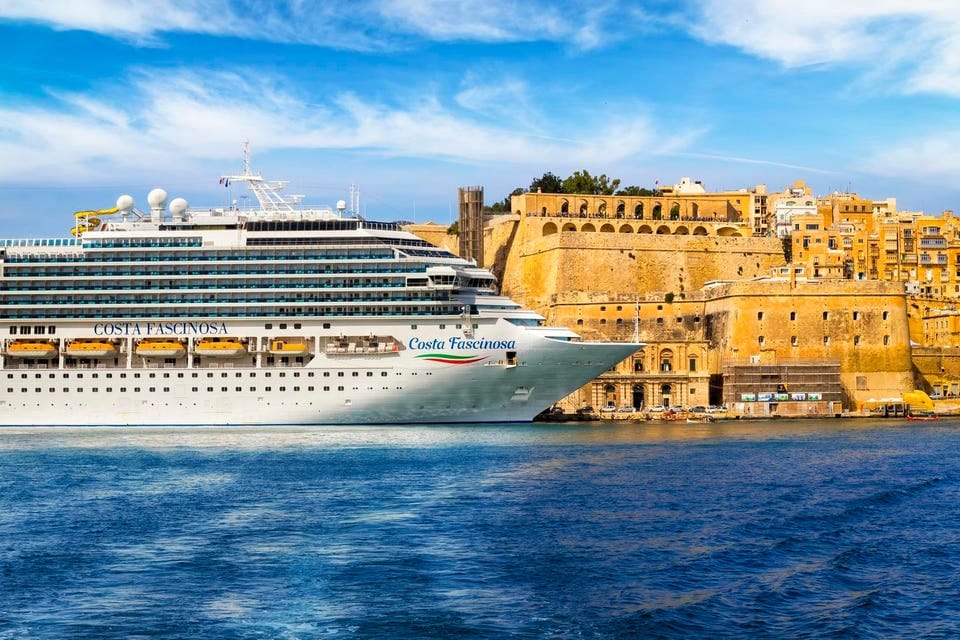
Cruise ship in Valletta harbour during a Mediterranean cruise

Choosing the Right Mediterranean Cruise

There is no single Mediterranean cruise experience.

Choose a Western Mediterranean itinerary if cities, architecture, museums and destinations such as Barcelona, Rome and Naples are central to your plans.

Look towards the Eastern Mediterranean if you are more interested in the Adriatic, Greek islands, ancient archaeological sites and the landscapes of the Aegean.

But the division is only a starting point. Look at the actual ports, the time available ashore and the distances between cruise terminals and the places you want to see.

A cruise with fewer well-chosen stops can sometimes provide a richer journey than an itinerary that visits a new port every morning.

The Mediterranean has connected people, cultures and trade routes for thousands of years. A good itinerary allows you to see some of those connections for yourself — through the cities, food, landscapes and history encountered along the way.

For more journeys where the route itself is part of the experience, explore our Cruising the Globe collection.

Related posts

Cruise ships sailing through a protected Norwegian World Heritage fjord

Norwegian Fjords Cruise

Norway’s fjord routes explore western inlets, while northern itineraries reach Arctic landscapes. Compare Geiranger, Flåm, Lofoten and Tromsø, including seasonal light, shore excursions and rules in protected fjords.

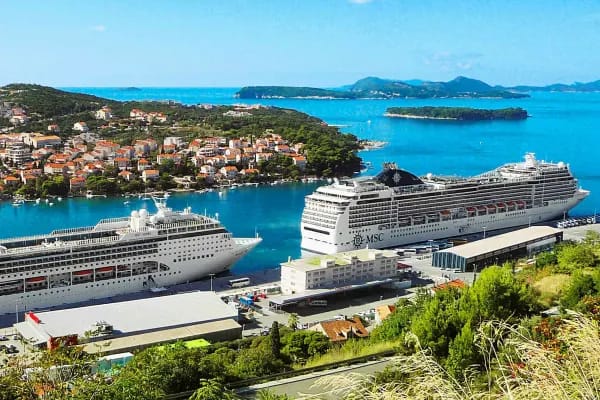
Read More »
Danube river cruise routes from Passau through Vienna, Budapest and Belgrade to the Danube Delta

Danube River Cruise

A Danube cruise links historic cities with changing landscapes across Central and Eastern Europe. Compare route choices, including Budapest, Belgrade and the Iron Gates, and consider how much time each itinerary allows ashore.
Read More »
Traditional Amazon River cruise boat sailing through the rainforest

Amazon River Cruise

An Amazon cruise changes with the water levels and the region you choose. Compare routes around Iquitos and Manaus, the wildlife and riverside communities you may encounter, and the practical demands of small-boat excursions.
Read More »

Nile River Cruise

A Nile cruise links Luxor and Aswan through temple visits and river landscapes. See how the classic route works, what changes on longer itineraries and how to plan for heat, shore excursions and archaeological sites.
Read More »

Alaska Cruise

Alaska cruises range from Inside Passage round trips to one-way Gulf of Alaska voyages. Compare ports, glaciers and inland connections, with practical advice on seasons, wildlife viewing and choosing excursions that suit your pace.
Read More »

Caribbean Cruises

Eastern, Western and Southern Caribbean routes offer different islands, ports and days at sea. Compare their landscapes and cultural stops, then choose an itinerary that fits the places you most want to visit.

Read More »
Scroll to Top