Danube River Cruise
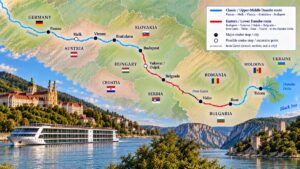
A Danube cruise links historic cities with changing landscapes across Central and Eastern Europe. Compare route choices, including Budapest, Belgrade and the Iron Gates, and consider how much time each itinerary allows ashore.

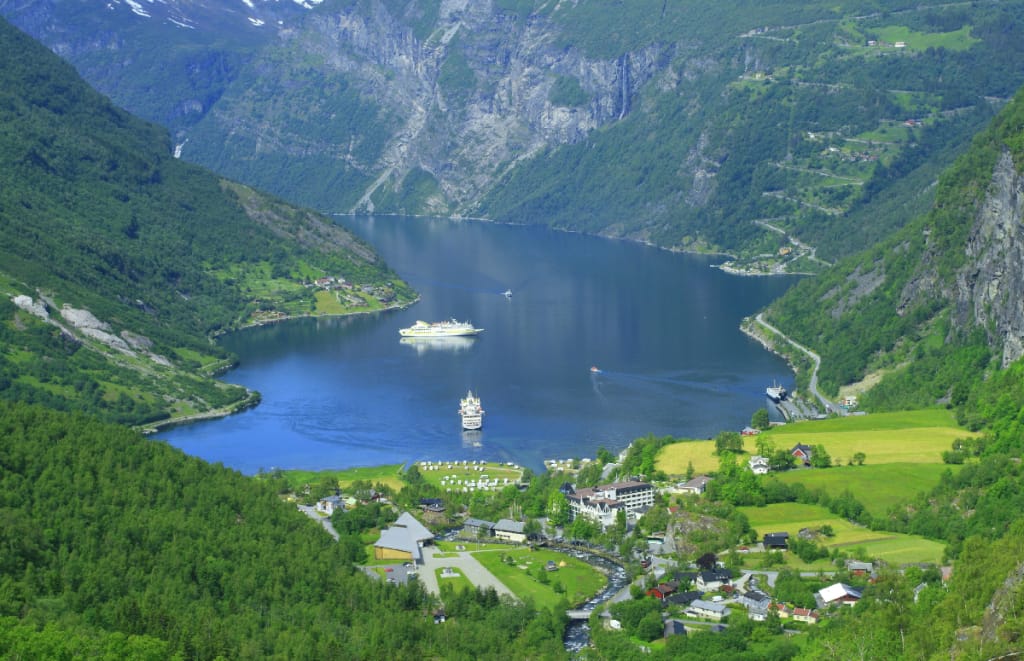
A Norwegian fjords cruise is less about moving from one port to another than about the journey between them. Long stretches of the route pass through narrow waterways surrounded by steep mountains, waterfalls, small settlements and valleys shaped by glaciers.
However, not every Norwegian cruise offers the same experience. Choosing the right itinerary depends on your travel priorities and what you wish to see beyond the ship’s deck. For a broader introduction to the country before choosing your route, our Norway Travel Guide explores its cities, landscapes, transport and practical travel considerations.
The first decision is how much of Norway you actually want to see.
Several destinations appear repeatedly on Norwegian cruise itineraries, each offering a different experience ashore:
The midnight sun is often associated with Norwegian summer cruises, but it is important to understand the geography. Western Norway does not experience the true midnight sun. Summer evenings there are exceptionally long and bright, but the phenomenon in which the sun remains above the horizon throughout the night occurs north of the Arctic Circle.
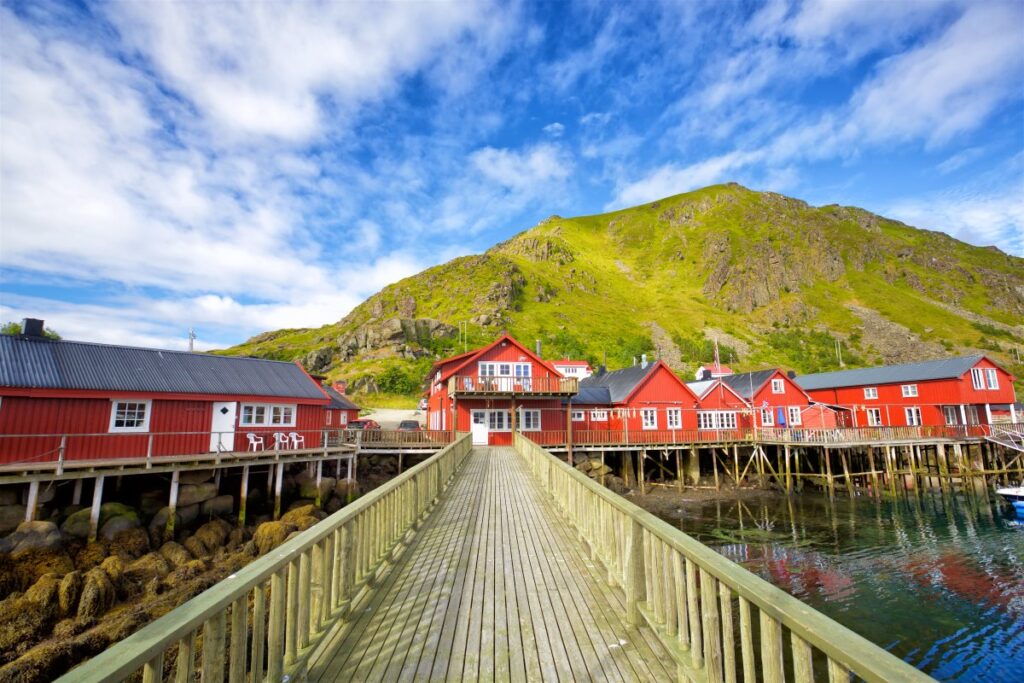
The dates vary according to latitude. In the Lofoten Islands, the midnight sun generally lasts from late May into mid-July, while farther north in Tromsø it extends from roughly the second half of May until the second half of July.
Travellers specifically hoping to experience the phenomenon should therefore choose a northern itinerary rather than assuming that any Norwegian fjords cruise will provide it. Visit Norway’s Midnight Sun guide provides location-specific dates for different parts of Northern Norway.
A Norwegian fjords cruise works best when the route itself is treated as part of the destination. Choose the geography first, then the itinerary and ship that allow you to experience it.
Norwegian summer weather can change rapidly, and conditions at sea level may be very different from those at a mountain viewpoint. The safest approach is to prepare for several types of weather during the same day.
Norway has introduced increasingly strict environmental requirements for ships operating in its World Heritage fjords. From January 1, 2026, zero-emission requirements apply to tourist ships and ferries under 10,000 gross tons operating within the World Heritage fjords. The requirement applies to five designated fjords: Nærøyfjord, Aurlandsfjord, Geirangerfjord, Sunnylvsfjord and Tafjord. For passenger ships of 10,000 gross tons or more, the same zero-emission requirement is scheduled to apply from January 1, 2032.
The regulations also allow qualifying biogas as an alternative. Because the requirements are being introduced in stages, travellers should check their confirmed itinerary and ports of call rather than assuming that all ships and routes are affected in the same way. The current rules and implementation timetable are explained by the Norwegian Government. When comparing itineraries, remember that the Norwegian fjords are not simply a collection of ports. Much of the experience happens between them. Choosing the geography first — and the ship second — is often the best way to find the route that suits you.
For more journeys where the route matters as much as the destinations, explore our Cruising the Globe collection.

A Danube cruise links historic cities with changing landscapes across Central and Eastern Europe. Compare route choices, including Budapest, Belgrade and the Iron Gates, and consider how much time each itinerary allows ashore.

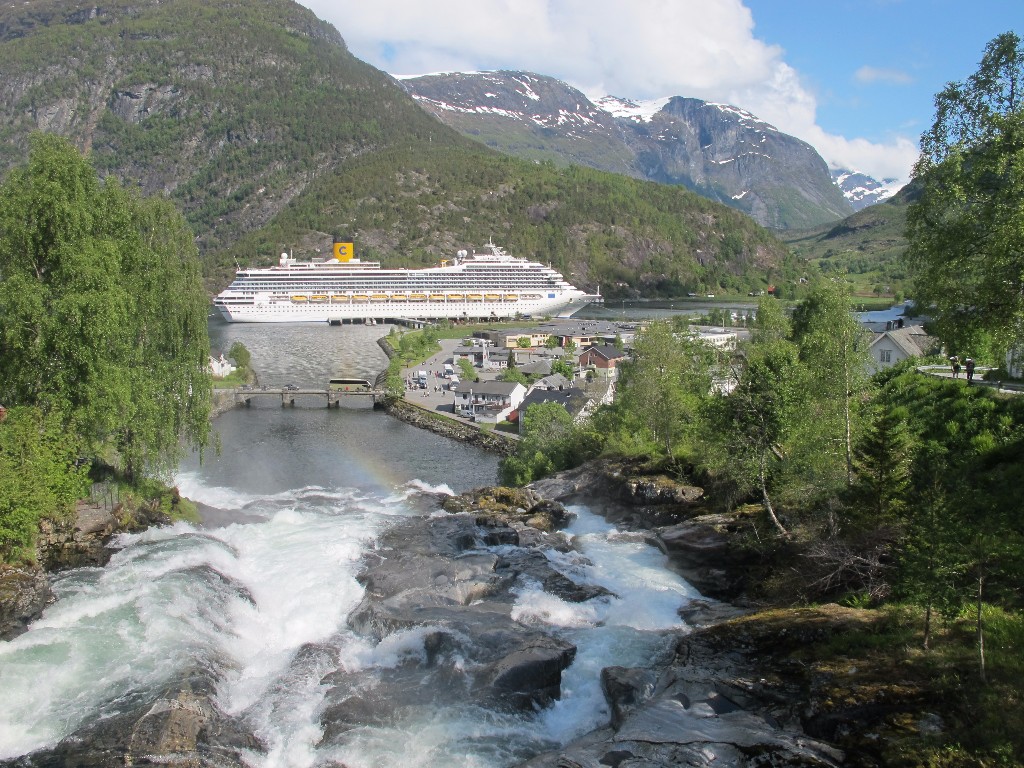
Alaska cruises range from Inside Passage round trips to one-way Gulf of Alaska voyages. Compare ports, glaciers and inland connections, with practical advice on seasons, wildlife viewing and choosing excursions that suit your pace.
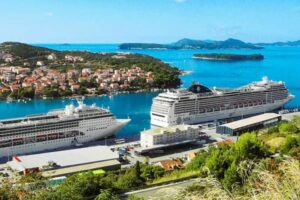
Mediterranean cruises can follow Western or Eastern routes, each with different ports and travel rhythms. Compare city visits, island stops and time ashore so the itinerary matches your interests and the amount of walking you enjoy.
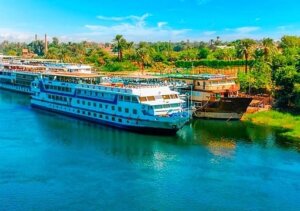
A Nile cruise links Luxor and Aswan through temple visits and river landscapes. See how the classic route works, what changes on longer itineraries and how to plan for heat, shore excursions and archaeological sites.
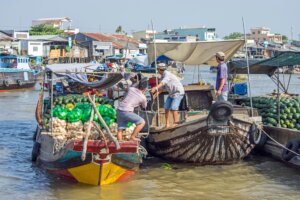
Follow a Mekong cruise through Vietnam and Cambodia, from delta waterways to Phnom Penh. Learn how route direction, changing water levels and transfers to Siem Reap affect the journey, alongside what to expect from shore excursions.
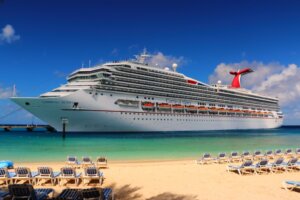
Eastern, Western and Southern Caribbean routes offer different islands, ports and days at sea. Compare their landscapes and cultural stops, then choose an itinerary that fits the places you most want to visit.