Nile River Cruise: Route, Ancient Sites and Practical Advice

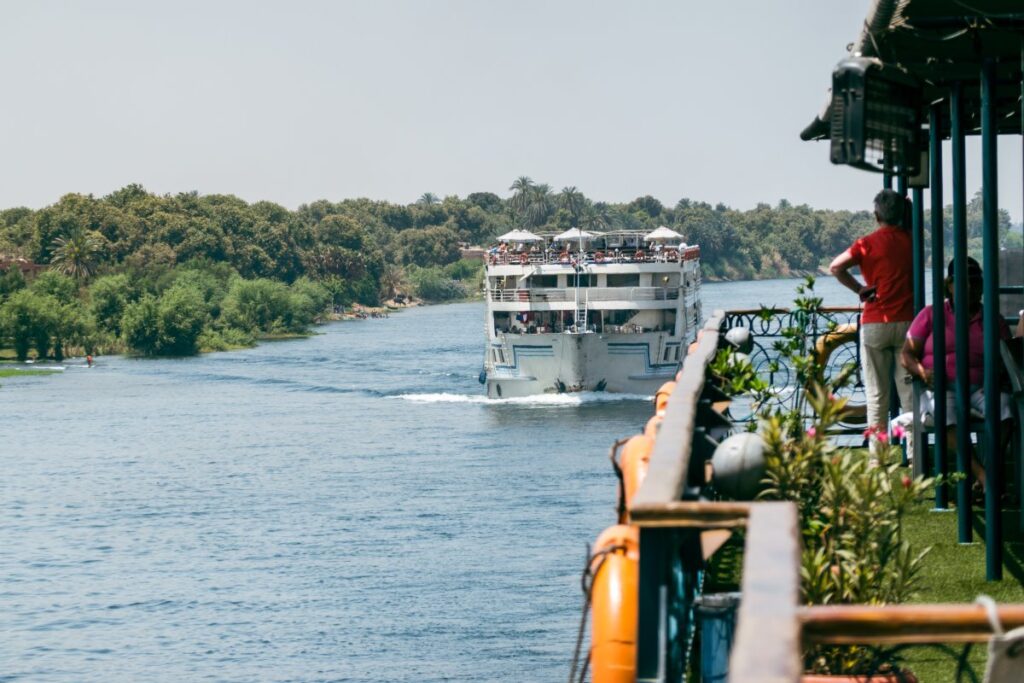
Nile River cruise ship sailing along the Nile in Egypt

A Nile River cruise follows one of the world’s great historic waterways through the heart of Upper Egypt. Between Luxor and Aswan, green riverbanks meet desert landscapes, while temples, tombs and ancient settlements reveal how closely Egyptian civilisation developed around the river.

Unlike many cruises, the main attraction is not simply the scenery or the ship. The journey connects archaeological sites that would otherwise require a series of separate road trips, with sailing time providing a slower rhythm between visits.

For most travellers, choosing a Nile cruise begins with one question: what kind of journey do you want along the river?

Choosing Your Nile River Cruise

The classic cruise route runs between Luxor and Aswan, travelling in either direction. The exact duration and sequence of visits vary, so it is more useful to compare itineraries than to assume that every Nile cruise includes the same experiences.

Larger river ships generally offer more onboard facilities and follow established schedules between the principal archaeological sites. Smaller vessels can provide a more intimate experience and may operate at a slower pace.

Among the alternatives is the dahabiya, a traditional style of Nile sailing vessel. Modern dahabiya journeys typically carry far fewer passengers than conventional cruise ships and emphasise quieter sailing and smaller-scale travel.

Whichever style you choose, look carefully at the itinerary. On the Nile, the archaeological stops are more important than the number of restaurants, pools or other facilities aboard the vessel.

Luxor: Temples and the Valley of the Kings

Luxor sits at one end of the classic cruise route and contains one of the greatest concentrations of ancient Egyptian monuments.

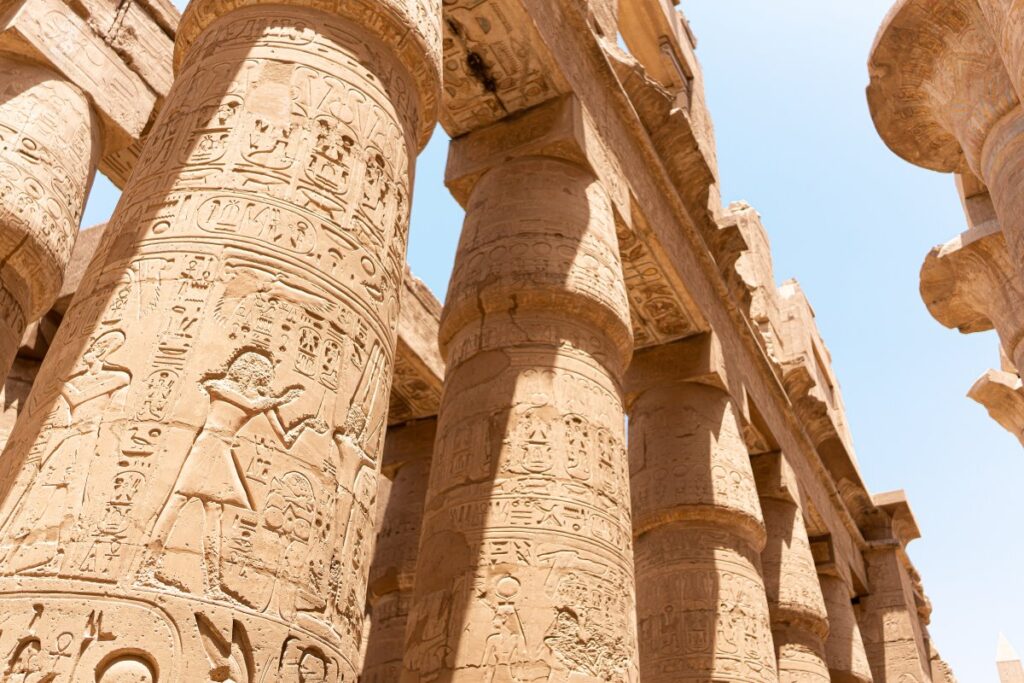
On the east bank of the Nile, Karnak developed over many centuries into an enormous religious complex. Its Great Hypostyle Hall, filled with monumental columns, remains one of its most remarkable spaces. Nearby, Luxor Temple forms another part of the ancient ceremonial landscape.

Across the river, the west bank leads into a very different world. Here lie the Valley of the Kings, mortuary temples and other remains associated with the ancient necropolis of Thebes.

The tomb of Tutankhamun made the valley internationally famous after its discovery by Howard Carter and his team in 1922, but it is only one part of a much larger archaeological landscape.

Luxor deserves time. If your cruise begins or ends here, adding an extra night can make it easier to explore without trying to fit both banks of the Nile into an overloaded schedule.

For current visitor information on Egypt’s archaeological sites, the official Experience Egypt tourism portal is a useful starting point.

Monumental columns at Karnak Temple in Luxor, Egypt

Between Luxor and Aswan: Edfu and Kom Ombo

Once the ship leaves Luxor, the journey itself becomes part of the experience. Agricultural land lines sections of the river, villages appear along the banks and the desert is often visible beyond the narrow cultivated strip.

Two important archaeological stops break the journey.

Edfu is dominated by the Temple of Horus, one of Egypt’s best-preserved ancient temples. Built during the Ptolemaic period, its monumental entrance and extensive inscriptions provide an unusually complete impression of an Egyptian temple complex.

Farther south, Kom Ombo occupies a striking position beside the Nile. Its unusual double temple was dedicated principally to two divine groups associated with Sobek, the crocodile god, and Haroeris, a form of Horus.

These stops are part of what makes the river journey different from simply dividing a holiday between Luxor and Aswan. The cruise connects important sites along the Nile while allowing the landscape between them to remain part of the experience.


Aswan and Philae

Aswan has a noticeably different atmosphere from Luxor. Granite islands, rocky riverbanks and traditional sailing boats give this stretch of the Nile its own character. One of its most important archaeological sites is Philae, the great sanctuary associated with the goddess Isis. The temple complex now stands on Agilkia Island, but this is not its original location.

During the international campaign to save the Nubian monuments threatened by rising waters following the construction of the Aswan High Dam, the temples of Philae were dismantled and reconstructed on higher ground.

The campaign became one of the most ambitious international heritage-preservation projects of the 20th century. The UNESCO Nubian Monuments page provides more information about Philae, Abu Simbel and the wider archaeological landscape protected as a World Heritage Site. Aswan is also a good place to experience the river on a smaller scale. A felucca, the traditional sailing boat seen throughout the area, offers a very different perspective from the larger cruise vessels.

Abu Simbel: Beyond the Main Cruise Route

Abu Simbel is often associated with Nile cruise itineraries, but geographically it lies well beyond the standard Luxor–Aswan sailing route.

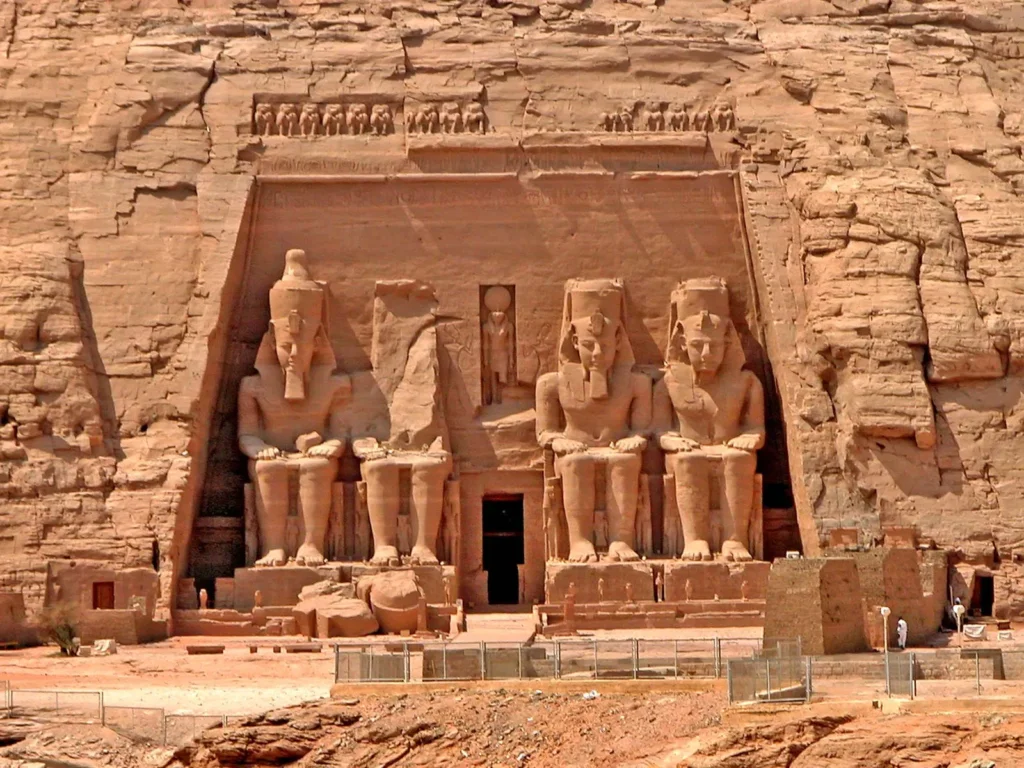
The temples were built during the reign of Ramesses II near Egypt’s southern frontier. Their colossal rock-cut façades make them among the country’s most recognisable ancient monuments.

Their modern history is almost as remarkable. The construction of the Aswan High Dam threatened Abu Simbel and other Nubian monuments with flooding, leading to the extraordinary international rescue campaign that moved the temples to higher ground.

For travellers on a Nile cruise, Abu Simbel is therefore best considered a separate excursion from Aswan, rather than another stop made by the cruise ship itself. Check how it fits into your schedule before assuming it is included.

Great Temple of Ramesses II at Abu Simbel in southern Egypt

Agatha Christie and Death on the Nile

The Nile has also occupied an unusual place in travel literature, particularly through Agatha Christie. Christie’s travels in Egypt helped inspire her 1937 Hercule Poirot novel Death on the Nile. By turning the enclosed world of a river cruise into the setting for a murder mystery, she created one of the most enduring literary images of travel along the Nile. Later screen adaptations, particularly the films released in 1978 and 2022, introduced new audiences to that combination of archaeological sites, desert landscapes and life aboard a Nile steamer. The reality of modern Nile cruising is naturally different, but the connection between travel and storytelling remains interesting. Sailing between Luxor and Aswan still follows a landscape where archaeology, travel writing and popular culture have overlapped for generations.

If you enjoy discovering how real destinations become part of stories on screen, our Cinematic Destinations collection explores that relationship in other parts of the world.

When to Cruise the Nile

Temperature matters more on a Nile cruise than it does on many other river journeys because much of the sightseeing takes place outdoors at archaeological sites with limited shade.

The cooler months are generally more comfortable for long visits to temples and tombs. Winter mornings and evenings can feel surprisingly cool, particularly on deck, while daytime conditions are often much more suitable for sightseeing than during the hottest part of the year. Summer travel is possible, but Upper Egypt can become intensely hot. That can make long walks through exposed archaeological sites considerably more demanding. Rather than choosing a month solely according to cruise availability, consider how much time you expect to spend exploring outdoors.

For a Nile cruise, the conditions during the shore visits can matter more than the temperature aboard the ship.

What to Wear and Pack

Lightweight, breathable clothing is useful for daytime sightseeing, while an additional layer can be valuable during cooler mornings and evenings. Comfortable walking shoes are essential. Archaeological sites can involve sand, dust, stone steps and uneven surfaces, so footwear chosen purely for the ship may not be suitable ashore. Sun protection deserves particular attention. A hat, sunglasses, sunscreen and water should be part of your daily sightseeing routine. Egypt is culturally conservative, especially away from major tourist resorts. Clothing that provides reasonable coverage is practical when visiting communities and religious sites, while also offering additional protection from the sun. A small day bag is useful for carrying water, sun protection and other essentials during excursions, but check individual archaeological sites for current restrictions on bags and photography equipment.

Health and Practical Planning

Heat, food and water precautions deserve some preparation before travelling in Egypt. Use a safe source of drinking water and follow sensible food hygiene practices. Travellers should also consider their own medical needs, routine medications and recommended vaccinations well before departure. The CDC Egypt travel health page provides current health information for travellers; visitors from other countries may also wish to consult their national travel-health authority.

Cruise schedules can involve early starts. Archaeological visits are often arranged during cooler parts of the day, and excursions may begin much earlier than travellers accustomed to sea cruises expect. If you are adding Cairo, Abu Simbel or another destination to the journey, allow enough time between different parts of the trip. Egypt’s major attractions cover considerable distances.

Travellers continuing to Cairo can also explore our Pyramids of Giza guide, while the Nile cruise itself should be treated as one part of the itinerary rather than a convenient base for seeing the entire country.

Nile River cruise boats sailing between Luxor and Aswan in Egypt

Choosing the Right Nile River Cruise

The most important decision is not which ship looks most luxurious, but how you want to experience the river.

A conventional cruise can provide a straightforward way to connect the major sites between Luxor and Aswan. A smaller vessel or dahabiya may appeal more to travellers who value a quieter atmosphere and a slower pace.

Compare the archaeological stops, time available ashore and overall rhythm of the journey before comparing onboard extras. If Abu Simbel or additional days in Luxor and Aswan matter to you, build those into the wider itinerary rather than trying to squeeze everything into the cruise itself.

The Nile is more than the route between a series of ancient monuments. The river helps explain why many of those monuments, settlements and agricultural landscapes developed where they did. Travelling along it makes the geography of ancient Egypt much easier to understand.

For more journeys where the waterway itself shapes the experience, explore our Cruising the Globe collection.

Related posts

Cruise ships sailing through a protected Norwegian World Heritage fjord

Norwegian Fjords Cruise

Norway’s fjord routes explore western inlets, while northern itineraries reach Arctic landscapes. Compare Geiranger, Flåm, Lofoten and Tromsø, including seasonal light, shore excursions and rules in protected fjords.

Read More »
Danube river cruise routes from Passau through Vienna, Budapest and Belgrade to the Danube Delta

Danube River Cruise

A Danube cruise links historic cities with changing landscapes across Central and Eastern Europe. Compare route choices, including Budapest, Belgrade and the Iron Gates, and consider how much time each itinerary allows ashore.
Read More »
Traditional Amazon River cruise boat sailing through the rainforest

Amazon River Cruise

An Amazon cruise changes with the water levels and the region you choose. Compare routes around Iquitos and Manaus, the wildlife and riverside communities you may encounter, and the practical demands of small-boat excursions.
Read More »
Mediterranean cruise ships docked along the Croatian coast

Mediterranean Cruise

Mediterranean cruises can follow Western or Eastern routes, each with different ports and travel rhythms. Compare city visits, island stops and time ashore so the itinerary matches your interests and the amount of walking you enjoy.
Read More »

Alaska Cruise

Alaska cruises range from Inside Passage round trips to one-way Gulf of Alaska voyages. Compare ports, glaciers and inland connections, with practical advice on seasons, wildlife viewing and choosing excursions that suit your pace.
Read More »

Caribbean Cruises

Eastern, Western and Southern Caribbean routes offer different islands, ports and days at sea. Compare their landscapes and cultural stops, then choose an itinerary that fits the places you most want to visit.

Read More »
Scroll to Top