Haus des Meeres: How Vienna Turned a WWII Flak Tower into a Living World

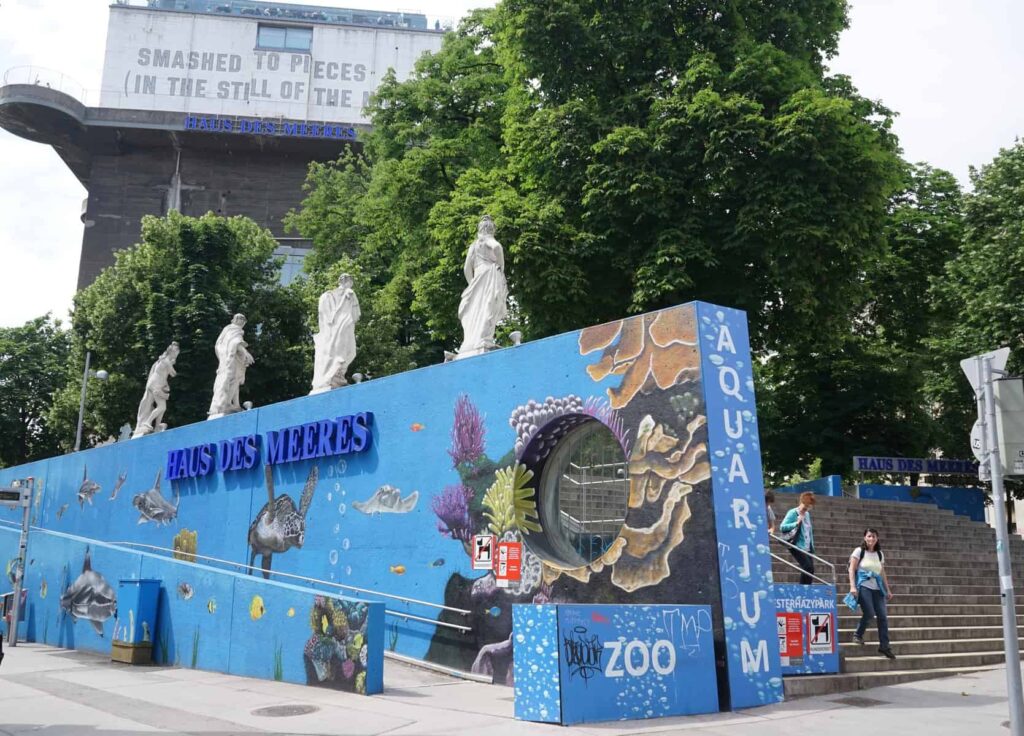
Haus des Meeres aquarium entrance and former flak tower in Vienna

In Vienna’s Mariahilf district, a massive concrete tower rises above the trees of Esterhazy Park. It was never designed to be beautiful. Built during the Second World War as part of Vienna’s air-defence system, the structure belonged to one of the darkest chapters in the city’s history.

Today, sharks swim behind its walls, tropical birds move through indoor habitats, monkeys live high above the surrounding streets, and visitors step onto terraces overlooking Vienna. This is Haus des Meeres, one of the city’s most unusual examples of adaptive reuse — and a natural addition to our collection of Hidden Gems.

From Flak Tower to House of the Sea

The Esterhazy Park tower was constructed in 1943–44 as a Luftwaffe fire-control tower, part of the network of enormous reinforced-concrete flak towers built in Vienna during the Second World War. After the war, buildings like this presented cities with an unusual problem. Their massive concrete construction made demolition extremely difficult, yet their original military purpose had disappeared.

The story of Haus des Meeres began in 1957, when scientists and members of the business community founded the Society for Marine Biology. Their ambition was remarkable: to establish Austria’s first permanent saltwater aquarium inside the former flak tower while also creating a centre for marine research.

The first Haus des Meeres opened in 1958, initially displaying marine animals from the Adriatic in a relatively modest collection of aquariums. What followed was not one dramatic conversion but decades of gradual transformation.

Aquariums, terrariums and animal habitats spread through the building. New openings had to be cut through extraordinarily thick reinforced-concrete walls. Extensions brought daylight into spaces never designed for a zoo, while lifts and new visitor areas gradually made the vertical building easier to explore.

The result is particularly striking because the original structure has never entirely disappeared. The modern zoo exists inside and around the physical remains of the wartime tower. The institution’s own history of Haus des Meeres traces this gradual transformation from the first adaptations to the much larger attraction visitors see today.

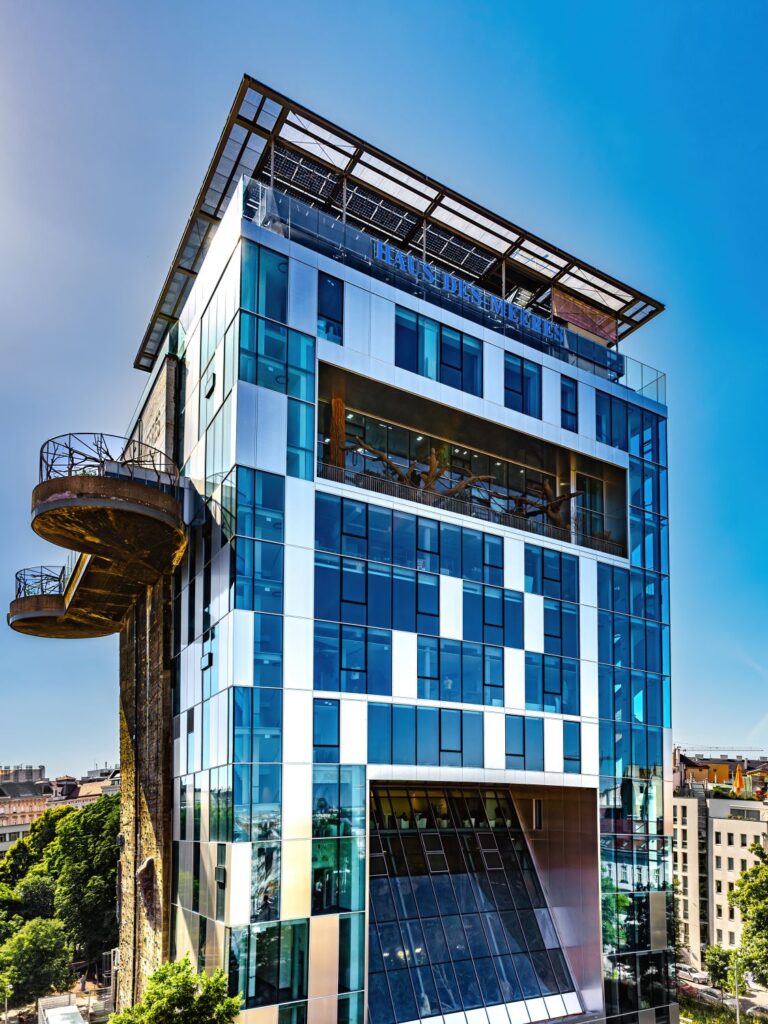
Former Vienna flak tower transformed into Haus des Meeres

A Zoo Built Vertically

The unusual architecture shapes the entire visit. Instead of walking through a conventional zoo or aquarium spread across a large site, visitors move upward through 11 floors containing more than 10,000 animals. The collection extends far beyond marine life. Sharks, rays, freshwater and saltwater fish share the building with reptiles, turtles, birds, insects, flying foxes and monkeys. Tropical areas add another environment entirely, creating a surprisingly lush interior within the heavy concrete shell.

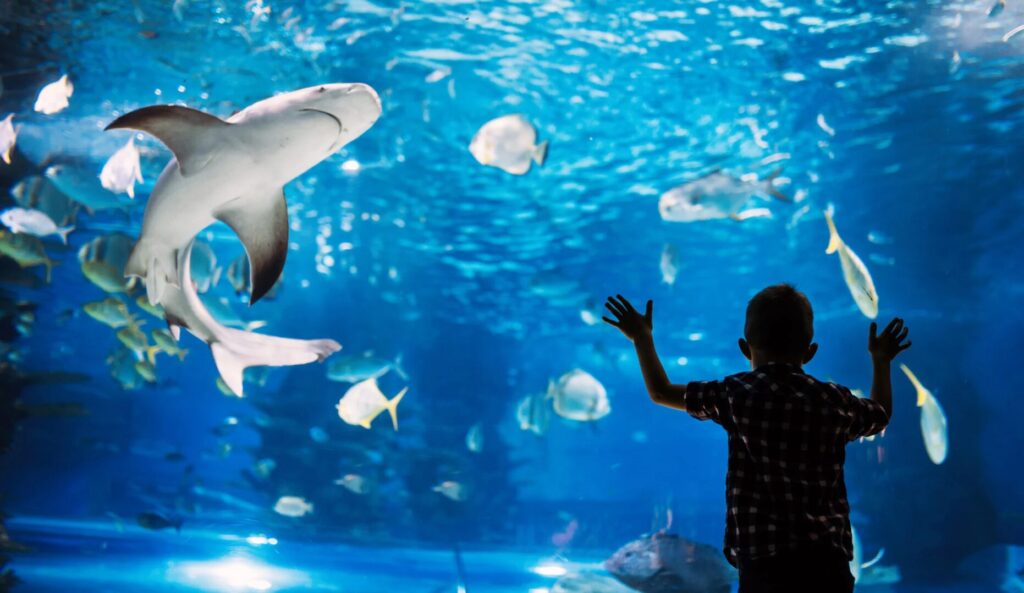
One of the most unusual installations is the Caribbean hammerhead shark tank on the 10th floor. The system holds around 150,000 litres of water with a four-metre water column, but the most surprising feature is its relationship with the building itself. A viewing panel installed inside the lift shaft allows passengers to look into the aquarium as the lift moves vertically alongside it.

Elsewhere, tropical habitats occupy spaces added to and adapted around the original tower. This vertical arrangement can make Haus des Meeres feel less like a traditional zoo and more like an exploration of different ecosystems stacked one above another.

It is also worth slowing down. The official visitor guidance suggests allowing around two to three hours, but anyone interested in both the animals and the building can easily spend longer.

Moving through a former military tower while learning about living ecosystems produces a contrast that a purpose-built aquarium could never quite reproduce. Education is part of the experience rather than a separate layer added to it, using animals and their habitats to explain biodiversity, ecological relationships and the pressures facing wildlife.

Environmental issues also form part of the exhibition. Displays addressing subjects such as marine pollution help connect the animals visitors encounter with the challenges facing their habitats in the wider world. Haus des Meeres describes itself not simply as a visitor attraction but as an educational institution intended to increase understanding of the diversity of the animal kingdom and biological and ecological relationships.

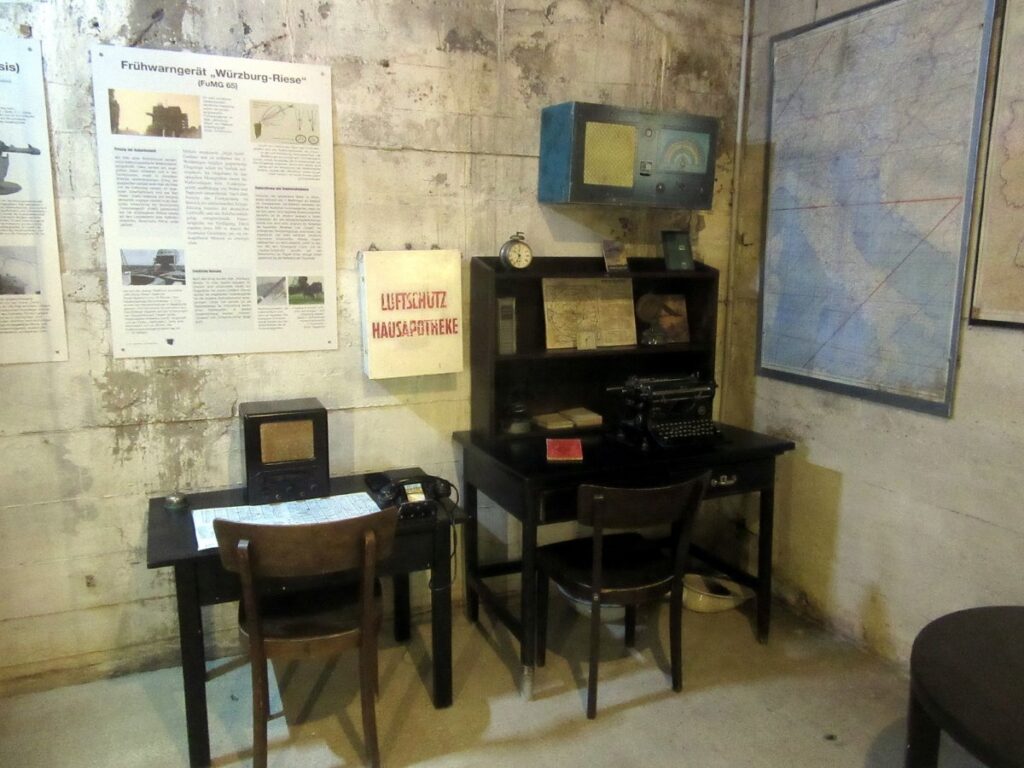
WWII history exhibition inside the Haus des Meeres flak tower in Vienna

The Building Has Not Forgotten Its Past

Transforming the tower did not mean pretending that its wartime history had never existed. On the 10th floor, the permanent “Erinnern im Innern” exhibition addresses the history of the flak tower itself. Surviving objects, historical information and parts of the original structure help explain how Vienna’s flak towers were constructed and used during the war.

Without that historical layer, the story could too easily become a simple tale of an ugly military building turned into a colorful tourist attraction. The reality is more complicated. The tower was part of a wartime system of air defence and civilian shelter, and that history remains part of the building.

The animals, tropical vegetation and aquariums therefore do not erase the past. They coexist with it. That makes Haus des Meeres an interesting example of how a city can reuse a difficult piece of architecture without completely removing its memory.

From Concrete Fortress to City Viewpoint

The transformation becomes most visible as you reach the upper levels. Terraces and the rooftop provide broad views across Vienna, while the 360° OCEAN SKY restaurant occupies the top of the building. What was once a military observation structure has effectively become a public viewpoint over the city. The exterior offers another unexpected use of the tower. One side incorporates a substantial climbing wall, turning the enormous concrete surface itself into a recreational space. Below, Esterhazy Park softens the relationship between the tower and the surrounding neighborhood. The contrast between the heavy wartime structure and these modern uses is perhaps the clearest expression of the building’s remarkable second life.


Accessibility in an Unusual Historic Structure

For such an unconventional building, accessibility is better than its origins might suggest. According to Haus des Meeres, approximately 98% of the visitor areas are wheelchair accessible. Elevators provide access to every floor and to the terraces, and the two-level Tropical Area can be approached from accessible entrances on different floors. There are exceptions. The South Galleries on levels 1 and 3 are currently not wheelchair accessible, so the building should not be described as completely step-free.

Accessible toilets are available on several levels, and one accompanying person per wheelchair user can enter without an additional admission charge. For safety reasons, a maximum of six wheelchair users can be inside the building at the same time, making it sensible to check the latest Haus des Meeres accessibility and visitor information before arriving.

For more practical ideas on exploring destinations with limited mobility, our Wheelchair Accessible travel guides look at destinations and attractions from the same practical perspective.

Child watching fish at Haus des Meeres aquarium in Vienna

Planning Your Visit

Haus des Meeres is located in Esterhazy Park in Vienna’s 6th district, making it relatively easy to combine with other parts of central Vienna.

The attraction is indoors, so it can also be useful on a day when Vienna’s weather makes extended outdoor sightseeing less appealing. But it deserves more than being treated simply as a rainy-day alternative.

Allow enough time to explore both sides of the experience: the living collections and the building itself. Look beyond the aquariums, notice where old concrete meets newer construction, and leave some time for the upper levels and views across the city.

Current opening hours and ticket arrangements can change, so these are best checked on the official website before travelling rather than relying on prices or schedules published in a travel article.

A place once constructed for war now houses thousands of living creatures and teaches visitors about the natural world. That unexpected second life is what makes Haus des Meeres one of Vienna’s most fascinating urban discoveries.

Related posts

Unlocking the Red Bull Ring Spielberg

Spielberg’s Red Bull Ring offers more than the Austrian Grand Prix. This guide covers the official circuit tour, Welcome Center and driving experiences, along with accessibility and tips for planning a visit. See what makes the venue worth a stop even when no major race is on the calendar.
Read More »
Danube river cruise routes from Passau through Vienna, Budapest and Belgrade to the Danube Delta

Danube River Cruise

A Danube cruise links historic cities with changing landscapes across Central and Eastern Europe. Compare route choices, including Budapest, Belgrade and the Iron Gates, and consider how much time each itinerary allows ashore.

Read More »
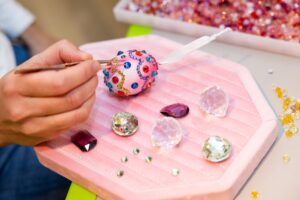
Swarovski crystals being applied by hand during a decorative design process

The Magic of Swarovski

Swarovski Crystal Worlds in Wattens is built around art and design, while the separate Manufaktur experience focuses more closely on production. Compare the two before planning a visit, so you know what each includes.

Read More »
Historic Orient Express dining car with original wooden interior

Orient Express

The Orient Express has defined luxury rail travel for more than a century. Discover its fascinating history, how the Venice Simplon-Orient-Express recreates the experience today, the classic routes from Paris to Venice and Istanbul, what life aboard is really like, current costs, and whether this legendary train journey is worth it.

Read More »

Austria: Europe’s Cultural Heartland

Austria is a breathtaking Alpine nation renowned for its imperial history and musical heritage. Visitors can marvel at Vienna’s opulent palaces, explore the baroque charm of Salzburg, or ski in the world-class resorts of Tyrol. With its stunning mountain landscapes and rich coffee house culture, it offers timeless European elegance.

Read More »
Scroll to Top