Rome Historic Centre: Three Thousand Years in One City

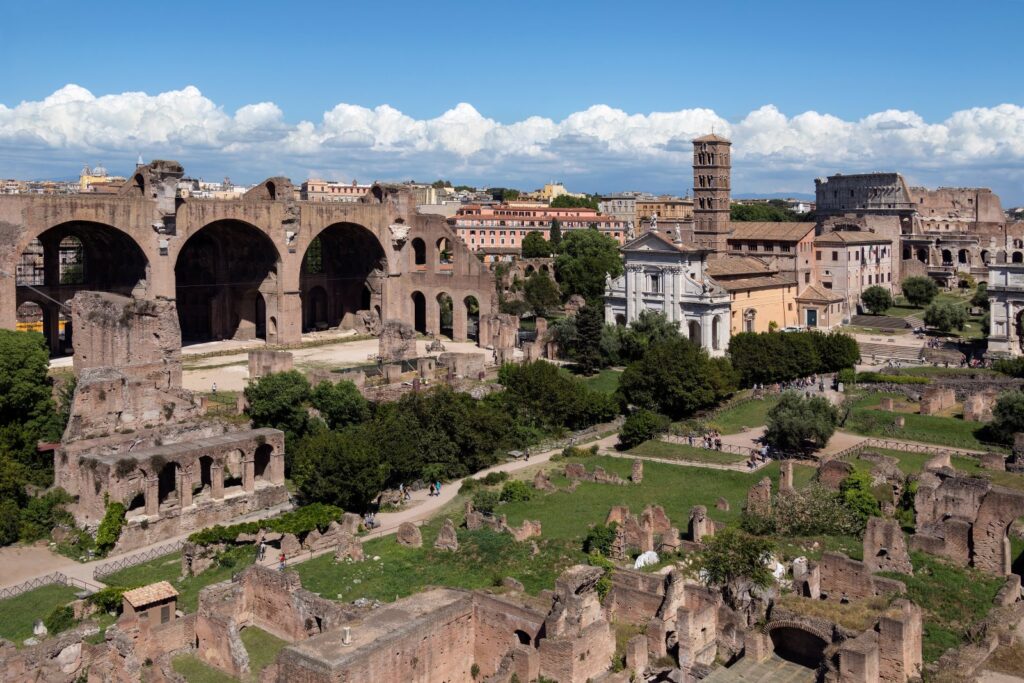
anoramic view of the Roman Forum in Rome

Few cities make the past feel as present as Rome. Ancient columns rise beside busy roads, medieval churches incorporate fragments of Roman buildings, and Renaissance palaces open onto Baroque squares that remain part of everyday city life. This layering is what makes the Rome Historic Centre much more than a collection of famous monuments. Over almost three thousand years, the city has repeatedly rebuilt itself without completely erasing what came before.

The Colosseum and Roman Forum reveal the political heart of the ancient empire. Early Christian basilicas mark Rome’s transformation into a centre of Christianity. Renaissance popes reshaped streets and public spaces, while Baroque architects turned fountains, churches and piazzas into theatrical urban landscapes. Rome’s World Heritage story is therefore best understood not monument by monument, but layer by layer.

Why Rome Is World Heritage

Rome’s historic centre was inscribed on the UNESCO World Heritage List in 1980 and significantly extended in 1990. The protected property encompasses the historic centre within the city walls at their widest 17th-century extent, together with important properties of the Holy See enjoying extraterritorial rights and the Basilica of Saint Paul Outside the Walls.

This distinction matters because Vatican City is a separate UNESCO World Heritage Site, even though it is geographically surrounded by Rome.

Rome’s UNESCO significance lies partly in the extraordinary survival of almost three millennia of architecture and urban development. Ancient monuments, Christian basilicas, Renaissance streets and palaces, and Baroque squares form parts of the same living city. UNESCO also recognises Rome’s enormous influence on architecture, urban planning and the arts far beyond Italy, as well as its long association with Christianity and pilgrimage.

For more places where architecture, history and cultural landscapes have received international recognition, explore our World Heritage collection.

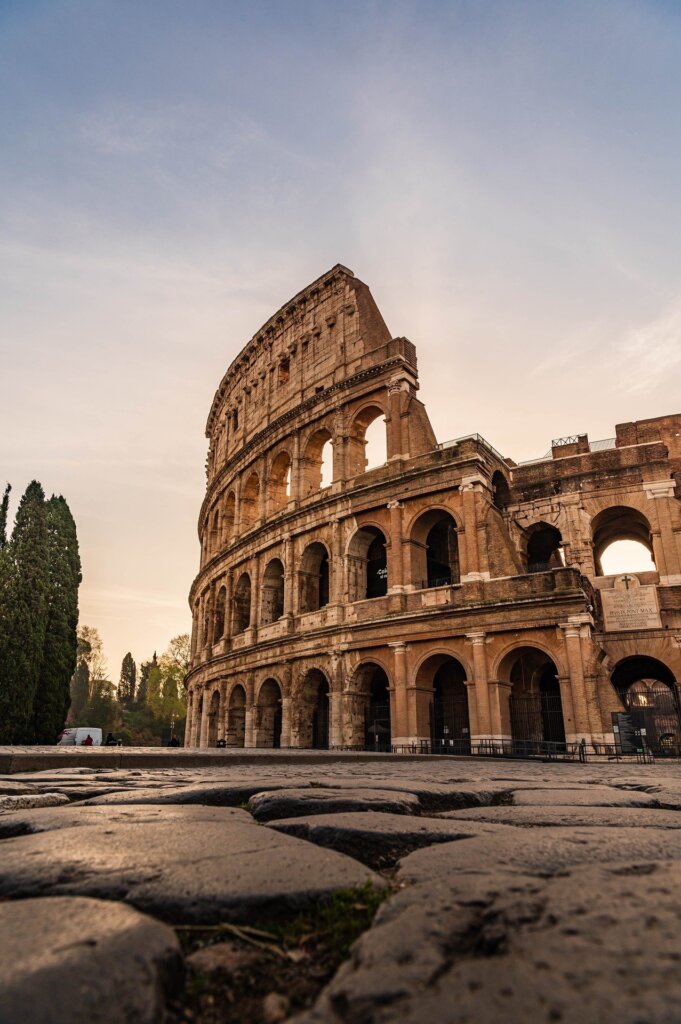
Colosseum in Rome viewed from the ancient pavement

Ancient Rome Beneath the Modern City

The most visible layer of Rome’s history belongs to the ancient city.

The Colosseum, completed in the first century AD, remains its most recognisable monument. Built for public spectacles on an immense scale, the amphitheatre could accommodate tens of thousands of spectators and became a powerful expression of imperial Rome. But the Colosseum makes more sense when seen as part of a much larger archaeological landscape.

Beside it, the Roman Forum was the political, religious and commercial centre of ancient Rome. Temples, basilicas, triumphal arches and government buildings accumulated here over centuries. Above the Forum rises the Palatine Hill, traditionally associated with Rome’s legendary foundation and later occupied by increasingly elaborate imperial residences.

Together, the three sites reveal different aspects of the same city: mass entertainment, public life, religion and imperial power.

The Pantheon offers perhaps the most remarkable example of continuity. Rebuilt during the reign of Hadrian in the second century AD, its vast concrete dome remains one of the great achievements of Roman engineering. The circular opening at its centre – the oculus – is the building’s principal source of natural light and is completely open to the sky.

Rain really does enter the building. The slightly convex floor and drainage system help carry the water away.

The Pantheon’s survival owes much to its conversion into a Christian church in the early seventh century. Today it remains both a functioning basilica and the burial place of figures including the Renaissance painter Raphael and two kings of unified Italy.

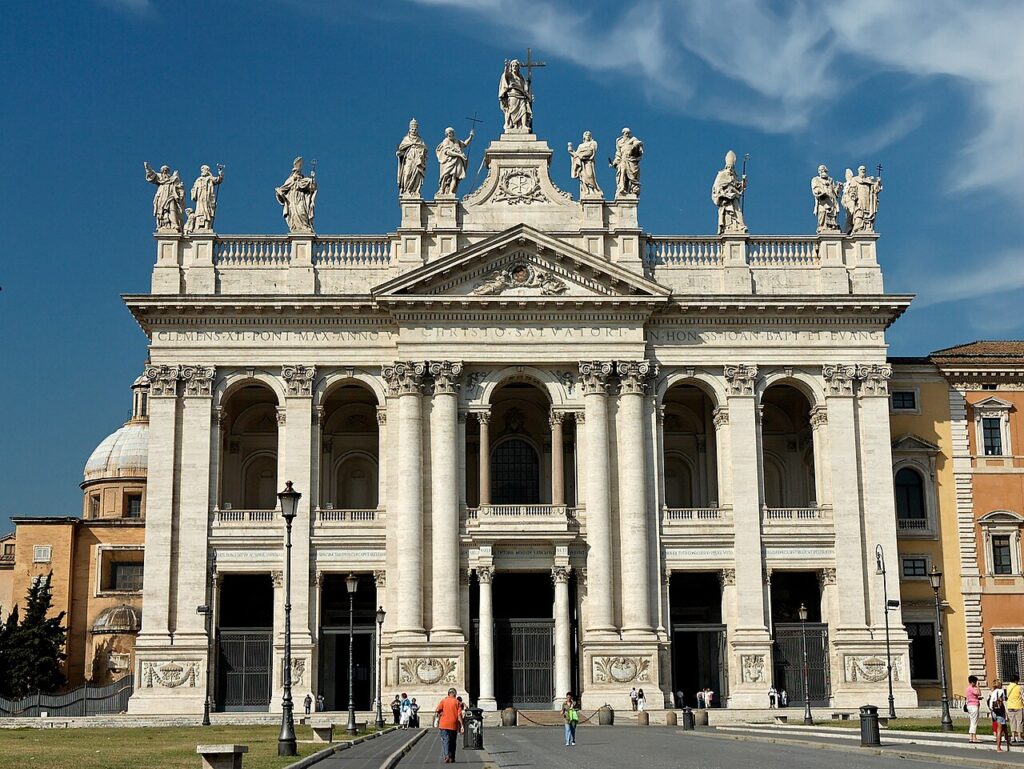
acade of the Archbasilica of Saint John Lateran in Rome
WikiCommons/by Alessandro Galilei

From Imperial Rome to Christian Rome

Rome did not simply disappear when imperial power shifted away from the city.

From the fourth century onwards, another Rome developed on and around the ancient one. Christian communities reused buildings, spaces and even construction materials inherited from the imperial city, while churches and pilgrimage sites gradually created a new sacred geography.

UNESCO specifically recognises this relationship between Ancient Rome and Christian Rome as part of the city’s exceptional historical importance.

Among the most important monuments are the great basilicas associated with the Holy See.

San Giovanni in Laterano, rather than St Peter’s Basilica, is the cathedral of the Bishop of Rome – the Pope. Its complex, together with the Lateran Palace and associated buildings, forms part of the extraterritorial Holy See properties included within the Rome World Heritage Site.

Santa Maria Maggiore preserves another major strand of early Christian and papal Rome, while San Paolo fuori le Mura – Saint Paul Outside the Walls stands beyond the historic walls near the traditional burial place of the Apostle Paul.

These monuments help explain why the full UNESCO title is considerably longer than simply “Historic Centre of Rome.” The World Heritage property represents not only the former capital of the Roman Empire but also a city that became one of Christianity’s most important centres of pilgrimage.

Renaissance and Baroque Rome

Another transformation began in earnest during the Renaissance, when popes, cardinals and wealthy families commissioned new churches, palaces, streets and public spaces. Instead of replacing ancient Rome completely, Renaissance and Baroque planners incorporated its monuments and inherited urban structures into a new vision of the city. The result is particularly visible in Rome’s great piazzas. Piazza Navona occupies the elongated footprint of the ancient Stadium of Domitian. The Roman structure has largely disappeared below street level, but its shape still determines the square above it – an unusually clear example of one city literally following the plan of another.

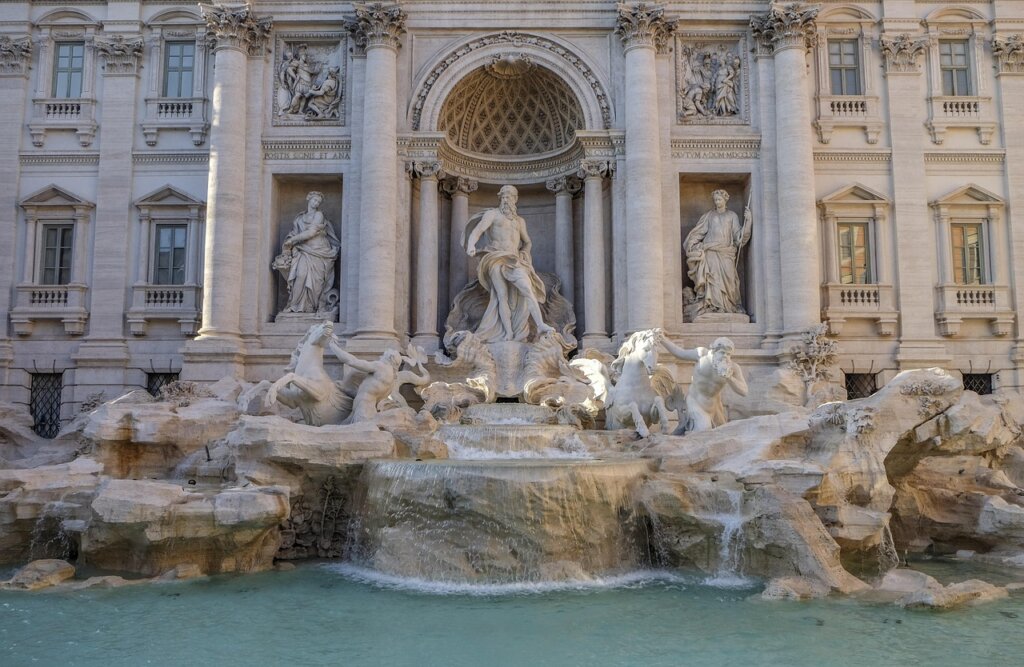
During the Baroque period, the piazza became a theatrical urban setting. At its centre stands Gian Lorenzo Bernini’s Fountain of the Four Rivers, while Francesco Borromini’s Sant’Agnese in Agone faces the square. The Trevi Fountain provides an even more dramatic example of Baroque spectacle. Rather than standing independently in a large open space, the fountain appears almost unexpectedly at the end of narrow streets, filling one side of its relatively compact piazza with water, sculpture and architecture.

The Spanish Steps create a different kind of monumental public space. Built in the 18th century, the staircase connects Piazza di Spagna with the church of Trinità dei Monti above. Its ramps divide, converge and change direction as they climb the slope, transforming a steep connection between two levels of the city into architecture. Together with Piazza del Popolo and the streets radiating through this part of central Rome, the area forms part of the urban development UNESCO identifies among the achievements of Renaissance and Baroque Rome.

Trevi Fountain with Oceanus sculpture in Rome

Rome on Page and Screen

Rome’s influence did not end when its great building periods were over. Writers, painters and filmmakers repeatedly reinvented the city for new audiences.

Beside the Spanish Steps stands the Keats-Shelley House, where the English Romantic poet John Keats spent the final months of his life and died in 1821 at the age of 25. Today the house preserves manuscripts, letters and other material connected with Keats and the wider circle of Romantic writers associated with Italy.

A century later, cinema created another version of Rome.

In Roman Holiday, released in 1953, Audrey Hepburn and Gregory Peck move through a city of scooters, piazzas and ancient monuments. The film helped transform locations such as the Spanish Steps and the Mouth of Truth into internationally recognised pieces of cinematic Rome.

Federico Fellini created a very different portrait in La Dolce Vita in 1960. Its nighttime scene with Anita Ekberg and Marcello Mastroianni at the Trevi Fountain became one of the most recognisable images in European cinema.

The fountain had existed for two centuries. Fellini gave it another life.

That continuing reinterpretation is part of Rome’s fascination. Ancient monuments, Baroque piazzas and ordinary streets have become settings through which successive generations imagine the city again.

Walking Through the Historic Centre

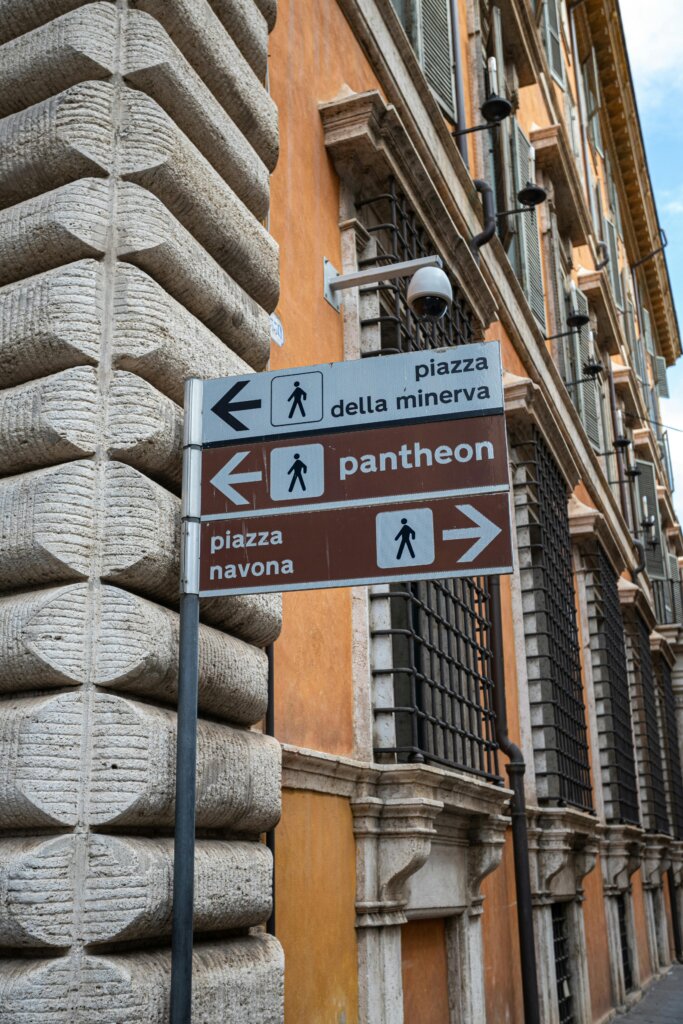
Rome rewards walking because many of its major historical areas are surprisingly close to one another. A route beginning around the Colosseum can continue through the Roman Forum towards Piazza Venezia and the Capitoline area before entering the dense streets of the historic centre. From there, the Pantheon and Piazza Navona are close enough to combine comfortably on foot.

The Trevi Fountain and Piazza di Spagna form another natural cluster farther north.

Trying to connect every major monument in a single day, however, misses much of what makes central Rome interesting. Distances on a map can look manageable, but archaeological sites require time, streets are often crowded and the city constantly provides reasons to stop.

Two or more days allow the ancient archaeological area and the later historic centre to be explored at a much better pace.

Public transport is useful when moving between more distant areas. Metro lines reach several major parts of the city, while buses and trams fill many of the gaps. Within the oldest streets, however, walking is often the simplest option.

Comfortable shoes matter. Cobblestones, uneven archaeological surfaces, steps and long days on foot are part of the experience.

Pedestrian signs pointing toward the Pantheon and Piazza Navona in Rome

Planning Your Rome Historic Centre Visit

Several of Rome’s major monuments require advance planning.

For the Colosseum, timed admission is required, and official ticket sales currently open 30 days before the visit. The same archaeological park includes access options covering the Roman Forum and Palatine Hill, so it makes sense to plan these sites together rather than as unrelated stops. Current opening hours, ticket types and reservation arrangements are available through the official Colosseum Archaeological Park.

The Pantheon also has regulated visitor access, while active churches and basilicas may have different arrangements for worship and tourism. Religious services can temporarily affect visitor access, and appropriate clothing is expected in churches. Because admission arrangements can change, checking official information shortly before a visit is more useful than relying on fixed prices published in a travel guide.

Early mornings can make outdoor areas considerably more pleasant, while evenings reveal another side of Rome as illuminated monuments and piazzas become part of the city’s social life.

Spring and autumn generally offer comfortable conditions for long walks, although Rome is busy during much of the year. Summer can be extremely hot, making shade, water and a slower midday pace important.

For a wider journey beyond the capital, our Italy travel guide connects Rome with more of the country’s historic cities, landscapes and cultural experiences. Rome cannot realistically be reduced to a checklist of monuments. Ancient ruins, Christian basilicas, Renaissance streets and Baroque piazzas remain parts of the same functioning city.

In the Rome Historic Centre, history is not confined to individual sights. It is the structure of the city itself.

Related posts

St Peter’s Square viewed from the dome in Vatican City

Vatican City

Vatican City brings St Peter’s Basilica, the Vatican Museums and the Sistine Chapel into a remarkable historic setting. Our guide looks at its art, continuing religious life and the work involved in preserving its collections.

Read More »
Moto Guzzi motorcycles and visitors outside the factory in Mandello del Lario

Moto Guzzi Factory

Moto Guzzi’s home in Mandello del Lario connects motorcycle heritage with modern manufacturing. Discover how the museum, factory and visitor spaces relate, and what to check before travelling to the Lake Como site.
Read More »
Florence Cathedral dome and Giotto’s Bell Tower viewed through a historic window

Italy – Art, Landscapes and La Dolce Vita

Italy rewards travellers with extraordinary history, regional cuisine and remarkably varied landscapes. From Rome, Florence and Venice to the Alps and southern Italy, this Italy travel guide covers where to go, when to visit, transport and accessibility – and why the country is worth exploring more than once.
Read More »
Murano glassmaker shaping a colorful glass ornament in a workshop

Murano Glass Factory Tours

Watching a Murano glassmaker at work brings the island’s craft into focus. Compare factory demonstrations and hands-on workshops, see where the Glass Museum fits into a visit, and learn what to check before booking.
Read More »

Swiss Mountain Tracks

The Bernina Express crosses the Alps through high mountain scenery and remarkable railway engineering. This guide follows the changing landscape from glaciers to valleys and helps you decide how to experience the route.
Read More »
Mediterranean cruise ships docked along the Croatian coast

Mediterranean Cruise

Mediterranean cruises can follow Western or Eastern routes, each with different ports and travel rhythms. Compare city visits, island stops and time ashore so the itinerary matches your interests and the amount of walking you enjoy.

Read More »
Scroll to Top