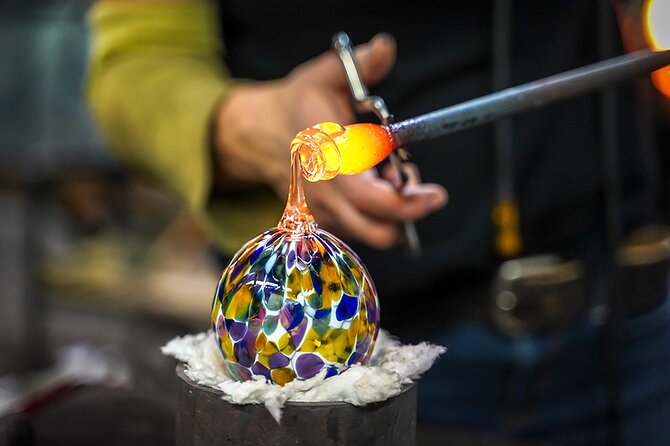
Murano glassmaker shaping a colorful glass ornament in a workshop

Murano Glass Factory Tours: Watching the Masters at Work

Murano is famous for glass, but the finished pieces displayed in Venetian shops tell only part of the story. Across the island, furnaces and workshops still produce glass today, and several open their doors to visitors. Depending on where you go, you might watch a short demonstration, explore a working production environment or take part in a hands-on session alongside experienced glassmakers. For travelers interested in how things are made, this is what makes Murano particularly interesting. It is not simply a historic glassmaking centre but a place where production can still become part of the travel experience. That makes the island a natural addition to our Magic of Manufacturing collection.


Why Murano Became the Island of Glass

Glassmaking in the Venetian lagoon has a history stretching back more than a thousand years, while Murano developed into its great production centre during the Middle Ages. Concentrating furnaces on the island brought glassmakers, specialist workers and generations of accumulated knowledge together in one place. Over time, Murano developed into one of Europe’s most distinctive glassmaking communities. The industry survived changing tastes, foreign competition and periods of serious decline. Although today’s workshops are very different from their medieval predecessors, the connection between Murano and glass production has never disappeared. Glass is still being produced here.

Choosing the Right Experience

The words demonstration, factory tour and workshop are often used when advertising Murano visits, but they do not describe the same experience.

  • A demonstration usually involves watching a glassmaker create one or more objects beside the furnace. It can be a fascinating first encounter with hot glass, but it may reveal relatively little about the wider production environment.
  • A factory or furnace tour puts more emphasis on the workplace itself. Access varies between companies, but the aim is to see glassmakers at work and understand more about how the workshop operates.
  • A hands-on workshop adds participation. Some involve working with hot glass under close supervision, while others concentrate on decorative techniques.

Deciding which of these experiences interests you most makes it much easier to choose where to visit.

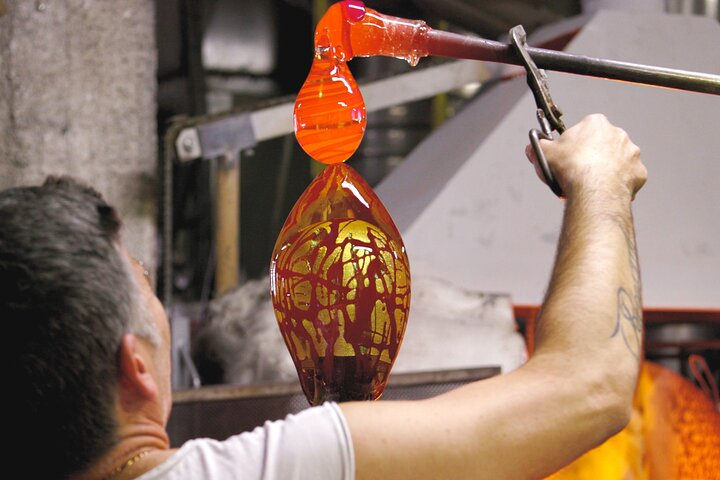
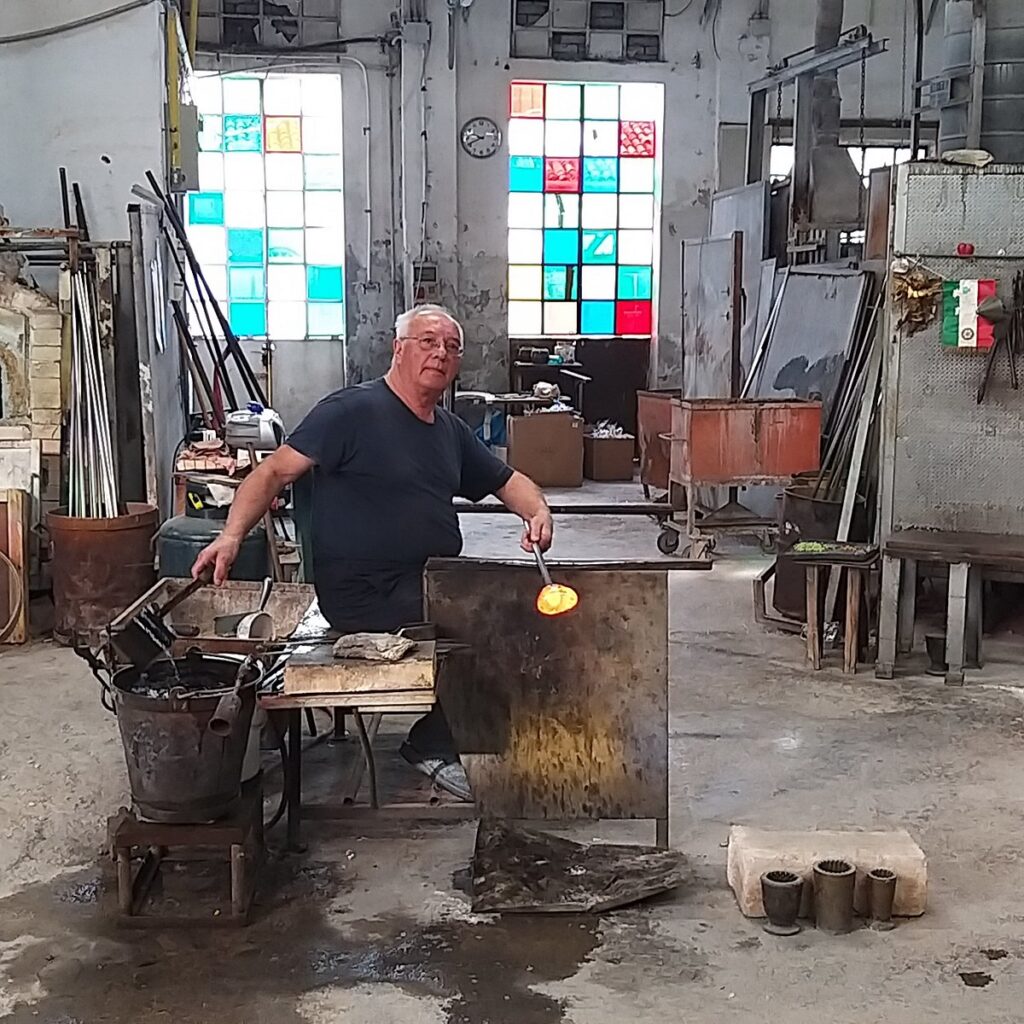
Murano glassmaker shaping molten glass inside a workshop

The Showroom Question

Many Murano furnace visits include a showroom, and this is not surprising. These are commercial businesses, and selling the objects produced by their glassmakers is part of how they operate. The important question is how much of the experience takes place around the furnace and production area. A short demonstration followed by time in a showroom may be perfectly suitable for someone who wants an introduction to glassmaking and an opportunity to shop. Travelers primarily interested in manufacturing, however, should look for visits where seeing the workplace and the glassmakers at work forms a substantial part of the program.

Understanding that distinction before choosing a factory helps avoid mismatched expectations.

Wave Murano Glass: Inside a Working Factory

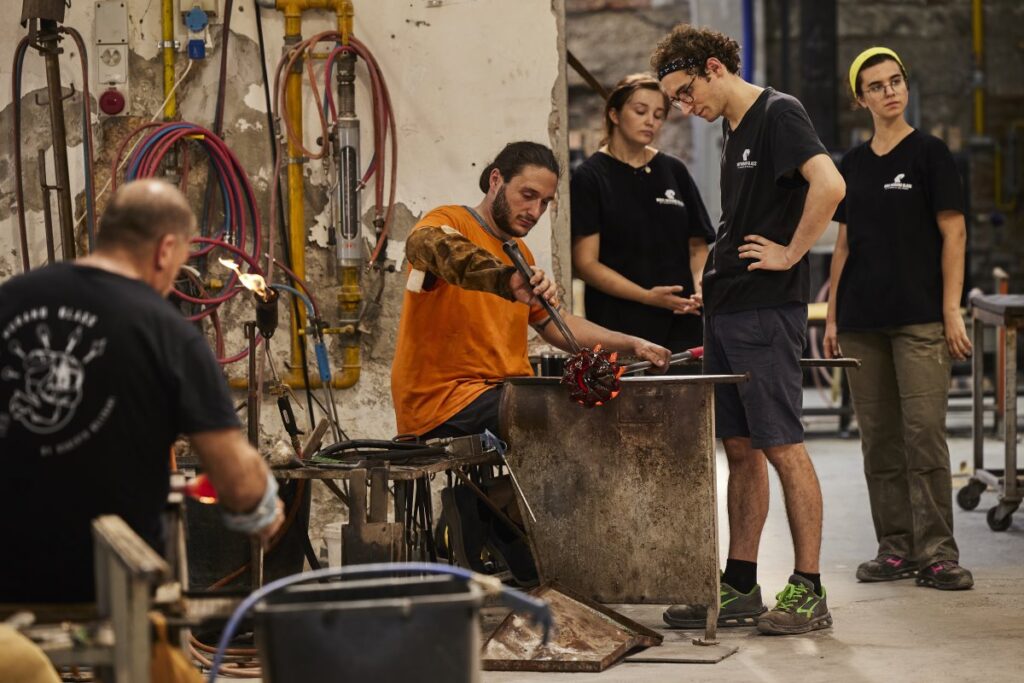
Murano glassmaker shaping molten glass inside a workshop

 For visitors particularly interested in the production environment, Wave Murano Glass offers a small-group guided factory tour. Rather than concentrating only on a single demonstration, the visit takes guests into the furnace environment and introduces different parts of the production process while the glassmakers work. The tour generally lasts around 45–60 minutes, with opportunities to ask questions along the way. Separate beginner glassblowing experiences are available for visitors who would like to try working with glass themselves.

One practical limitation is worth knowing before booking: Wave currently states that its factory tour is not wheelchair accessible and also cautions visitors about the intense heat around the furnaces.

Original Murano Glass: Different Levels of Participation

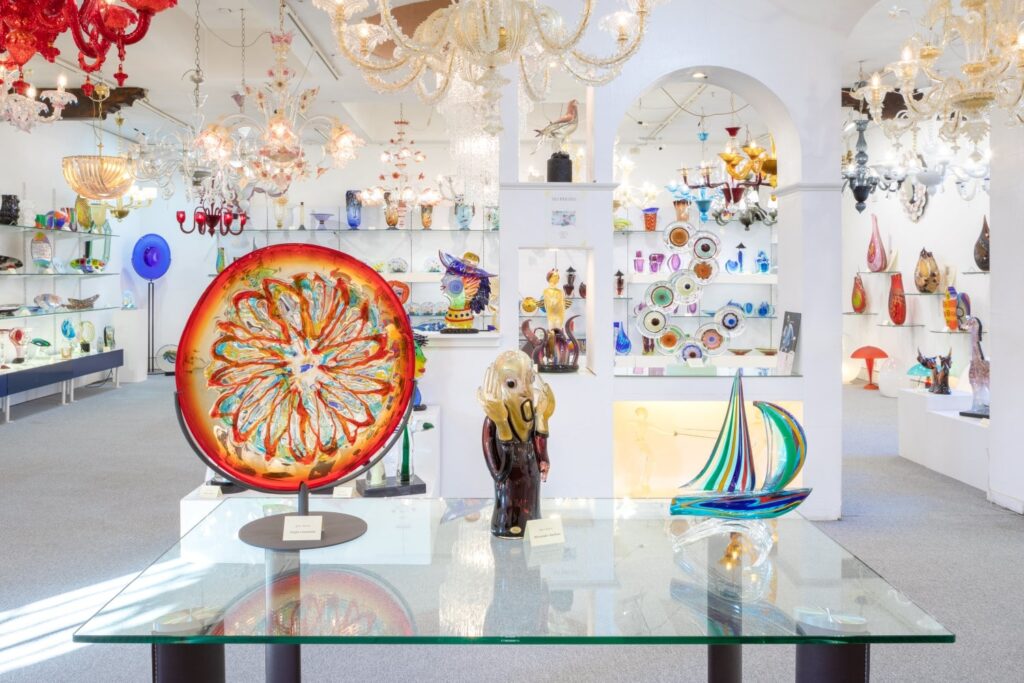
Murano glass showroom displaying colorful handmade glass pieces

 Close to the Murano Faro vaporetto stop, Original Murano Glass OMG allows visitors to choose how closely they want to engage with production. The simplest option is a live furnace demonstration, with a dedicated visitor area for watching the glassmakers at work. Depending on the activity in the furnace, other pieces may also be in production during the visit.

For those who want to participate rather than simply observe, the company offers several hands-on workshops, ranging from introductory glassmaking sessions to longer glassblowing classes and private furnace experiences.

This range makes it particularly useful when members of the same group are looking for different levels of involvement.

Vetreria Artistica Colleoni: Factory Visit and Workshop

 Also near Murano Faro, Vetreria Artistica Colleoni offers a guided visit built around watching a master glassmaker at work. During the demonstration, visitors see objects being created with different techniques while learning where and how Murano glass is produced. The standard visit continues into the company’s showroom, with the admission currently usable as credit toward a purchase.

A separate program combines the factory visit with a practical workshop, providing an alternative for visitors who want to add a hands-on activity to the experience.

The Glass Museum: Adding Context to the Factory Visit

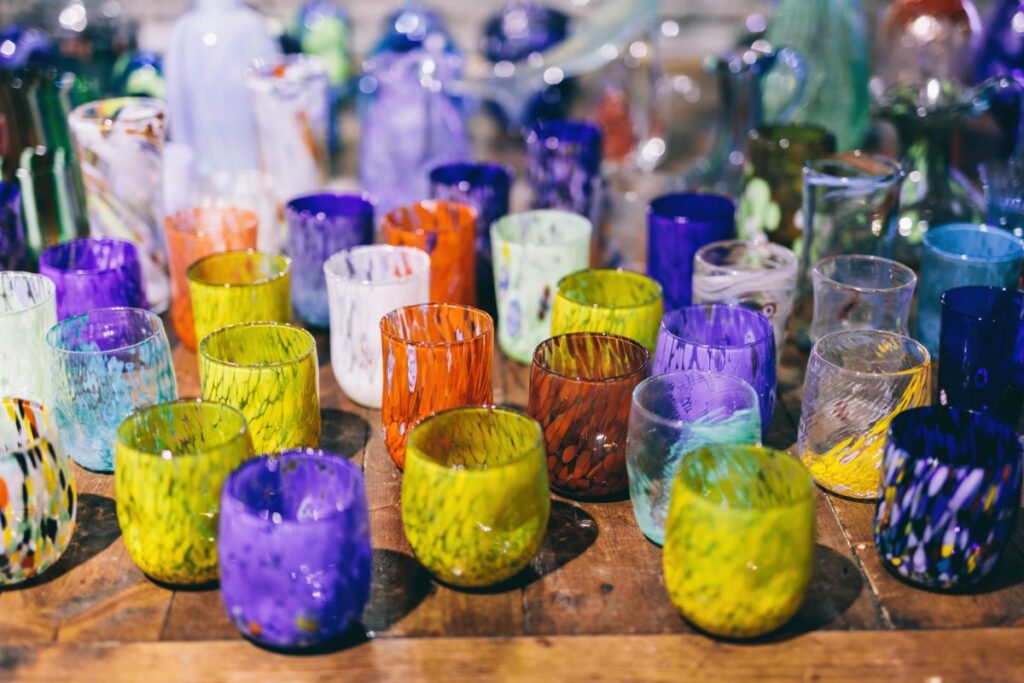
Colorful Murano glass pieces displayed in the Glass Museum

 A furnace shows Murano glassmaking as a living industry; the Museo del Vetro provides the historical context. Founded in 1861 and housed in Palazzo Giustinian, the museum grew partly through donations from Murano’s glassworks and today holds an extensive collection documenting the island’s glassmaking history.

For manufacturing enthusiasts, it works particularly well as a companion to a factory visit. Historical pieces and later designs show how the industry changed over centuries, while the furnace provides the contemporary counterpart.

Together they offer something familiar from many good factory destinations: the workplace shows the industry in action, while the museum explains how it developed.

Visiting Murano Independently

You do not need to join an organised Venice–Murano–Burano excursion to visit the island’s glassworks.

Murano is part of Venice’s public transport network and is served by several vaporetto stops. Original Murano Glass and Colleoni are both close to Murano Faro, making them particularly straightforward to combine with an independent visit.

Travelling independently also gives you control over your time. Instead of fitting the furnace into a multi-island excursion, you can arrange a specific factory visit or workshop and combine it with the Glass Museum and some time exploring Murano itself.

For current routes and service information, check the ACTV public transport website before travelling.


Planning Your Visit

Pre-booking is sensible for small-group factory tours and hands-on workshops, where capacity may be limited. If seeing normal production is particularly important to you, check what will be operating on the day of your visit rather than assuming that every furnace experience provides the same access.

Allow enough time to combine the factory with other parts of Murano. A furnace visit and the Glass Museum complement each other especially well: one provides direct access to today’s glassmaking, while the other places what you have seen within the much longer story of the island’s industry.

Related posts

Visitor tasting chocolate at Maison Cailler in Broc, Switzerland

The Sweetest Journey

Maison Cailler in Broc follows Swiss chocolate from its ingredients to the finished product. Learn what the visitor tour, production displays and workshops offer, and how to plan a stop in the region. Nearby Gruyères makes a natural second stop.

Read More »
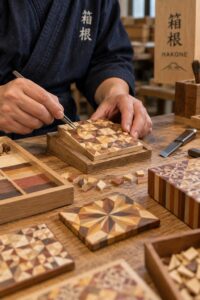
Artisan creating a geometric yosegi-zaiku wood pattern in a Hakone workshop

Japanese Woodworking

Japanese woodworking traditions range from interlocking kigumi joints to decorative techniques. This guide compares workshop experiences and shows how working by hand at the bench reveals the logic behind each craft.

Read More »
Moto Guzzi motorcycles and visitors outside the factory in Mandello del Lario

Moto Guzzi Factory

Moto Guzzi’s home in Mandello del Lario connects motorcycle heritage with modern manufacturing. Discover how the museum, factory and visitor spaces relate, and what to check before travelling to the Lake Como site.

Read More »
Artisan painting a Venetian mask in the Venice Art Mask Factory in Shkodër

Venetian Masks

A mask workshop in Shkodër connects Venetian carnival traditions with contemporary Albanian craftsmanship. See how the masks are shaped and decorated, and what makes a visit different from browsing a souvenir shop.

Read More »
Diamond craftsman working in a workshop with Antwerp in the background

Antwerp Diamonds

Antwerp’s Diamond District has a long trading history, but its working spaces are not all open to visitors. Learn what the DIVA museum explains, where you can realistically encounter the craft, and how the trade shaped the district.

Read More »

Touching the Sky

An Airbus factory visit in Toulouse reveals the scale and coordination behind aircraft assembly, with components arriving from across Europe. Learn what the visitor tours cover, how access is arranged and why this part of France became an aviation centre.

Read More »
Scroll to Top