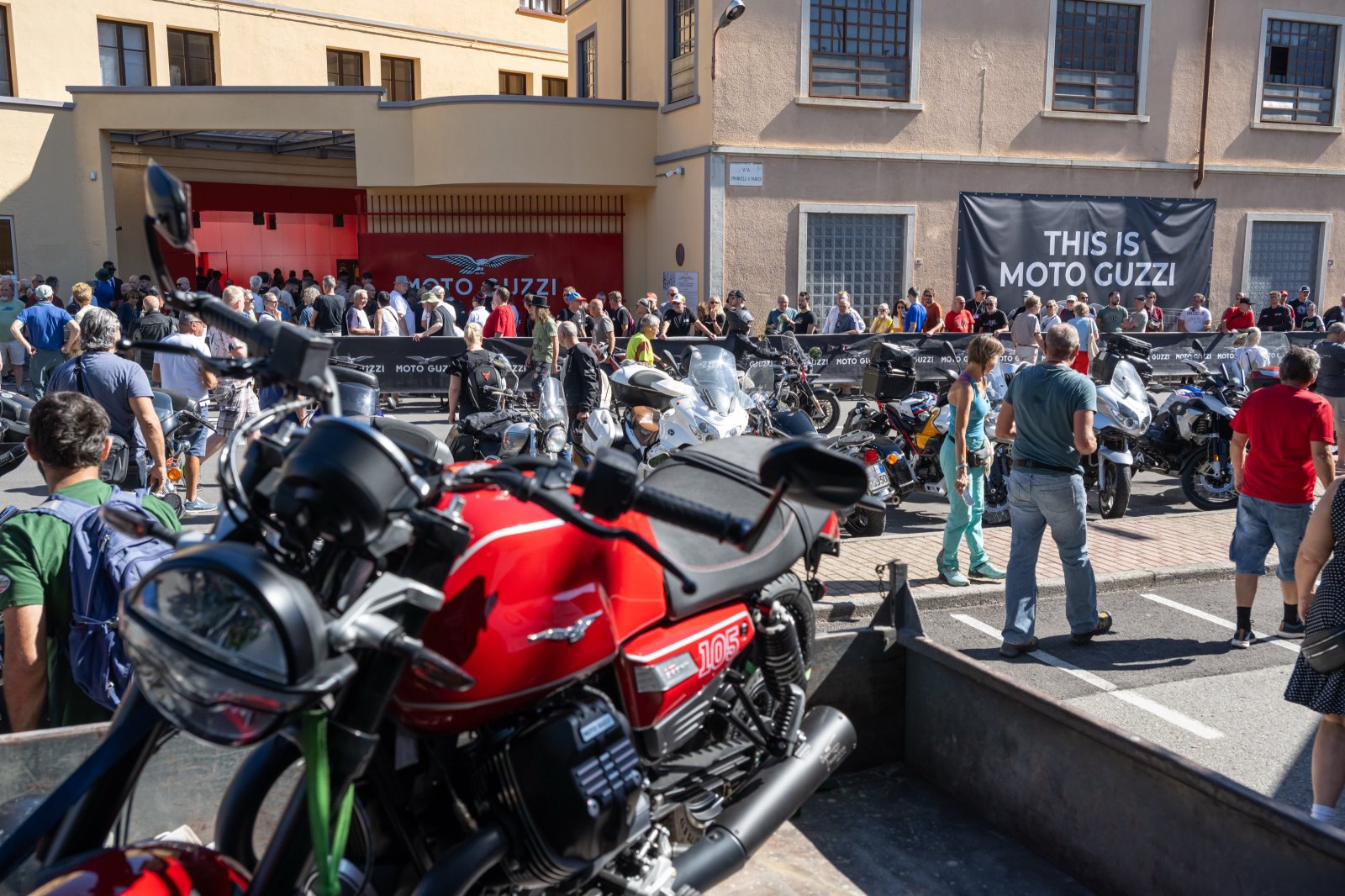
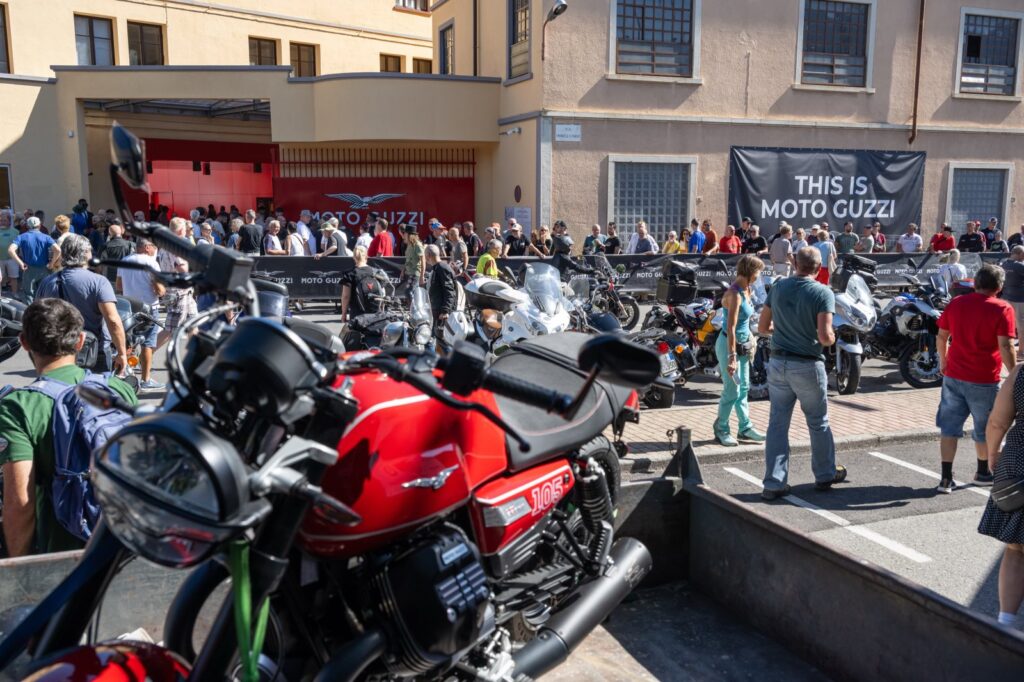
Moto Guzzi motorcycles and visitors outside the factory in Mandello del Lario

Moto Guzzi Factory

Moto Guzzi motorcycles and visitors outside the factory in Mandello del Lario

Moto Guzzi Factory & Museum: Inside Mandello del Lario

For more than a century, motorcycles have been built in the same small town on the eastern shore of Lake Como. Moto Guzzi was founded in 1921, and Mandello del Lario has remained its home ever since.

In September 2026, that historic connection entered a new chapter. After almost five years of work and an investment of more than €50 million, the company opened a completely transformed factory, a new museum and extensive visitor spaces within the original manufacturing site. Designed by American architect Greg Lynn, the project deliberately brings production, industrial heritage and public spaces together rather than separating the factory from the visitor experience.

For travellers, the result is an unusual combination: more than a century of motorcycle history alongside a modern production facility that is still building bikes today.

A Historic Factory Reborn

The famous red gate on Via Parodi remains, but much of what lies behind it has changed. The redevelopment increased the factory area to around 38,000 square metres and raised production capacity to more than 30,000 motorcycles a year. At the same time, 4,200 square metres of new multifunctional areas were created for visitors, events and cultural activities.

This is not simply a restoration of an old factory. New automated engine assembly lines were built, while the final motorcycle assembly plant is connected to the engine facility by a robotised conveyor system. At the end of production, ground robots developed by Piaggio Fast Forward transport motorcycles towards final testing. The contrast is part of what makes the site interesting. Historic industrial buildings have been retained within a facility using modern automation and contemporary architecture, rather than being separated into a heritage attraction elsewhere.

For a closer look at the redevelopment itself, the official Moto Guzzi presentation of the new Mandello complex provides background on the architecture, production technology and visitor concept.

A Landmark of Motorcycle Engineering

One historic feature survived the transformation for a very good reason: the Galleria del Vento, or wind tunnel.

Created in the middle of the 20th century, it represents an important period in motorcycle engineering, when aerodynamics was becoming increasingly important to racing performance and road-bike development. Instead of relying only on theoretical calculations and road testing, engineers could study the interaction between rider, motorcycle and airflow under controlled conditions. The wind tunnel has been restored as part of the new Mandello complex and is now one of the historic features incorporated into the public-facing site. Many manufacturer museums can display historic machines; far fewer can preserve the engineering infrastructure that helped create them.


More Than a Motorcycle Museum

The transformation was designed around the idea that visitors should spend time here rather than simply enter an exhibition and leave. Two tree-lined squares, pedestrian routes and a raised terrace now connect different parts of the complex. There is also a Motoplex Store, café, auditorium and spaces intended for workshops and events.

Greg Lynn’s design does not attempt to disguise the industrial character of the location. The new public areas remain within the original factory perimeter, allowing old industrial structures and contemporary architecture to coexist rather than turning the site into a conventional standalone museum.

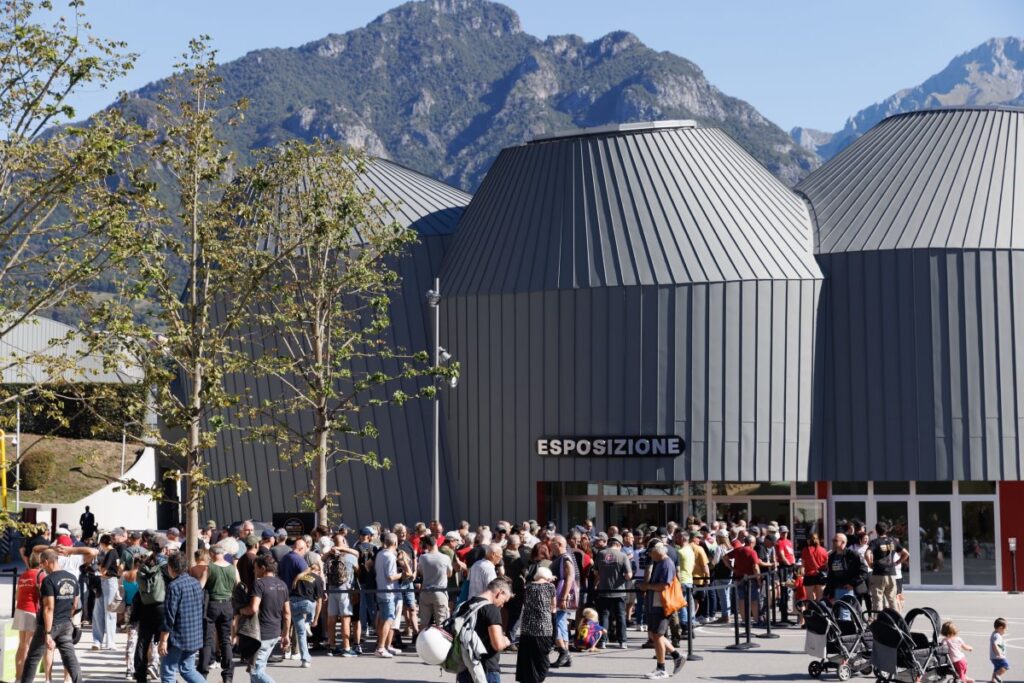
The response to the reopening was substantial. More than 60,000 people travelled to Mandello del Lario during the four-day Moto Guzzi World Days in September 2026. According to the company, around 40,000 visited the new complex and the museum recorded approximately 30,000 admissions during the event.

Those figures came from an exceptional anniversary weekend rather than normal tourism, so they should not be treated as typical visitor numbers. They do, however, show the scale of interest surrounding the reopening.

Inside the Moto Guzzi Factory and Museum

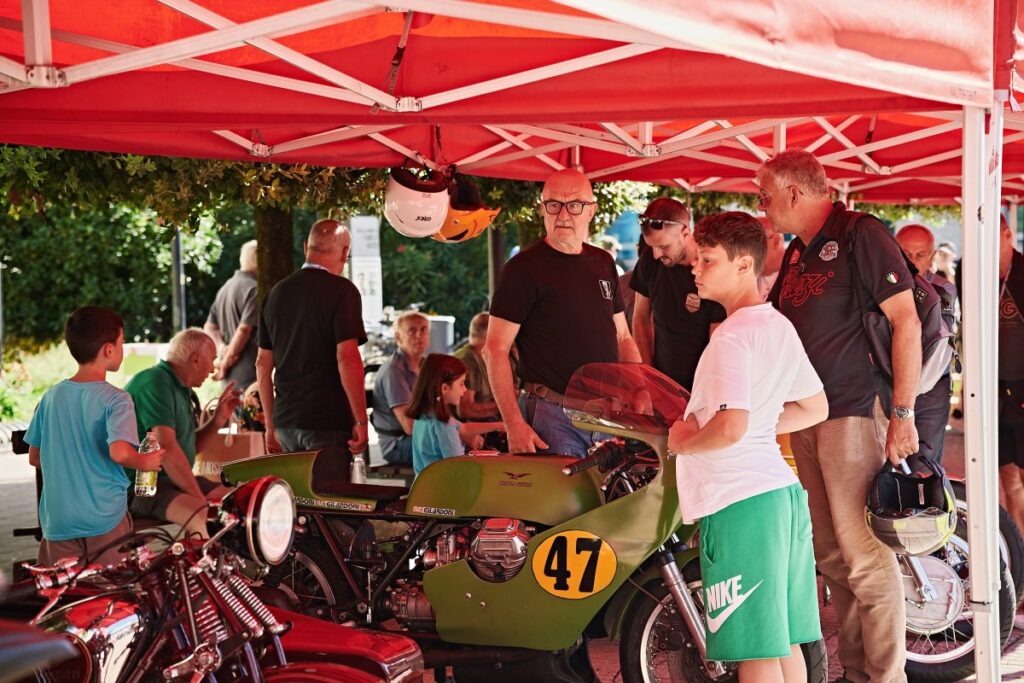
The new museum occupies approximately 3,000 square metres and contains more than 160 restored motorcycles. The collection begins with the G.P. prototype associated with the birth of the company and continues through historic road bikes, racing machines and current models. Rather than presenting the motorcycles simply in chronological rows, the exhibition also explores themes including racing, travel, cinema, art and vehicles developed for military and police use.

For anyone interested in motorcycle history, there is plenty to explore. Racing is particularly important to the story, but the collection also illustrates how motorcycle design, engineering and everyday mobility changed across generations.

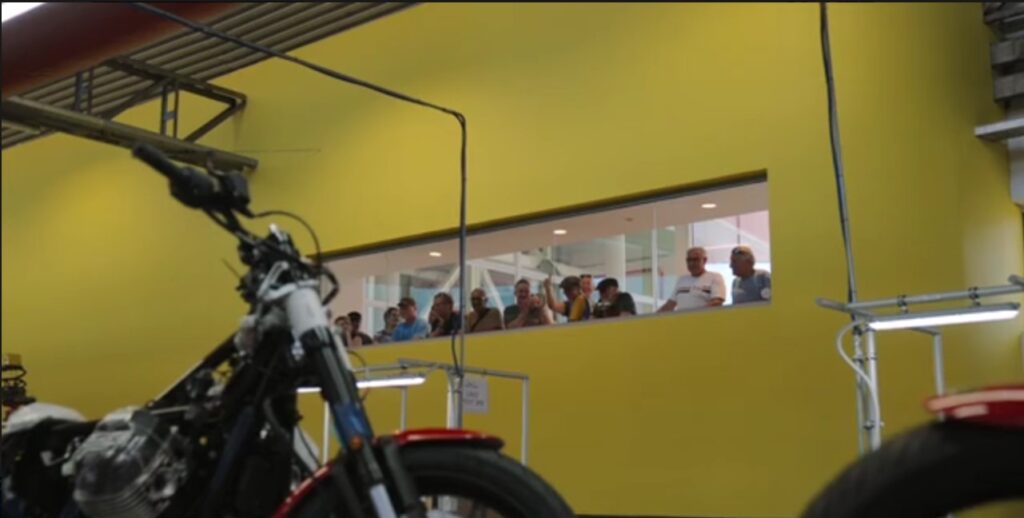
What makes the museum particularly relevant to our Manufacturing collection is its relationship with the working factory. Visitors have a window onto the new assembly lines, allowing them to connect the historic motorcycles on display with machines being produced today. Pedestrian routes through the redesigned complex also provide views of the factory in operation.

There is an important distinction, however. We would not describe the regular experience as a conventional guided production-line tour comparable with some automotive factory tours. During the September 2026 opening celebrations, visitors received unusually extensive access to the production facilities, and not every part of that programme should be assumed to form part of an ordinary visit. If seeing production up close is your main priority, our Lamborghini Factory Tour guide provides an interesting comparison with a more structured automotive factory-tour experience.

Visitors looking into the Moto Guzzi production area at the Mandello del Lario factory

Planning Your Moto Guzzi Visit

Mandello del Lario lies on the eastern shore of Lake Como, north of Lecco, making the factory relatively easy to include in a wider northern Italian itinerary. Because the redesigned complex has only recently opened, check current booking arrangements and opening hours before travelling. The inaugural schedule announced for September 2026 – daily except Tuesday, from 10:00 to 17:30 – should not be assumed to be the permanent timetable.

The safest starting point for current visitor information is the official Moto Guzzi website. If seeing production is particularly important to you, confirm what is included in the visitor programme for your chosen date rather than assuming that all areas seen during the opening celebrations will be accessible. Detailed accessibility information is currently more limited than we would like. Until comprehensive information is published covering step-free routes, lifts, accessible toilets and access within production areas, wheelchair users and visitors with limited mobility should contact the venue before travelling.


Make It Part of a Lake Como Trip

Mandello’s location makes the visit easy to combine with a wider journey through Lombardy. Rather than treating the factory as an isolated destination, travellers can include it in a Lake Como stay or a longer northern Italian itinerary.

It also provides an interesting counterpoint to Italy’s better-known automotive attractions. In Emilia-Romagna, our Lamborghini Factory Tour explores supercar manufacturing, while the Monza Circuit Tour offers a different perspective on Italian motorsport culture. Mandello adds motorcycles and industrial heritage to that picture.

For travellers planning a longer journey, our Italy travel guide can help place the visit within a wider northern Italian route.

Families and motorcycle enthusiasts viewing historic Moto Guzzi motorcycles in Mandello del Lario

Is It Worth Visiting?

Yes – and you do not need to be a dedicated motorcycle enthusiast to find it interesting.

For fans, the historic collection and the opportunity to visit the company’s home are obvious reasons to come. For everyone else, the appeal lies in seeing how an industrial site with more than a century of history has been adapted for modern manufacturing without losing its identity.

Visitors looking primarily for a highly structured, behind-the-scenes production tour should check the programme carefully before making a special journey. This is better approached as a broader manufacturing and heritage experience than as a guaranteed step-by-step factory tour.

If you are already travelling through northern Italy, Mandello is an easy recommendation. We would make a longer detour for it if motorcycles, industrial design or manufacturing are among your interests.

Related posts

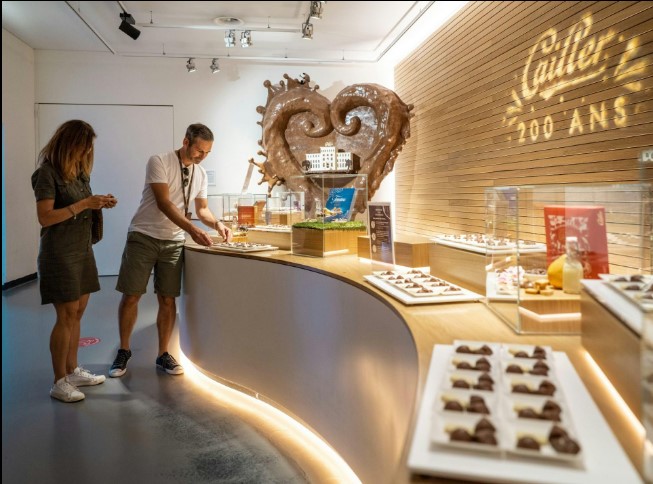
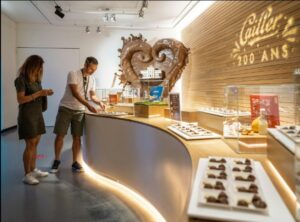
Visitor tasting chocolate at Maison Cailler in Broc, Switzerland

The Sweetest Journey

Maison Cailler in Broc follows Swiss chocolate from its ingredients to the finished product. Learn what the visitor tour, production displays and workshops offer, and how to plan a stop in the region. Nearby Gruyères makes a natural second stop.
Read More »
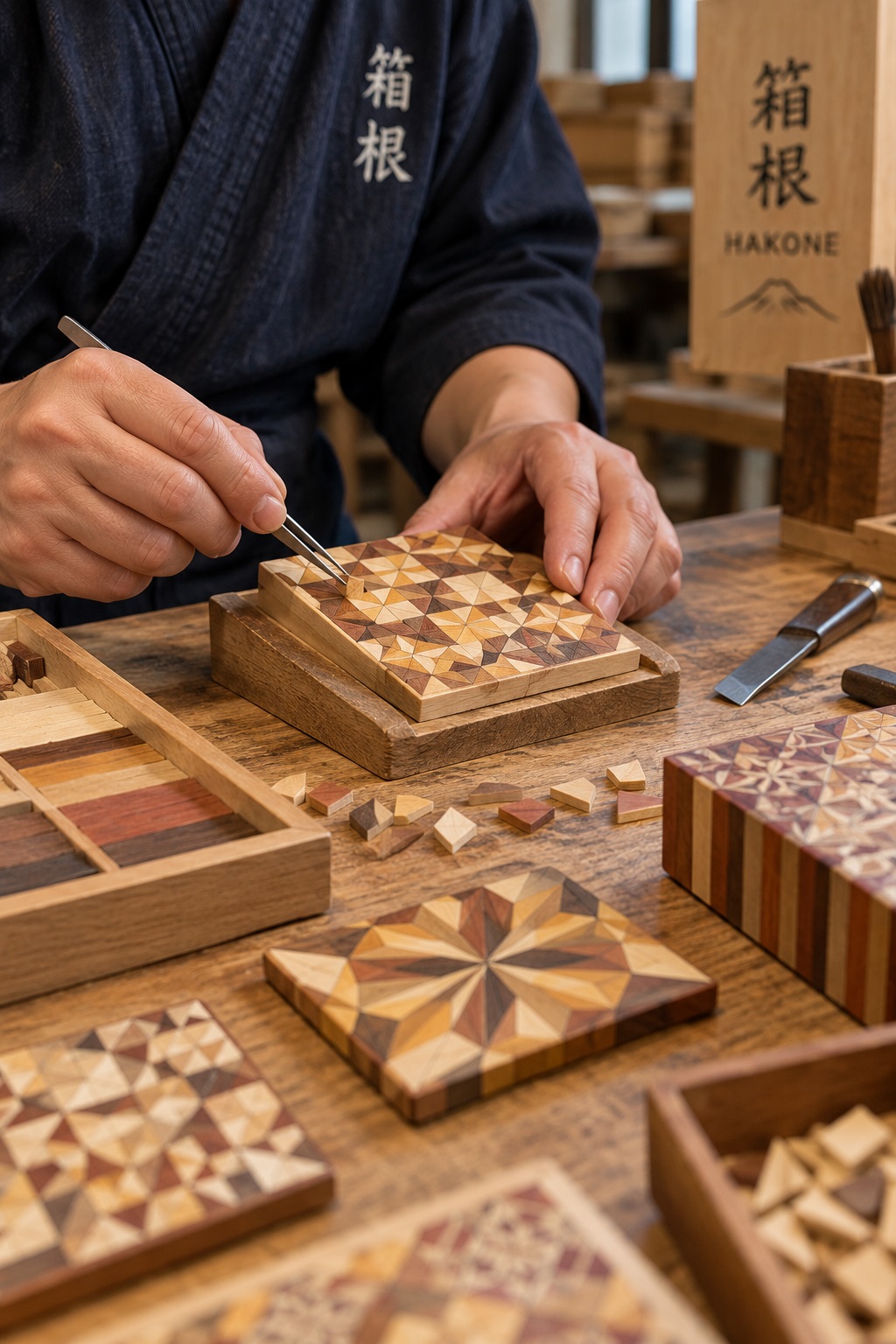
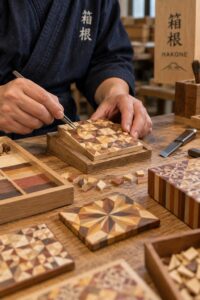
Artisan creating a geometric yosegi-zaiku wood pattern in a Hakone workshop

Japanese Woodworking

Japanese woodworking traditions range from interlocking kigumi joints to decorative techniques. This guide compares workshop experiences and shows how working by hand at the bench reveals the logic behind each craft.

Read More »
Moto Guzzi motorcycles and visitors outside the factory in Mandello del Lario

Moto Guzzi Factory

Moto Guzzi’s home in Mandello del Lario connects motorcycle heritage with modern manufacturing. Discover how the museum, factory and visitor spaces relate, and what to check before travelling to the Lake Como site.
Read More »
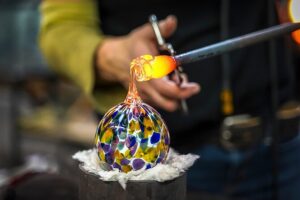
Murano glassmaker shaping a colorful glass ornament in a workshop

Murano Glass Factory Tours

Watching a Murano glassmaker at work brings the island’s craft into focus. Compare factory demonstrations and hands-on workshops, see where the Glass Museum fits into a visit, and learn what to check before booking.

Read More »
Artisan painting a Venetian mask in the Venice Art Mask Factory in Shkodër

Venetian Masks

A mask workshop in Shkodër connects Venetian carnival traditions with contemporary Albanian craftsmanship. See how the masks are shaped and decorated, and what makes a visit different from browsing a souvenir shop.
Read More »
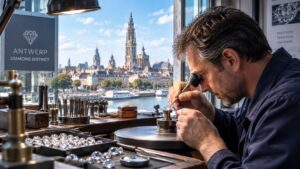
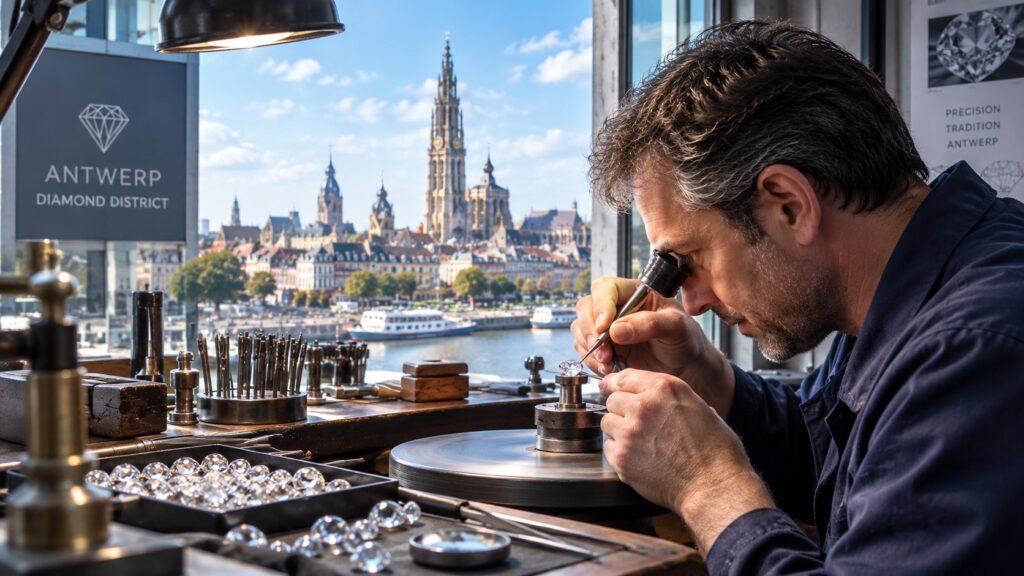
Diamond craftsman working in a workshop with Antwerp in the background

Antwerp Diamonds

Antwerp’s Diamond District has a long trading history, but its working spaces are not all open to visitors. Learn what the DIVA museum explains, where you can realistically encounter the craft, and how the trade shaped the district.

Read More »

Moto Guzzi Factory Read More »
Artisan creating a geometric yosegi-zaiku wood pattern in a Hakone workshop

Japanese Woodworking

Living Timber: Hands-on Workshops in the Heart of Japanese Craftsmanship

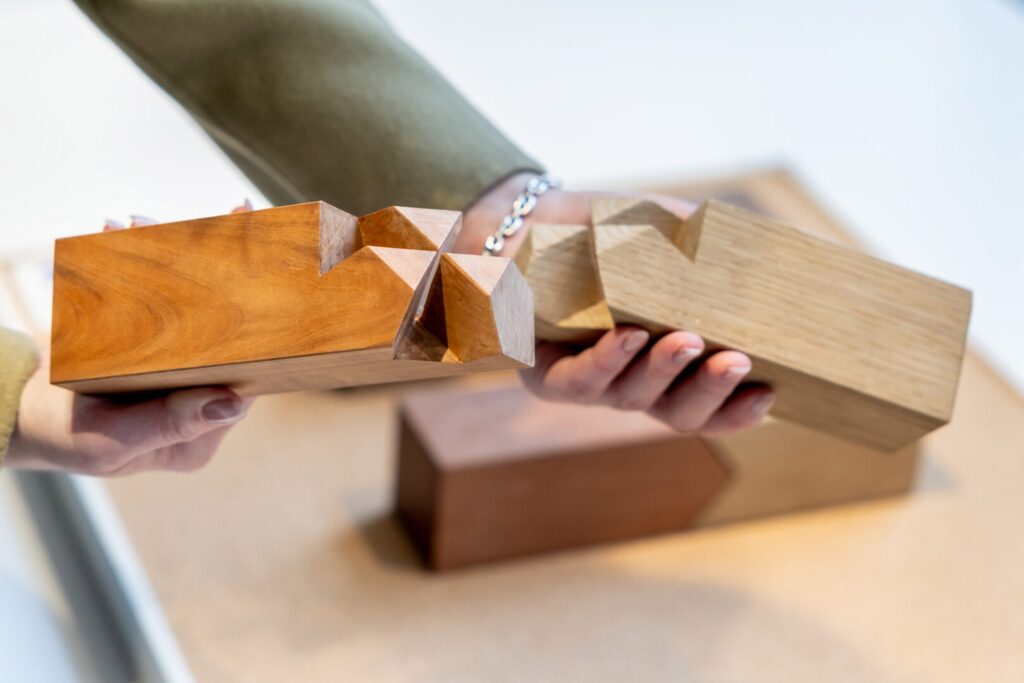
Traditional Japanese wooden joinery demonstrating the precision of kigumi woodworking

Japanese woodworking is known for the precision of its joinery and the close attention craftspeople give to the properties of the wood itself. One of its best-known traditions is kigumi, a system of interlocking wooden joints that can connect structural elements without relying on nails or screws. These techniques are not confined to historic buildings or museum displays. Workshops in Japan give visitors an opportunity to encounter different forms of woodworking at close range, from structural joinery to decorative yosegi-zaiku and contemporary furniture making.

In this guide, we look at three different experiences: Suikoushya in Kyoto, Hakone, known for yosegi-zaiku marquetry, and Takumi Woodwork near Tokyo. Together, they show how traditional techniques continue to be taught, adapted and used in Japanese woodworking today.

Planning a wider trip? Explore our Japan travel guide for more ideas and practical information about travelling in Japan.

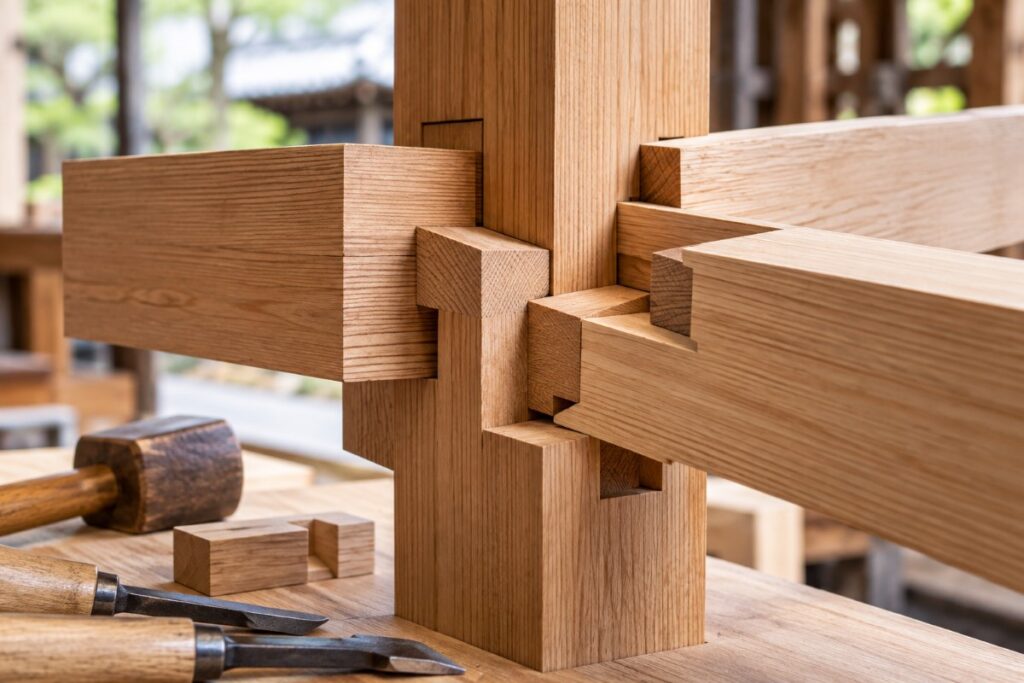
Traditional Japanese kigumi wood joinery using precisely fitted interlocking timber joints

What Is Kigumi?

Kigumi is a traditional Japanese woodworking technique in which precisely cut wooden components are fitted together to create strong joints without relying on metal nails. Rather than using simple connections, carpenters developed many different interlocking joints for specific structural purposes.

The technique is particularly associated with traditional Japanese timber architecture, including temples and shrines, where complex wooden structures could be assembled using carefully designed joints. Some of these connections also allow a degree of flexibility and movement, an important characteristic in timber buildings exposed to earthquakes.

What makes kigumi fascinating for visitors is that the finished joint can look deceptively simple. Its strength depends on the precision with which the individual wooden pieces are cut and fitted together.

Suikoushya – Japanese Woodworking Workshop, Kyoto

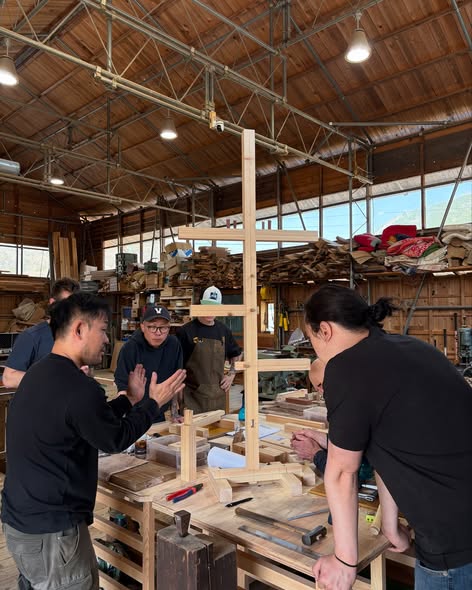
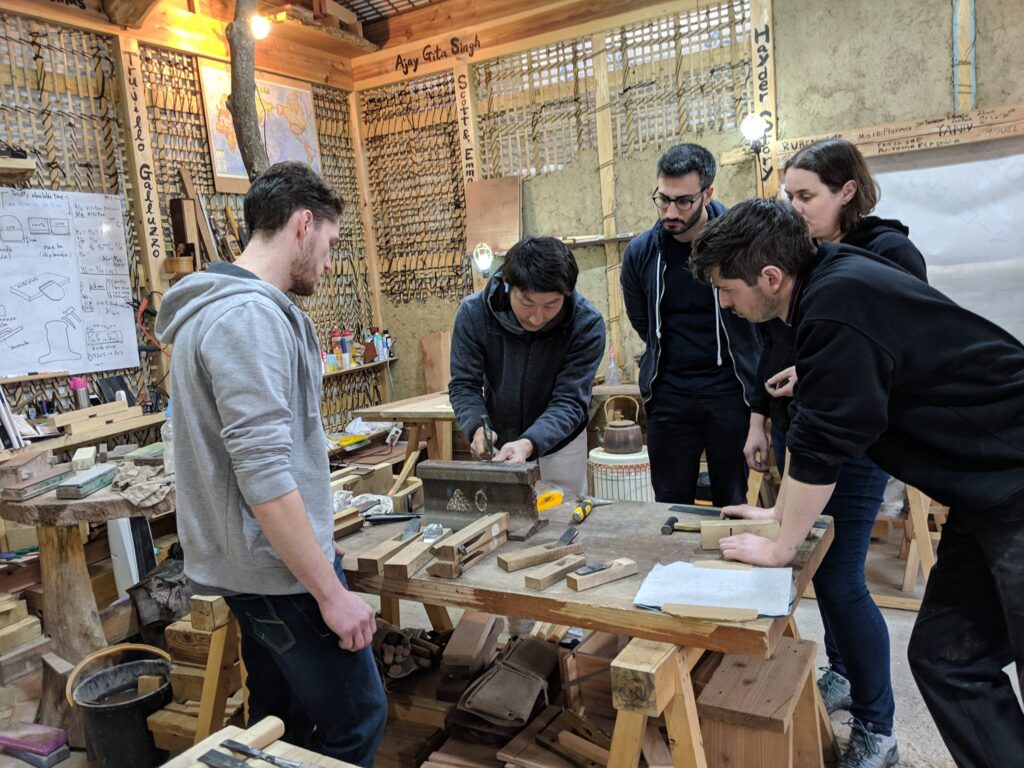
Participants learning Japanese woodworking techniques at Suikoushya in Kyoto

Suikoushya is a woodworking school and working construction company in Kyoto, offering English-language instruction in traditional Japanese woodworking. Its programs range from shorter workshops to intensive courses for participants who want to study the craft in considerably greater depth.

The emphasis is very much on practical woodworking. Participants can learn how to set up, sharpen and use traditional Japanese hand tools, including nomi (chisels) and kanna (hand planes). Joinery is another important part of the training, with courses introducing different types of Japanese joints and the precise marking, cutting and fitting required to make them.

This makes Suikoushya particularly interesting for anyone who wants to go beyond simply looking at Japanese craftsmanship. Depending on the program, participants can spend several days or even weeks working with the tools and techniques used by Japanese woodworkers.

Practical Details:

  • Location: Arashiyama, Kyoto
  • Experience: Hands-on Japanese woodworking and joinery
  • Language: English-language instruction is available
  • Duration: Varies considerably, from shorter workshops to multi-day and one-month programs
  • Group size: Some intensive courses are limited to around five participants
  • Best for: Visitors with a serious interest in Japanese woodworking, traditional hand tools and joinery
  • Booking: Programs, availability and requirements vary, so check the current course information directly with Suikoushya before planning your visit

Official Website & Current Courses: Suikoushya

Hakone Yosegi-zaiku – Japanese Marquetry, Hakone

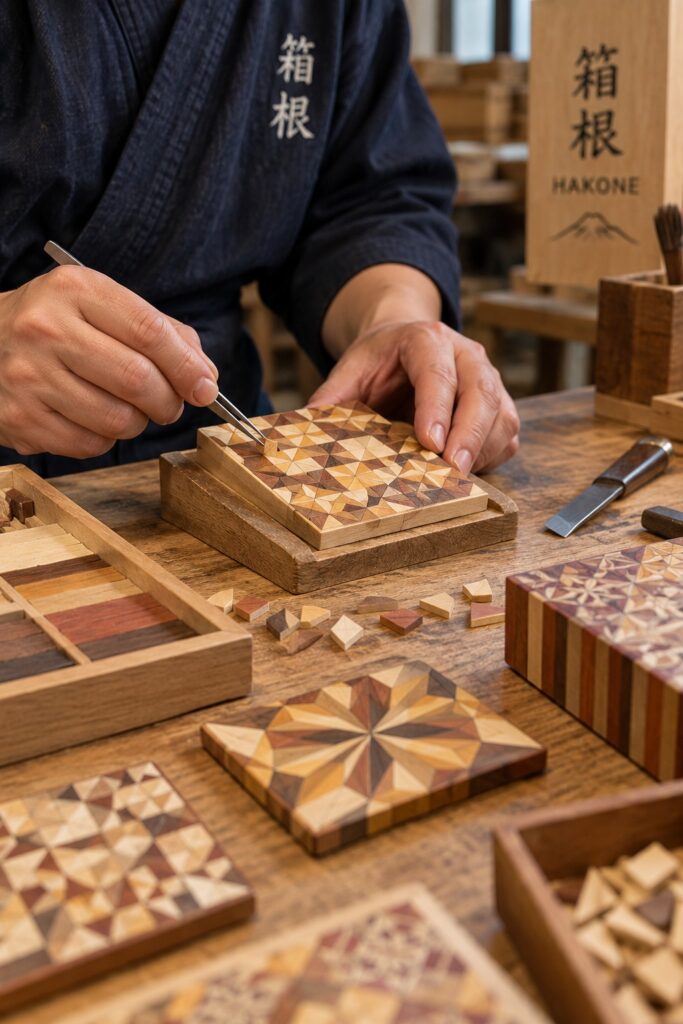
Artisan creating a geometric yosegi-zaiku wood pattern in a Hakone workshop

Hakone is closely associated with yosegi-zaiku, a traditional form of decorative woodworking that uses the natural colours of different woods to create intricate geometric patterns. The craft developed in the Hakone area during the Edo period and remains one of the region’s distinctive traditional crafts.

The process begins by combining pieces of differently coloured wood into carefully arranged patterns. These patterned blocks can then be worked into decorative surfaces and objects, producing the geometric designs characteristic of Hakone yosegi-zaiku.

For visitors, the tradition can be explored at workshops and museums around Hakone. One option is the Honma Yosegi Art Museum, where visitors can take part in a hands-on workshop and make a coaster using a traditional yosegi pattern. This offers a very different woodworking experience from the structural joinery introduced at Suikoushya: here, the emphasis is on pattern, colour and decorative craftsmanship.

Practical Details:

  • Experience: Traditional Hakone yosegi-zaiku and decorative woodworking
  • Hands-on option: Workshops are available at selected studios and museums
  • What you can make: The Honma Yosegi Art Museum offers a traditional patterned coaster workshop
  • Duration and cost: Depend on the workshop and provider
  • Best for: Visitors interested in Japanese decorative crafts, woodworking and traditional design
  • Booking: Check current workshop schedules and availability directly with the venue before visiting

Official information:
Honma Yosegi Art Museum – Workshop

Takumi Woodwork – Contemporary Woodworking in Niseko, Hokkaido

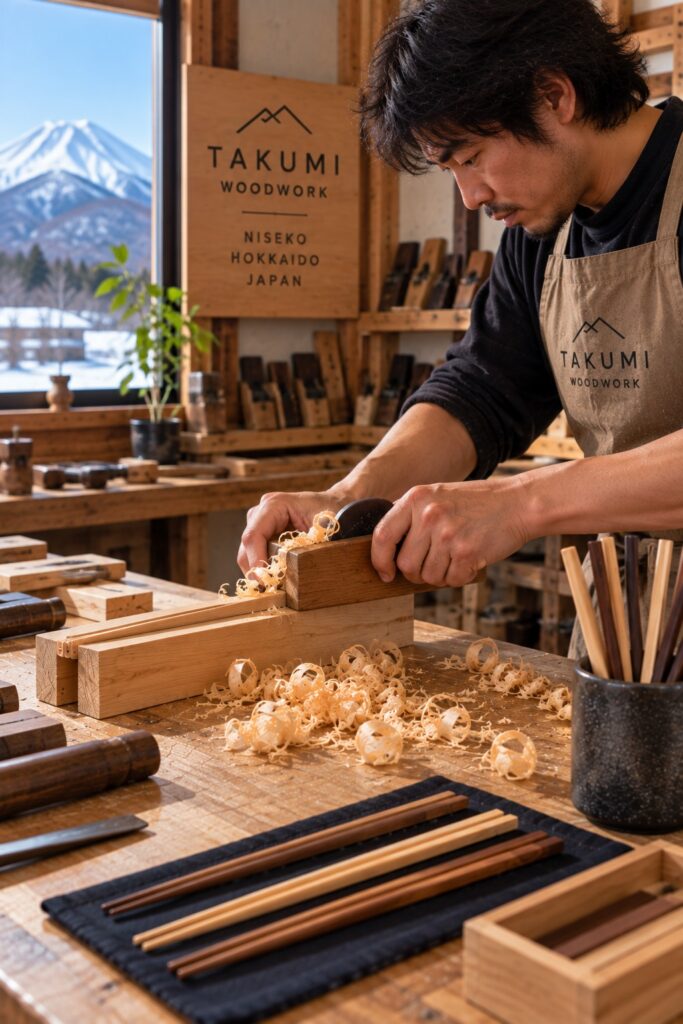
Chopstick making with a Japanese hand plane at a woodworking workshop in Niseko

Takumi Woodwork is a small furniture workshop in Kutchan, near Niseko in Hokkaido. The studio produces solid-timber furniture, cabinetry and smaller wooden objects, combining traditional hand skills with modern production methods.

Visitors looking for a hands-on experience can currently book a chopstick-making workshop. Participants choose a suitable hardwood and use a Japanese hand plane to shape the chopsticks with the help of a prepared jig. The pieces are then refined by hand, sanded and finished with food-safe oil.

This is a much smaller-scale experience than the intensive woodworking courses at Suikoushya, but that is also what makes it useful in this guide. It gives travelers a practical introduction to Japanese hand tools and woodworking without requiring several days of training.

Practical Details:

  • Location: Kutchan, Hokkaido, near Niseko
  • Experience: Hands-on chopstick making
  • Tools: Includes the use of a Japanese hand plane
  • Duration: Approximately 30 minutes
  • Booking: Required; current availability is shown on the workshop booking calendar
  • Best for: Travelers looking for a short, practical introduction to Japanese woodworking
  • Getting there: Visitors need to make their own way to the workshop

Official Website & Booking: Takumi Woodwork – Chopstick Making Experience

Are Japanese Woodworking Workshops Worth It?

Participants watching a woodworking demonstration during a hands-on Japanese craft workshop

Japanese woodworking workshops are worth considering if you want to understand the craft beyond finished objects in shops and museums. What these experiences have in common is the opportunity to see how much precision, patience and knowledge of materials sits behind apparently simple wooden objects.

The three experiences in this guide are quite different. Suikoushya is the strongest choice for visitors who want to study traditional tools and joinery in depth, while Hakone offers a more decorative introduction through yosegi-zaiku. Takumi Woodwork provides a shorter, more accessible hands-on experience that can fit more easily into a wider trip.

You do not need to be a woodworker to find these places interesting. But if you enjoy understanding how things are made, spending some time at a Japanese workbench can reveal far more about the craft than simply admiring the finished result.

If you enjoy discovering the work behind everyday objects, explore more workshops, factory tours and craft experiences in our Magic of Manufacturing collection.

Related posts

Artisan creating a geometric yosegi-zaiku wood pattern in a Hakone workshop

Japanese Woodworking

Japanese woodworking traditions range from interlocking kigumi joints to decorative techniques. This guide compares workshop experiences and shows how working by hand at the bench reveals the logic behind each craft.

Read More »
Diamond craftsman working in a workshop with Antwerp in the background

Antwerp Diamonds

Antwerp’s Diamond District has a long trading history, but its working spaces are not all open to visitors. Learn what the DIVA museum explains, where you can realistically encounter the craft, and how the trade shaped the district.

Read More »
Artisan painting a Venetian mask in the Venice Art Mask Factory in Shkodër

Venetian Masks

A mask workshop in Shkodër connects Venetian carnival traditions with contemporary Albanian craftsmanship. See how the masks are shaped and decorated, and what makes a visit different from browsing a souvenir shop.

Read More »
Murano glassmaker shaping a colorful glass ornament in a workshop

Murano Glass Factory Tours

Watching a Murano glassmaker at work brings the island’s craft into focus. Compare factory demonstrations and hands-on workshops, see where the Glass Museum fits into a visit, and learn what to check before booking.

Read More »

Japanese Woodworking Read More »

Diamond craftsman working in a workshop with Antwerp in the background

Antwerp Diamonds

Antwerp Diamond Experience: Inside the World’s Diamond Capital

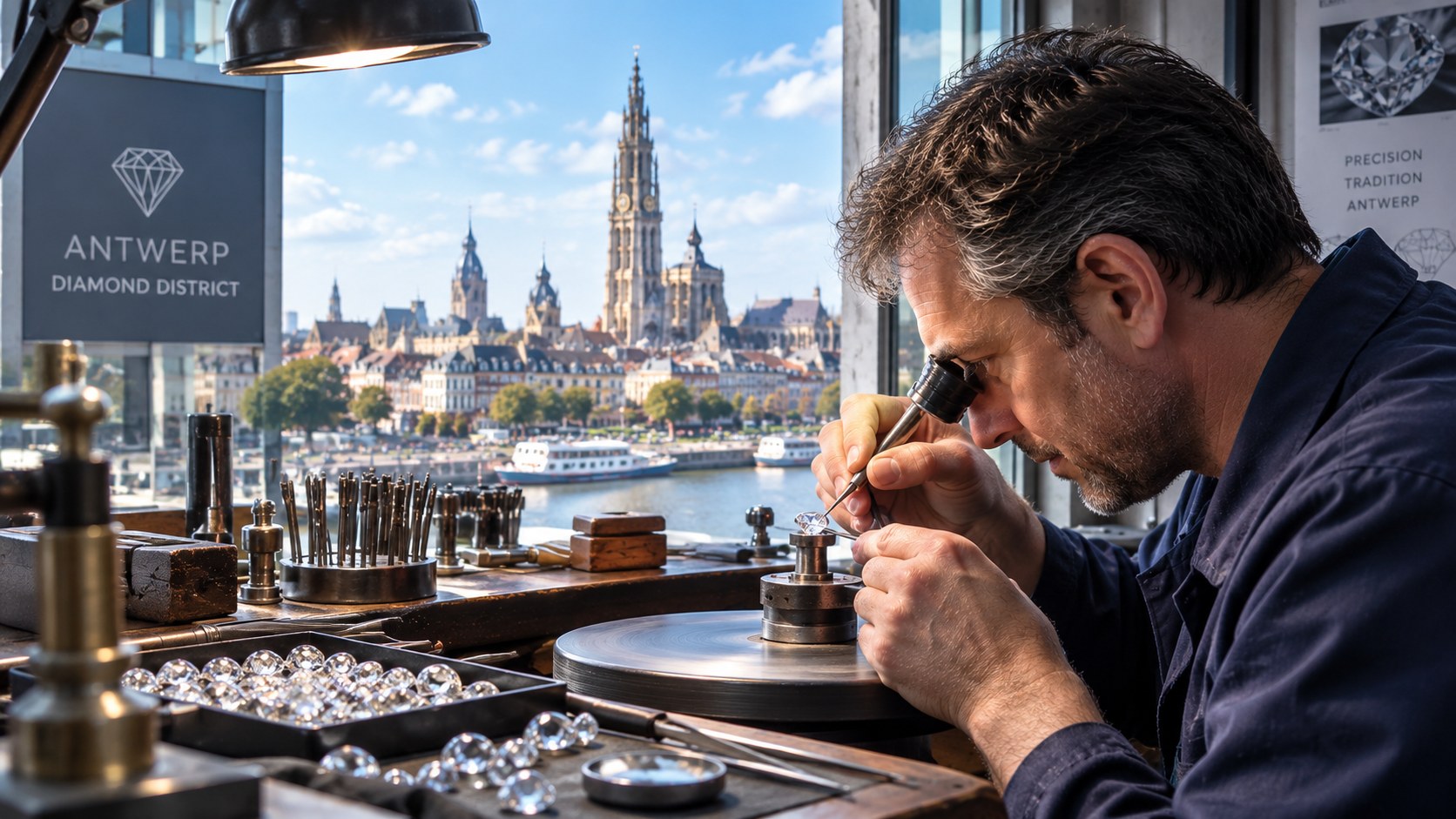
Diamond craftsman working in a workshop with Antwerp in the background

For more than five centuries, Antwerp has been closely connected with the diamond trade. But this is not simply a historical story. Behind the streets near Antwerp Central Station is a highly specialised industry that continues to sort, value, trade and, in some cases, polish some of the world’s most valuable stones.

For travelers interested in craftsmanship, manufacturing and the story behind everyday luxury products, Antwerp offers something unusual. There is no single “Antwerp Diamond Experience” or conventional factory tour. Instead, the experience is spread across the city’s Diamond District, the DIVA museum and opportunities to learn about the skills that transform rough stones into finished gems.

That distinction is important. You will not normally walk freely through commercial cutting rooms or trading floors. Security and confidentiality are fundamental to the industry. What Antwerp offers instead is a way to understand an industry that usually operates largely out of public view.

Why Antwerp Is Still a Diamond City?

Antwerp’s diamond history stretches back more than 580 years. Today, more than 1,300 diamond companies remain connected to the city, while the tightly secured Diamond Square Mile near Central Station contains trading offices and four of the world’s diamond bourses.

The industry has changed considerably. Much of the world’s diamond polishing now takes place in India, while Antwerp has retained particular expertise in sorting and valuing rough diamonds and polishing high-value stones.

That actually makes the city more interesting from a manufacturing perspective. The diamond story here is not simply about jewellery shops. It involves an international supply chain connecting mines, traders, specialist graders, polishers, certification and eventually the consumer.

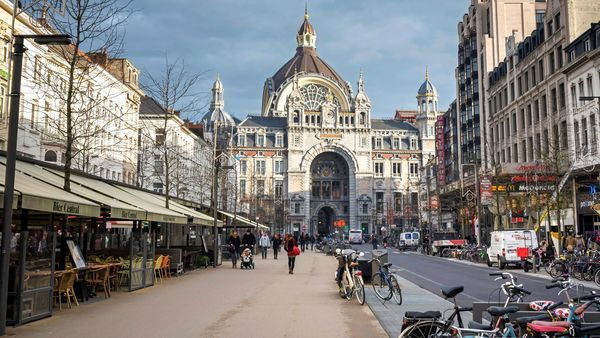
Antwerp Central Station near the city's Diamond District

Exploring Antwerp’s Diamond District

The Diamond District begins almost immediately beside Antwerp Central Station, making it one of the easiest industrial districts to encounter during a city visit.

Do not expect a picturesque historic quarter. Much of the area looks surprisingly functional: offices, security systems, jewellery businesses and heavily controlled entrances occupy a compact network of streets.

That contrast is part of what makes it interesting.

Behind relatively ordinary façades, diamonds worth substantial sums are sorted, valued and traded. Antwerp also remains particularly important for so-called “run of mine” productions — parcels of rough diamonds arriving from mines before being separated according to their characteristics and potential value.

A guided district walk can therefore add considerably more context than simply walking through the streets independently. The value is less about seeing machinery and more about understanding how this unusual commercial ecosystem works.

From Rough Stone to Polished Diamond

One of the most fascinating parts of the story is how much judgement is required before a diamond ever reaches a jewellery store.

Rough stones need to be examined, sorted and valued. Decisions about cutting can determine both the appearance and eventual value of a finished diamond, while polishing demands exceptional precision.

Antwerp continues to specialise particularly in valuable and complex natural diamonds, even though much of the world’s large-scale polishing activity takes place elsewhere.

This is one reason the city remains relevant despite enormous changes in the global diamond business. It is not simply trading on its history; specialist knowledge still forms part of the modern industry.

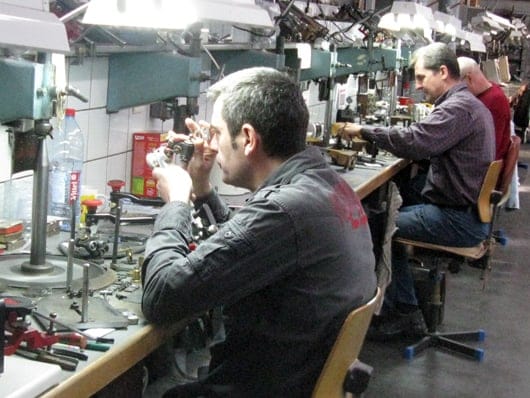
Diamond craftsmen examining stones at their workbenches

Can You Actually See Diamonds Being Worked?

This is where expectations need to be realistic. Antwerp is a working diamond centre, but that does not mean its commercial workshops operate like visitor-friendly attractions such as the Maison Cailler chocolate experience or an automobile factory tour. Access to professional cutting and trading environments is necessarily restricted.

Special programmes, workshops and demonstrations can sometimes provide a closer look at craftsmanship, but these should be treated as additional opportunities rather than something every visitor is guaranteed to see.

For us, that does not make Antwerp less interesting as a manufacturing destination. It simply makes it a different kind of factory-tour experience.

Here, understanding the expertise behind the product matters more than watching a production line.

 A Changing Global Industry

There is another reason we think the diamond story is more interesting today than a purely celebratory museum presentation might suggest.

The industry is changing.

Natural diamond markets have faced falling prices, competition from laboratory-grown diamonds and major changes in international trade. Sanctions introduced against Russian diamonds have also significantly altered Antwerp’s traditional supply chains.

At the same time, Antwerp recorded renewed growth in diamond-trading volume during the first quarter of 2026.

In other words, visitors are looking at an industry that is actively adapting rather than one preserved purely as industrial heritage.

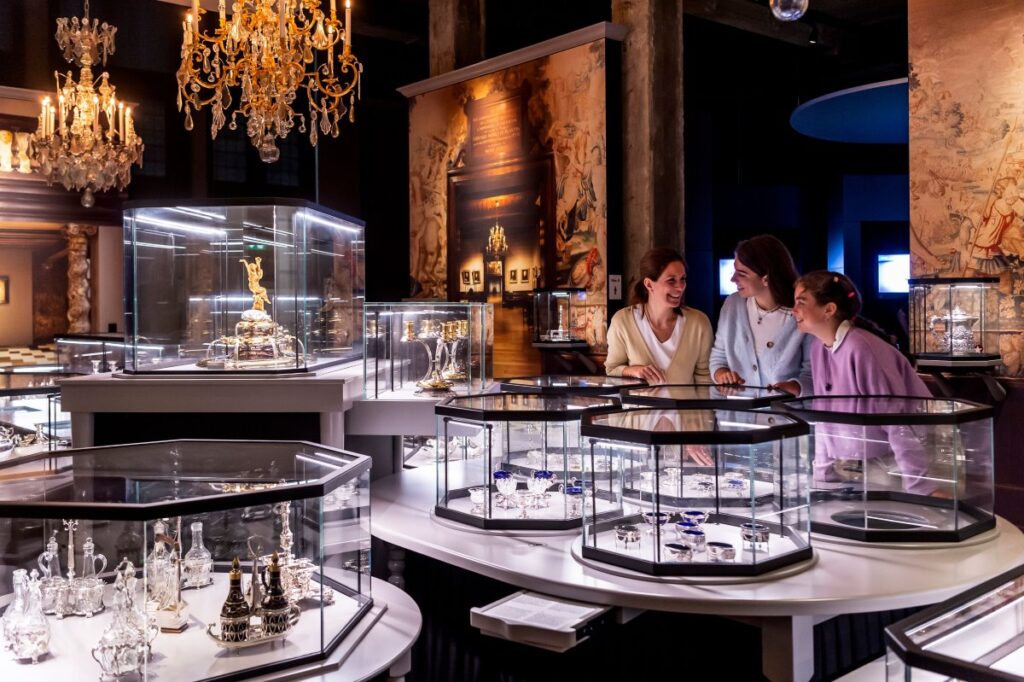
Visitors exploring jewellery and silver exhibits at DIVA Museum in Antwerp
DIVA Museum, Antwerp. Source: Visit Antwerpen

DIVA: Where the Process Becomes Visible

For most visitors, DIVA, the museum for diamonds, jewellery and silver, provides the clearest introduction to the physical materials and craftsmanship behind Antwerp’s diamond story.

The permanent exhibition follows the journey from raw materials through craftsmanship and finished objects. Its galleries explore where diamonds and precious metals come from, how craftspeople work with them, and how these materials become jewellery and other valuable objects.

This is particularly useful because much of Antwerp’s commercial diamond industry cannot simply be opened to tourists.

DIVA effectively fills that gap.

Rather than pretending to be a working factory, it provides the tools, objects and explanations needed to understand processes that would otherwise remain hidden. The collection also places diamond working within the wider traditions of jewellery, goldsmithing and silversmithing.

How Much Time Should You Allow?

DIVA can form the core of a diamond-themed visit, while the Diamond District adds the real-world context.

Rather than assigning a fixed two- or three-hour duration to an imaginary single “Diamond Experience,” we would allow half a day if you want to combine the museum with the district without rushing.

The geography makes this relatively easy. Antwerp Central Station and the Diamond District are close together, while DIVA is in the historic centre, so the diamond story can also be incorporated naturally into a broader day exploring Antwerp.


Who Will Enjoy It Most?

This experience works particularly well for travelers interested in craftsmanship, industrial heritage, luxury manufacturing and unusual urban industries. Someone expecting a conventional factory floor filled with machinery may be disappointed.

But if you find yourself wondering how an unremarkable rough stone becomes a precisely cut object worth thousands — or sometimes far more — Antwerp provides an unusually good place to investigate that question.

You do not need to be particularly interested in buying jewellery.

In fact, we think the manufacturing story becomes more interesting when you look beyond the finished product in the shop window.


Is the Antwerp Diamond Experience Worth It?

Yes — but think of it as an exploration rather than a single attraction.

DIVA explains the materials and craftsmanship. The Diamond District provides the contemporary industrial setting. And Antwerp itself supplies something a museum cannot reproduce: the knowledge that this centuries-old trade is still operating around you.

It is less spectacular than seeing automotive production up close, as visitors can experience at Volkswagen’s Autostadt and factory in Wolfsburg, and considerably less accessible behind the scenes than a food factory.

But that is precisely what makes it different.

Few products conceal as much expertise behind something so small. Antwerp gives you a chance to understand some of that hidden process.

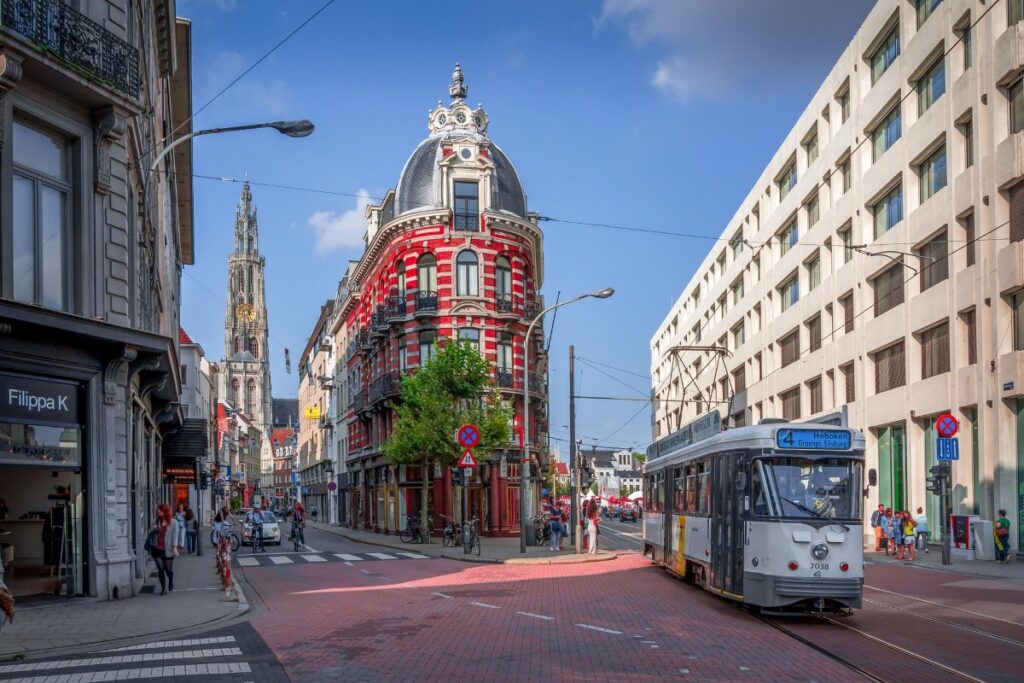
Street scene with a tram in Antwerp city centre, Belgium

Related posts

Artisan creating a geometric yosegi-zaiku wood pattern in a Hakone workshop

Japanese Woodworking

Japanese woodworking traditions range from interlocking kigumi joints to decorative techniques. This guide compares workshop experiences and shows how working by hand at the bench reveals the logic behind each craft.

Read More »
Diamond craftsman working in a workshop with Antwerp in the background

Antwerp Diamonds

Antwerp’s Diamond District has a long trading history, but its working spaces are not all open to visitors. Learn what the DIVA museum explains, where you can realistically encounter the craft, and how the trade shaped the district.

Read More »
Artisan painting a Venetian mask in the Venice Art Mask Factory in Shkodër

Venetian Masks

A mask workshop in Shkodër connects Venetian carnival traditions with contemporary Albanian craftsmanship. See how the masks are shaped and decorated, and what makes a visit different from browsing a souvenir shop.

Read More »
Murano glassmaker shaping a colorful glass ornament in a workshop

Murano Glass Factory Tours

Watching a Murano glassmaker at work brings the island’s craft into focus. Compare factory demonstrations and hands-on workshops, see where the Glass Museum fits into a visit, and learn what to check before booking.

Read More »

Antwerp Diamonds Read More »

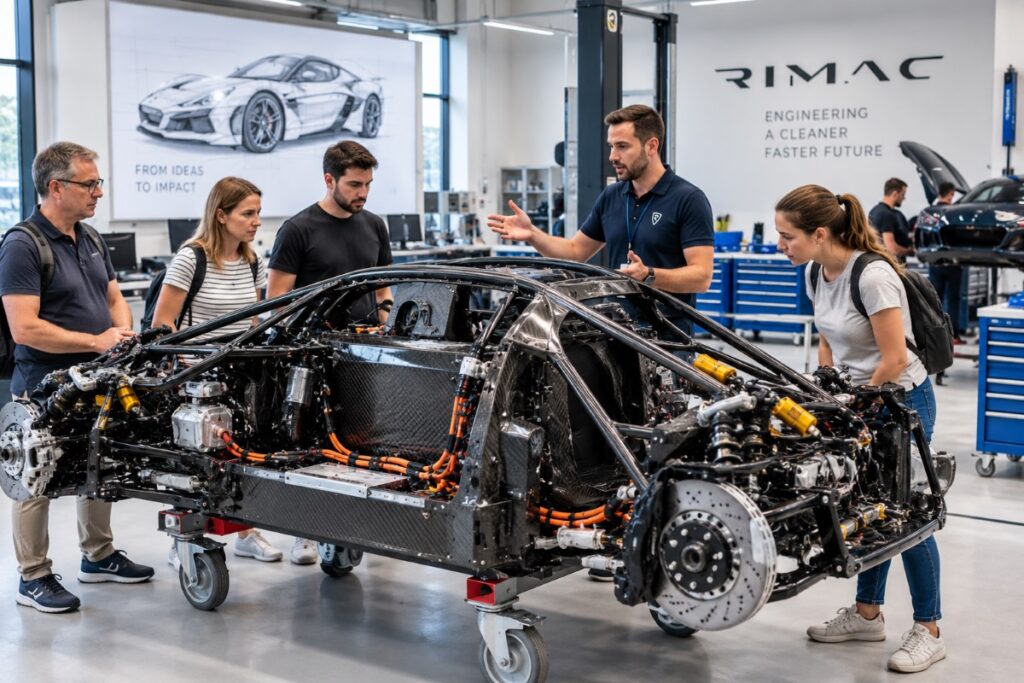
Visitors viewing a Rimac car during a factory tour near Zagreb

Rimac Automobili

Visitors viewing a Rimac car during a factory tour near Zagreb

Rimac Factory Tour: Inside Croatia’s Electric Hypercar Campus

Croatia is better known for its Adriatic coastline, historic cities and islands than for building electric hypercars. Yet just outside Zagreb, the Rimac Campus reveals a very different side of the country: one associated with advanced automotive technology and high-performance electric cars.

The company behind the Nevera has become one of Croatia’s most distinctive modern industrial success stories. Its campus near Zagreb is not simply a corporate headquarters or a place to display finished cars. Visitors can book a guided tour that takes them into an operating production environment and offers a closer look at the work behind some highly specialised vehicles.

That combination makes Rimac particularly interesting from a travel perspective. Croatia has no shortage of historic and cultural attractions, but opportunities to explore contemporary manufacturing are much less common.

The factory tour adds something genuinely different to a Zagreb itinerary, especially for travellers interested in cars, engineering, technology or seeing how things are made.

Can You Visit the Rimac Factory?

Yes. Rimac offers public guided factory tours at its campus near Zagreb.

This is worth clarifying because older information online may suggest that access is limited to special events or private groups. Today, individual visitors can book the official Standard Factory Tour online, subject to availability.


Where Is Rimac Located?

The Rimac Campus is in the Sveta Nedelja area, west of Zagreb, approximately 16 kilometres from the city centre.

The official address is Kerestinečka cesta 54, Kerestinec, 10431 Sveta Nedelja, Croatia.

The location makes Rimac practical to combine with a stay in Zagreb, although it is not a central-city attraction. If you are travelling without a car, check transport options before choosing your tour time.


From a Garage Project to a Global Automotive Company

Rimac’s story began in 2009, when Mate Rimac established Rimac Automobili after converting a BMW E30 into an electric car.

The company went on to develop its own electric hypercars, including the Concept_One and later the Nevera, while building expertise in batteries, electric powertrains and other automotive technologies.

The business has since expanded beyond its own cars. Bugatti Rimac brings together the Rimac and Bugatti hypercar businesses, while Rimac Technology develops electrification systems and components for other automotive manufacturers.

Visitors examining a vehicle chassis at a Rimac facility in Croatia

What You See During the Tour

The tour begins with an introduction to Rimac and some of the cars that chart the company’s development, including the Concept_One and the all-electric Nevera. From there, visitors move into the manufacturing areas, where the focus shifts from the finished cars to how they are actually made.

Some of the work is surprisingly traditional. In the upholstery department, visitors can see the cutting, sewing and embossing involved in producing hypercar interiors by hand. The route also covers carbon-composite production, where lightweight materials are turned into components designed to combine strength with minimal weight.

Battery production provides a very different perspective. This part of the tour offers a closer look at the battery systems behind high-performance electric vehicles and at an area of technology that has become central to Rimac’s wider business.

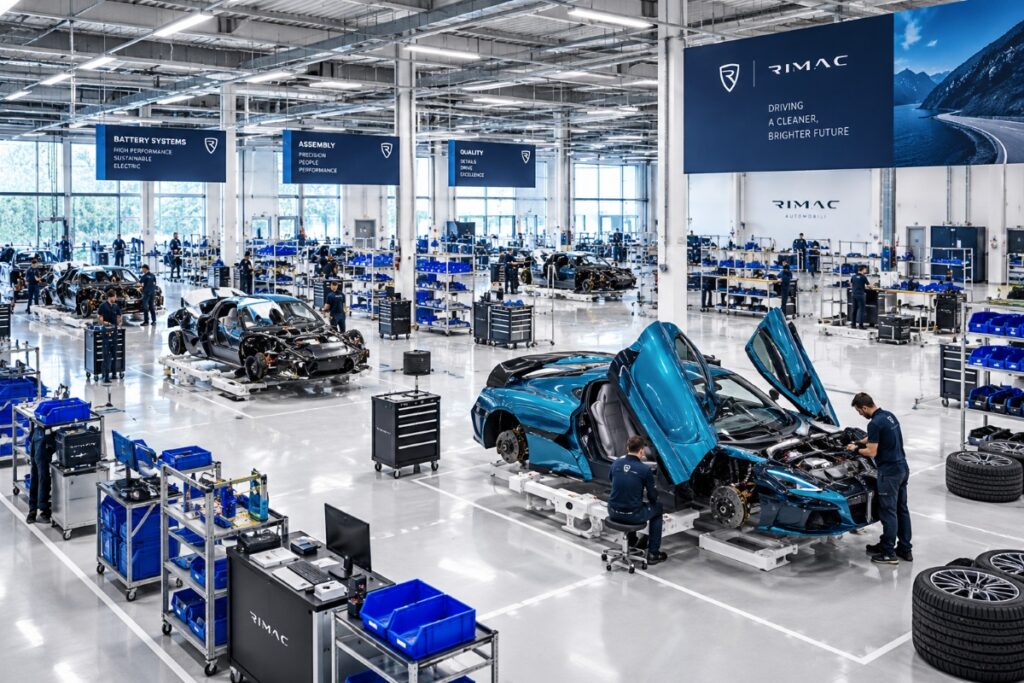
The later stages bring the different elements together. Visitors pass through the paintshop, where components for Rimac and Bugatti hypercars are finished, before reaching vehicle assembly. Rather than the high-volume production lines of a mainstream car factory, this is low-volume manufacturing, with a very different pace and level of individual attention. The route ends with end-of-line inspection and quality control, where completed vehicles undergo their final checks.

For comparison, the Volkswagen Autostadt and Factory Tour in Wolfsburg offers a look at automotive production on a much larger scale.

Practical Information for Visiting Rimac

The Rimac Factory Tour lasts approximately 90 minutes and is available in English and Croatian.

Tours normally operate Monday to Friday, with departures at 10:00 and 13:00, subject to availability. The standard tour is limited to a maximum of 25 visitors per guide, making advance booking highly recommended.

One thing to know before booking is that a Nevera test drive or passenger ride is not included in the tour. Although the Rimac Campus has a test track, Rimac states that Nevera test rides are available only to customers.

There is also a clothing requirement worth noticing before you arrive: visitors must wear closed-toe shoes and long trousers. This is particularly relevant during a summer trip to Croatia, when shorts and sandals might otherwise be the obvious choice.

Schedules, availability and prices can change, so check the official Rimac Factory Tours page when booking rather than relying on older information.

Rimac hypercars at different stages of production inside the factory

Is the Rimac Factory Tour Worth It?

For travellers interested in cars, engineering or manufacturing, yes.

What makes the visit particularly interesting is the contrast between different kinds of work taking place within the same production environment. Hand-finished interiors, carbon components and battery technology eventually converge in the assembly of a very small number of highly specialised cars.

That is ultimately Rimac’s appeal as a visitor experience. You are not going there simply to admire an expensive hypercar, but to understand a little more about what it takes to build one. For a Zagreb itinerary, that is an unusual proposition – and a welcome contrast to the historic cities and coastal landscapes Croatia is better known for.

Related posts

Visitors viewing a Rimac car during a factory tour near Zagreb

Rimac Automobili

In Croatia, Rimac develops electric performance cars through battery technology and in-house engineering. This guide examines the work behind the Nevera and explains what visitors should check before planning a visit.

Read More »

Touching the Sky

An Airbus factory visit in Toulouse reveals the scale and coordination behind aircraft assembly, with components arriving from across Europe. Learn what the visitor tours cover, how access is arranged and why this part of France became an aviation centre.

Read More »

Lamborghini Factory Tour

Lamborghini’s Sant’Agata Bolognese site brings production and automotive history together. Find out what the factory tour and museum cover, how to book, and what to consider when planning a visit to Italy’s Motor Valley.

Read More »
Volkswagen Factory Tour in Wolfsburg, Germany

The City of Cars

Wolfsburg offers several ways to encounter Volkswagen’s history and production. Compare Autostadt’s exhibitions and visitor spaces with the separate factory tour to decide which experience belongs in your itinerary.

Read More »

Rimac Automobili Read More »

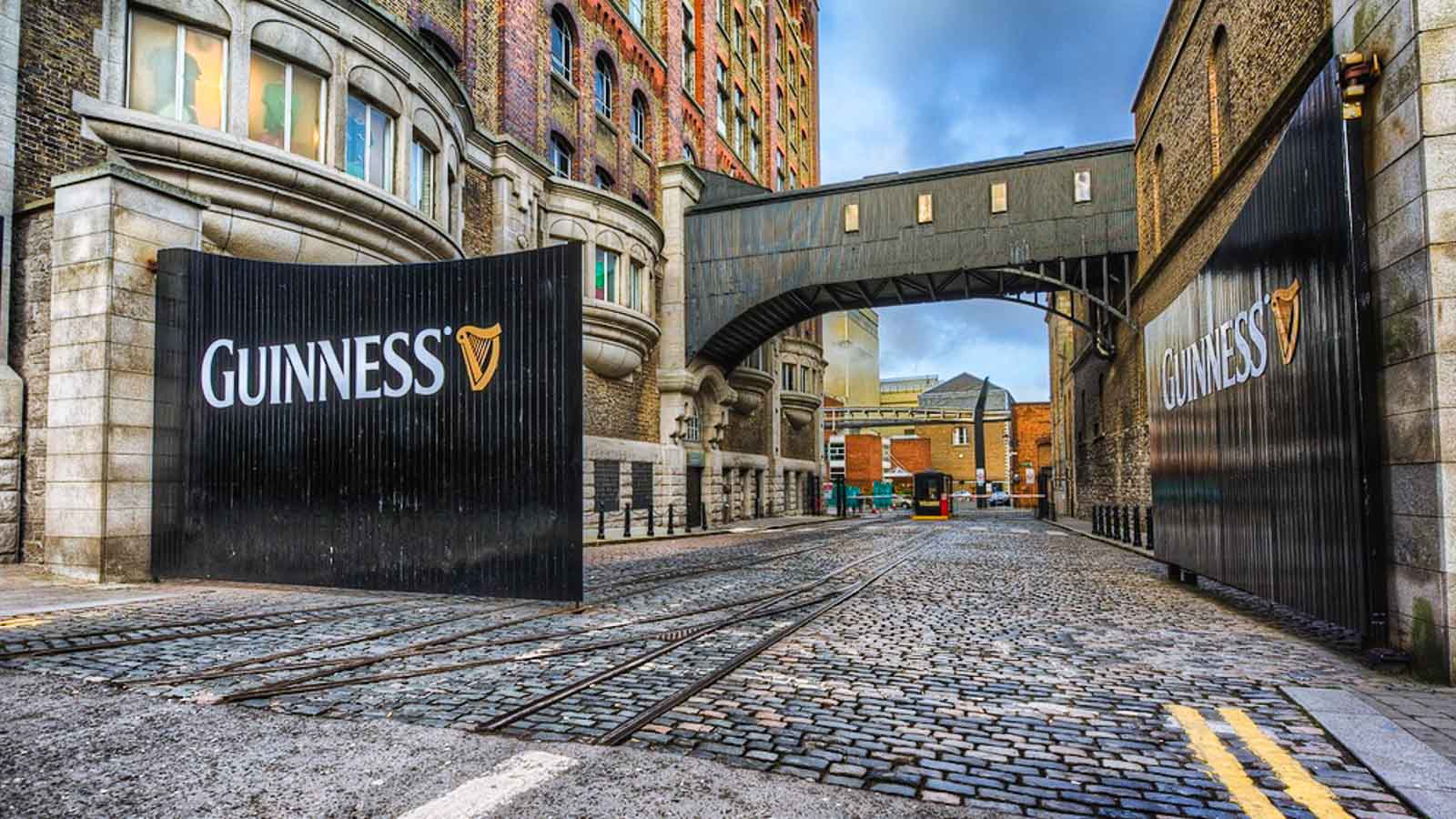
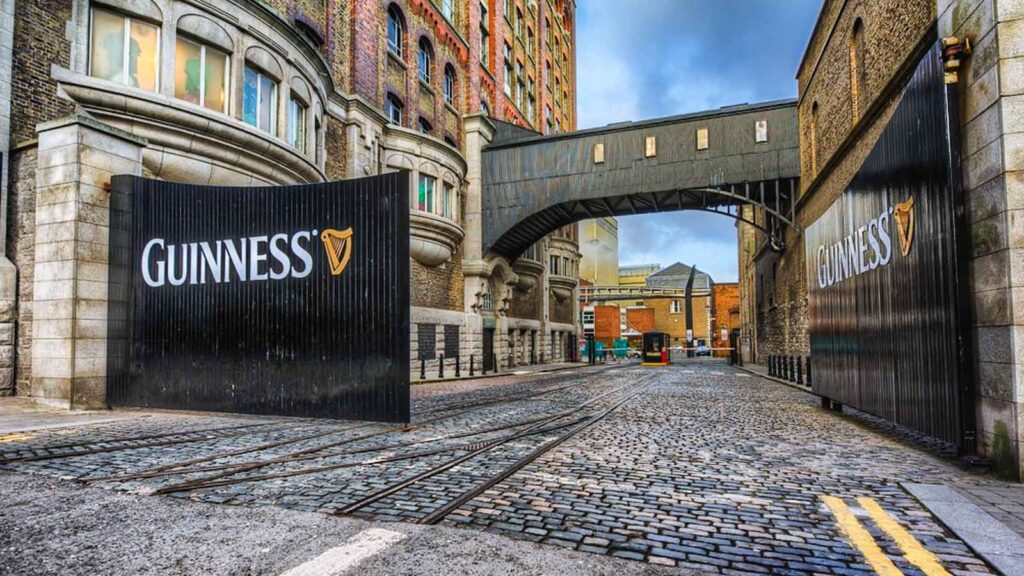
Entrance to the Guinness St. James’s Gate brewery complex in Dublin

Guinness Dublin

Entrance to the Guinness St. James’s Gate brewery complex in Dublin

Guinness Storehouse Dublin: Is It a Real Brewery Tour?

The Guinness name is so closely connected with Dublin that it can be easy to think of the Guinness Storehouse as simply another city attraction. But St. James’s Gate is still an active brewing site, which makes visiting it particularly interesting from a manufacturing perspective.

There is one important distinction to understand before booking: the Guinness Storehouse Experience and the Guinness Brewery Experience are not the same thing. The Storehouse is the famous seven-floor visitor attraction where the story of Guinness, its ingredients, brewing process, advertising and history are presented through exhibitions and interactive displays. The separate Brewery Experience goes considerably further, taking visitors into parts of the working brewery itself.

For travelers interested in how famous products are made, St. James’s Gate therefore offers something unusual: you can choose how close you want to get to the actual manufacturing process.

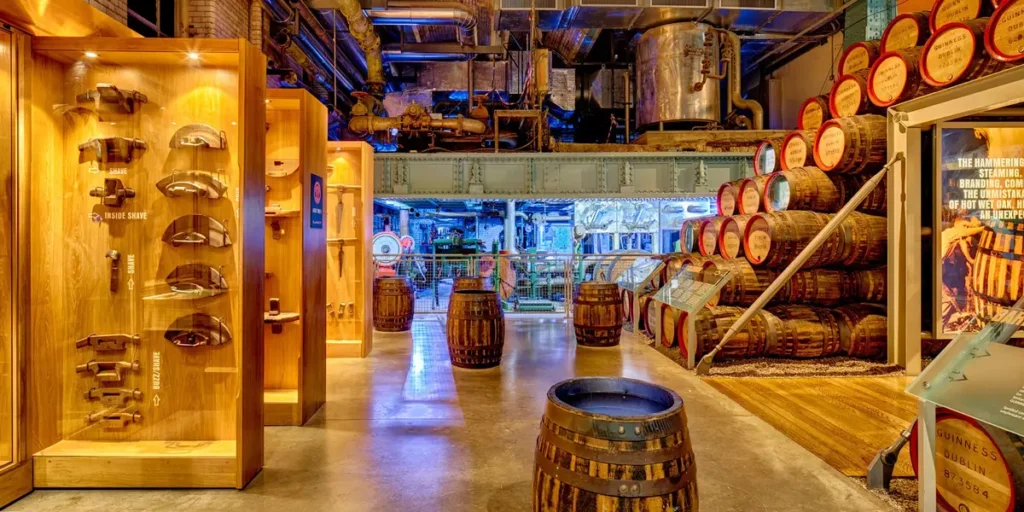
Brewing equipment and wooden barrels inside the Guinness Storehouse in Dublin

What Can You Visit at Guinness Storehouse Dublin?

Most visitors choose the standard Guinness Storehouse Experience. It is self-guided and takes you through seven floors devoted to the ingredients, brewing process and history of Guinness before finishing at the Gravity Bar, with its panoramic views across Dublin.

The official average visiting time is around 90 minutes, although there is little reason to rush through it.

This is not a walk through the production line. Think of it instead as a sophisticated visitor experience built around the history, science and culture of brewing, located within a working industrial site.

But visitors who want to go behind the scenes now have another option.

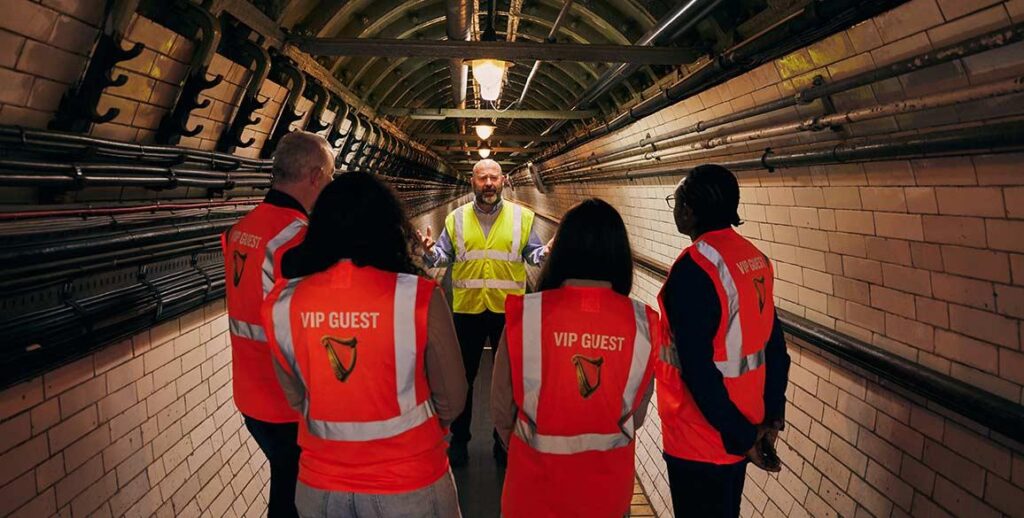
Visitors exploring an underground tunnel during the Guinness Brewery Experience in Dublin

The Guinness Brewery Experience: Inside the Working Brewery

The premium Guinness Brewery Experience takes small groups beyond the Storehouse and into the working St. James’s Gate brewery.

The experience includes the brewery’s historic underground tunnels as well as Brewhouse 4, bringing visitors much closer to the modern brewing operation.

It is also a considerably bigger commitment than a Storehouse visit. The Brewery Experience lasts approximately three to four hours, involves more walking and includes stairs. It is restricted to adults and is conducted in English.

For anyone whose main interest is the industrial side of Guinness, this is one of the most interesting additions to the St. James’s Gate visitor experience.

How Guinness Is Made

Even without entering the working brewery, the Storehouse explains the basic elements behind Guinness production.

Visitors encounter the ingredients and brewing story through large-scale displays and sensory exhibits rather than simply reading information panels. Water, barley, hops and yeast may sound like a simple starting point, but the exhibits show how brewing techniques, temperature, roasting and quality control transform those ingredients into a highly consistent product produced on an enormous scale. The aim is not to turn visitors into brewing experts, but to make a complex industrial process understandable — from raw ingredients to the distinctive stout that has been produced at St. James’s Gate for generations.

If you enjoy seeing how familiar products develop from simple ingredients into globally recognised brands, our Maison Cailler chocolate factory guide explores the same question from a very different manufacturing tradition.


How Much Time Should You Allow?

A standard Guinness Storehouse Dublin visit averages around 90 minutes. If you enjoy reading the exhibits, taking photographs or spending some time at the Gravity Bar, allowing around two hours makes for a more relaxed visit.

The Brewery Experience requires considerably longer, at approximately three to four hours.

That makes the Storehouse relatively easy to combine with other Dublin sightseeing, while the longer brewery visit is better treated as one of the main activities of the day.

Guinness guide speaking to visitors during an experience in Dublin

Which Guinness Experience Should You Choose?

For most first-time visitors, the standard Guinness Storehouse Experience is the obvious starting point. It covers the history and production story and finishes at the Gravity Bar.

Visitors who want something more interactive can choose additional experiences such as learning how to pour a pint at the Guinness Academy or joining one of the tasting-focused options.

The Guinness Brewery Experience is the more substantial choice for those particularly interested in what happens behind the visitor attraction.

Experiences and prices can change, so we recommend checking the current options directly with Guinness before booking rather than relying on old ticket prices.

House of Guinness: From Netflix to St. James’s Gate

The Guinness story has found a new audience through Netflix’s House of Guinness, a historical drama inspired by the Guinness family and the brewing dynasty they created.

The series is dramatized rather than a documentary account, but it adds another layer of interest to a visit to Dublin. St. James’s Gate is not a film set created to represent the Guinness story — it is the place where that industrial history actually developed.

For viewers who first encountered the family through the series, seeing the scale of the brewery and its place within Dublin can make that history considerably more tangible.

Visitors walking past the Guinness St. James’s Gate brewery entrance in Dublin

Getting to Guinness Storehouse Dublin

The Guinness Storehouse is at St. James’s Gate in Dublin 8, in the historic Liberties area west of Dublin city centre.

It can be reached on foot or by public transport, and walking from central Dublin is a practical option for many visitors. Because transport routes and services can change, it is worth checking current directions before your visit.

For visitors who prefer a quieter experience, Guinness recommends Tuesday to Thursday between 10:00 and 12:00 as generally quieter periods.

Accessibility and Comfort

The standard Guinness Storehouse Experience performs particularly well in terms of accessibility.

Ramps and lifts provide access throughout the visitor experience, accessible facilities are available in the restaurants, bars and shop, and wheelchairs can be borrowed subject to availability. Guinness also provides sensory maps, sensory kits and designated sensory-friendly sessions.

The Brewery Experience requires more consideration. Because it enters a working production site and involves substantial walking and stairs, visitors with mobility requirements should check suitability with Guinness before booking.

This makes the Storehouse the more straightforward option for visitors for whom accessibility or physical comfort is a priority.

You can find more ideas for easier-to-navigate attractions in our wheelchair-accessible travel guides.

Multi-level interior of the Guinness Storehouse in Dublin with escalators and steel beams

Is Guinness Storehouse Worth Visiting?

Yes — particularly if you are interested in more than beer.

What makes St. James’s Gate interesting is the combination of manufacturing, industrial heritage, family history and the development of a global brand, all connected to a site where brewing continues today.

The Storehouse itself is polished and visitor-focused rather than industrial. But that does not make it superficial: it provides an accessible way to understand the process and history behind a product that has become inseparable from Dublin’s identity.

And for those who want to go further, the Brewery Experience opens a door into the working side of St. James’s Gate.

You do not need to be a dedicated Guinness drinker to find the story interesting. Sometimes understanding how an everyday product became part of a city’s identity is reason enough to visit.

Related posts

Moto Guzzi motorcycles and visitors outside the factory in Mandello del Lario

Moto Guzzi Factory

Moto Guzzi’s home in Mandello del Lario connects motorcycle heritage with modern manufacturing. Discover how the museum, factory and visitor spaces relate, and what to check before travelling to the Lake Como site.

Read More »
Entrance to the Guinness St. James’s Gate brewery complex in Dublin

Guinness Dublin

Dublin’s Guinness story extends beyond the television drama House of Guinness. This guide separates screen fiction from the family’s history and explains what visitors can experience at the Guinness Storehouse.

Read More »
Swarovski crystals being applied by hand during a decorative design process

The Magic of Swarovski

Swarovski Crystal Worlds in Wattens is built around art and design, while the separate Manufaktur experience focuses more closely on production. Compare the two before planning a visit, so you know what each includes.

Read More »
Visitor tasting chocolate at Maison Cailler in Broc, Switzerland

The Sweetest Journey

Maison Cailler in Broc follows Swiss chocolate from its ingredients to the finished product. Learn what the visitor tour, production displays and workshops offer, and how to plan a stop in the region. Nearby Gruyères makes a natural second stop.

Read More »

Guinness Dublin Read More »

Artisan painting a Venetian mask in the Venice Art Mask Factory in Shkodër

Venetian Masks

Artisan painting a Venetian mask in the Venice Art Mask Factory in Shkodër

Behind the Venetian Masks: A Shkodër Craft Story

When travelers think of Albania, beaches, mountains and ancient ruins may come to mind before Venetian carnival masks. Yet in Shkodër, an unusual connection between Albania and Venice has developed into a distinctive local craft.

The Venice Art Mask Factory is an artisan workshop and showroom where Venetian-style masks are made and decorated by hand. Its story began with an Albanian artist who learned the craft in Venice before returning home and establishing a workshop where local artisans continue the tradition today.

Hand-decorated Venetian jester mask at the Venice Art Mask Factory in Shkodër

What Makes the Venice Art Mask Factory Special?

The masks produced in Shkodër are made using traditional papier-mâché techniques rather than simply being moulded as finished plastic souvenirs. The process begins with a design and a clay model, from which a plaster mould is created. Layers of papier-mâché are then shaped by hand inside the mould and left to dry before the mask is trimmed and prepared for decoration.

Designs include traditional Venetian forms such as Bauta and Colombina masks, alongside characters inspired by the Commedia dell’arte.

Decoration is also done by hand. Depending on the design, artisans may use gold or silver leaf, feathers, crystals, pearls and other decorative elements. This hand-finishing is an important part of what distinguishes the Shkodër workshop from mass-produced carnival masks.

If you enjoy seeing the work behind everyday and decorative objects, explore more places in our Magic of Manufacturing collection.

Artisan hand-painting a Venetian mask at the Venice Art Mask Factory in Shkodër

What to Expect During a Visit

A visit to the Venice Art Mask Factory offers a chance to see the craft beyond the finished masks displayed in the showroom. Depending on what is being worked on during your visit, you may see artisans shaping, painting and decorating masks by hand.

The showroom displays a wide range of finished designs, giving visitors a closer look at the different styles, materials and decorative techniques used by the workshop. Masks are also available to purchase directly from the factory.

What makes the visit particularly interesting is the connection between the finished object and the work behind it. After seeing the different stages involved in making a mask, the elaborate pieces in the showroom take on a rather different meaning.

Practical Information for Visitors

Location: Shkodër, northern Albania
Experience: Artisan workshop, factory and showroom
Visit: The showroom can be visited separately; a factory visit offers a closer look at the mask-making process
Time needed: Allow around an hour, and longer if you want to explore the displays at a relaxed pace
Cost: The showroom is generally free to enter; a separate fee may apply for visiting the factory
Booking: Check current visiting arrangements before you go.  The Venice Art Mask Factory is outside Shkodër’s historic centre but close enough to include easily in a visit to the city. If seeing the artisans at work is important to you, it is worth confirming the factory’s current visiting hours in advance rather than relying on general opening times.

Display of handmade Venetian masks at the Venice Art Mask Factory showroom in Shkodër
Ornate black and gold Venetian mask decorated with feathers and crystals in Shkodër

Why Visit the Venice Art Mask Factory?

The Venice Art Mask Factory is worth visiting if you are interested in traditional crafts and the process behind handmade objects. What makes the experience particularly interesting is that the masks are not simply displayed as finished souvenirs: visitors can connect the elaborate pieces with the work involved in creating them.

It is also an unexpected addition to a visit to Shkodër. Venetian masks may seem more naturally associated with Italy, but here the craft has developed into a small Albanian manufacturing story of its own.

We would not plan an entire trip to Shkodër around the factory alone. But if you are already exploring northern Albania, it is an unusual and worthwhile stop – especially for anyone who enjoys seeing how things are made.

Related posts

Artisan creating a geometric yosegi-zaiku wood pattern in a Hakone workshop

Japanese Woodworking

Japanese woodworking traditions range from interlocking kigumi joints to decorative techniques. This guide compares workshop experiences and shows how working by hand at the bench reveals the logic behind each craft.

Read More »
Diamond craftsman working in a workshop with Antwerp in the background

Antwerp Diamonds

Antwerp’s Diamond District has a long trading history, but its working spaces are not all open to visitors. Learn what the DIVA museum explains, where you can realistically encounter the craft, and how the trade shaped the district.

Read More »
Artisan painting a Venetian mask in the Venice Art Mask Factory in Shkodër

Venetian Masks

A mask workshop in Shkodër connects Venetian carnival traditions with contemporary Albanian craftsmanship. See how the masks are shaped and decorated, and what makes a visit different from browsing a souvenir shop.

Read More »
Murano glassmaker shaping a colorful glass ornament in a workshop

Murano Glass Factory Tours

Watching a Murano glassmaker at work brings the island’s craft into focus. Compare factory demonstrations and hands-on workshops, see where the Glass Museum fits into a visit, and learn what to check before booking.

Read More »

Venetian Masks Read More »

Murano glassmaker shaping a colorful glass ornament in a workshop

Murano Glass Factory Tours

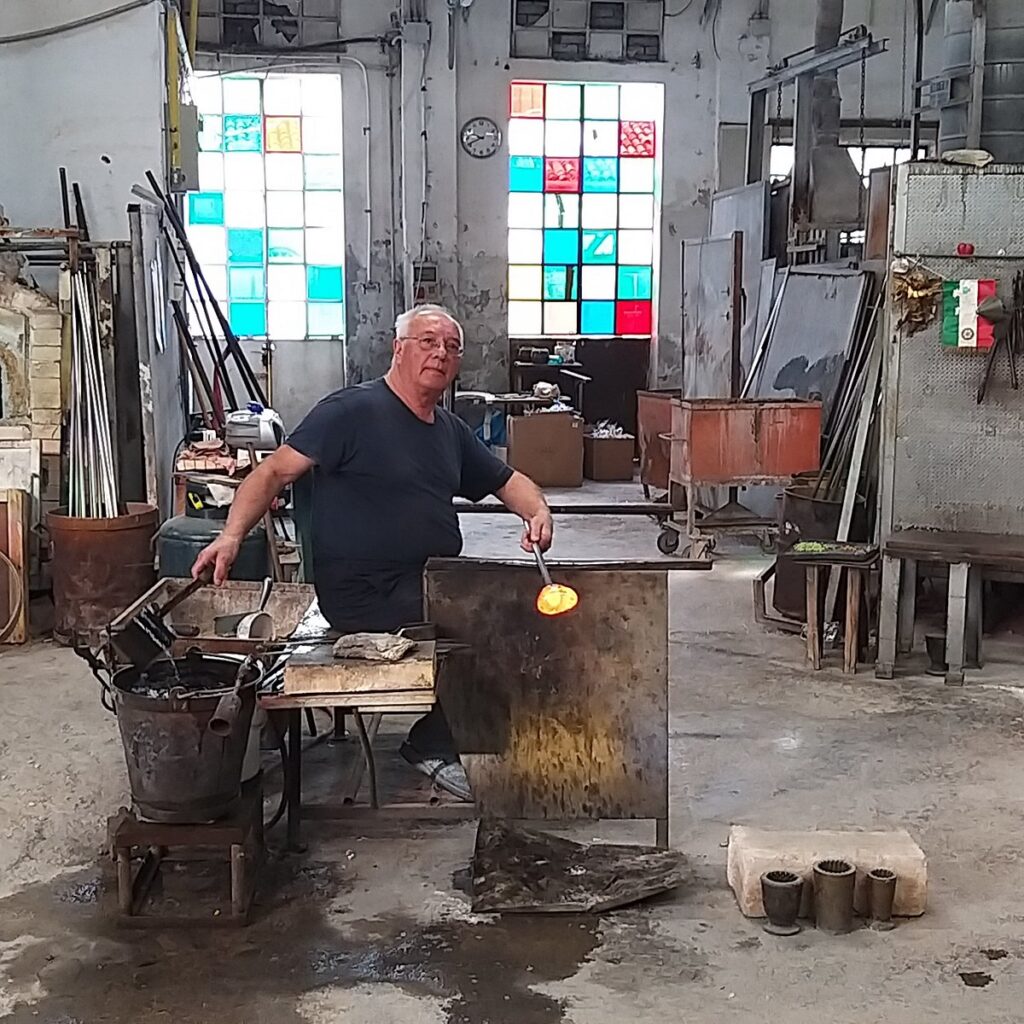
Murano glassmaker shaping a colorful glass ornament in a workshop

Murano Glass Factory Tours: Watching the Masters at Work

Murano is famous for glass, but the finished pieces displayed in Venetian shops tell only part of the story. Across the island, furnaces and workshops still produce glass today, and several open their doors to visitors. Depending on where you go, you might watch a short demonstration, explore a working production environment or take part in a hands-on session alongside experienced glassmakers. For travelers interested in how things are made, this is what makes Murano particularly interesting. It is not simply a historic glassmaking centre but a place where production can still become part of the travel experience. That makes the island a natural addition to our Magic of Manufacturing collection.


Why Murano Became the Island of Glass

Glassmaking in the Venetian lagoon has a history stretching back more than a thousand years, while Murano developed into its great production centre during the Middle Ages. Concentrating furnaces on the island brought glassmakers, specialist workers and generations of accumulated knowledge together in one place. Over time, Murano developed into one of Europe’s most distinctive glassmaking communities. The industry survived changing tastes, foreign competition and periods of serious decline. Although today’s workshops are very different from their medieval predecessors, the connection between Murano and glass production has never disappeared. Glass is still being produced here.

Choosing the Right Experience

The words demonstration, factory tour and workshop are often used when advertising Murano visits, but they do not describe the same experience.

  • A demonstration usually involves watching a glassmaker create one or more objects beside the furnace. It can be a fascinating first encounter with hot glass, but it may reveal relatively little about the wider production environment.
  • A factory or furnace tour puts more emphasis on the workplace itself. Access varies between companies, but the aim is to see glassmakers at work and understand more about how the workshop operates.
  • A hands-on workshop adds participation. Some involve working with hot glass under close supervision, while others concentrate on decorative techniques.

Deciding which of these experiences interests you most makes it much easier to choose where to visit.

Murano glassmaker shaping molten glass inside a workshop

The Showroom Question

Many Murano furnace visits include a showroom, and this is not surprising. These are commercial businesses, and selling the objects produced by their glassmakers is part of how they operate. The important question is how much of the experience takes place around the furnace and production area. A short demonstration followed by time in a showroom may be perfectly suitable for someone who wants an introduction to glassmaking and an opportunity to shop. Travelers primarily interested in manufacturing, however, should look for visits where seeing the workplace and the glassmakers at work forms a substantial part of the program.

Understanding that distinction before choosing a factory helps avoid mismatched expectations.

Wave Murano Glass: Inside a Working Factory

Murano glassmaker shaping molten glass inside a workshop

 For visitors particularly interested in the production environment, Wave Murano Glass offers a small-group guided factory tour. Rather than concentrating only on a single demonstration, the visit takes guests into the furnace environment and introduces different parts of the production process while the glassmakers work. The tour generally lasts around 45–60 minutes, with opportunities to ask questions along the way. Separate beginner glassblowing experiences are available for visitors who would like to try working with glass themselves.

One practical limitation is worth knowing before booking: Wave currently states that its factory tour is not wheelchair accessible and also cautions visitors about the intense heat around the furnaces.

Original Murano Glass: Different Levels of Participation

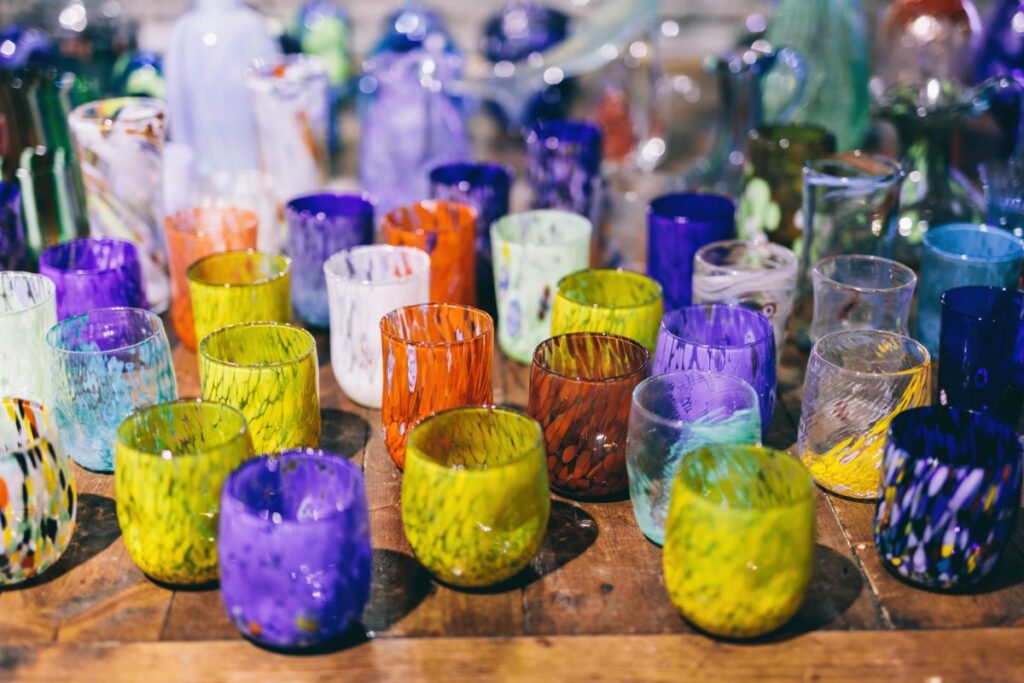
Murano glass showroom displaying colorful handmade glass pieces

 Close to the Murano Faro vaporetto stop, Original Murano Glass OMG allows visitors to choose how closely they want to engage with production. The simplest option is a live furnace demonstration, with a dedicated visitor area for watching the glassmakers at work. Depending on the activity in the furnace, other pieces may also be in production during the visit.

For those who want to participate rather than simply observe, the company offers several hands-on workshops, ranging from introductory glassmaking sessions to longer glassblowing classes and private furnace experiences.

This range makes it particularly useful when members of the same group are looking for different levels of involvement.

Vetreria Artistica Colleoni: Factory Visit and Workshop

 Also near Murano Faro, Vetreria Artistica Colleoni offers a guided visit built around watching a master glassmaker at work. During the demonstration, visitors see objects being created with different techniques while learning where and how Murano glass is produced. The standard visit continues into the company’s showroom, with the admission currently usable as credit toward a purchase.

A separate program combines the factory visit with a practical workshop, providing an alternative for visitors who want to add a hands-on activity to the experience.

The Glass Museum: Adding Context to the Factory Visit

Colorful Murano glass pieces displayed in the Glass Museum

 A furnace shows Murano glassmaking as a living industry; the Museo del Vetro provides the historical context. Founded in 1861 and housed in Palazzo Giustinian, the museum grew partly through donations from Murano’s glassworks and today holds an extensive collection documenting the island’s glassmaking history.

For manufacturing enthusiasts, it works particularly well as a companion to a factory visit. Historical pieces and later designs show how the industry changed over centuries, while the furnace provides the contemporary counterpart.

Together they offer something familiar from many good factory destinations: the workplace shows the industry in action, while the museum explains how it developed.

Visiting Murano Independently

You do not need to join an organised Venice–Murano–Burano excursion to visit the island’s glassworks.

Murano is part of Venice’s public transport network and is served by several vaporetto stops. Original Murano Glass and Colleoni are both close to Murano Faro, making them particularly straightforward to combine with an independent visit.

Travelling independently also gives you control over your time. Instead of fitting the furnace into a multi-island excursion, you can arrange a specific factory visit or workshop and combine it with the Glass Museum and some time exploring Murano itself.

For current routes and service information, check the ACTV public transport website before travelling.


Planning Your Visit

Pre-booking is sensible for small-group factory tours and hands-on workshops, where capacity may be limited. If seeing normal production is particularly important to you, check what will be operating on the day of your visit rather than assuming that every furnace experience provides the same access.

Allow enough time to combine the factory with other parts of Murano. A furnace visit and the Glass Museum complement each other especially well: one provides direct access to today’s glassmaking, while the other places what you have seen within the much longer story of the island’s industry.

Related posts

Visitor tasting chocolate at Maison Cailler in Broc, Switzerland

The Sweetest Journey

Maison Cailler in Broc follows Swiss chocolate from its ingredients to the finished product. Learn what the visitor tour, production displays and workshops offer, and how to plan a stop in the region. Nearby Gruyères makes a natural second stop.

Read More »
Artisan creating a geometric yosegi-zaiku wood pattern in a Hakone workshop

Japanese Woodworking

Japanese woodworking traditions range from interlocking kigumi joints to decorative techniques. This guide compares workshop experiences and shows how working by hand at the bench reveals the logic behind each craft.

Read More »
Moto Guzzi motorcycles and visitors outside the factory in Mandello del Lario

Moto Guzzi Factory

Moto Guzzi’s home in Mandello del Lario connects motorcycle heritage with modern manufacturing. Discover how the museum, factory and visitor spaces relate, and what to check before travelling to the Lake Como site.

Read More »
Murano glassmaker shaping a colorful glass ornament in a workshop

Murano Glass Factory Tours

Watching a Murano glassmaker at work brings the island’s craft into focus. Compare factory demonstrations and hands-on workshops, see where the Glass Museum fits into a visit, and learn what to check before booking.

Read More »
Artisan painting a Venetian mask in the Venice Art Mask Factory in Shkodër

Venetian Masks

A mask workshop in Shkodër connects Venetian carnival traditions with contemporary Albanian craftsmanship. See how the masks are shaped and decorated, and what makes a visit different from browsing a souvenir shop.

Read More »
Diamond craftsman working in a workshop with Antwerp in the background

Antwerp Diamonds

Antwerp’s Diamond District has a long trading history, but its working spaces are not all open to visitors. Learn what the DIVA museum explains, where you can realistically encounter the craft, and how the trade shaped the district.

Read More »

Murano Glass Factory Tours Read More »

Swarovski crystals being applied by hand during a decorative design process

The Magic of Swarovski

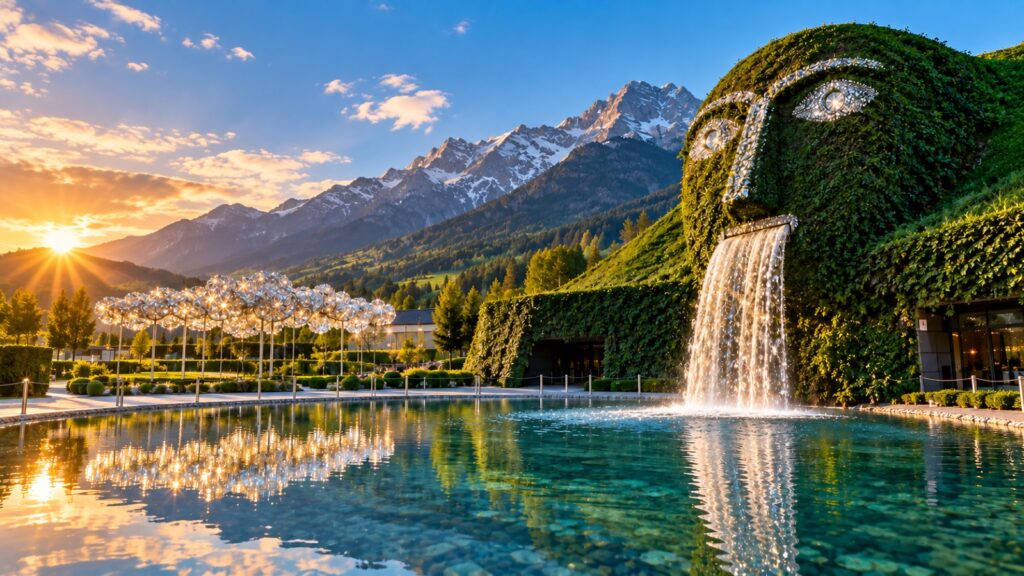
Swarovski Crystal Worlds Giant and crystal garden in Wattens, Tyrol, with the Alps in the background | AI-generated image

Swarovski Crystal Worlds: What to Expect in Wattens

Swarovski Crystal Worlds in Wattens is easy to misunderstand before your first visit. Despite its location beside Swarovski’s historic base in Tyrol, the standard visitor experience is not a conventional factory tour where you follow a production line and watch crystals being made.

Instead, Swarovski Kristallwelten combines contemporary art, design, gardens and crystal installations. The attraction opened in 1995 to celebrate Swarovski’s 100th anniversary, with Austrian multimedia artist André Heller creating the Giant and the original concept behind the attraction.

Located around 20 kilometres east of Innsbruck, Crystal Worlds can work well as a half-day excursion from the Tyrolean capital. But whether it belongs in your itinerary depends very much on what you expect: this is more about seeing what artists and designers can do with crystal than understanding industrial manufacturing.

If you are planning a broader Austrian trip outside the busiest summer period, Austria is also one of the destinations we discuss in our guide to travelling in Europe in September.

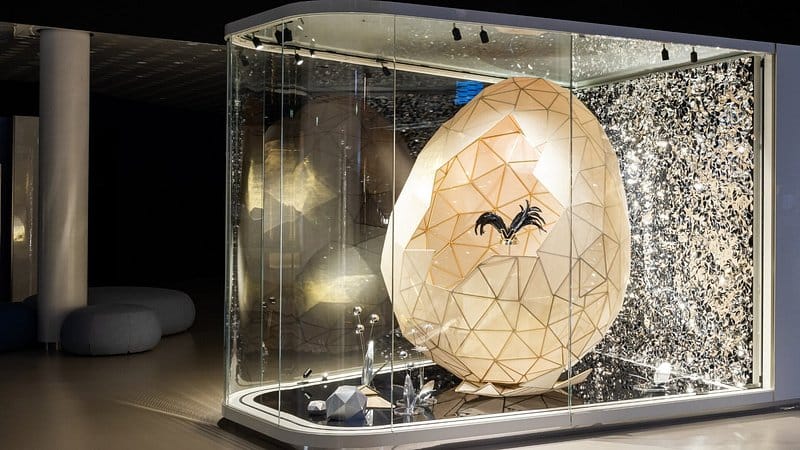
ALT: Large geometric crystal-inspired art installation at Swarovski Crystal Worlds in Wattens

Inside the Chambers of Wonder

The main indoor section is found behind the Giant, the enormous grass-covered head with sparkling eyes and a waterfall flowing from its mouth.

Inside are the Chambers of Wonder, individual installations created by international artists and designers. Rather than following a chronological museum route, visitors move through very different artistic spaces that use crystal together with mirrors, light, colour, sound and other materials.

That distinction is worth understanding before you go. You are not walking through a museum that explains Swarovski company history room by room. Some chambers are dramatic and immediately accessible; others are more conceptual, so how much you enjoy them will depend partly on your interest in contemporary art and design.

The installations also evolve over time. Rather than planning your visit around a fixed list found in an older travel guide, it is better to approach the Chambers of Wonder as a changing collection.

The Giant, Crystal Cloud and Gardens

The outdoor areas are a substantial part of the visit and should not be treated simply as the route back to the exit.

The Giant has been associated with Swarovski Crystal Worlds since the attraction opened and remains its defining visual symbol. Beyond it, the park combines contemporary artworks, landscaping and family areas with the Tyrolean mountains in the background.

One of the best-known installations is the Crystal Cloud and Mirror Pool, surrounded by a wider collection of artworks throughout the park. There is also a maze, carousel, Playtower and several outdoor installations. The park changes the character of the visit considerably: Crystal Worlds is not simply a sequence of dark rooms filled with illuminated crystal.

Weather therefore matters more than you might expect. On a pleasant day, it is worth leaving enough time for the grounds rather than planning only around the indoor exhibitions.

Can You Tour the Swarovski Factory?

Yes — but this needs an important qualification.

A normal admission ticket to Swarovski Crystal Worlds does not include a tour of Swarovski’s production facilities. However, Swarovski currently offers a separate Exclusive Swarovski Manufaktur Tour – VIP Experience. The official description presents it as an approximately three-hour guided experience that provides insights into the manufacturing process, behind-the-scenes access and a visit to Swarovski Crystal Worlds. That makes it quite different from the ordinary Crystal Worlds visit.

For most travellers buying a standard admission ticket, Wattens remains primarily an art-and-design attraction. But if your real interest is seeing something closer to Swarovski production, the Manufaktur experience is the option to investigate.

This distinction is important because searches for a “Swarovski factory tour” can easily create the wrong expectation. Crystal Worlds itself is not the factory tour; the Manufaktur experience is a separate product.

If seeing how things are actually made is the part that interests you most, explore more working factories and behind-the-scenes visitor experiences in our Factory Tours and Manufacturing Travel Guide.

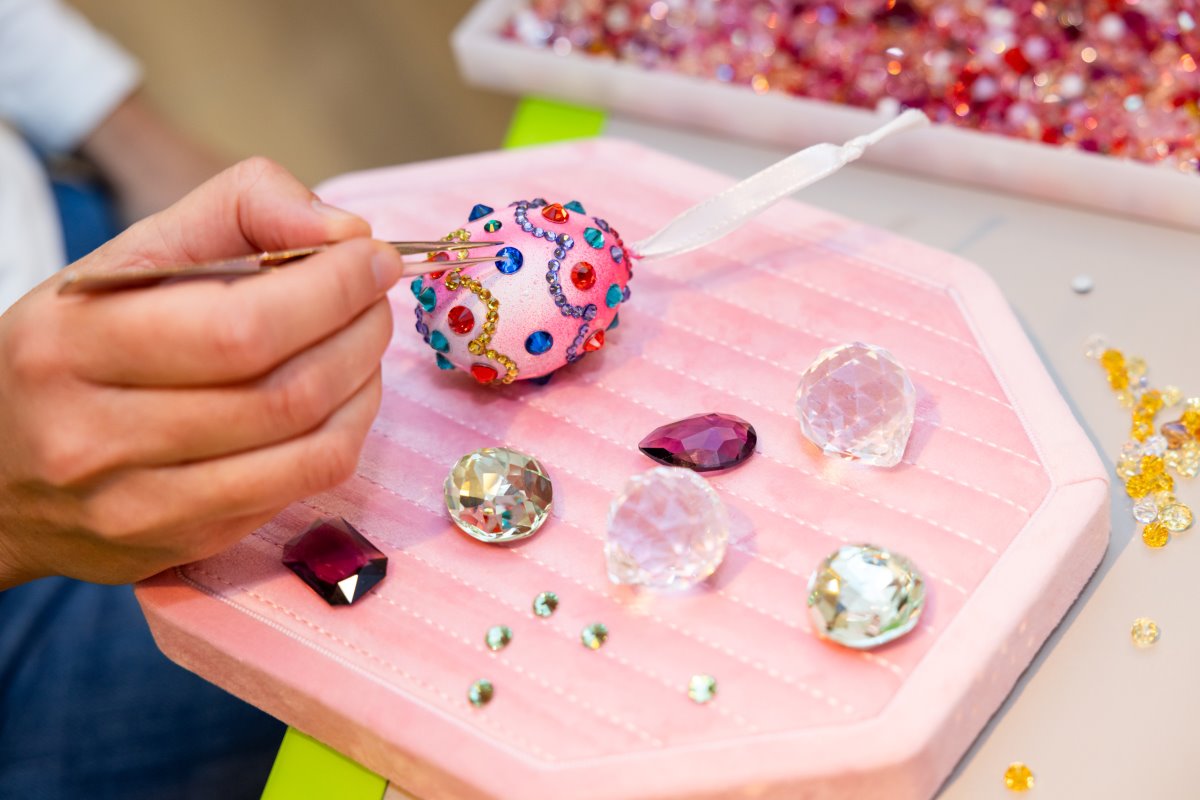
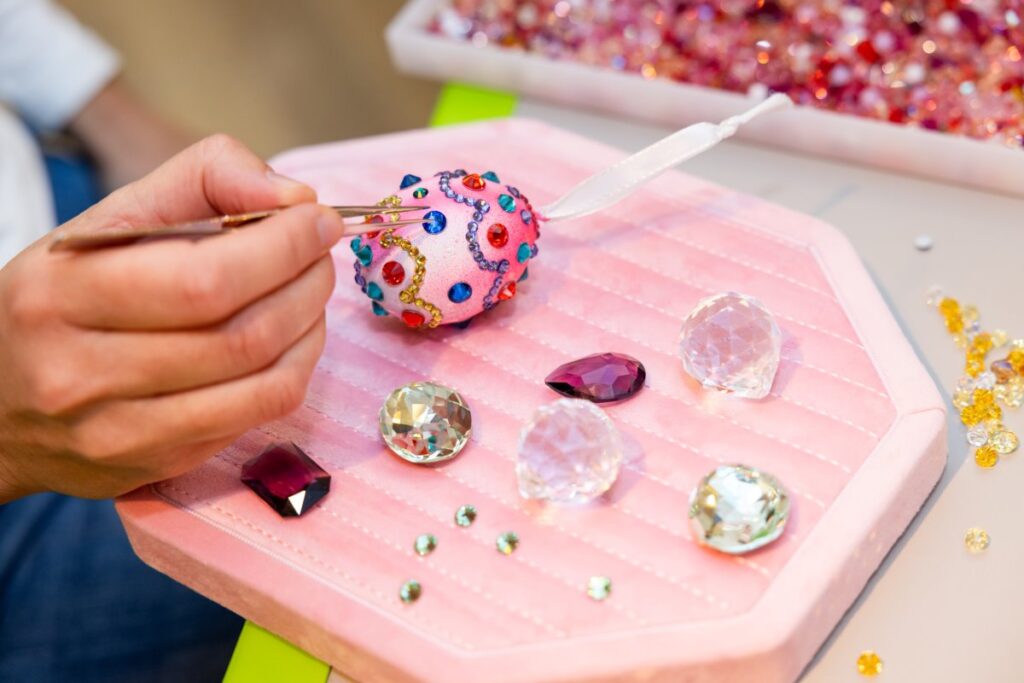
Swarovski crystals being applied by hand during a decorative design process
Copyright: © Swarovski Kristallwelten / Thomas Steinlechner

How Much Time Do You Need?

Swarovski says visitors spend an average of around 1.5 to 2 hours at Crystal Worlds. Some stay considerably longer, particularly if they explore the park, use the family facilities or stop at the restaurant.

For most adults interested mainly in the Chambers of Wonder and the gardens, two hours is therefore a reasonable starting point.

Families may need longer because the Playtower, maze and other outdoor facilities can easily extend the visit.

The journey from Innsbruck also needs to be included in your schedule. Rather than squeezing Crystal Worlds between two tightly timed attractions, it works better as a half-day excursion.


Tickets and Opening Hours

Swarovski Crystal Worlds is currently open daily from 9:00 to 19:00, with last admission at 18:00.

Advance booking is not compulsory. However, Swarovski states that online tickets provide direct access without waiting at the ticket counters, and its current ticket system offers online pricing options.

Rather than publishing fixed admission prices here, which can change, we would check the latest rates when planning the visit.

Check current tickets and admission options

One useful detail if shopping or eating is your main reason for stopping in Wattens: you do not need a Crystal Worlds admission ticket to visit the Swarovski store or Daniels Kristallwelten restaurant. Complimentary store and restaurant tickets are available at the welcome desks.

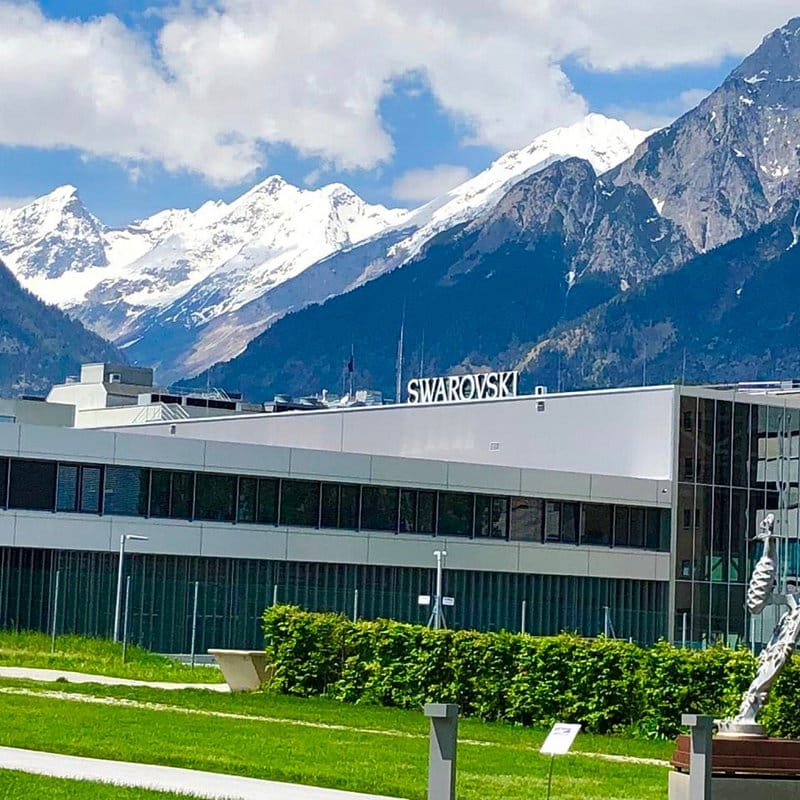
Swarovski building in Wattens with the Tyrolean Alps in the background

How to Get There from Innsbruck

Swarovski Crystal Worlds is located at Kristallweltenstraße 1 in Wattens, around 20 kilometres east of Innsbruck.

One of the simplest options for visitors staying in Innsbruck is Swarovski’s dedicated e-shuttle bus, which currently travels between Innsbruck Main Station and Crystal Worlds five times a day. If you are travelling by car, parking is free for the duration of your visit. Electric vehicle charging is also available.

Public transport therefore makes the attraction practical without renting a car specifically for the excursion. However, because the shuttle follows a timetable rather than operating continuously, check the current departure and return times when planning how long to spend in Wattens.

Practical Tips Before Your Visit

The most important preparation is simply to arrive with the right expectation.

Swarovski Crystal Worlds is primarily an art, design and visitor attraction built around crystal. A standard ticket does not take you through the Swarovski factory.

If the production side is what interests you most, look specifically at the separate Manufaktur VIP Experience rather than assuming factory access is part of normal admission. Buying online can reduce time spent at the ticket counter, and checking the e-shuttle timetable before leaving Innsbruck can prevent unnecessary waiting.

Allow enough time for the outdoor areas, particularly in good weather. Conversely, remember that a meaningful part of the experience is outside, so weather can affect how long you want to stay. The installations also evolve. What you see during one visit may not be identical to what appeared in photographs or travel articles a few years earlier.


Visiting with Children

Crystal Worlds is designed to work for families as well as adults interested in art and design. The outdoor section includes a four-level Playtower, maze and carousel, giving children something quite different from the indoor Chambers of Wonder. The playground and maze currently follow the main attraction’s opening hours, while the Carousel and Playtower open later in the morning.

That balance between indoor exhibitions and active outdoor areas can make the attraction easier for families than a conventional museum. It also means families may want to allow more time than visitors who are mainly interested in the art installations.


Accessibility

Swarovski Crystal Worlds provides unusually detailed accessibility information, which makes the attraction easier to assess in advance.

Wheelchairs, strollers and other mobility aids can be used throughout the Chambers of Wonder and the park, with the exception of parts of the Alpine Garden where there are some steep passages. Visitors with limited mobility can also borrow a wheelchair free of charge. There are eight accessible parking spaces next to the entrance, accessible restrooms are available, and the e-shuttle from Innsbruck has a designated space for wheelchair users. Visitors with a valid disability card and their registered companions are also eligible for discounted admission.

For travellers with mobility requirements, this kind of practical detail is more useful than a simple statement that an attraction is “accessible.” We collect similar information in our Wheelchair Accessible Travel guides, where we look at transport, attractions and the details worth checking before a trip.


Final Verdict

Swarovski Crystal Worlds makes most sense for travellers who enjoy contemporary art, design and unusual visual installations, or who want an easy half-day excursion from Innsbruck. Families have more to do here than the word “crystal” might initially suggest, while the gardens make the experience broader than a conventional indoor museum.

It is a less obvious choice for travellers whose main interest is industrial production. The standard Crystal Worlds ticket does not provide a factory-floor experience.

That distinction is probably the key to deciding whether to go.

Come expecting a traditional factory tour and Crystal Worlds may not be what you had in mind. Come expecting an imaginative art attraction built around crystal — with the option of booking a separate Manufaktur experience if production really interests you — and the visit makes considerably more sense.

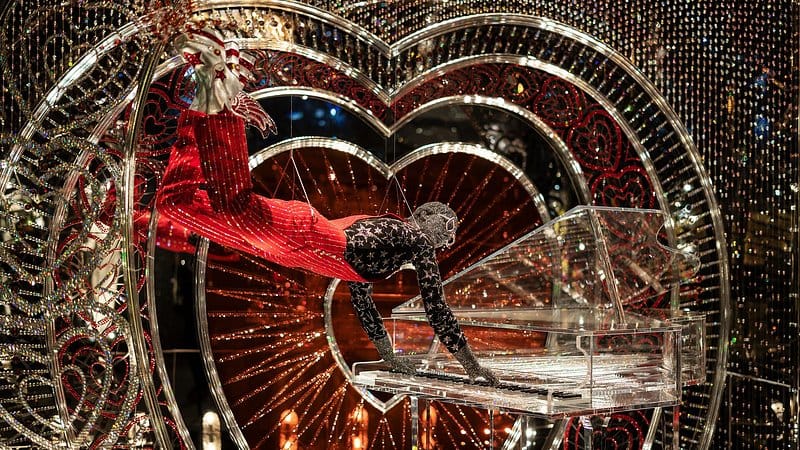
Crystal-covered figure playing a transparent piano inside Swarovski Crystal Worlds in Wattens

Related posts

Visitor tasting chocolate at Maison Cailler in Broc, Switzerland

The Sweetest Journey

Maison Cailler in Broc follows Swiss chocolate from its ingredients to the finished product. Learn what the visitor tour, production displays and workshops offer, and how to plan a stop in the region. Nearby Gruyères makes a natural second stop.

Read More »
Moto Guzzi motorcycles and visitors outside the factory in Mandello del Lario

Moto Guzzi Factory

Moto Guzzi’s home in Mandello del Lario connects motorcycle heritage with modern manufacturing. Discover how the museum, factory and visitor spaces relate, and what to check before travelling to the Lake Como site.

Read More »
Entrance to the Guinness St. James’s Gate brewery complex in Dublin

Guinness Dublin

Dublin’s Guinness story extends beyond the television drama House of Guinness. This guide separates screen fiction from the family’s history and explains what visitors can experience at the Guinness Storehouse.

Read More »
Swarovski crystals being applied by hand during a decorative design process

The Magic of Swarovski

Swarovski Crystal Worlds in Wattens is built around art and design, while the separate Manufaktur experience focuses more closely on production. Compare the two before planning a visit, so you know what each includes.

Read More »

The Magic of Swarovski Read More »

Touching the Sky

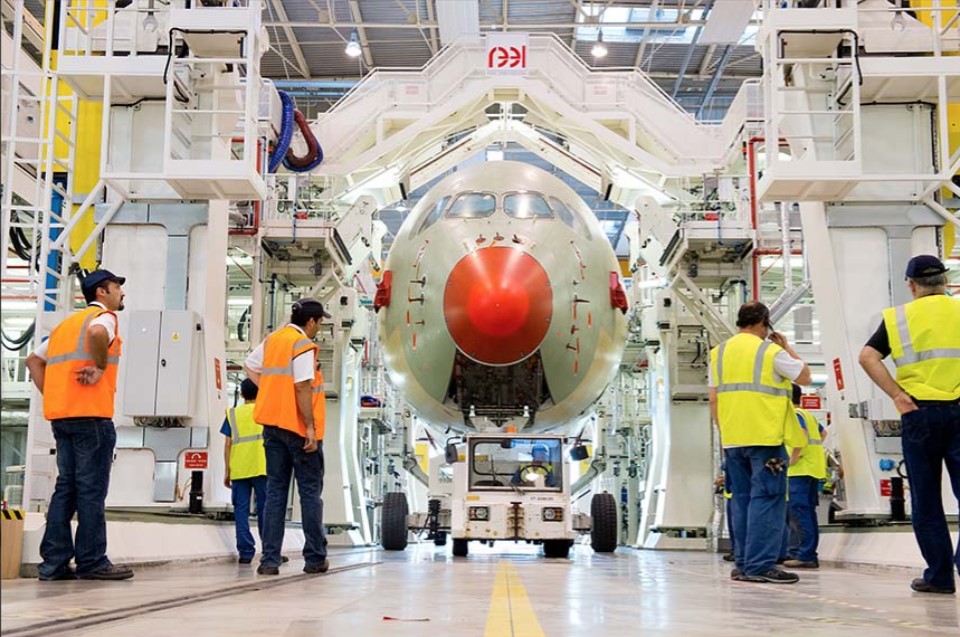
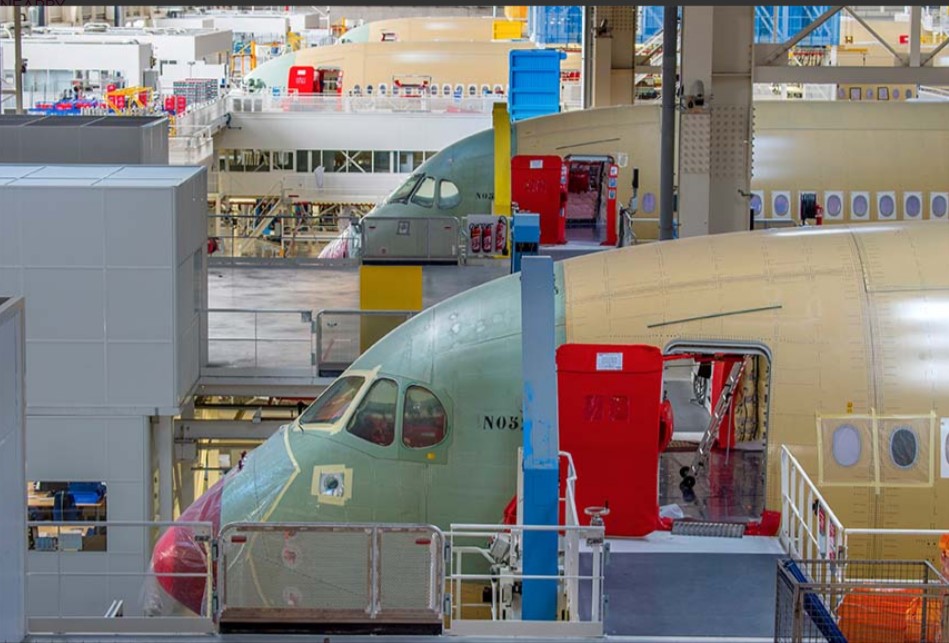
Airbus Factory Tour in Toulouse with aircraft under assembly

Touching the Sky: The Airbus Factory Tour Experience in Toulouse

There is something slightly strange about boarding a plane, fastening your seat belt and rarely thinking about how this enormous machine actually came into existence.

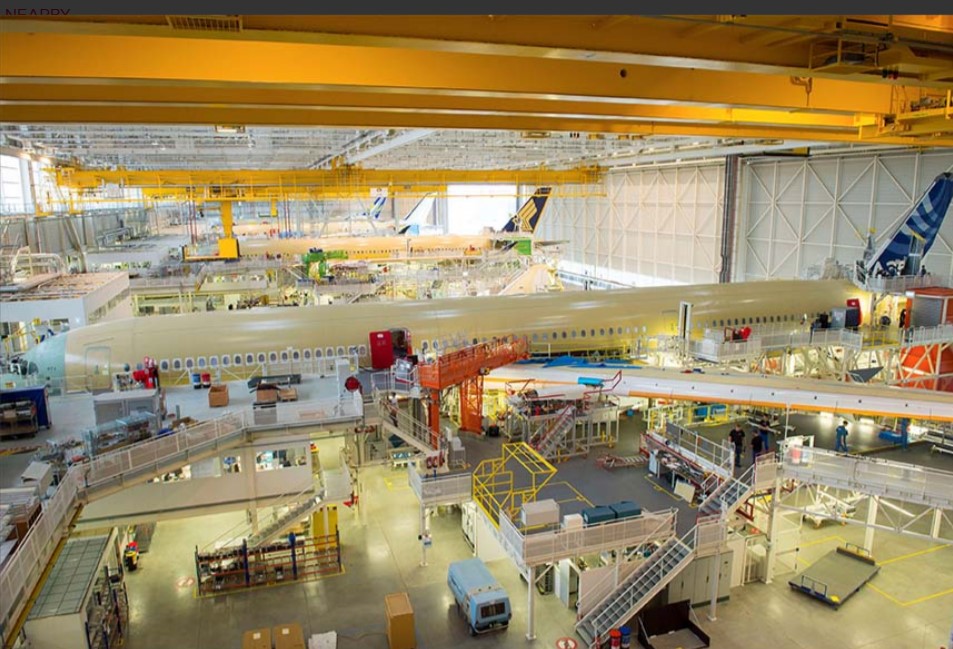
The Airbus Factory Tour in Toulouse offers a chance to see the other side of air travel. Toulouse is at the heart of Airbus operations, and the factory visits take you beyond the airport terminal into a world of assembly lines, logistics and aircraft production.

You do not need to be an aviation enthusiast to find the scale impressive. Aircraft components arrive from different parts of Europe before being brought together in Toulouse, turning an international supply chain into something surprisingly tangible.

This is not a theme-park version of aviation. It is a visit to a working industrial environment, which also means security rules, limited access and some advance planning. But that is precisely what makes it different from an ordinary museum visit.

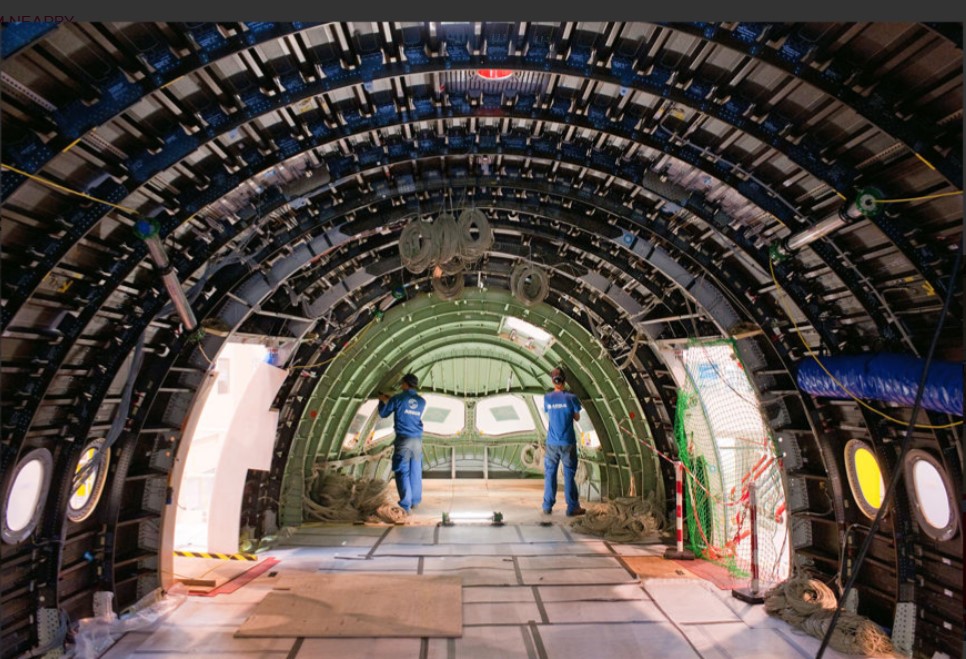
Workers inside an unfinished Airbus aircraft fuselage during assembly

What Can You See on an Airbus Factory Tour?

Airbus currently offers two main factory visits in Toulouse: the Airbus A321 tour and the Airbus A350 tour. Both last approximately 90 minutes, but they focus on different parts of the aircraft production story.

For many visitors, the A350 experience is particularly memorable because of the sheer scale involved. The tour takes you into the world of wide-body aircraft production and explains how major sections of an aircraft manufactured elsewhere in Europe eventually come together in Toulouse.

Rather than walking freely through the factory floor, visitors see the operation from designated areas while a guide explains the different stages of production.

It is one thing to know that an aircraft is assembled from thousands of components. It is quite another to look at an unfinished aircraft and realize that, eventually, hundreds of passengers will be sitting inside it somewhere above the Atlantic.

That change of perspective is probably the most interesting part of the visit.

What Makes the Experience Different?

Perhaps the most interesting thing you learn is that an Airbus is not simply “made in Toulouse.”

Aircraft production is a European operation. Wings, fuselage sections and other major components are manufactured at different sites before being transported to final assembly facilities. Toulouse is where many of those pieces finally become something recognizable as an aircraft.

The visit helps put that logistical puzzle into perspective.

It also makes you appreciate how much of an aircraft remains invisible to passengers. We normally see seats, overhead lockers and a neat cabin wall. During production, an aircraft is something entirely different: structure, systems, wiring and engineering.

There is an interesting contrast between scale and precision, too. The components are enormous, yet producing an aircraft requires extremely controlled processes and careful coordination. For us, that is more interesting than simply seeing a very big aeroplane.

If industrial tourism interests you, our Lamborghini Factory Tour guide shows a very different approach to modern European manufacturing.

Getting There

The tours depart from the Musée aeroscopia in Blagnac, close to Toulouse-Blagnac Airport and the Airbus facilities.

If you are using public transport, the official visitor information recommends Tram Line 1 to Beauzelle Aeroscopia. From there, the museum and the tour meeting point are within easy reach.

Driving is also straightforward, and parking is available at the Aeroscopia Museum.

The important thing is not to plan your arrival too tightly. Airbus is an active industrial site with strict security procedures, and visitors are required to arrive at the meeting point 30 minutes before their scheduled departure.

That is one appointment where we would definitely prefer to be early rather than running through the car park at the last minute.

Airbus aircraft undergoing final assembly at the Toulouse factory

Tickets, Booking and Security

This is not a place where you can simply arrive and decide to join the next tour. Advance reservation is required, and availability depends on the schedule.

At the time of writing, the A321 and A350 tours cost €18 for adults and €15 at the reduced rate. Children under six can visit free of charge but still require a ticket.

Because prices, schedules and tour conditions can change, we recommend checking the latest information and booking through the official Manatour – Let’s Visit Airbus website before planning your visit.

Identification requirements are particularly important. Visitors must bring an original, valid identity document. Photocopies, digital copies and driving licences are not accepted. Visitors from outside the European Union must bring their original passport.

Photography and filming are prohibited on the Airbus site, so this is one travel experience that will have to remain mostly in your memory rather than your camera roll.


Accessibility: Check Before Booking

There is one important limitation that should not be overlooked. The official visitor information currently states that the Airbus factory visit is not accessible to people with reduced mobility (PMR). If accessibility is relevant to you or someone travelling with you, contact Manatour before booking to discuss your specific requirements and check the latest arrangements.

The Aeroscopia Museum is a separate attraction with its own accessibility arrangements, so the accessibility of the museum should not be assumed to apply to the factory visit itself.

For a broader look at travelling with mobility requirements in the country, see our guide to exploring France by wheelchair.

Airbus Factory Tour in Toulouse with aircraft under assembly

When Should You Visit?

Planning the date requires a little attention because visits do not necessarily operate every day.

Outside French school holiday periods, tours are generally scheduled on Wednesdays and Saturdays. During school holidays in French zones A, B and C, they are generally available from Monday to Saturday.

Tours are offered in French, English and Spanish according to the schedule, with some additional languages available for groups.

For international visitors, we would choose the tour first and build the rest of the Toulouse itinerary around it, rather than book the trip and assume that a suitable English-language visit will be available on any particular day.

Make It an Aviation Day

One advantage of the location is that the factory visit can easily be combined with the Aeroscopia Museum.

The museum provides the historical side of the story, with aircraft including Concorde and an Airbus A380, while the factory visit shows a very different side of aviation: how modern aircraft production works today.

Doing both on the same day makes sense. Instead of two unrelated attractions, they become two halves of the same story — how aviation developed and how today’s aircraft are built.

And keep an eye on the sky while you are in the area. Toulouse is also home territory for the distinctive BelugaXL, Airbus’s oversized transport aircraft used to move large aircraft components between production sites.

Spotting one is never guaranteed, but if one appears, you are unlikely to mistake it for anything else.

Is It Worth It?

If you are expecting a conventional tourist attraction with unlimited access and plenty of photo opportunities, this probably isn’t it.

But that is also its strength. Factory visits can take very different forms. The Nestlé-Cailler Experience in Switzerland, for example, is far more visitor-focused than the tightly controlled industrial environment at Airbus.

You are entering part of a real aircraft manufacturing operation, and the restrictions that come with that are part of the experience. It offers a perspective on aviation that airports and aviation museums cannot quite reproduce.

Dedicated aviation enthusiasts will obviously find plenty to enjoy, but we think the visit may be even more interesting for people who aren’t avgeeks.

Most of us fly without giving much thought to how the aircraft beneath our feet was built. After seeing the scale, logistics and international cooperation involved in producing one, the next time you look out of an aircraft window, you may see that machine a little differently.

Aircraft on the Airbus final assembly line in Toulouse

Related posts

Visitors viewing a Rimac car during a factory tour near Zagreb

Rimac Automobili

In Croatia, Rimac develops electric performance cars through battery technology and in-house engineering. This guide examines the work behind the Nevera and explains what visitors should check before planning a visit.

Read More »

Touching the Sky

An Airbus factory visit in Toulouse reveals the scale and coordination behind aircraft assembly, with components arriving from across Europe. Learn what the visitor tours cover, how access is arranged and why this part of France became an aviation centre.

Read More »

Lamborghini Factory Tour

Lamborghini’s Sant’Agata Bolognese site brings production and automotive history together. Find out what the factory tour and museum cover, how to book, and what to consider when planning a visit to Italy’s Motor Valley.

Read More »
Volkswagen Factory Tour in Wolfsburg, Germany

The City of Cars

Wolfsburg offers several ways to encounter Volkswagen’s history and production. Compare Autostadt’s exhibitions and visitor spaces with the separate factory tour to decide which experience belongs in your itinerary.

Read More »

Touching the Sky Read More »

Lamborghini Factory Tour

Lamborghini Factory Tour: Inside Sant’Agata Bolognese

Lamborghini supercars displayed at the Lamborghini Museum in Sant’Agata Bolognese

If a large automotive plant is a lesson in industrial scale and precision, the Lamborghini factory in Sant’Agata Bolognese offers something different. Here, in the heart of Italy’s Motor Valley, some of the world’s most distinctive super sports cars are created at the same site Lamborghini has called home since 1963. Production is highly specialised, combining advanced manufacturing technology with the attention to detail expected from a luxury manufacturer.

For visitors, the attraction goes beyond seeing expensive cars. The Lamborghini factory tour takes you beyond the adjacent museum and into selected areas of a working automotive plant, offering a rare look at the process behind the finished cars.

That makes Sant’Agata particularly interesting not only for Lamborghini fans, but also for travellers curious about how highly specialised products are actually made.

What to Expect

The official guided production-line tours begin at the Lamborghini Museum. From there, visitors enter selected areas of the company and get a closer look at the environment where Lamborghini builds its super sports cars. Lamborghini describes the experience as a journey between craftsmanship and technology, rather than a production display created specifically for tourists. This is where expectations need to remain flexible.

Lamborghini is an operating factory. Models, manufacturing processes and daily activity can change, so the exact things visible during one visit should not be assumed from older tour reports. That unpredictability is part of what makes a genuine factory tour interesting. You are seeing real production rather than a reconstruction of it. For current tour information and reservations, use the official Lamborghini Museum and Factory Tour page.

The Lamborghini Museum

The Museo Automobili Lamborghini shares the Sant’Agata Bolognese site and provides the historical side of the experience.

Its displays trace Lamborghini’s development across more than six decades, placing famous cars, design ideas and technological milestones within the wider story of the company. The museum gives visitors a chance to follow the evolution of Lamborghini before seeing the modern manufacturing environment next door. If availability allows, we would combine the museum and production tour.

The museum works particularly well as context for the factory visit. Instead of encountering Lamborghini only as a modern supercar manufacturer, you can see how its design and engineering have developed since the company’s early years.

Lamborghini factory in Sant’Agata Bolognese, Italy

Sant’Agata Bolognese and Italy’s Motor Valley

Sant’Agata Bolognese lies northwest of Bologna in Emilia-Romagna, at the heart of an area known internationally as Italy’s Motor Valley.

Lamborghini is only one part of that story. Ferrari, Ducati, Pagani, racing circuits, specialist manufacturers and automotive museums are concentrated across the region, making Bologna and Modena particularly strong bases for travellers interested in cars and engineering.

This changes the way we would plan the Lamborghini visit. Rather than treating the factory as an isolated attraction, automotive enthusiasts can make it one part of a wider journey through the region.

Our Italy Travel Guide provides more ideas for combining Bologna and Emilia-Romagna with a longer journey through Italy.

How to Get to the Lamborghini Factory

The Lamborghini Museum and factory are located at Via Modena 12 in Sant’Agata Bolognese, between Bologna and Modena.

By Car: For a wider Motor Valley itinerary, driving is generally the most flexible option.

A car makes it considerably easier to combine Lamborghini with other automotive destinations around Bologna, Modena and Maranello without having to coordinate several public-transport connections with fixed museum or factory-tour times.

If you plan several visits requiring reservations, avoid creating an itinerary with little margin between them. Factory tours operate to specific schedules, while traffic and parking can add unexpected time.

By Public Transport: Visiting Lamborghini without a car is possible, but requires more planning. TPER’s Line 576 serves the Bologna–San Giovanni in Persiceto–Sant’Agata Bolognese–Crevalcore corridor. Because individual services and timetables can change, check the current schedule rather than relying on journey times quoted in older travel guides. Use the official TPER Line 576 information when planning the journey. If you have a timed factory tour, allow a comfortable margin between your scheduled arrival and the start of the visit.


Booking and Planning Your Visit

One distinction is particularly important: museum admission and the production-line tour are not the same experience.

Access to the production areas is provided through Lamborghini’s guided tour, so check factory-tour availability before building the rest of a Motor Valley itinerary around a particular day. Museum opening hours vary seasonally, and Lamborghini also publishes exceptional closures and early-closing dates. Rather than reproducing prices and detailed opening times that could quickly become outdated, check the current information when planning your visit.

The same approach makes sense for photography rules, age requirements and other visitor restrictions. Follow the conditions supplied for the tour you actually book rather than relying on older factory reports.


Accessibility

Accessibility deserves particular attention when booking a working factory tour. A museum visit and entry into an active production environment are not necessarily equivalent experiences. Routes, safety requirements and access to individual areas can differ.

If step-free access, wheelchair use, seating opportunities or other assistance is important, contact Lamborghini before booking and ask specifically about the production-line tour, rather than assuming that information about the museum applies automatically to the factory. This allows the visitor team to confirm what is possible on the particular tour you intend to book.

Museum or Factory Tour?

If you can do both, choose both – but they offer very different experiences.

The Lamborghini Museum is worthwhile in its own right, particularly if the cars, design and history of the brand are your main interests. You can explore the collection at your own pace and follow Lamborghini’s development across more than six decades.

For dedicated Lamborghini fans, the museum alone can justify the journey. For travellers interested in manufacturing, however, the factory tour is the experience we would prioritise.

There are larger automotive factories and more extensive car museums in Europe. Lamborghini’s advantage is not scale, but the opportunity to experience both sides of the brand in the place it has called home since 1963.

Come for the cars. If you can, stay for the factory – that is what turns a Lamborghini visit into a genuine manufacturing experience.

Related posts

Visitor tasting chocolate at Maison Cailler in Broc, Switzerland

The Sweetest Journey

Maison Cailler in Broc follows Swiss chocolate from its ingredients to the finished product. Learn what the visitor tour, production displays and workshops offer, and how to plan a stop in the region. Nearby Gruyères makes a natural second stop.

Read More »
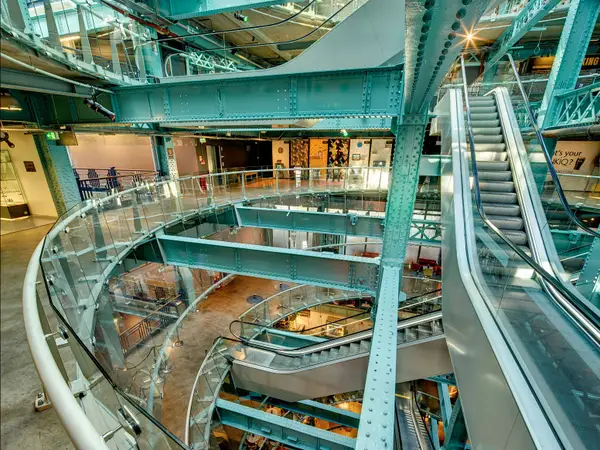
Artisan creating a geometric yosegi-zaiku wood pattern in a Hakone workshop

Japanese Woodworking

Japanese woodworking traditions range from interlocking kigumi joints to decorative techniques. This guide compares workshop experiences and shows how working by hand at the bench reveals the logic behind each craft.

Read More »

Moto Guzzi motorcycles and visitors outside the factory in Mandello del Lario

Moto Guzzi Factory

Moto Guzzi’s home in Mandello del Lario connects motorcycle heritage with modern manufacturing. Discover how the museum, factory and visitor spaces relate, and what to check before travelling to the Lake Como site.

Read More »

Murano glassmaker shaping a colorful glass ornament in a workshop

Murano Glass Factory Tours

Watching a Murano glassmaker at work brings the island’s craft into focus. Compare factory demonstrations and hands-on workshops, see where the Glass Museum fits into a visit, and learn what to check before booking.

Read More »
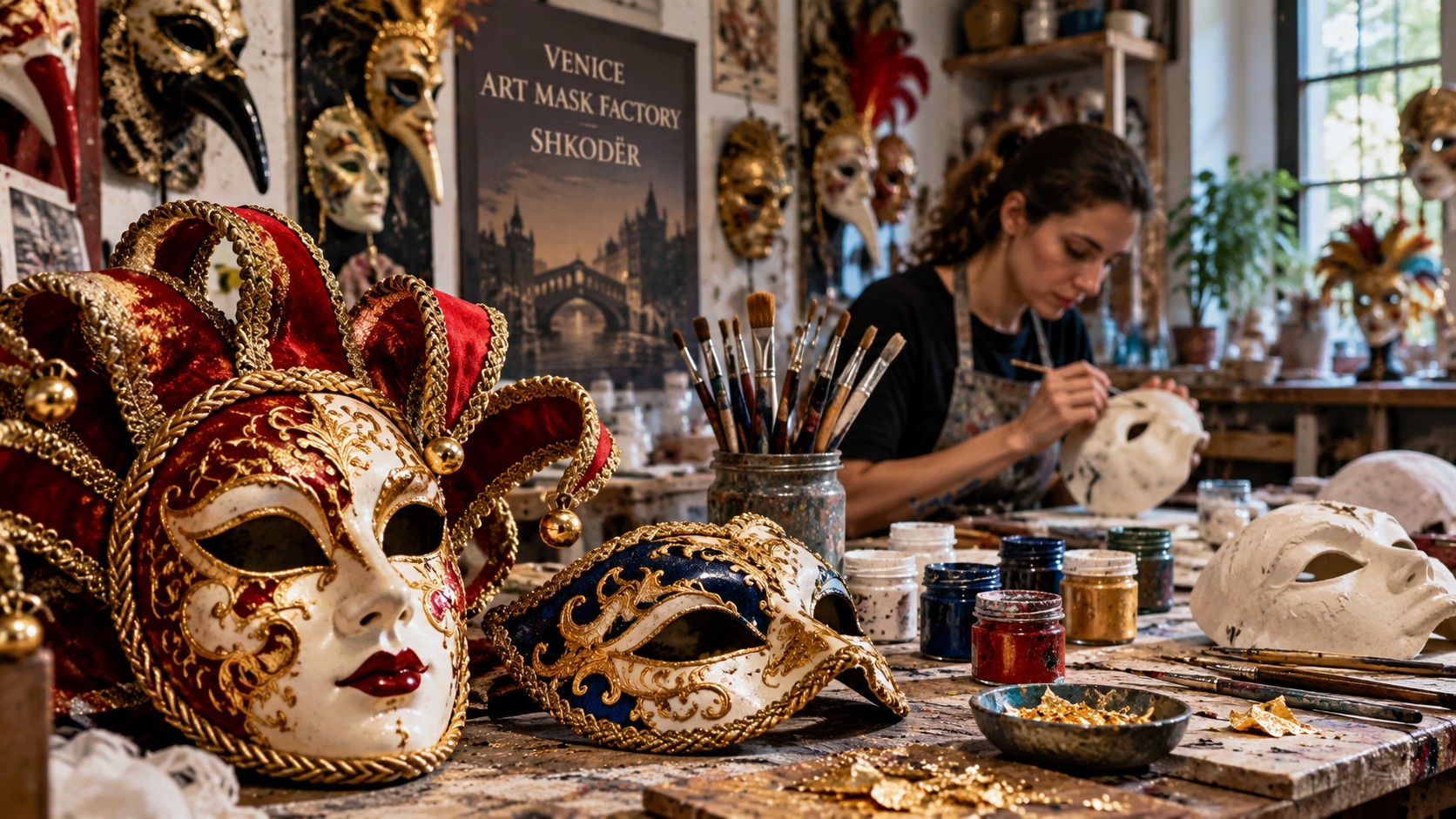
Artisan painting a Venetian mask in the Venice Art Mask Factory in Shkodër

Venetian Masks

A mask workshop in Shkodër connects Venetian carnival traditions with contemporary Albanian craftsmanship. See how the masks are shaped and decorated, and what makes a visit different from browsing a souvenir shop.

Read More »
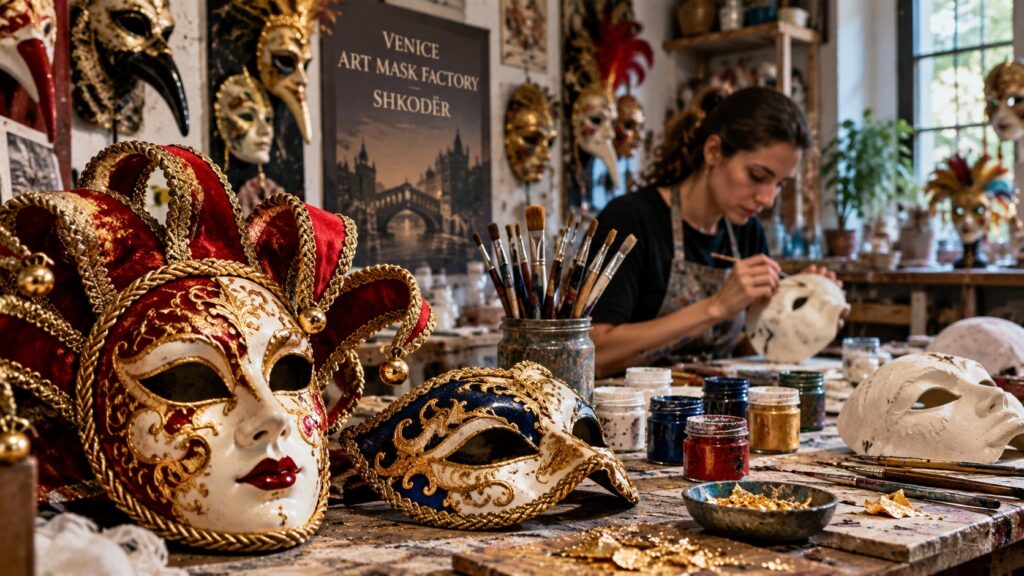
Diamond craftsman working in a workshop with Antwerp in the background

Antwerp Diamonds

Antwerp’s Diamond District has a long trading history, but its working spaces are not all open to visitors. Learn what the DIVA museum explains, where you can realistically encounter the craft, and how the trade shaped the district.

Read More »
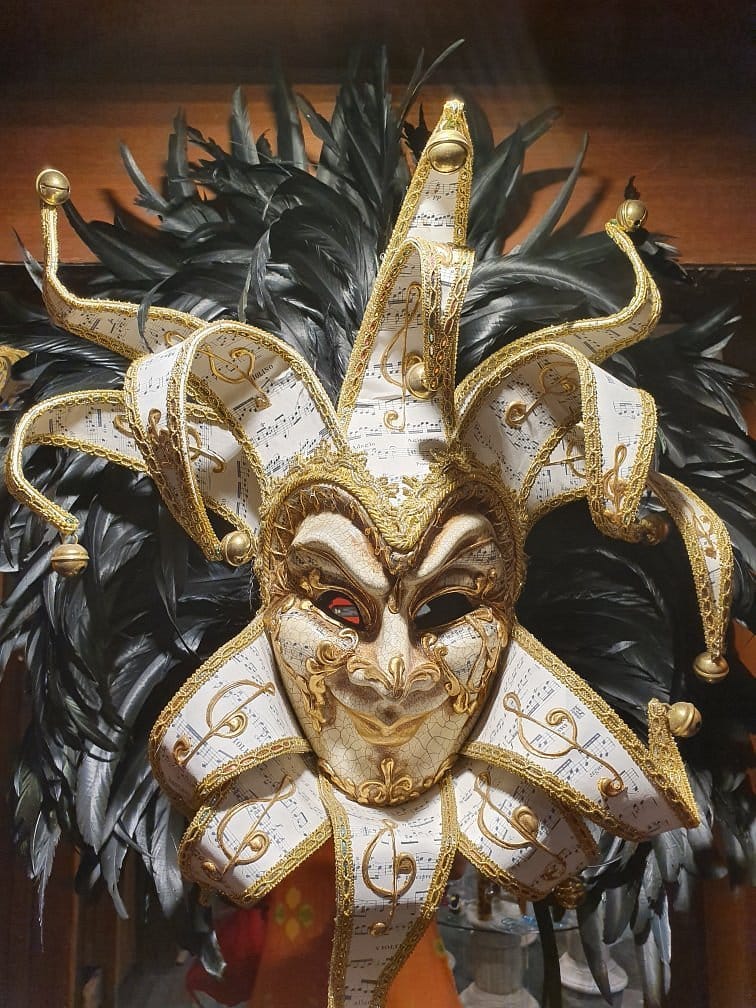
Lamborghini Factory Tour Read More »
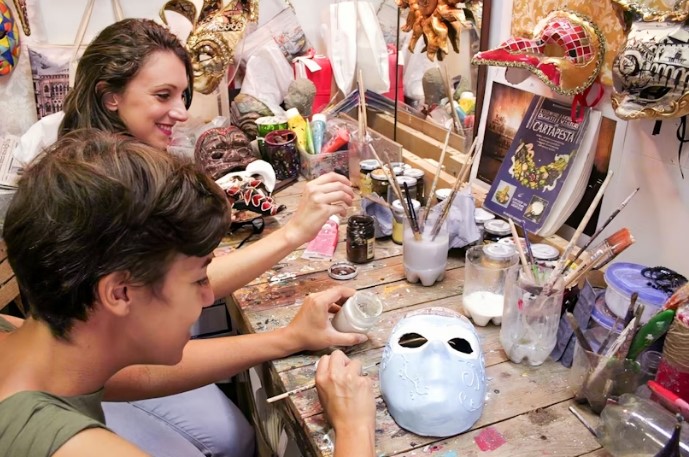
Volkswagen Factory Tour in Wolfsburg, Germany

The City of Cars

Volkswagen Factory Tour in Wolfsburg, Germany

The City of Cars: Volkswagen Factory Tour and Autostadt in Wolfsburg

Wolfsburg is a city whose identity is unusually closely connected to one company. Volkswagen has been building cars here for decades, and the enormous factory beside the Mittelland Canal still dominates both the landscape and the story of the city.

For visitors, however, there are two different experiences to understand: Autostadt and the Volkswagen Factory Tour. They sit next to each other and are closely connected, but they are not the same thing.

Autostadt is Volkswagen Group’s visitor complex, with exhibitions, brand pavilions, museums, restaurants and the distinctive glass Car Towers. The factory tour, on the other hand, takes you into the working Volkswagen plant to see parts of the actual production process. If you are interested in how things are made rather than simply looking at finished products, that distinction matters.

Autostadt visitor complex beside the Volkswagen factory in Wolfsburg

What Is the Volkswagen Factory Tour Like?

The factory visit lasts up to one hour and takes visitors through parts of Volkswagen’s Wolfsburg production facility. Rather than walking independently through the plant, visitors travel through the production environment on the factory tour vehicle.

The purpose is not to present a polished exhibition about car manufacturing. You are looking at parts of an operating factory and seeing some of the stages involved in turning individual components into completed vehicles.

That difference is what makes the experience interesting.

Modern car production combines enormous industrial scale with processes that have to work in carefully coordinated sequences. What looks relatively simple when you see a finished Volkswagen on the road becomes much more complicated when you see how many individual operations are involved in producing it.

The exact experience can vary because this is a working factory rather than a static attraction. Volkswagen tours operate only when production conditions allow, and routes can be changed or tours cancelled at short notice.

Tickets, Booking and Security

This is the part we would plan carefully. The factory tour operates Monday to Friday, subject to availability and factory production schedules. Tours are not offered during factory holidays, and production requirements can result in changes or cancellations. The experience lasts a maximum of about one hour, and children must be at least six years old to participate.

The current official information is not completely consistent about advance booking. The dedicated English factory-tour page says guests may book through the online shop or obtain a place on the day, subject to availability. The Autostadt FAQ says day visitors should ask at the Welcome Desk on the day of their visit. The German factory-tour page currently lists available places for non-vehicle-collection visitors at €15, booked at the Welcome Desk subject to availability.

For that reason, we would check the current booking procedure directly with Autostadt shortly before visiting, rather than relying on an older blog post or assuming that a factory-tour place is included with general admission.

Visitors must also carry photo identification. Restrictions apply to bags and other belongings taken onto the tour, so check the latest rules before arriving.

The regular Autostadt day ticket is separate. At the time of writing, admission costs €21 for adults, €17 reduced, and €11 for visitors aged 6–17, with family tickets also available. Children under six enter Autostadt free of charge.

Cars moving through the Volkswagen production line in Wolfsburg

How Much Time Should You Allow?

If the factory is your main reason for coming to Wolfsburg, we still would not plan to arrive, take the one-hour tour and immediately leave.

Autostadt deserves more time than that.

A half day is the minimum we would allow, while a full day makes more sense if you want to combine the factory with the museum, pavilions, Car Towers and grounds without constantly watching the clock.

If the factory tour is particularly important to you, plan the rest of the day around it rather than the other way around. Production-dependent tours are the least flexible part of the visit.

Wolfsburg is also well connected by rail, so Autostadt can work as part of a wider German itinerary without requiring an overnight stay for every visitor.

Autostadt or Factory Tour? Know the Difference

It is easy to treat Autostadt and the Volkswagen plant as one attraction, but they offer quite different experiences.

Autostadt is a large visitor destination built around cars, mobility, design and the Volkswagen Group. You can explore brand pavilions, see historic vehicles, visit exhibitions, walk through the landscaped grounds and see the famous glass Car Towers.

The factory tour is the industrial part of the visit. It takes you beyond the visitor complex and into Volkswagen’s working production environment.

For us, the combination is much more interesting than either experience in isolation.

Autostadt explains how Volkswagen presents cars and mobility to the public. The factory shows something else entirely: how cars are actually produced.

If factory tourism interests you, this contrast is also worth comparing with our Airbus Factory Tour in Toulouse, where aircraft production creates a very different industrial experience.

What Else Is Worth Seeing at Autostadt?

Even without the factory, there is plenty to explore.

The ZeitHaus focuses on automotive history rather than only Volkswagen, making it particularly interesting if you enjoy seeing how car design and technology developed over time.

The individual brand pavilions provide another perspective. Instead of concentrating on manufacturing, they show how different Volkswagen Group brands interpret design, technology and their own identities.

Then there are the Car Towers.

The two cylindrical glass towers are among Autostadt’s most recognizable structures and are used in Volkswagen’s vehicle delivery system. A separate Tour and Tower experience includes a visit to one of the brand pavilions followed by a ride inside a Car Tower to a height of 48 metres.

This is a good example of why it helps to understand the different experiences before buying tickets. A Factory Tour, an Autostadt guided tour and a Tour and Tower experience are three different things.

You do not necessarily need to do all three.

Glass Car Towers at Autostadt in Wolfsburg

Getting to Autostadt in Wolfsburg

Wolfsburg is particularly convenient for visitors arriving by train.

From Wolfsburg Hauptbahnhof, you can already see Autostadt, and the entrance is only a short walk across the Stadtbrücke. This makes a factory-focused day trip possible without needing a car.

If you are driving, Autostadt has several visitor parking areas. Current parking charges and daily maximums are published on the official website, so it is worth checking them before travelling.

The factory tour itself has a specific meeting point. Visitors should arrive 15 minutes before departure at the ServiceHaus parking area, from where a shuttle takes participants to the factory.

That last detail is worth remembering. Arriving at Autostadt on time is not quite the same thing as arriving at the factory-tour meeting point on time.

Accessibility

Autostadt itself provides accessible facilities, including wheelchair-accessible toilets in several buildings. Reduced admission is also available to visitors with disabilities.

However, accessibility should be checked experience by experience rather than assuming that every activity within Autostadt has the same conditions.

For example, the Car Tower portion of the Tour and Tower experience is specifically listed as unsuitable for wheelchair users and people with walking disabilities.

The current factory-tour information does not give us enough detail to make a confident general statement about accessibility for visitors with reduced mobility. If this affects you or someone travelling with you, we recommend contacting Autostadt directly before booking. 

For more practical information on planning trips around mobility needs, explore our wheelchair-accessible travel guides.

Is the Volkswagen Factory Tour Worth It?

That depends on what you expect from Wolfsburg.

If your interest is mainly in seeing beautiful classic cars, Autostadt and the ZeitHaus may already give you what you want. If you are interested in how cars are actually produced, the factory adds an entirely different layer to the visit.

You do not have to be a Volkswagen enthusiast.

In fact, factory visits are often most interesting when you stop thinking about the brand and start looking at the process. A familiar object that we normally see parked outside a supermarket suddenly becomes the result of an enormous chain of engineering, logistics, machinery and human work.

That is also why the Volkswagen experience fits so well into a broader factory-tour itinerary. Compare it with aircraft production at Airbus, hand-built performance cars in Italy or chocolate production in Switzerland, and the products could hardly be more different.

The interesting question remains the same:

How is this actually made?

For us, that is reason enough to look behind the factory doors.

Related posts

Visitors viewing a Rimac car during a factory tour near Zagreb

Rimac Automobili

In Croatia, Rimac develops electric performance cars through battery technology and in-house engineering. This guide examines the work behind the Nevera and explains what visitors should check before planning a visit.

Read More »
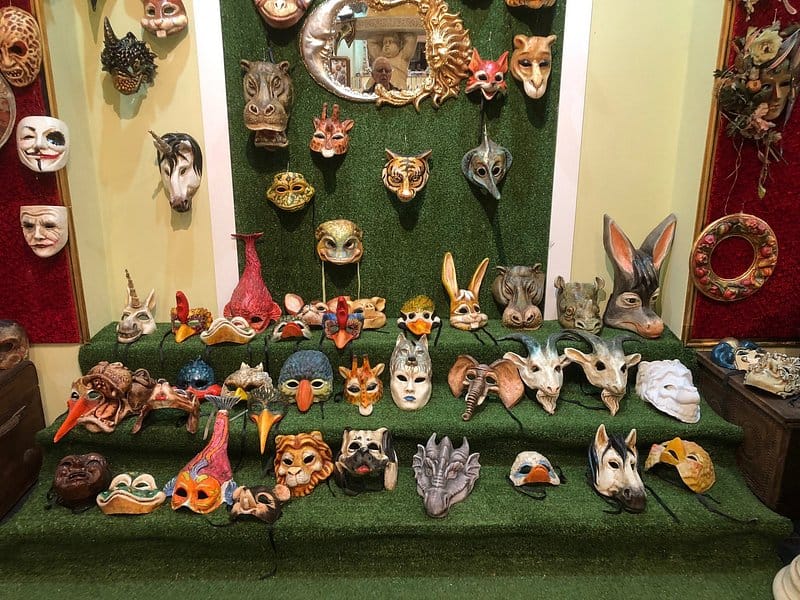
Touching the Sky

An Airbus factory visit in Toulouse reveals the scale and coordination behind aircraft assembly, with components arriving from across Europe. Learn what the visitor tours cover, how access is arranged and why this part of France became an aviation centre.

Read More »
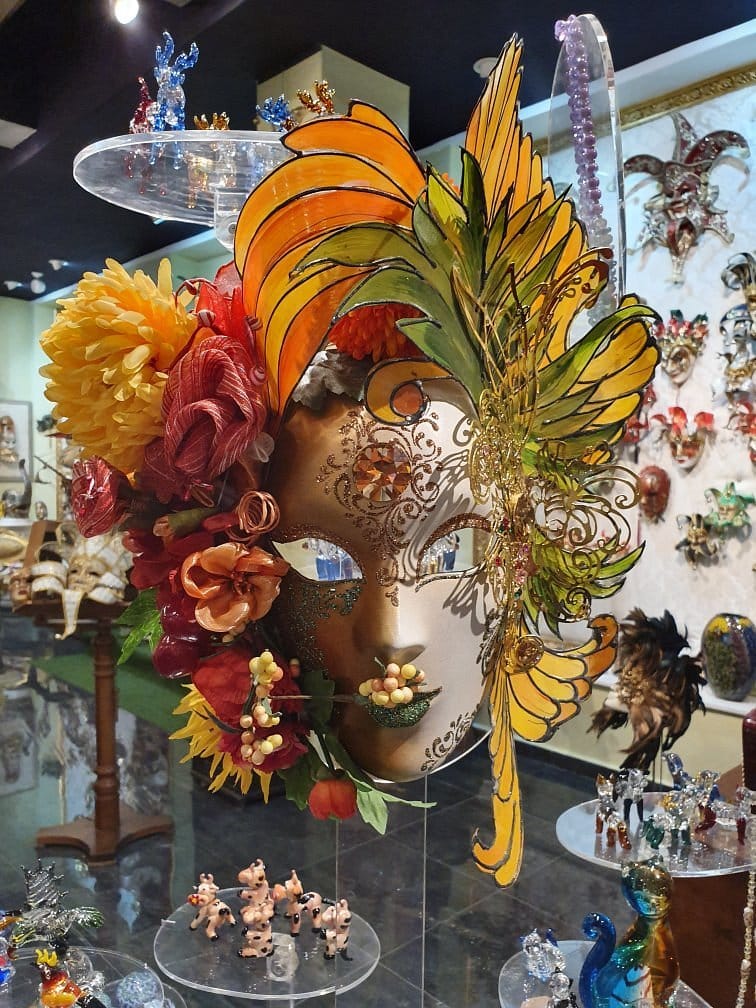
Lamborghini Factory Tour

Lamborghini’s Sant’Agata Bolognese site brings production and automotive history together. Find out what the factory tour and museum cover, how to book, and what to consider when planning a visit to Italy’s Motor Valley.

Read More »
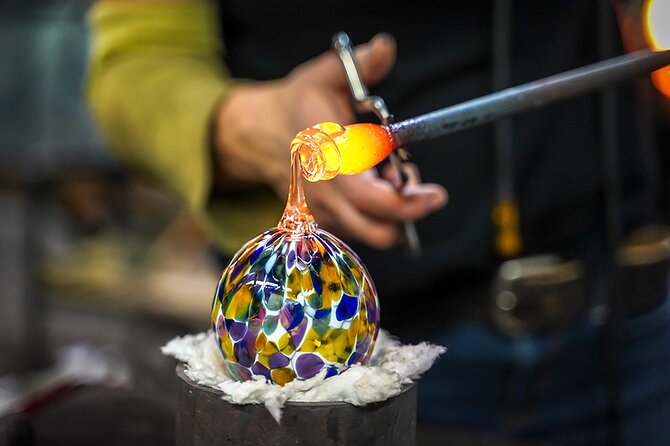
The City of Cars Read More »
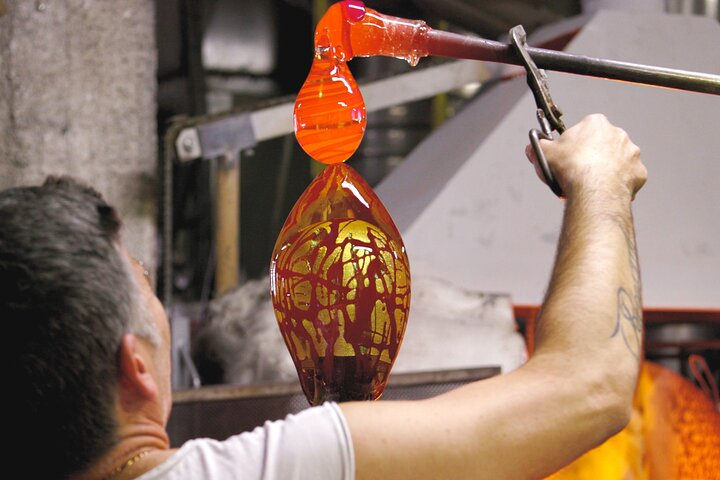
Visitor tasting chocolate at Maison Cailler in Broc, Switzerland

The Sweetest Journey

Visitors on the Maison Cailler Chocolate Factory Tour in Broc, Switzerland

The Sweetest Journey – Maison Cailler Chocolate Factory Tour in Switzerland

There are factory tours where you watch machines from behind glass, and then there are places where the product itself becomes part of the experience. Maison Cailler in Broc, Switzerland, definitely belongs to the second category.

Set in the beautiful Gruyère region at the foot of the Swiss Alps, Maison Cailler combines chocolate history, manufacturing, tasting and hands-on experiences in the place where Cailler chocolate is still produced today. For travellers interested in how familiar products are made, the Maison Cailler Chocolate Factory Tour offers something more interesting than a conventional museum – although it is worth knowing exactly how much of the working factory you will actually see.

Cailler, Nestlé and More Than 200 Years of Swiss Chocolate

Selection of Cailler chocolate bars

 Cailler was founded in 1819 and is the oldest still-existing Swiss chocolate brand. The company’s connection with Broc began in 1898, when Alexandre-Louis Cailler built a chocolate factory here in the Gruyère region.

The location was no accident. The surrounding countryside provided access to high-quality milk, while water and local labour helped make Broc a practical base for chocolate production.

Today, Cailler is part of Nestlé, but the brand retains a strong identity of its own. Cailler chocolate is still produced at the Broc factory, where the manufacturing process runs from roasting cocoa beans through to the finished chocolate products.

One particularly distinctive ingredient is local Alpine milk. Cailler uses milk supplied by farms close to the factory, maintaining a connection between Swiss agriculture and chocolate production that has existed here for generations.

Fun fact: Cailler is the oldest existing Swiss chocolate brand, but Switzerland’s milk-chocolate story also has another connection to the family. Daniel Peter, who married into the Cailler family, developed milk chocolate in the 19th century.

How Long Should You Allow?

Do not treat Maison Cailler as a quick stop if you genuinely enjoy food production and manufacturing experiences.

Allow around 1.5 to 2 hours for the main visit, with additional time if you plan to browse the shop, stop at Café Cailler or join a workshop.

The attraction can also be combined easily with other destinations in the Gruyère region, making Broc a good part of a full-day excursion rather than a destination that needs an entire day on its own.

What Is the Maison Cailler Experience?

Maison Cailler is the visitor experience attached to the Cailler chocolate factory in Broc. Rather than simply walking visitors through an industrial production hall, it combines an interactive museum, chocolate-making demonstrations, manufacturing displays and – inevitably – tasting.

The experience begins with the history of cocoa and chocolate before moving into the story of Cailler and Swiss chocolate making. Multimedia displays make this first part more theatrical than a traditional museum.

Later sections focus more closely on ingredients and production. Visitors can learn about cocoa beans, milk and other ingredients before seeing parts of the manufacturing process and watching chocolate products move through production.

And then comes the part most visitors are waiting for: the tasting.

Maison Cailler allows visitors to sample a selection of chocolates, making this one factory-related attraction where understanding the product and eating it are very much part of the same experience.

Cailler confectionery display at Maison Cailler in Broc

Is It a Real Chocolate Factory Tour?

This is an important distinction.

Maison Cailler is located at a working chocolate production site, and Cailler chocolate really is manufactured in Broc. However, visitors should not expect an unrestricted walk through an industrial factory floor.

The experience is designed as a visitor attraction. You see and learn about production through dedicated viewing areas, displays and demonstrations rather than following workers through every stage of a live production line.

For some factory-tour enthusiasts, that distinction matters. If your main interest is heavy machinery, industrial logistics and unrestricted behind-the-scenes access, Maison Cailler may feel more polished and museum-like than expected.

But if you want to understand how chocolate is made while also learning about the history, ingredients and people behind a major Swiss brand, the balance works very well.

Chocolate Workshops – Make Your Own

For visitors who want something more hands-on, Maison Cailler also offers chocolate workshops led by its chocolate experts.

Depending on the workshop, participants can learn techniques such as tempering chocolate and making ganache before creating their own chocolate products.

These workshops are separate from the standard museum visit and should be booked in advance, particularly during busy periods. Children under six are not permitted in the workshop area for safety reasons.

This is probably the best addition for travellers who want to do more than simply observe. Making something yourself changes the visit from a museum experience into a more memorable encounter with the craft behind the product.

Opening Hours and Practical Information

Maison Cailler is open seven days a week, except 25 December and 1 January.

Current seasonal opening hours are:

  • 1 November – 31 March: 10:00–17:00
  • 1 April – 31 October: 10:00–18:00
  • Last on-site ticket sale: one hour before closing

Advance online booking is strongly recommended during busy periods.

Ticket prices, workshop availability and opening hours can change, so check the latest visitor information on the official La Gruyère tourism website before your visit.

Lockers are available for bags, suitcases and jackets. Café Cailler serves drinks, light meals and desserts, so there is no need to rush away immediately after the tour.

Accessibility

Maison Cailler is a particularly useful option for travellers with reduced mobility.

According to the attraction, the museum tour is accessible to visitors using wheelchairs or walkers, and two wheelchairs are available on request. Buggies are also permitted inside the museum.

Visitors with hearing impairments are accommodated as well, and assistance dogs are permitted.

There is one important exception if you are considering the additional outdoor chocolate game: the 2.5-kilometre walking route around the factory is not accessible to wheelchairs or buggies.

For travellers who need to plan accessibility carefully, it is worth checking current conditions directly with Maison Cailler before visiting. You can also explore our wheelchair accessible travel guides for more practical information on accessible destinations, transport and attractions.

Getting to Maison Cailler

Maison Cailler is located in Broc, in the canton of Fribourg, close to the medieval town of Gruyères.

One of the advantages is that you do not necessarily need a car. The railway station Broc-Chocolaterie is directly associated with the attraction, making the factory accessible by public transport.

There is also a direct Chocolat Express connection from Bern to Broc-Chocolaterie, with the journey taking approximately 1 hour and 18 minutes.

By car, Broc is easy to combine with Gruyères and the surrounding countryside. Parking is available at Maison Cailler, including designated arrangements for buses and campervans, and electric-vehicle charging points are available.

Travel tip: If you are already exploring western Switzerland by train, check current rail connections before automatically renting a car. Switzerland’s public transport makes this one of the easier factory attractions to reach without driving.

Chocolate Express train to Maison Cailler in Broc

What Else Can You See Nearby?

One of the best reasons to visit Maison Cailler is its location.

The medieval village of Gruyères is nearby and makes an excellent combination with the chocolate factory. Its hilltop setting, castle and historic streets provide a complete change of atmosphere after the modern visitor experience at Cailler.

Cheese lovers can take the food theme even further by combining chocolate with a visit devoted to Gruyère cheese production.

This makes the area particularly appealing for travellers who enjoy factory tours and food production: chocolate, cheese and one of Switzerland’s most picturesque historic villages can all fit naturally into the same day.

If you are also considering Vevey, our Maison Cailler vs Alimentarium comparison looks at two very different Swiss food experiences and can help you decide which one better suits your interests.

The Sonsy Verdict – Is the Maison Cailler Chocolate Factory Tour Worth It?

 Pros

  • Located at a genuine working Cailler production site
  • More than 200 years of Swiss chocolate history
  • Chocolate production displays and demonstrations
  • Tastings included in the visitor experience
  • Optional hands-on chocolate workshops
  • Good public transport connections
  • Wheelchair-accessible main museum
  • Easy to combine with Gruyères

Cons

  • More visitor experience than unrestricted factory-floor tour
  • Can become busy during peak periods
  • Workshops cost extra and require separate booking
  • Serious manufacturing enthusiasts may want more behind-the-scenes access

 What makes the visit memorable is the combination. Chocolate here is connected to the surrounding Gruyère region, local milk, more than 200 years of Cailler history and a brand that has become part of Switzerland’s chocolate tradition. The interactive displays make the story accessible without turning the experience into a dry museum visit, while the workshops offer a chance to get more involved.

Its location is another advantage. Maison Cailler fits naturally into a day exploring Gruyères, where chocolate, cheese, Alpine scenery and a medieval village can become part of the same journey.

As a combination of manufacturing, history, food and travel, Maison Cailler works remarkably well – even if the chocolate is probably what you will remember first.

And if your idea of quality control involves tasting several pieces before leaving, this is one factory where volunteering for the job seems entirely reasonable.

Related posts

Swiss Mountain Tracks

The Bernina Express crosses the Alps through high mountain scenery and remarkable railway engineering. This guide follows the changing landscape from glaciers to valleys and helps you decide how to experience the route.

Read More »
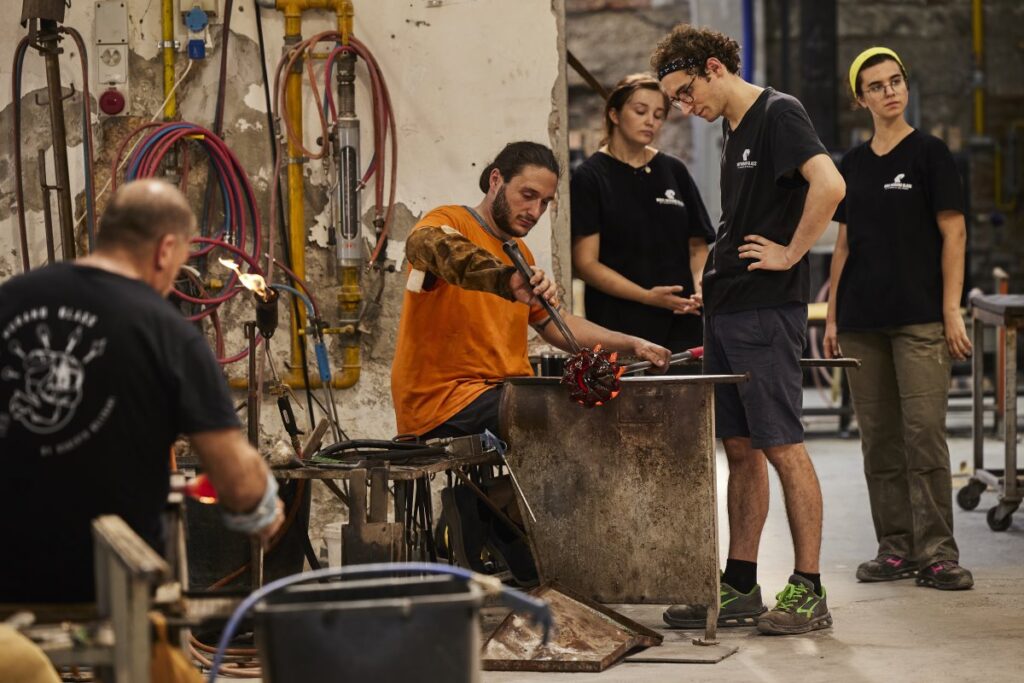
Fork of Vevey standing in Lake Geneva with the Swiss Alps in the background

Maison Cailler vs Alimentarium

Maison Cailler and the Alimentarium offer two very different ways to explore Switzerland’s relationship with food. One focuses on chocolate, its history, production and tasting, while the other examines food through science, culture and society. We compare both experiences to help you decide which one better suits your interests.

Read More »
Visitor tasting chocolate at Maison Cailler in Broc, Switzerland

The Sweetest Journey

Maison Cailler in Broc follows Swiss chocolate from its ingredients to the finished product. Learn what the visitor tour, production displays and workshops offer, and how to plan a stop in the region. Nearby Gruyères makes a natural second stop.

Read More »

The Sweetest Journey Read More »

Scroll to Top