Antwerp Diamonds
Antwerp’s Diamond District has a long trading history, but its working spaces are not all open to visitors. Learn what the DIVA museum explains, where you can realistically encounter the craft, and how the trade shaped the district.

Japanese woodworking is known for the precision of its joinery and the close attention craftspeople give to the properties of the wood itself. One of its best-known traditions is kigumi, a system of interlocking wooden joints that can connect structural elements without relying on nails or screws. These techniques are not confined to historic buildings or museum displays. Workshops in Japan give visitors an opportunity to encounter different forms of woodworking at close range, from structural joinery to decorative yosegi-zaiku and contemporary furniture making.
In this guide, we look at three different experiences: Suikoushya in Kyoto, Hakone, known for yosegi-zaiku marquetry, and Takumi Woodwork near Tokyo. Together, they show how traditional techniques continue to be taught, adapted and used in Japanese woodworking today.
Planning a wider trip? Explore our Japan travel guide for more ideas and practical information about travelling in Japan.
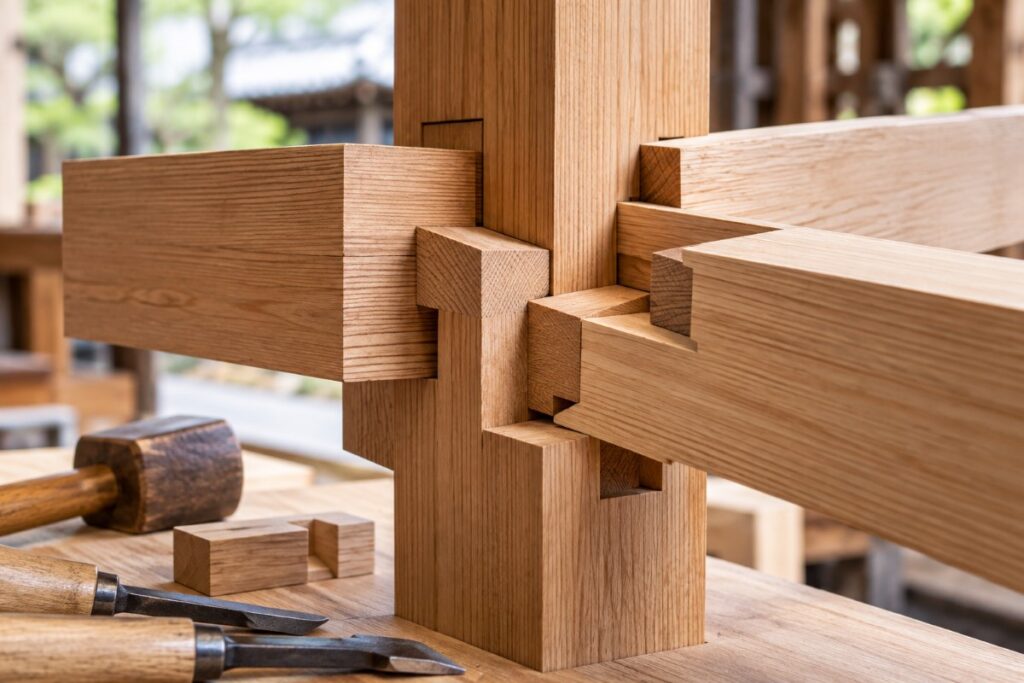
Kigumi is a traditional Japanese woodworking technique in which precisely cut wooden components are fitted together to create strong joints without relying on metal nails. Rather than using simple connections, carpenters developed many different interlocking joints for specific structural purposes.
The technique is particularly associated with traditional Japanese timber architecture, including temples and shrines, where complex wooden structures could be assembled using carefully designed joints. Some of these connections also allow a degree of flexibility and movement, an important characteristic in timber buildings exposed to earthquakes.
What makes kigumi fascinating for visitors is that the finished joint can look deceptively simple. Its strength depends on the precision with which the individual wooden pieces are cut and fitted together.
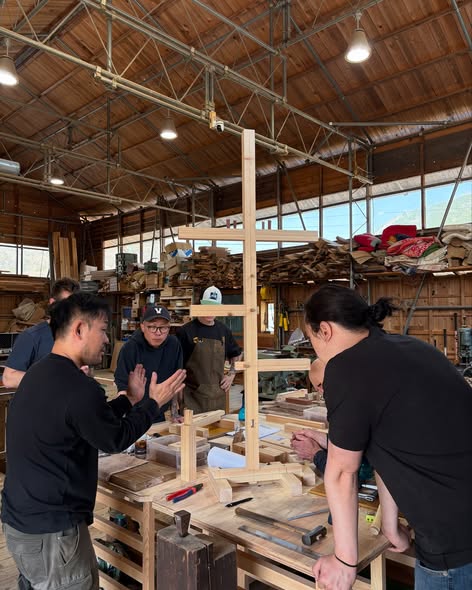
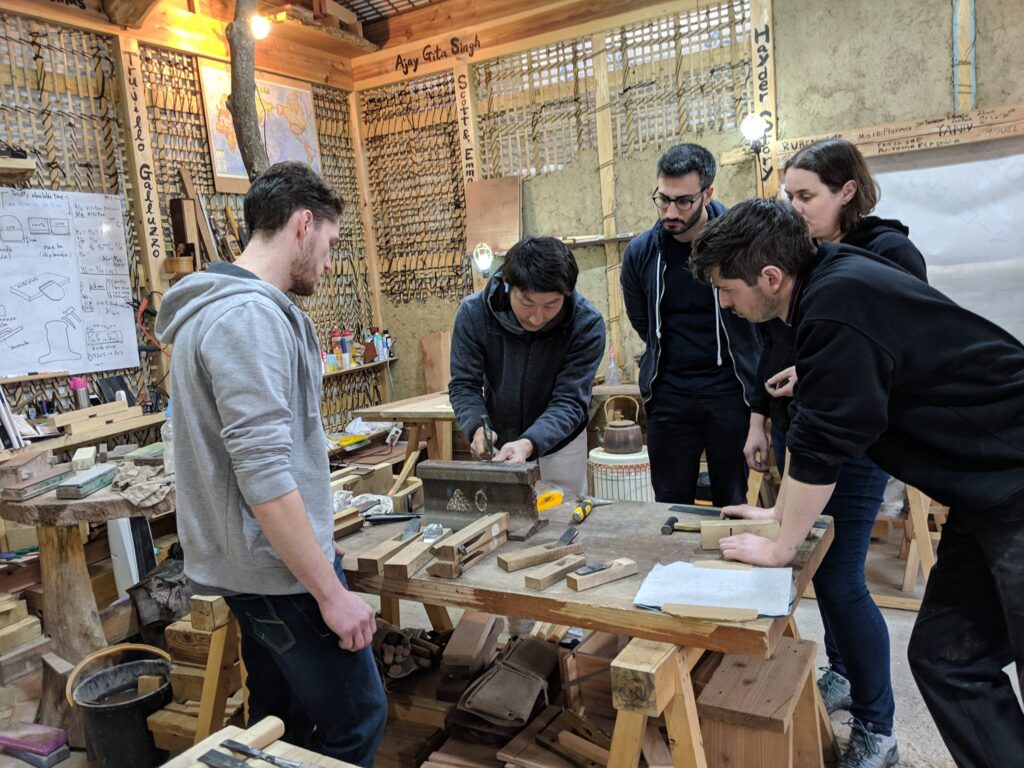
Suikoushya is a woodworking school and working construction company in Kyoto, offering English-language instruction in traditional Japanese woodworking. Its programs range from shorter workshops to intensive courses for participants who want to study the craft in considerably greater depth.
The emphasis is very much on practical woodworking. Participants can learn how to set up, sharpen and use traditional Japanese hand tools, including nomi (chisels) and kanna (hand planes). Joinery is another important part of the training, with courses introducing different types of Japanese joints and the precise marking, cutting and fitting required to make them.
This makes Suikoushya particularly interesting for anyone who wants to go beyond simply looking at Japanese craftsmanship. Depending on the program, participants can spend several days or even weeks working with the tools and techniques used by Japanese woodworkers.
Practical Details:
Official Website & Current Courses: Suikoushya
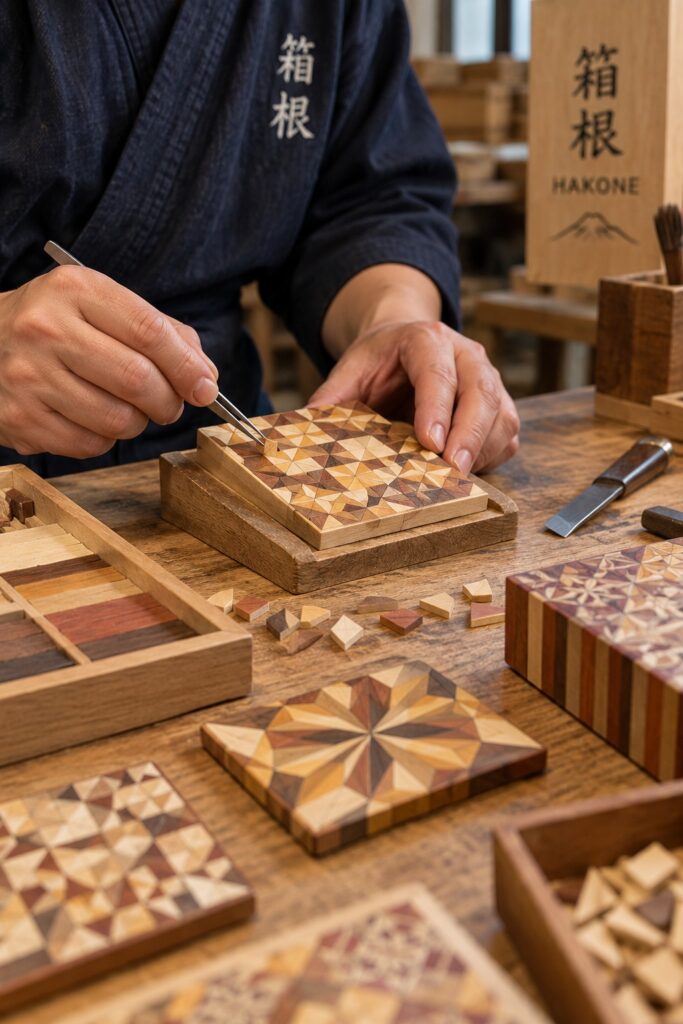
Hakone is closely associated with yosegi-zaiku, a traditional form of decorative woodworking that uses the natural colours of different woods to create intricate geometric patterns. The craft developed in the Hakone area during the Edo period and remains one of the region’s distinctive traditional crafts.
The process begins by combining pieces of differently coloured wood into carefully arranged patterns. These patterned blocks can then be worked into decorative surfaces and objects, producing the geometric designs characteristic of Hakone yosegi-zaiku.
For visitors, the tradition can be explored at workshops and museums around Hakone. One option is the Honma Yosegi Art Museum, where visitors can take part in a hands-on workshop and make a coaster using a traditional yosegi pattern. This offers a very different woodworking experience from the structural joinery introduced at Suikoushya: here, the emphasis is on pattern, colour and decorative craftsmanship.
Practical Details:
Official information:
Honma Yosegi Art Museum – Workshop
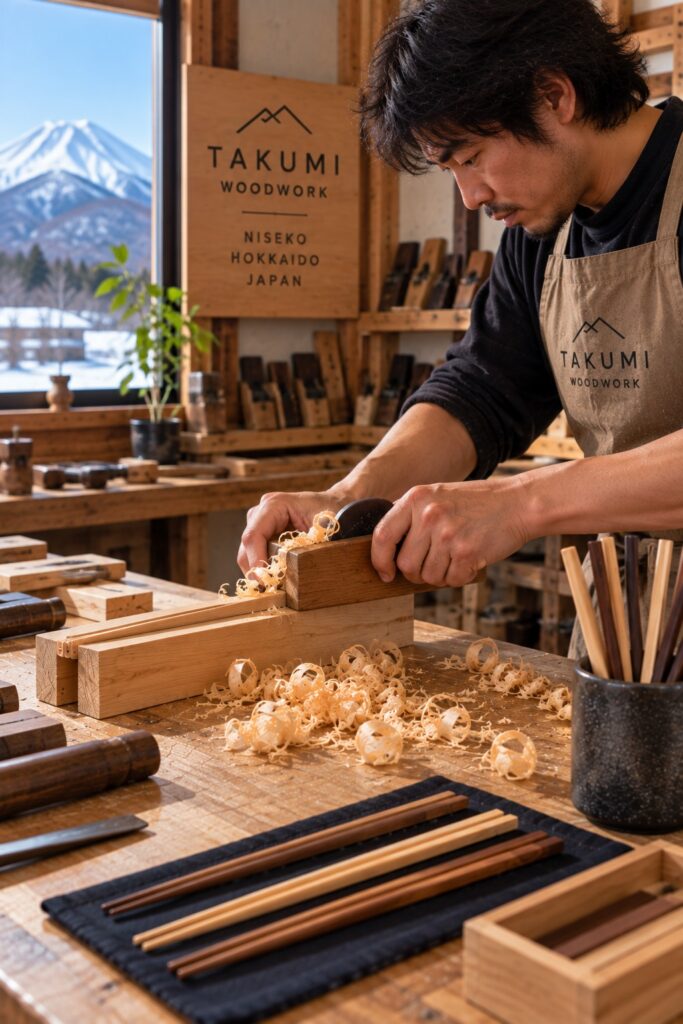
Takumi Woodwork is a small furniture workshop in Kutchan, near Niseko in Hokkaido. The studio produces solid-timber furniture, cabinetry and smaller wooden objects, combining traditional hand skills with modern production methods.
Visitors looking for a hands-on experience can currently book a chopstick-making workshop. Participants choose a suitable hardwood and use a Japanese hand plane to shape the chopsticks with the help of a prepared jig. The pieces are then refined by hand, sanded and finished with food-safe oil.
This is a much smaller-scale experience than the intensive woodworking courses at Suikoushya, but that is also what makes it useful in this guide. It gives travelers a practical introduction to Japanese hand tools and woodworking without requiring several days of training.
Practical Details:
Official Website & Booking: Takumi Woodwork – Chopstick Making Experience
Japanese woodworking workshops are worth considering if you want to understand the craft beyond finished objects in shops and museums. What these experiences have in common is the opportunity to see how much precision, patience and knowledge of materials sits behind apparently simple wooden objects.
The three experiences in this guide are quite different. Suikoushya is the strongest choice for visitors who want to study traditional tools and joinery in depth, while Hakone offers a more decorative introduction through yosegi-zaiku. Takumi Woodwork provides a shorter, more accessible hands-on experience that can fit more easily into a wider trip.
You do not need to be a woodworker to find these places interesting. But if you enjoy understanding how things are made, spending some time at a Japanese workbench can reveal far more about the craft than simply admiring the finished result.
If you enjoy discovering the work behind everyday objects, explore more workshops, factory tours and craft experiences in our Magic of Manufacturing collection.

Antwerp’s Diamond District has a long trading history, but its working spaces are not all open to visitors. Learn what the DIVA museum explains, where you can realistically encounter the craft, and how the trade shaped the district.

A mask workshop in Shkodër connects Venetian carnival traditions with contemporary Albanian craftsmanship. See how the masks are shaped and decorated, and what makes a visit different from browsing a souvenir shop.
Watching a Murano glassmaker at work brings the island’s craft into focus. Compare factory demonstrations and hands-on workshops, see where the Glass Museum fits into a visit, and learn what to check before booking.