Vatican City: Art, Faith and Power Inside the World’s Smallest State

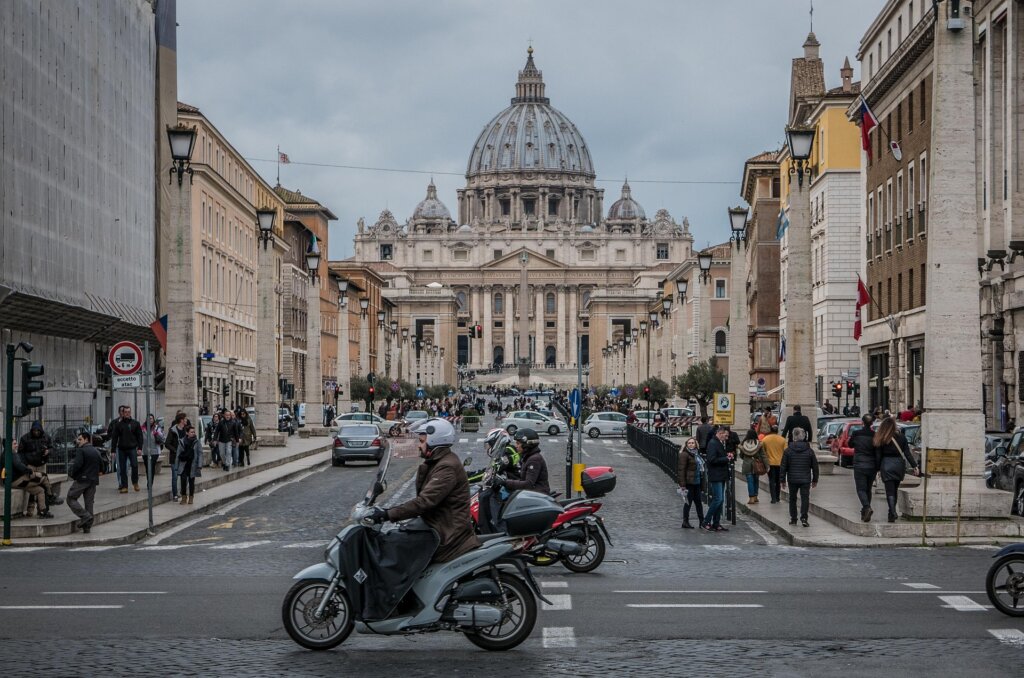
St Peter’s Basilica seen from a busy street in Rome

Crossing into Vatican City can feel surprisingly ordinary. There may be no dramatic border crossing as you walk into St Peter’s Square, yet you have entered an independent state – and one of the most concentrated cultural landscapes in the world.

Within just 44 hectares stand St Peter’s Basilica, the Sistine Chapel, the Vatican Museums, Renaissance palaces and gardens, together with works by Michelangelo, Raphael, Bernini and generations of other artists.

But Vatican City is more than a collection of masterpieces. It is simultaneously a sovereign state, the centre of the Roman Catholic Church, one of Christianity’s most important pilgrimage destinations and an extraordinary record of centuries of artistic patronage.

The entire state is a UNESCO World Heritage Site, making Vatican City unusual even among the world’s great historic places.

Why Vatican City Is World Heritage

Vatican City was inscribed on the UNESCO World Heritage List in 1984, and the boundaries of the World Heritage property coincide with the entire territory of Vatican City State. UNESCO recognises it both for the exceptional artistic and architectural achievements found within its walls and for its profound influence on European culture. Its significance is also inseparable from the history of Christianity and the traditional burial place of Saint Peter.

Unlike many World Heritage properties that preserve a former royal or religious centre, the Vatican still performs many of the functions that shaped it. Churches remain places of worship, pilgrims continue to arrive at St Peter’s, and buildings created for the papal court remain part of the institutional life of the Holy See.

Vatican City should not be confused with the wider collection of Holy See properties found elsewhere in Rome. Several important basilicas and buildings outside Vatican territory form part of the separate Rome Historic Centre World Heritage Site.

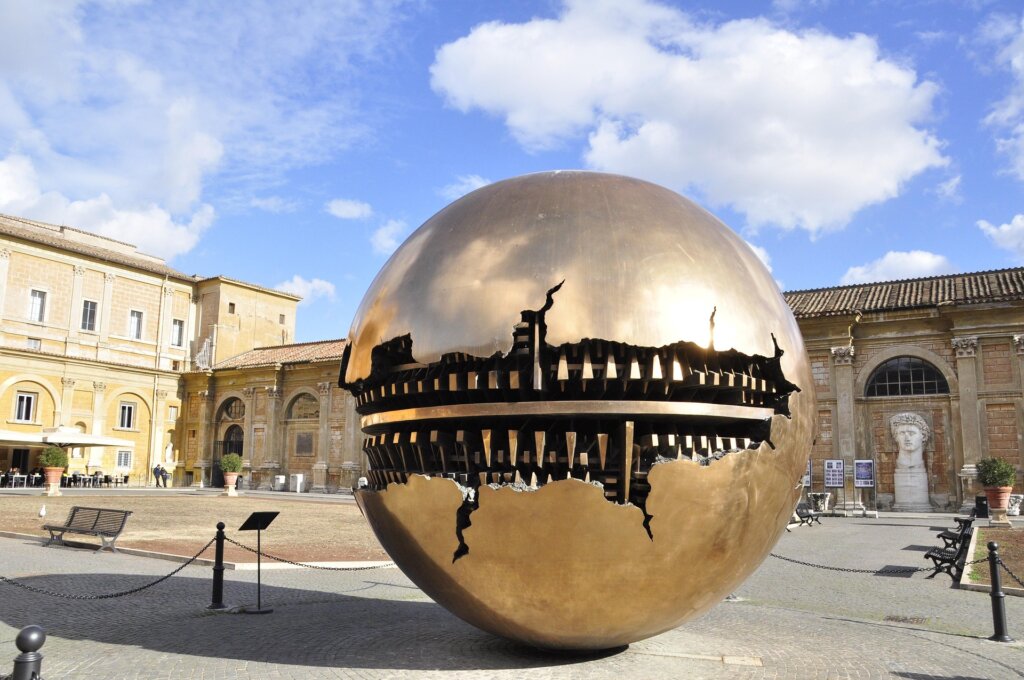
Sphere Within a Sphere sculpture at the Vatican Museums

How the World’s Smallest State Came to Exist

The Vatican’s religious history stretches back far beyond the creation of Vatican City State. According to Christian tradition, Saint Peter was martyred in Rome during the first century and buried in a cemetery on Vatican Hill. In the fourth century, Emperor Constantine ordered a basilica to be constructed over the site associated with his tomb. That first St Peter’s Basilica survived for more than a thousand years. By the Renaissance, however, the ageing building was increasingly considered inadequate for the ambitions of the papacy. In 1506, construction began on a vast replacement. The project continued for more than a century and involved some of the most important architects of Renaissance and Baroque Italy. The political state surrounding the basilica is much younger.

Modern Vatican City State was created in 1929 by the Lateran Treaty between the Holy See and Italy, resolving a long dispute over the political status of the papacy after the unification of Italy. The result is an important distinction. The Holy See is the governing authority of the Catholic Church and an international legal entity; Vatican City State is the sovereign territory created to guarantee its independence.

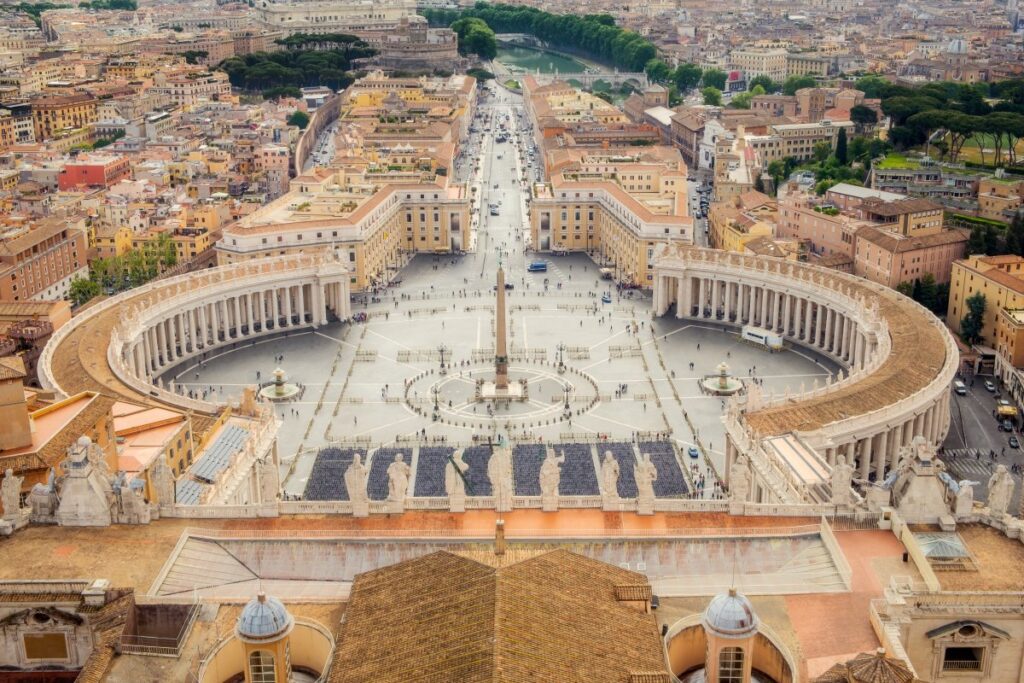
St Peter’s Square viewed from the dome in Vatican City

St Peter’s Square: Bernini’s Grand Entrance

For many visitors, the first encounter with the Vatican is not a building but a space.

St Peter’s Square was designed by Gian Lorenzo Bernini in the 17th century. Its enormous curving colonnades extend from the basilica like two arms, creating one of the most recognisable public spaces in Europe.

Bernini arranged four rows of Doric columns around the piazza, but the geometry contains a visual trick. From specific points marked in the square, the four rows align so precisely that they appear to become a single row.

At the centre stands an ancient Egyptian obelisk brought to Rome during the Roman imperial period and moved to its present position in the 16th century. The square functions differently depending on when you arrive. On an ordinary morning it acts as the monumental approach to the basilica. During major papal ceremonies, audiences and celebrations, it becomes an immense gathering place for pilgrims.

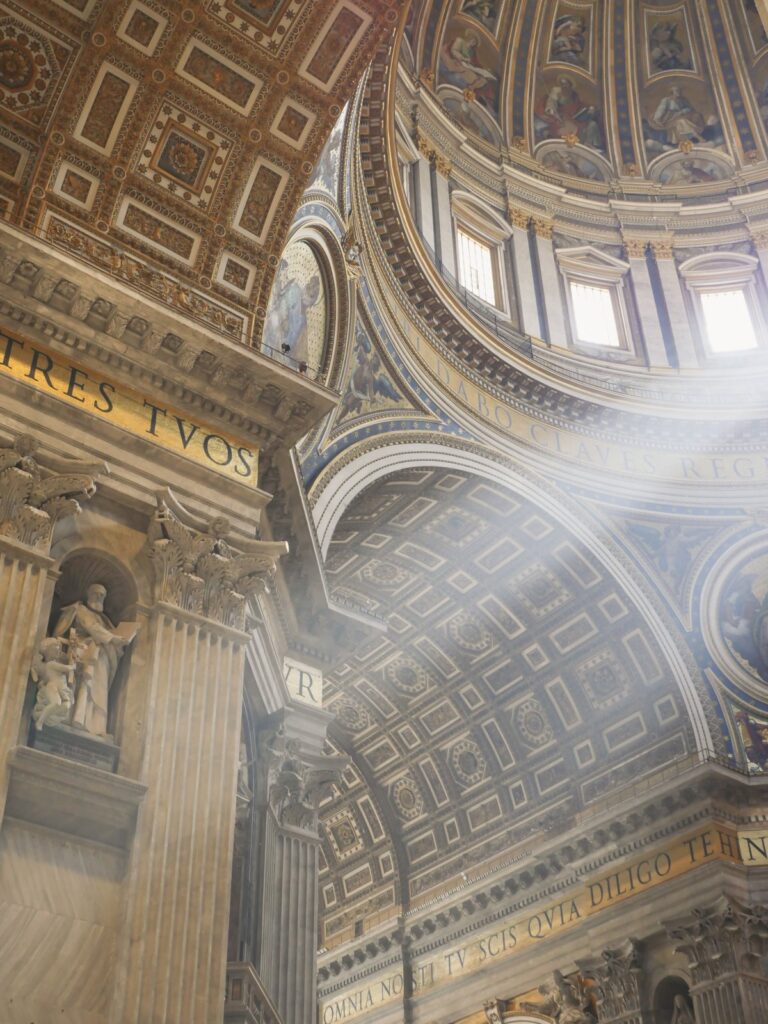
Interior of St Peter’s Basilica in Vatican City

Inside St Peter’s Basilica

Beyond the square stands one of the largest and most influential churches in Christianity. The present St Peter’s Basilica emerged from a building campaign involving Bramante, Raphael, Michelangelo, Carlo Maderno and Bernini. Rather than reflecting the vision of a single architect, it represents more than a century of changing ideas about Renaissance and Baroque architecture.

Michelangelo was already in his seventies when he became chief architect of St Peter’s in 1546. His work was crucial to the design of the enormous dome that still dominates the skyline of the Vatican and much of central Rome. Inside the basilica, scale can be deceptive. Sculptures and architectural details that appear reasonably sized from the floor are often enormous.

Near the entrance stands Michelangelo’s Pietà, completed when the artist was still in his twenties. The marble sculpture of Mary holding the body of Christ became one of his earliest masterpieces.

Farther inside, Bernini’s monumental bronze Baldacchino rises above the papal altar. Below lies the area associated with the tomb of Saint Peter, giving the architecture a direct connection with the reason the basilica was built here in the first place.

Visitors can also ascend towards the dome. The experience eventually opens onto a panorama across St Peter’s Square, Vatican City and Rome, although the complete route should not be assumed to be accessible to every visitor.

The Vatican Museums: More Than One Museum

The name Vatican Museums can be misleading. Rather than a single museum, this is a complex of collections, papal apartments, courtyards and decorated rooms developed over centuries.

Successive popes assembled classical sculpture, archaeological discoveries, paintings, manuscripts and objects from different periods and cultures. Among the best-known sections are the classical collections of the Pio-Clementine Museum, the Gallery of Maps and the Raphael Rooms.

The Gallery of Maps is particularly revealing. Created in the late 16th century, its long corridor is lined with painted maps of regions of Italy. They are not merely geographical documents; together they show how Renaissance art, geographical knowledge, political power and the representation of territory could merge into an extraordinary decorative programme.

The Raphael Rooms were created for Pope Julius II and his successors. Their frescoes include Raphael’s School of Athens, an imagined gathering of ancient philosophers that became one of the defining images of the High Renaissance. It is easy to race through these rooms because almost everyone knows what waits at the end of the museum route. That would be a mistake.


The Sistine Chapel Beyond Michelangelo

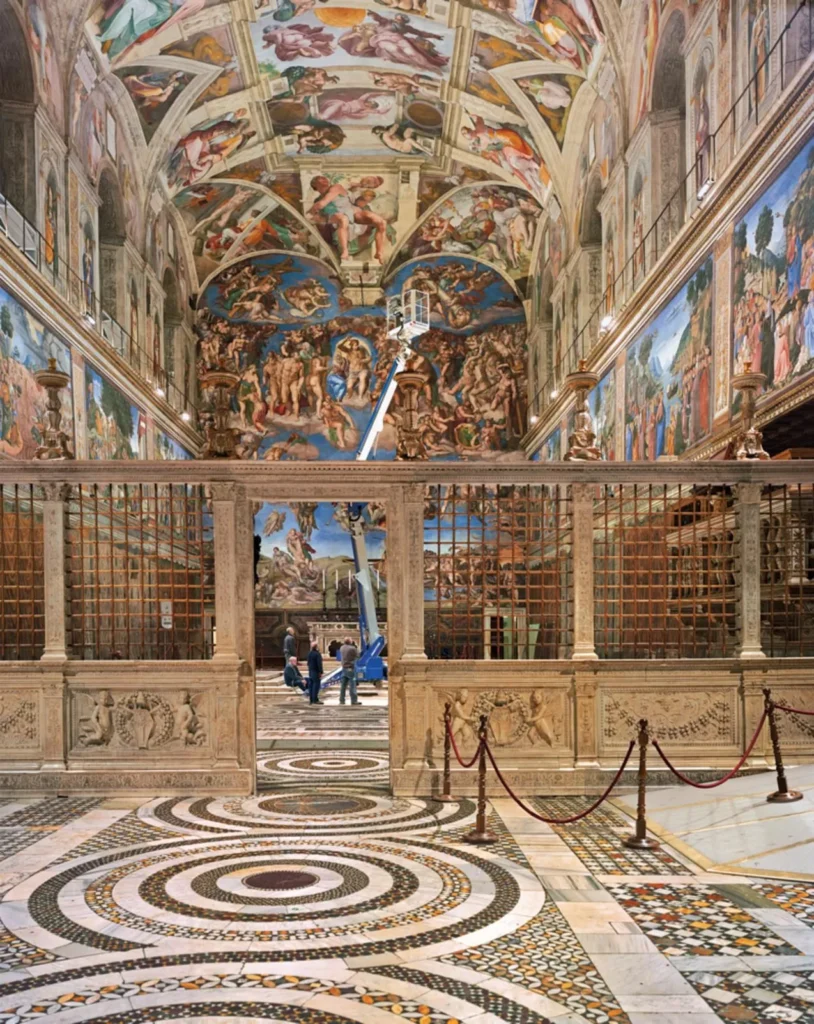
The Sistine Chapel is so closely associated with Michelangelo that it is easy to forget that he was not the first great artist to work there. Before Michelangelo painted the ceiling, artists including Botticelli, Perugino and Ghirlandaio had decorated the chapel walls with scenes from the lives of Moses and Christ.

Between 1508 and 1512, Michelangelo created the vast sequence of figures and biblical scenes across the ceiling, including the famous Creation of Adam. More than two decades later, he returned to paint The Last Judgement on the altar wall. The result transformed the history of Western art. Yet the Sistine Chapel is not simply an art gallery. It remains a functioning religious space and is also the setting for the papal conclave, when the College of Cardinals gathers to elect a new pope.

That gives the room an unusual double identity: one of the world’s great artistic monuments and, at particular moments, one of the most closely watched ceremonial spaces in the world.

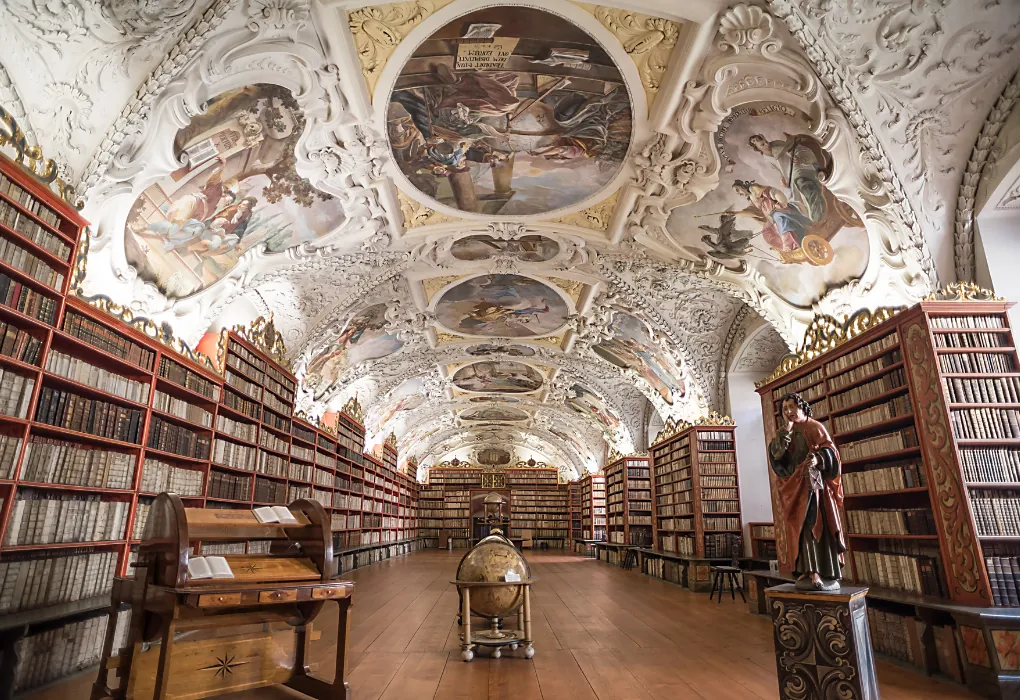
Historic hall of the Vatican Apostolic Library

Art, Architecture and the Power of Patronage

The Vatican demonstrates how profoundly patronage can shape cultural history.

For centuries, popes commissioned architects, painters and sculptors not simply to decorate buildings but to communicate religious ideas, institutional authority and the ambitions of their age. Bramante, Raphael, Michelangelo and Bernini worked here at different moments, leaving an artistic legacy that influenced architecture, painting and sculpture far beyond Rome.

The Vatican Library, founded in the 15th century, developed into one of the great repositories of manuscripts and books, adding another dimension to the Vatican’s role as a centre of scholarship and cultural preservation.

This is one reason the Vatican feels different from a conventional museum district. Much of its art was created, collected or displayed within the same institution that commissioned it.

For more destinations where cultural significance extends far beyond individual monuments, explore our World Heritage collection.

Behind the Masterpieces: Preserving the Vatican’s Treasures

The Vatican’s masterpieces may be centuries old, but preserving them increasingly relies on modern technology. One of the most unusual places to glimpse what happens behind the masterpieces is the Anima Mundi Ethnological Museum, where part of the conservation laboratory was designed so that visitors can watch restorers at work. It offers a rare look at the practical side of cultural heritage: not simply what museums preserve, but how they preserve it.

Behind the scenes, Vatican specialists combine traditional restoration skills with scientific analysis and modern documentation techniques. Technologies including digital imaging and 3D scanning can help researchers examine materials, record the condition of objects and understand how works have changed over time.

Preservation is also moving online. The Vatican Apostolic Library has been steadily digitising its extraordinary collections, and more than 31,000 manuscripts can already be explored through the Digital Vatican Library. High-resolution images allow researchers – and curious visitors anywhere in the world – to examine individual pages that were once accessible mainly to specialists inside the library.

The Vatican Museums are also digitising parts of their collections and historic photographic archives, although their online catalogue is still a work in progress. It creates a striking connection between past and present: some of the Vatican’s oldest treasures are now being preserved, studied and shared using some of its newest technologies.

The Vatican’s use of modern science extends far beyond conservation. It also operates the Vatican Observatory, one of the world’s oldest active astronomical observatories. Today its researchers study subjects ranging from meteorites and asteroids to stars, galaxies and cosmology, while much of its observational work is carried out with the Vatican Advanced Technology Telescope on Mount Graham in Arizona. Visitors can encounter another side of this scientific tradition at Castel Gandolfo, where the Vatican Observatory’s historic telescope domes can be visited through the Vatican Museums. It is an unexpected reminder that the Vatican’s cultural story does not end with Renaissance art: it also includes centuries of observing and studying the universe.

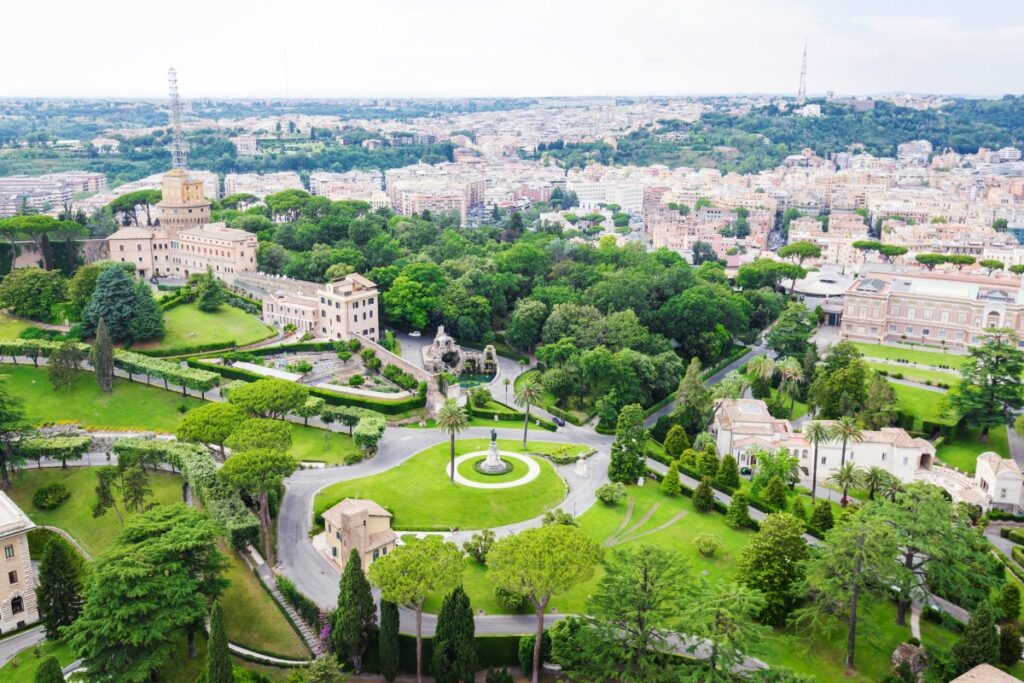
Vatican Gardens overlooking Rome

Vatican Gardens: The Quieter Side of the State

Behind the museums, basilica and administrative buildings lies a surprisingly different Vatican. The Vatican Gardens occupy a substantial part of the state’s territory, with landscaped gardens, fountains, sculptures, religious shrines and historic buildings spread across the slopes behind St Peter’s Basilica.

Their history reaches back to the medieval period, although successive popes reshaped and expanded them. They also reveal something easily missed from St Peter’s Square. Vatican City is not simply a basilica surrounded by museums. It is a functioning territory containing gardens, offices, residences, communications facilities and the infrastructure of a very small state.

Access to the gardens is controlled and generally forms part of organised visits, so anyone interested in seeing them should check the current options through the official Vatican Museums before travelling.

Accessibility in Vatican City

The historic character of the Vatican creates some accessibility challenges, but many of its major visitor areas can be explored by people with reduced mobility. Most areas of the Vatican Museums are accessible to wheelchair users, and the museums provide a recommended step-free itinerary using lifts, ramps and other accessible routes. Wheelchairs can also be borrowed free of charge at the entrance, subject to availability. Visitors using larger mobility scooters or electric wheelchairs should check arrangements in advance because space restrictions prevent their use in some museum areas. Accessible toilets are available along the museum route.

The museums also provide services for visitors with visual or hearing impairments, including tactile and multisensory experiences and specialist tours. Because some standard guided-tour routes are not suitable for wheelchair users, it is worth consulting the official Vatican Museums accessibility information before booking.

St Peter’s Basilica is accessible by ramps and lifts, with a dedicated priority entrance for visitors with disabilities at the right-hand semicircle of St Peter’s Square. The dome is only partially accessible by lift, so visitors who cannot manage stairs should check how far they can comfortably proceed before planning a dome visit.

Accessibility conditions can vary considerably between historic attractions in Italy. For broader advice on planning routes, checking entrances and evaluating accommodation and transport before travelling, see our Wheelchair Accessible Italy guide.

Interior of the Sistine Chapel in Vatican City

Making the Most of Your Vatican Visit

The most important practical point is to treat St Peter’s Basilica and the Vatican Museums as separate visits.

The entrance to the Vatican Museums is on Viale Vaticano, some distance around the Vatican walls from St Peter’s Square. Looking at a map can make the two appear almost adjacent, but visitors cannot simply walk directly from the museum entrance into the basilica as if they were rooms of the same attraction.

For the museums, advance booking is particularly useful. The Vatican Museums warn visitors that their own ticket portal is the only official website for online ticket purchases, an important point given the large number of third-party sites that appear in searches. Current opening arrangements and reservations can be checked through the official Vatican Museums visitor information.

St Peter’s Basilica has its own security procedures and visitor arrangements. Security checks can create queues, particularly at busy periods, while Wednesdays and Sundays can be especially affected by papal events. Current information about access, the dome, guided visits and other areas is available from the official St Peter’s Basilica website.

Dress requirements also matter. St Peter’s is an active place of worship, and shoulders and knees should be covered. Similar expectations apply to the Sistine Chapel and other religious spaces within the Vatican. Photography rules vary. Photography without flash is generally permitted in many areas, but the Sistine Chapel has stricter rules, so follow the instructions given by museum staff rather than assuming the same policy applies throughout the complex.

Trying to see St Peter’s Basilica, climb the dome, explore the Vatican Museums and properly appreciate the Sistine Chapel in a rushed half-day can turn an extraordinary place into an endurance test. Giving the Vatican a full day allows a much more comfortable pace.

Vatican City may be the world’s smallest independent state, but its cultural scale is anything but small.

Here, World Heritage is not simply preserved around the visitor. It remains part of a living institution.

Related posts

Moto Guzzi motorcycles and visitors outside the factory in Mandello del Lario

Moto Guzzi Factory

Moto Guzzi’s home in Mandello del Lario connects motorcycle heritage with modern manufacturing. Discover how the museum, factory and visitor spaces relate, and what to check before travelling to the Lake Como site.

Read More »
Florence Cathedral dome and Giotto’s Bell Tower viewed through a historic window

Italy – Art, Landscapes and La Dolce Vita

Italy rewards travellers with extraordinary history, regional cuisine and remarkably varied landscapes. From Rome, Florence and Venice to the Alps and southern Italy, this Italy travel guide covers where to go, when to visit, transport and accessibility – and why the country is worth exploring more than once.
Read More »
Murano glassmaker shaping a colorful glass ornament in a workshop

Murano Glass Factory Tours

Watching a Murano glassmaker at work brings the island’s craft into focus. Compare factory demonstrations and hands-on workshops, see where the Glass Museum fits into a visit, and learn what to check before booking.
Read More »

Swiss Mountain Tracks

The Bernina Express crosses the Alps through high mountain scenery and remarkable railway engineering. This guide follows the changing landscape from glaciers to valleys and helps you decide how to experience the route.
Read More »
Mediterranean cruise ships docked along the Croatian coast

Mediterranean Cruise

Mediterranean cruises can follow Western or Eastern routes, each with different ports and travel rhythms. Compare city visits, island stops and time ashore so the itinerary matches your interests and the amount of walking you enjoy.
Read More »
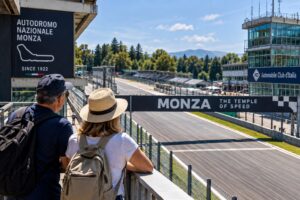
Visitors overlooking the Monza Circuit during a tour of the Temple of Speed

Monza – The Temple of Speed

Monza Circuit is Italy’s legendary “Temple of Speed” and home of the Italian Grand Prix. Find out what you can see on a circuit tour, from behind-the-scenes areas to its motorsport history, and compare the visitor experiences available when planning a trip to this historic Formula 1 venue.

Read More »
Scroll to Top