Cologne’s World Heritage: From Roman Frontiers to Gothic Spires

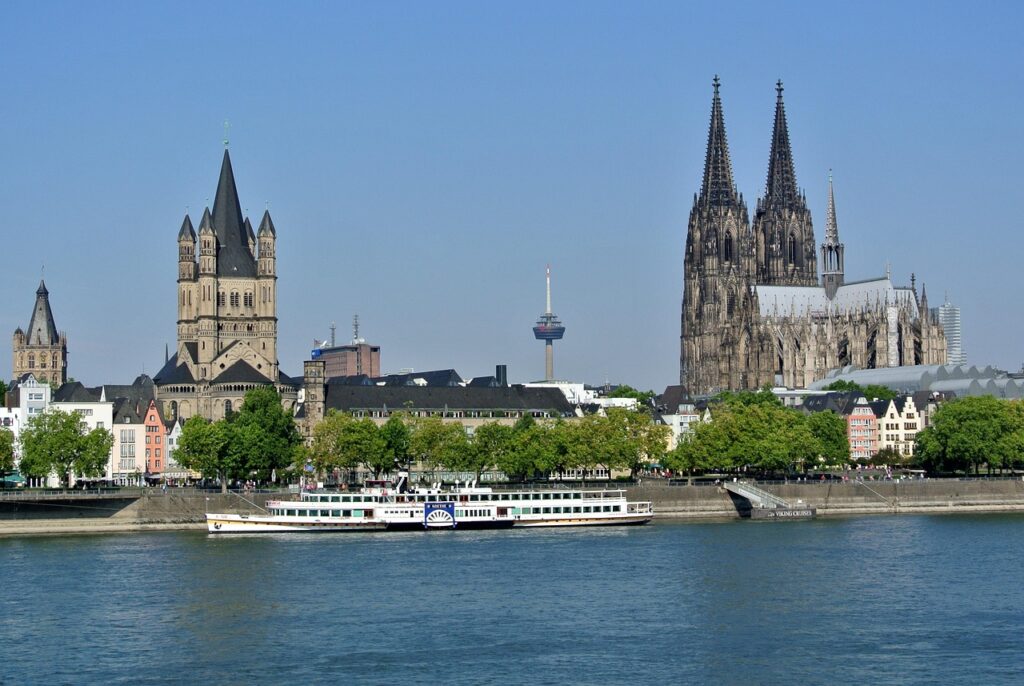
Cologne World Heritage skyline with Cologne Cathedral and the Rhine

Cologne World Heritage sites reveal nearly two thousand years of European history, from the remains of the Roman frontier to medieval churches, Gothic architecture and the Rococo palaces of Brühl. Cologne is a city where history rarely stays beneath the surface. Roman foundations lie below medieval churches, Gothic towers dominate streets rebuilt after the Second World War, and just beyond the city, the palaces of Brühl preserve the extravagant world of an 18th-century prince-archbishop.

The famous twin spires of Cologne Cathedral may define the skyline, but they are only one part of the story. The region brings together three very different chapters of UNESCO World Heritage: the Roman frontier of the Lower German Limes, the Gothic achievement of Cologne Cathedral, and the Rococo splendour of Augustusburg and Falkenlust. Together, they make Cologne an unusually rewarding base for exploring how European architecture, power and belief changed across almost two thousand years.

Cologne Cathedral: The Gothic Landmark

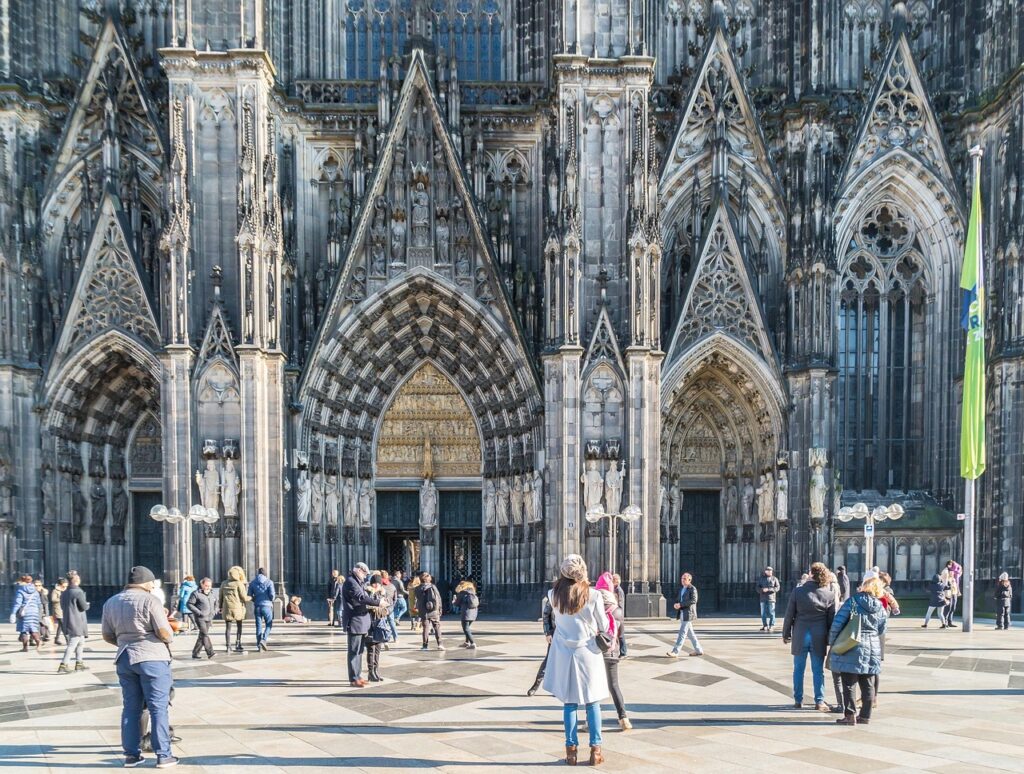
Few buildings announce a city as dramatically as Cologne Cathedral (Kölner Dom). Standing beside the Rhine and immediately outside Cologne Central Station, its twin towers rise above the city centre and make the cathedral almost impossible to miss.

Construction began in 1248, largely driven by Cologne’s growing importance as a pilgrimage destination. The city possessed relics traditionally identified as those of the Three Kings, brought to Cologne from Milan in 1164. Their magnificent medieval reliquary, the Shrine of the Three Kings, remains one of the cathedral’s greatest treasures.

The medieval builders had extraordinarily ambitious plans, but work eventually slowed and stopped. For centuries the unfinished cathedral stood above Cologne with a medieval crane still perched on its incomplete south tower. Construction resumed in the 19th century, following the surviving medieval plans, and the cathedral was finally completed in 1880. At about 157 metres high, it briefly became the tallest building in the world.

UNESCO inscribed Cologne Cathedral as a World Heritage Site in 1996, recognising both its importance as a masterpiece of Gothic architecture and the remarkable continuity between its medieval conception and its 19th-century completion. Its survival also became part of Cologne’s modern identity. The cathedral was damaged during the Second World War, while much of the surrounding city centre was devastated, but the enormous structure remained standing.

There is another, less obvious chapter in its World Heritage story. In 2004, UNESCO placed the cathedral on the List of World Heritage in Danger because planned high-rise development across the Rhine threatened its visual setting. Changes to Cologne’s planning policy helped resolve the issue, and the cathedral was removed from the danger list in 2006. It is a useful reminder that protecting World Heritage can involve preserving a landmark’s relationship with the city around it, not simply conserving the building itself.

Visiting Cologne Cathedral

The cathedral stands directly beside Köln Hauptbahnhof, making it one of Europe’s easiest major monuments to reach by rail. Since 1 July 2026, tourist visits to the cathedral interior require a ticket. Entry for worship, personal prayer or lighting a candle remains possible without a tourist ticket in designated areas and at appropriate times.

The South Tower offers a very different experience. Reaching its viewing platform involves 533 steps, eventually bringing you to a viewpoint roughly 100 metres above the ground. The climb is demanding, but the reward is a broad panorama over the Rhine and central Cologne. Opening arrangements can change because the cathedral remains an active place of worship, so check the official Cologne Cathedral visitor information before your visit.

Visitors at the main entrance of Cologne Cathedral

Roman Cologne and the Lower German Limes

Long before Cologne became a medieval religious centre, it was one of the most important Roman cities north of the Alps.

Known as Colonia Claudia Ara Agrippinensium, Roman Cologne became the capital of the province of Lower Germania. Its position beside the Rhine placed it within a much larger military and administrative landscape along the northern frontier of the Roman Empire. That frontier survives today as the Lower German Limes, inscribed on UNESCO’s World Heritage List in 2021.

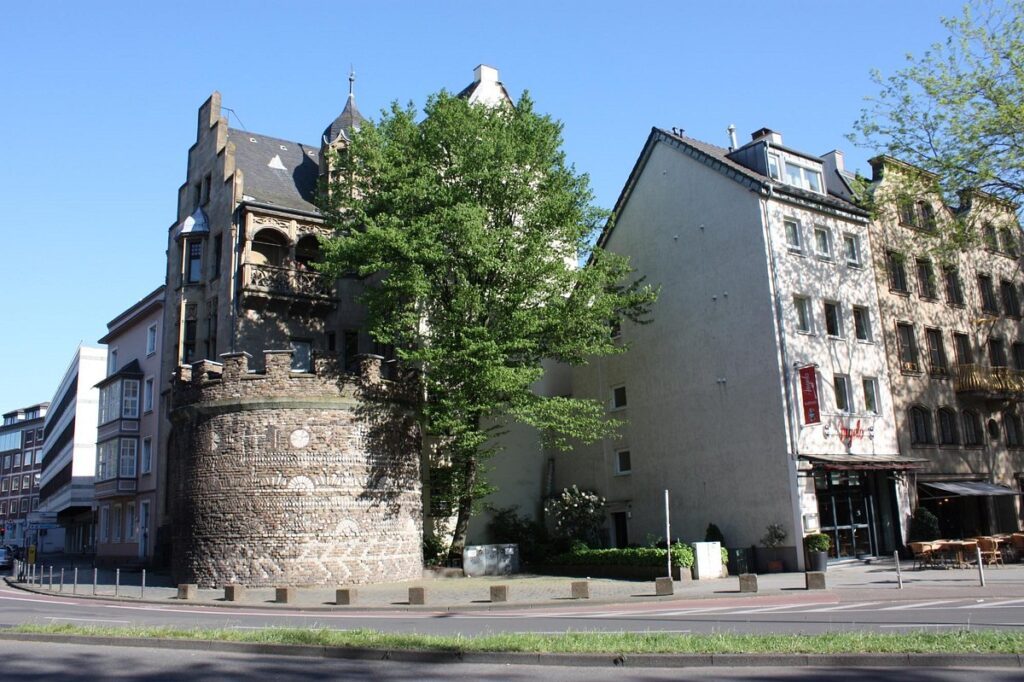
Rather than imagining a continuous stone wall, it is better to think of the Lower German Limes as an interconnected frontier system. Military bases, forts, roads, settlements and other installations followed the Rhine for roughly 400 kilometres through what are now Germany and the Netherlands. Cologne played an especially important role because it was not merely a frontier settlement but a major provincial centre. The Roman city can still be traced beneath modern Cologne. Archaeological remains appear in different parts of the historic centre, sometimes creating an extraordinary contrast between the modern streets above and structures built almost two millennia ago below them.

Roman tower remains in Cologne’s historic centre

One of the most important locations is the archaeological zone around Rathausplatz. Here, excavations have revealed remains associated with the Roman governor’s palace, or Praetorium, alongside later remains of Cologne’s medieval Jewish quarter.

These remains are being incorporated into MiQua – LVR-Jewish Museum in the Archaeological Zone Cologne, an ambitious museum project designed to connect the Roman, Jewish and medieval history preserved beneath the city.

Because museum access and archaeological areas can change as the project develops, check the official Cologne museums information for MiQua before planning your visit.

Roman Cologne is therefore best understood not through a single spectacular ruin, but through a network of archaeological sites scattered across the historic centre.

Augustusburg and Falkenlust: Rococo Beyond Cologne

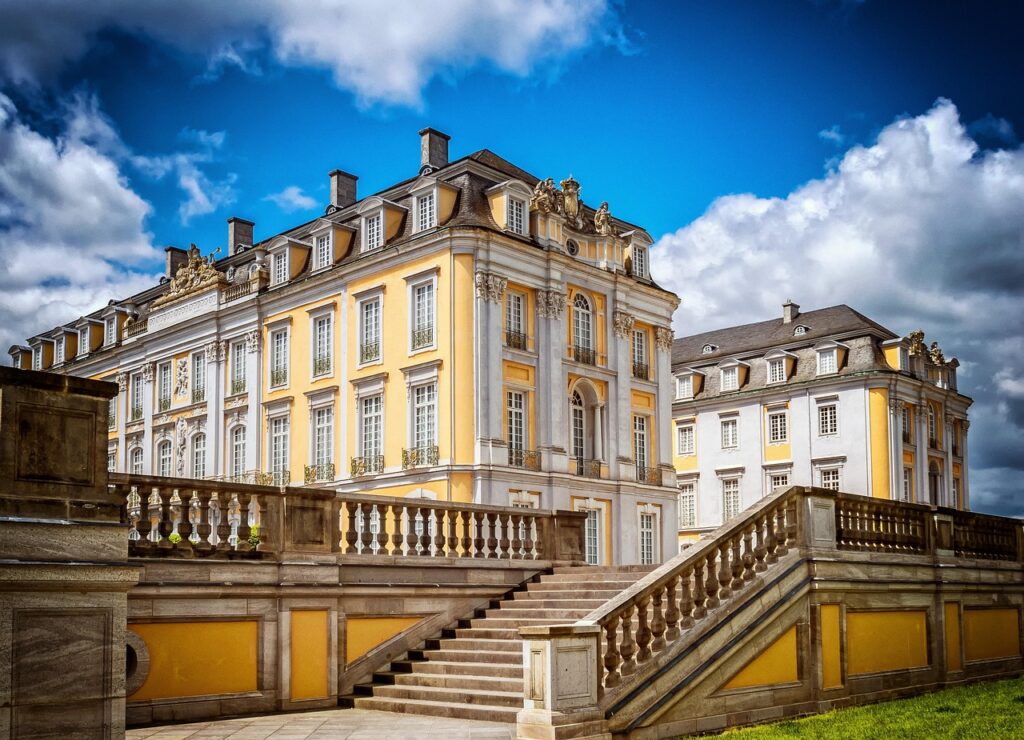
Around 15 kilometres south of central Cologne, the historical atmosphere changes completely. The Castles of Augustusburg and Falkenlust at Brühl have been on UNESCO’s World Heritage List since 1984 and represent one of Germany’s outstanding ensembles of 18th-century Rococo architecture. Augustusburg was created for Clemens August of Bavaria, Elector and Archbishop of Cologne. Construction began in 1725 on the remains of an earlier castle, with several leading architects and artists contributing to the residence over the following decades.

The most spectacular interior is the ceremonial staircase designed by Balthasar Neumann. Marble, stucco, sculpture and Carlo Carlone’s ceiling fresco combine to turn what could have been a functional part of the building into a theatrical display of status and power. Yet Augustusburg was only part of Clemens August’s carefully constructed courtly world.

A walk through the palace landscape leads towards Falkenlust, built between 1729 and 1737. Smaller and more intimate than Augustusburg, it was designed specifically around the prince-elector’s passion for falconry. Its interiors include elaborate stucco, a Chinese lacquer cabinet, a gilded mirror room and a staircase decorated with Dutch tiles. The contrast between the two buildings is part of what makes Brühl worth the journey. Augustusburg presents the ceremonial face of princely power; Falkenlust reveals something closer to a private retreat.

The gardens provide the connection between them. The formal garden beside Augustusburg was designed in the French tradition, while the wider park evolved over time. Falkenlust lies about 2.5 kilometres from Augustusburg, so reaching it on foot takes roughly 30–40 minutes.

Visiting the Brühl Palaces

Brühl is easy to combine with a stay in Cologne. Regional trains from Köln Hauptbahnhof stop at Brühl station, from where Augustusburg is only a short walk away. Tram line 18 provides another connection between Cologne and Brühl.

There is one important distinction between the two palaces: Augustusburg can only be visited as part of a guided tour, while Falkenlust can normally be explored independently.

The palaces also have a winter closure period, and temporary restrictions can affect the gardens or park. Check the official Brühl Palaces visitor information before travelling.

Augustusburg Palace on a Cologne World Heritage trip

Beyond the UNESCO Sites

World Heritage status inevitably highlights certain monuments, but it does not tell the whole story of Cologne.

One of the best examples is St. Severin, one of the city’s twelve major Romanesque churches. The group forms an extraordinary concentration of medieval architecture and provides an important counterpoint to the much later Gothic scale of Cologne Cathedral.

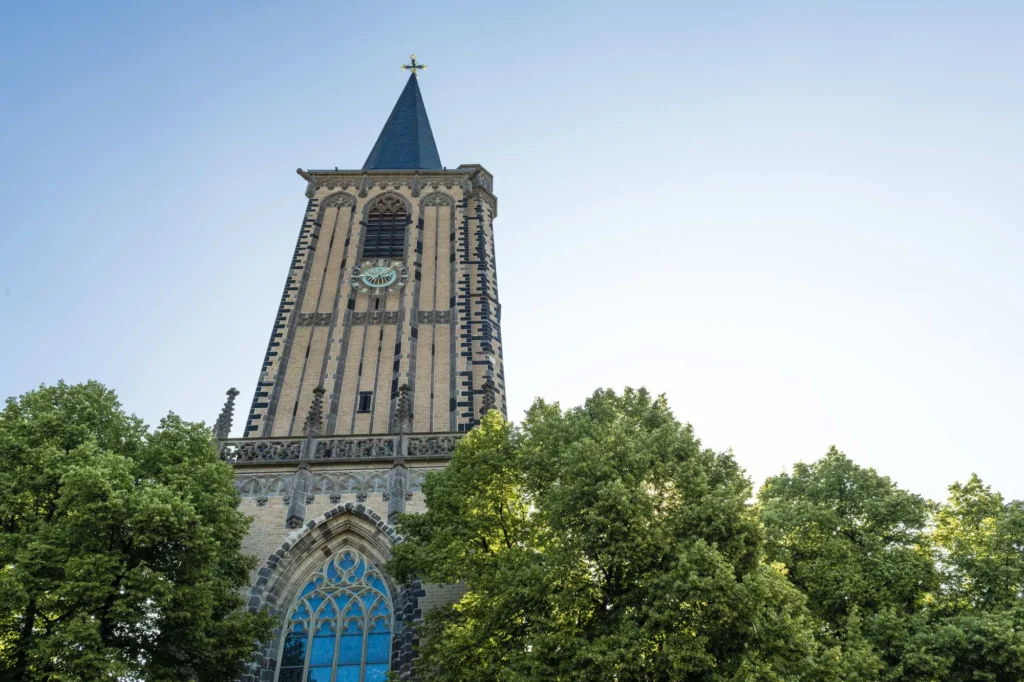
St. Severin is particularly interesting because the site reaches much further back than the present church. Roman burial grounds once occupied this area beside the ancient road towards Bonn. A small Christian memorial building existed here by around the 4th century, and the site developed over successive centuries. Construction associated with the Romanesque basilica began in the medieval period, while later Gothic alterations changed the appearance of parts of the building. St. Severin also offers something the cathedral often cannot — relative quiet. Located in Cologne’s Südstadt rather than at the heart of the main tourist zone, it gives visitors a chance to experience another side of the city’s religious heritage.

St. Severin Basilica tower in Cologne

Cologne’s medieval past is not only preserved in churches and museums. The University of Cologne is also an important centre for medieval research. Its interdisciplinary Centre for Medieval Studies (ZEMAK) brings together fields ranging from medieval history, Byzantine and Jewish studies to philology, philosophy, art history and Digital Humanities.

The centre also works with Cologne’s archives, museums and libraries. In a city where Roman archaeology, medieval churches, manuscripts and historic collections remain part of the modern urban landscape, that connection between academic research and place is particularly fitting.

Cologne’s cultural landscape did not stop evolving in the Middle Ages. Neighbourhoods such as Ehrenfeld have become known for large murals and street art, creating a contemporary contrast with the city’s historic monuments. It is not part of Cologne’s World Heritage story, but it shows how the city continues to use architecture and public space as a canvas for cultural expression.

Planning Your Cologne World Heritage Visit

The three World Heritage stories do not need to be squeezed into a single day. The Cathedral and Roman Cologne work naturally together. Both are in the historic centre, and walking between Roman remains, medieval streets and the cathedral helps make the different periods of Cologne’s history easier to understand. St. Severin can be added as you continue south into the Südstadt, particularly if you are interested in medieval architecture or want to see one of the city’s great Romanesque churches away from the busiest tourist routes. Give Brühl a separate half-day or longer. Augustusburg, the gardens and the walk to Falkenlust are better experienced without constantly watching the clock.

Public transport makes a car unnecessary for this itinerary. Cologne has an extensive tram, bus and suburban rail network, making the main city sights easy to combine without driving. For visitors arriving by air, Cologne Bonn Airport (CGN) is particularly convenient. Despite serving two cities and functioning as an important base for low-cost airlines, it is much closer to central Cologne than many airports marketed as alternatives to major European cities. Direct S-Bahn and regional trains connect the airport railway station with Köln Hauptbahnhof, placing arriving passengers within steps of Cologne Cathedral. It is a useful example of why the term “secondary airport” can be misleading: some alternatives offer surprisingly practical connections, while others can add considerable time and expense to a journey. We look at these differences in our Secondary Airports guide.

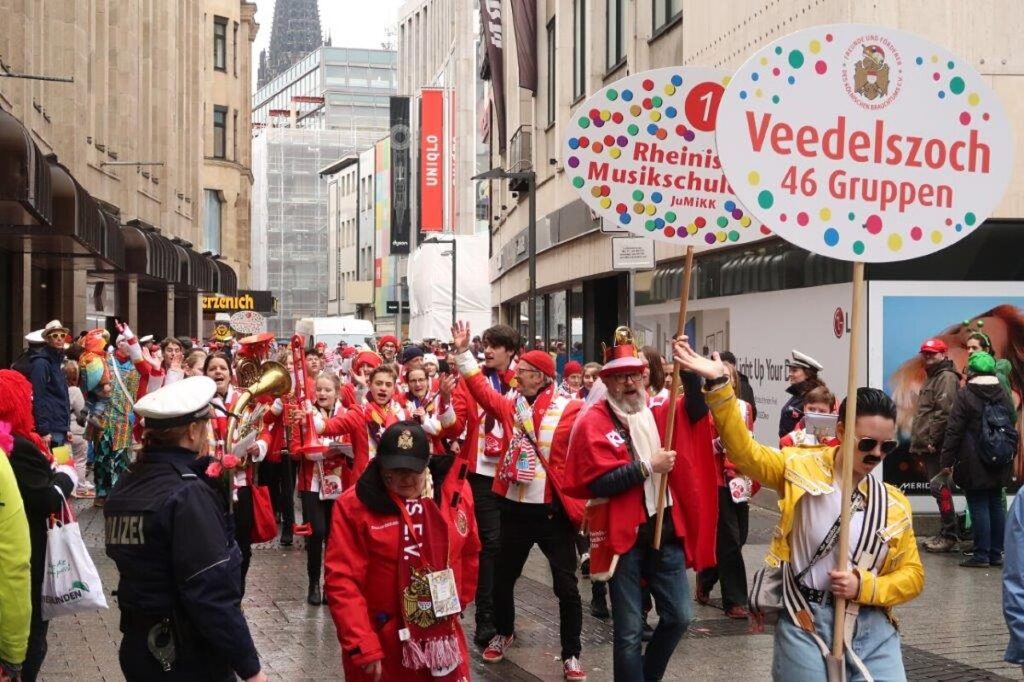
Cologne Carnival parade with costumed participants in the city centre

Spring and early autumn are particularly comfortable for combining architecture with walking, while summer offers longer days and the gardens at Brühl at their most inviting.

A very different experience awaits during Cologne Carnival (Kölner Karneval). The carnival season symbolically begins on 11 November at 11:11, but the main street celebrations take over the city in the days before Lent, culminating in the enormous Rose Monday parade. Carnival is deeply rooted in Cologne’s identity and can be an attraction in its own right, but visitors primarily interested in museums and historic sites should expect large crowds, street closures and changes to normal opening hours.

December brings another distinctive atmosphere with Cologne’s Christmas markets, including the major market beside the Cathedral. Keep in mind, however, that the Brühl palaces are closed during December, January and February.

If you are exploring more of the country, our Germany travel guide looks beyond Cologne at Germany’s cities, landscapes and cultural experiences. Football fans can also continue just north of the city to explore the BayArena Stadium Tour in nearby Leverkusen.

For more places where architecture, archaeology and landscapes tell stories that reach far beyond a single landmark, explore our World Heritage collection.

A City Built in Layers

Cologne’s heritage is compelling because no single period completely defines the city. The Romans established a major provincial centre on the Rhine. Medieval Cologne became one of Europe’s great religious cities, leaving behind Romanesque churches and eventually one of the world’s most ambitious Gothic cathedrals. Centuries later, the prince-archbishops expressed their power through the elaborate Rococo world of Brühl. These places are separated by centuries, architectural styles and very different ideas about power and faith, yet they belong to the same regional story. What emerges is not simply a collection of famous monuments, but almost two thousand years of European history still visible within one city and its surroundings.

Related posts

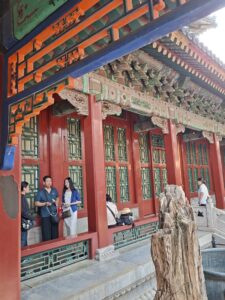
The Forbidden City in Beijing

Beijing’s Forbidden City was the ceremonial centre of imperial China. Follow its south-to-north visitor route, understand the spaces beyond the main courtyards, and prepare for advance booking, queues and a substantial walk.
Read More »

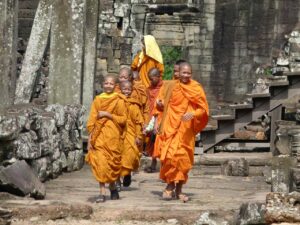
Ancient Khmer Legacy

Angkor Wat is part of a much wider temple landscape near Siem Reap. Choose between Angkor’s major sites and plan for transport, temple etiquette, heat and the walking conditions visitors with limited mobility should consider.

Read More »
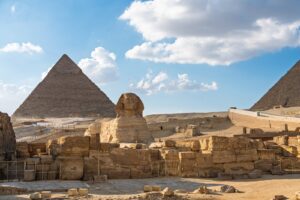
The Great Sphinx with two of the Pyramids of Giza in the background

Giza: Ancient World Wonders

The Pyramids of Giza extend beyond the familiar skyline. Learn what to see across the plateau, how to get there from Cairo, and what uneven ground, pyramid interiors and persistent on-site offers mean for your visit.

Read More »
The Great Wall of China winding across green mountain ridges, with watchtowers along the route

Journey Through Time and Stone

The Great Wall offers very different experiences at its sections near Beijing. Compare the character of Badaling, Mutianyu and Simatai, including transport, walking conditions and the limits of routes described as accessible.

Read More »
anoramic view of the Roman Forum in Rome

Timeless Journey Rome

Rome’s historic centre layers ancient ruins, churches, Renaissance streets and Baroque squares into a walkable city. This guide connects familiar landmarks with the history around them and helps you make sense of the UNESCO-listed area.

Read More »
Wadden Sea salt marshes with lighthouse and tidal channel

The Wadden Sea

The Wadden Sea changes with every tide, revealing broad mudflats that support migratory birds and coastal wildlife. Discover why this North Sea landscape is protected and what visitors should understand before exploring it.

Read More »
Scroll to Top