The Pyramids of Giza: More Than an Ancient Wonder

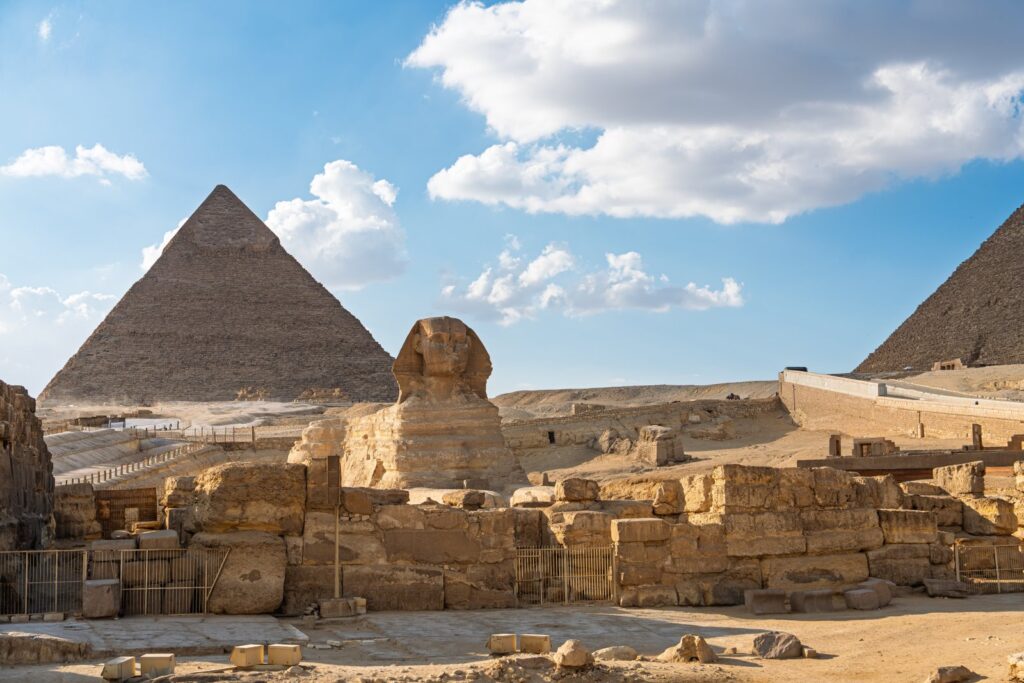
The Great Sphinx with two of the Pyramids of Giza in the background

The Pyramids of Giza are among the world’s most familiar sights. Yet photographs rarely convey the scale of the plateau, the distance between its monuments or the city that now reaches almost to the desert. A visit becomes more rewarding when you look beyond the three famous outlines and consider the people, beliefs and immense organisation behind them.

Giza forms part of the UNESCO-listed Memphis and its Necropolis, which stretches well beyond the plateau. Of the Seven Wonders of the Ancient World, it is Khufu’s Great Pyramid that survives today. Our World Heritage collection explores more places where understanding the wider setting changes the experience of a famous landmark.

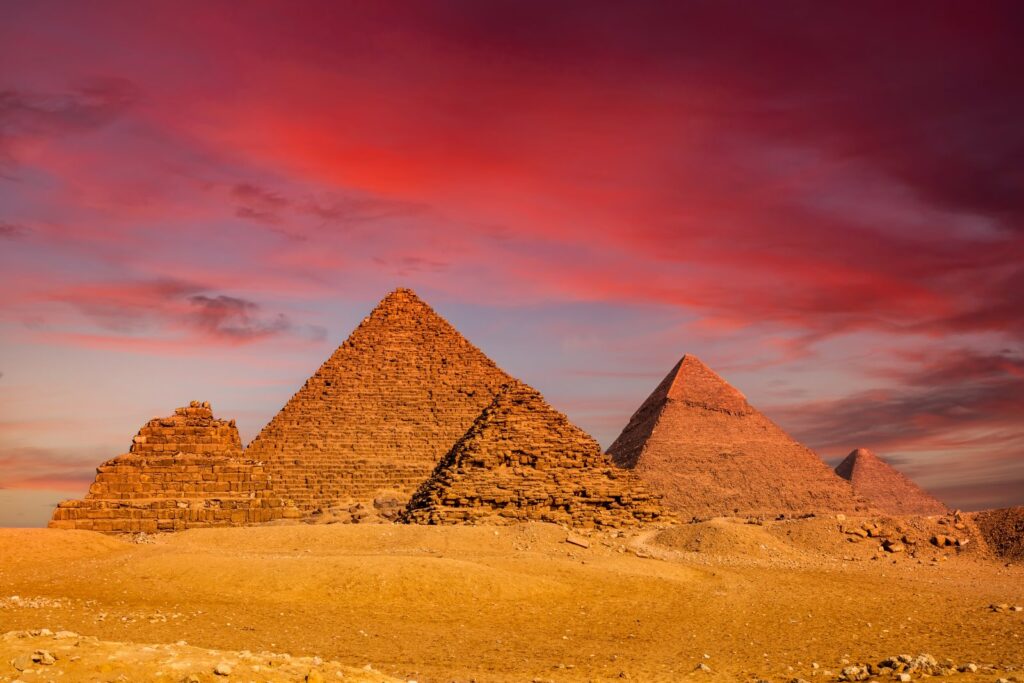
Three pyramids on the Giza Plateau beneath a red sunset sky

Three Pyramids, Three Generations

The largest and oldest of Giza’s three principal pyramids was built for Khufu during Egypt’s Fourth Dynasty. The other two belonged to his son Khafre and grandson Menkaure. Together they are extraordinary, but each pyramid was only the central feature of a larger funerary complex. Temples, causeways, smaller pyramids and tombs once surrounded the royal monuments. These details help explain why Giza was more than a collection of enormous stone structures: it was a landscape shaped by beliefs about kingship, death and the afterlife. Khufu’s pyramid was originally clad in fine limestone brought from Tura, giving its exterior a very different appearance from the rougher stone visible today.

The People Who Built Giza

The pyramids invite a question that has fascinated visitors for centuries: how could such vast monuments be built? There is no single, settled explanation for every construction detail. Archaeology does, however, tell us much more about the people involved than the old image of an anonymous enslaved workforce suggests.

At Heit al-Ghurab, southeast of the pyramids, archaeologists found traces of a settlement associated with the builders of Khafre’s and Menkaure’s complexes. Houses, storage areas, streets and an administrative building point to a highly organised operation. Nearby burials include overseers and skilled craftspeople; remains also show the physical demands of the work. Thinking about these people while standing beside the pyramids makes their achievement feel human as well as monumental.

What to See on the Plateau

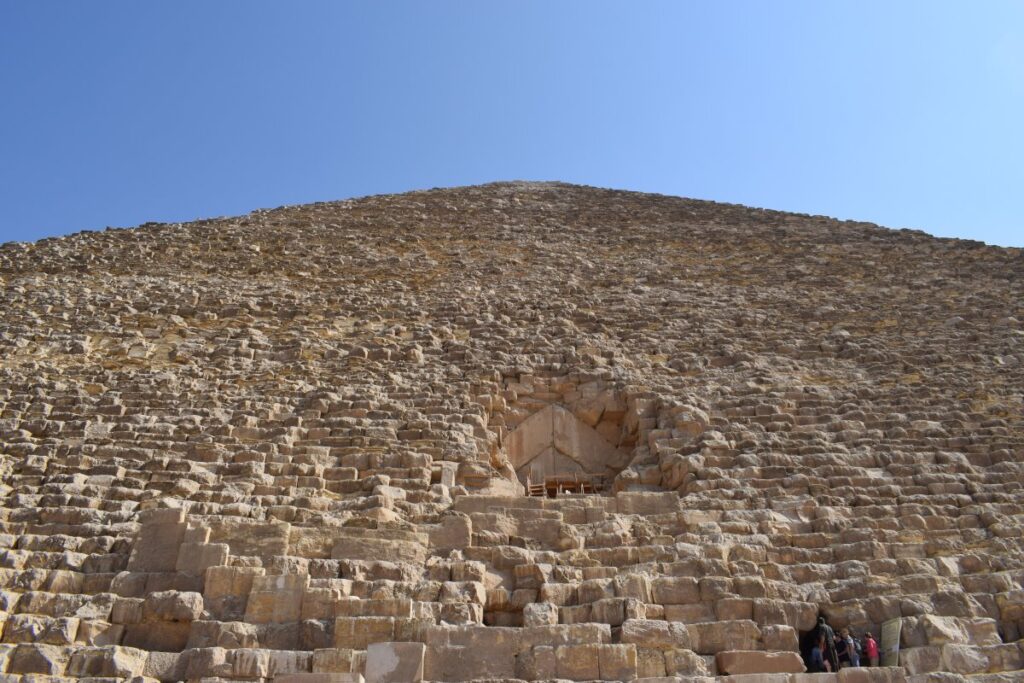
Begin with the Great Pyramid and allow time to walk around its exterior. From close up, the individual stone courses become visible in a way that no distant photograph can show. An interior visit is a separate choice: the route to the King’s Chamber includes steep, confined passages, and the chamber is austere. You do not need to go inside to appreciate the pyramid.

Continue towards Khafre’s and Menkaure’s pyramids, using the wider viewpoints to see how the three monuments relate to one another. The Great Sphinx adds another dimension to the visit. Carved from the bedrock and closely associated with Khafre’s complex, it belongs to the same funerary landscape rather than being an isolated photo stop.

Close view of the Great Pyramid’s stone courses and entrance, with visitors at its base

Visiting with Limited Mobility

Giza is possible to experience without climbing inside a pyramid. The exterior views, the Sphinx and the panorama can still make a memorable visit, but the plateau is extensive and its surfaces are not uniformly smooth. Sand, uneven ground, kerbs, heat and the distance from a shuttle stop to a viewpoint may matter more than the distance shown on a map.

If you use a wheelchair, do not assume every shuttle bus can accommodate it. Arrange an accessible vehicle for the journey from Cairo and ask the site or your tour provider in advance how wheelchair users board the shuttle and which stops and viewing areas are currently reachable. A recent wheelchair user’s account reported that an accessible bus could be provided, but also described difficult ramps and sandy approaches. Conditions at individual stops can change. Khufu’s narrow, steep interior route is unsuitable for a wheelchair visit.

For anyone who cannot walk far, a shorter plan focused on a few exterior stops is more sensible than trying to cover every monument. Bring water and sun protection, and leave room in the schedule for waiting, transfers and rests.

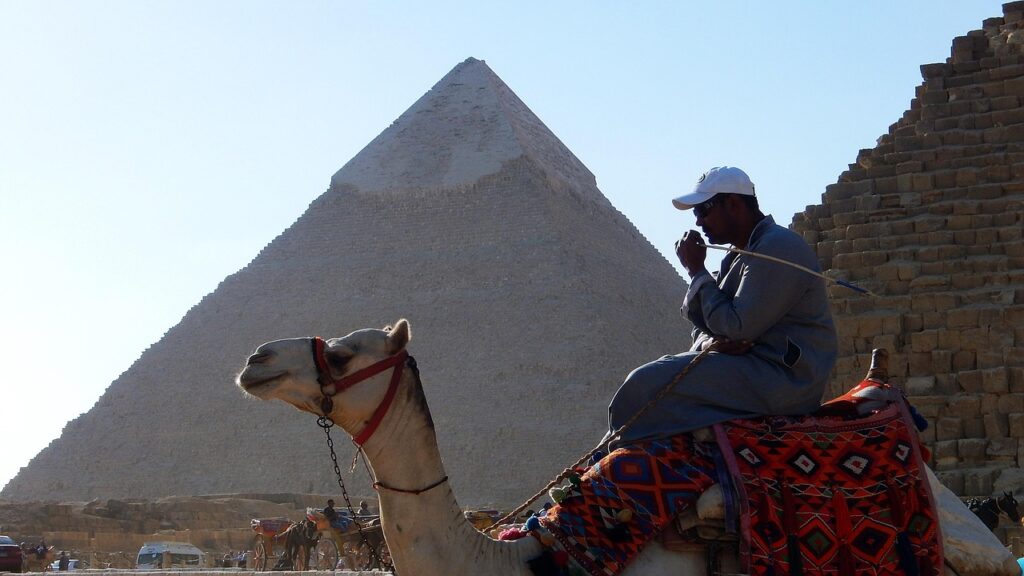
Camel and rider in front of a pyramid on the Giza Plateau

Getting to the Pyramids of Giza

From Cairo, the simplest approach for many visitors is a taxi, a booked car or a tour with transport to the plateau’s visitor entrance. Set your destination to the current Giza Plateau entrance, rather than assuming a driver can take you directly to the foot of the Great Pyramid. Entry arrangements have changed, and visitors generally use the site’s shuttle buses to travel between the principal stops.

Cairo Metro Line 2 reaches Giza Station, but the station is not at the pyramids: you still need onward road transport. This option may save money, though it involves an additional transfer and is less convenient if walking or changing vehicles is difficult. Before travelling, check the Egyptian Ministry of Tourism and Antiquities’ Giza Plateau page for current opening information. Plateau admission and entry into a pyramid are separate, so decide whether you want to go inside before buying tickets.

Handling unsolicited offers. Around the plateau, you may be approached with offers of a camel ride, a guided walk or help taking a photograph. An offer that sounds free can end with a request for baksheesh (a tip). If you want a service, agree on the full price and what it includes before accepting—for a ride, clarify the return journey and any expected tip as well. If you do not want it, a brief, firm “No, thank you” is enough; keep walking rather than entering a long discussion. Buy admission through the official ticket channels, and do not feel obliged to pay for help you did not request.

Continue the Story at the Grand Egyptian Museum

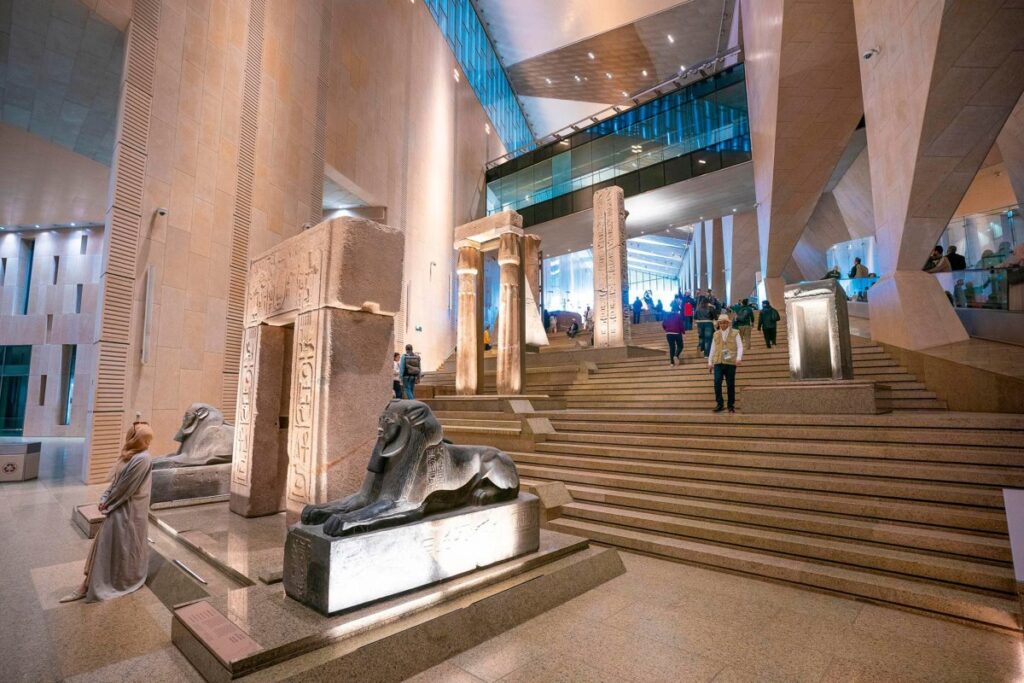
Visitors walking up a broad staircase lined with ancient Egyptian statues inside the Grand Egyptian Museum

 The nearby Grand Egyptian Museum complements the plateau rather than replacing it. After seeing the scale of the royal monuments, its galleries bring you closer to the objects, craftsmanship and beliefs of ancient Egypt. The museum’s official ticket site currently lists the Tutankhamun galleries and Khufu’s Boats Museum among the areas included with admission.

Treat the museum as a separate visit with its own ticket. Combining both places in one day is possible, but it creates a long itinerary; spreading them over two days allows more time at each. The museum also publishes accessibility information for visitors planning around mobility needs.

Giza’s lasting impression comes from more than the photograph of three pyramids against the sky. The closer you look at the landscape around them—and the people who made it—the more remarkable that familiar view becomes.

Related posts

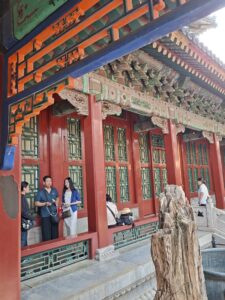
The Forbidden City in Beijing

Beijing’s Forbidden City was the ceremonial centre of imperial China. Follow its south-to-north visitor route, understand the spaces beyond the main courtyards, and prepare for advance booking, queues and a substantial walk.
Read More »

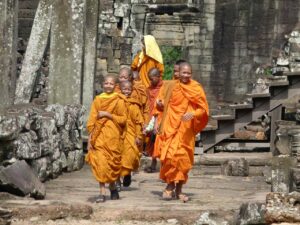
Ancient Khmer Legacy

Angkor Wat is part of a much wider temple landscape near Siem Reap. Choose between Angkor’s major sites and plan for transport, temple etiquette, heat and the walking conditions visitors with limited mobility should consider.

Read More »
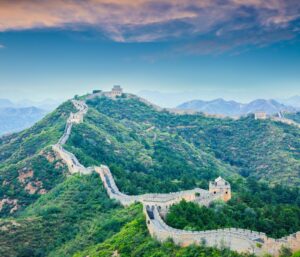
The Great Wall of China winding across green mountain ridges, with watchtowers along the route

Journey Through Time and Stone

The Great Wall offers very different experiences at its sections near Beijing. Compare the character of Badaling, Mutianyu and Simatai, including transport, walking conditions and the limits of routes described as accessible.

Read More »
anoramic view of the Roman Forum in Rome

Timeless Journey Rome

Rome’s historic centre layers ancient ruins, churches, Renaissance streets and Baroque squares into a walkable city. This guide connects familiar landmarks with the history around them and helps you make sense of the UNESCO-listed area.

Read More »
Wadden Sea salt marshes with lighthouse and tidal channel

The Wadden Sea

The Wadden Sea changes with every tide, revealing broad mudflats that support migratory birds and coastal wildlife. Discover why this North Sea landscape is protected and what visitors should understand before exploring it.

Read More »

Swiss Mountain Tracks

The Bernina Express crosses the Alps through high mountain scenery and remarkable railway engineering. This guide follows the changing landscape from glaciers to valleys and helps you decide how to experience the route.

Read More »

Darjeeling Himalayan Railway

The Darjeeling Himalayan Railway climbs through West Bengal on a historic narrow-gauge line. Learn what makes its engineering distinctive, where Batasia Loop and Ghoom fit into the route, and how to choose a train journey.

Read More »
Cologne World Heritage skyline with Cologne Cathedral and the Rhine

Cologne’s World Heritage

Cologne Cathedral is only one part of the region’s World Heritage story. Discover how the Roman frontier and the Rococo palaces of Brühl add different chapters, with practical guidance for visiting them.

Read More »
St Peter’s Square viewed from the dome in Vatican City

Vatican City

Vatican City brings St Peter’s Basilica, the Vatican Museums and the Sistine Chapel into a remarkable historic setting. Our guide looks at its art, continuing religious life and the work involved in preserving its collections.

Read More »
Scroll to Top