The Great Wall of China: Which Section Should You Visit?

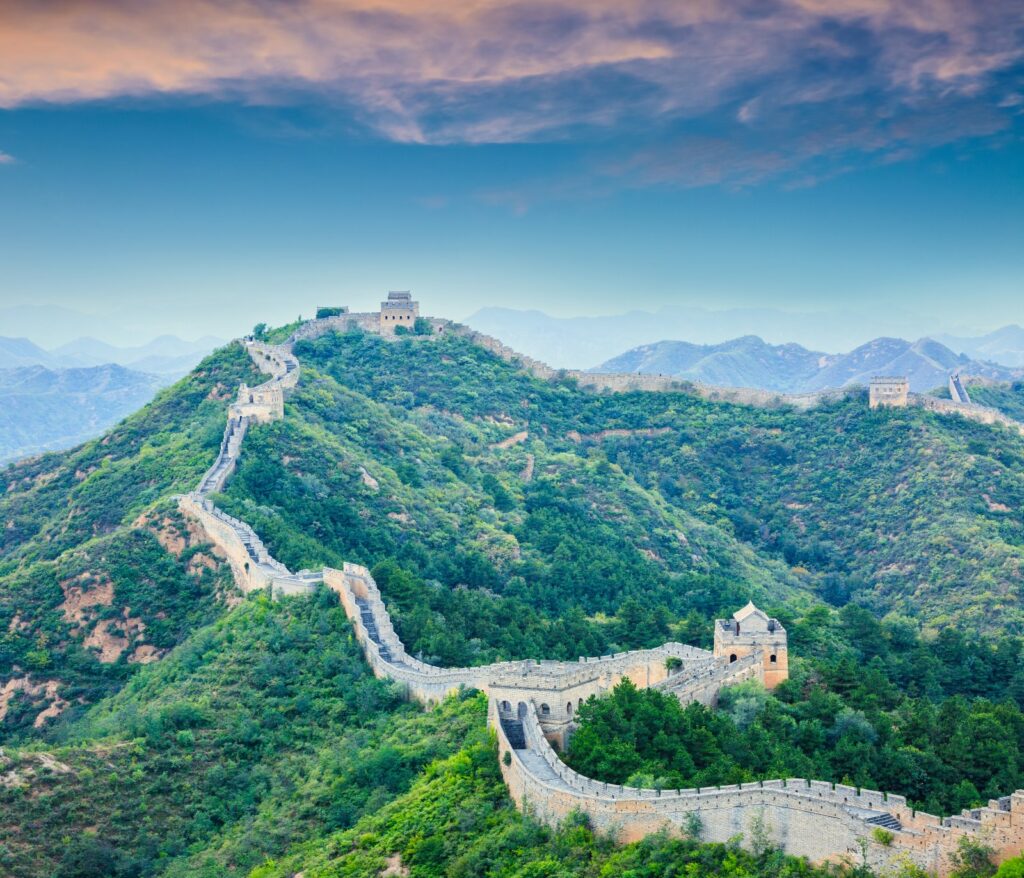
The Great Wall of China winding across green mountain ridges, with watchtowers along the route

The Great Wall is one of China’s most remarkable sights, but choosing where to visit takes more thought than choosing a viewpoint. Each section offers a different experience, and reaching the entrance is only part of the journey: you also need to know how you will get up onto the wall. The Great Wall is a UNESCO World Heritage site built and rebuilt over many centuries. It is a network of walls, passes and watchtowers rather than one uninterrupted structure. Around Beijing, restored visitor routes sit alongside steep, fragile stretches where access requires particular care.

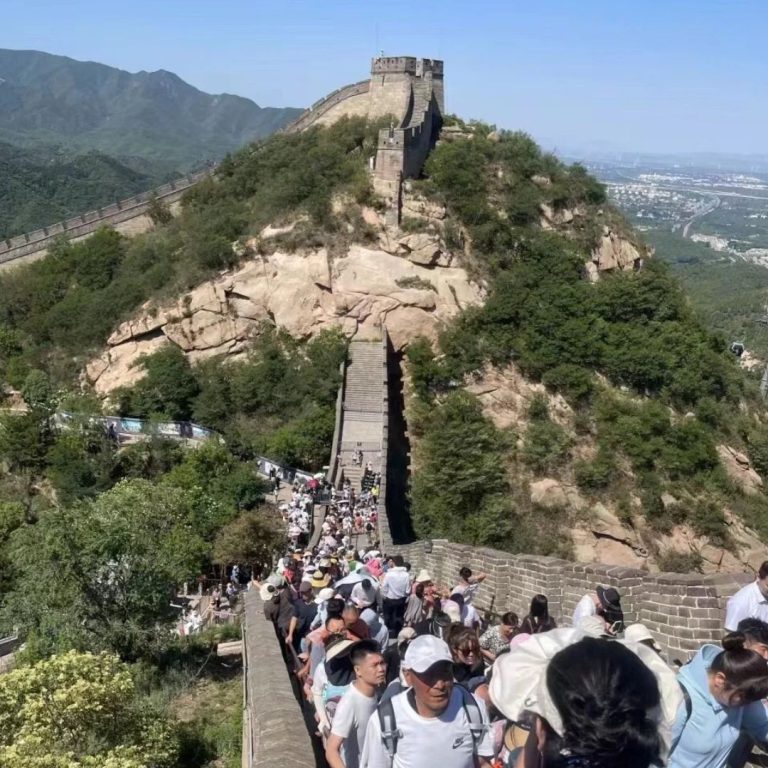
Visitors climbing a steep, crowded section of the Great Wall towards a watchtower

Five Great Wall Experiences Near Beijing

Badaling: The Wall and the Railway

Badaling is one of the best-known sections and among the simplest to reach independently. Trains from Beijing North or Qinghe take visitors to Badaling Great Wall station; buses and organised excursions are other options. There are established visitor facilities, parking areas and places to eat near the entrance. You can walk onto the wall from the entrance area, or use a cable car to reduce the climb to the higher sections. Badaling also has a limited accessible route near the lower part of the wall, with ramps and lifts described in visitor information. That does not make the entire wall wheelchair accessible: the route, gradients and lift operation should be confirmed with the attraction before travelling.

Badaling’s additional story lies in the railway that crosses this difficult mountain landscape. The nearby Zhan Tianyou Memorial explores the engineer and the early Beijing–Zhangjiakou Railway. It makes an interesting second stop if its opening arrangements fit your visit.

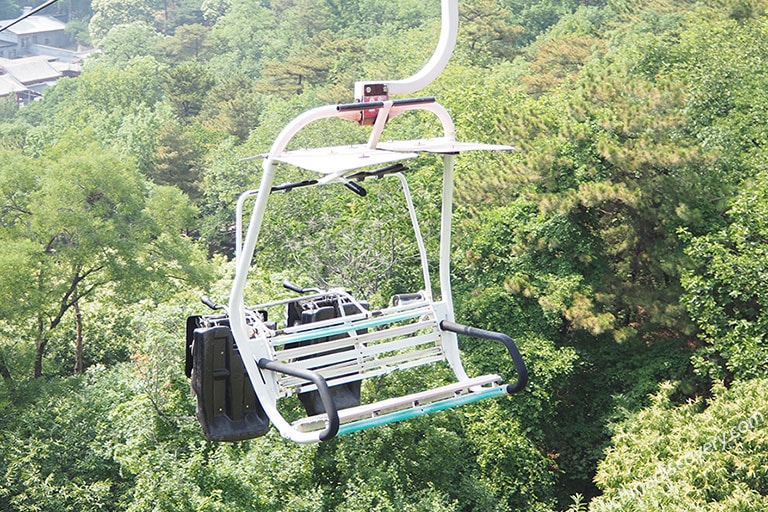
Empty open chairlift above the forest at Mutianyu Great Wall

Mutianyu: Two Ways Up and a Row of Old Cabins

Mutianyu was our choice. Its visitor area has parking, restaurants and a pleasant landscaped approach. We also saw old cable car cabins displayed there, a reminder of the many well-known guests who have visited this section over the decades.

The crucial detail is that the enclosed cable car and the open chairlift are different ways up. The enclosed cabins bring visitors towards Watchtower 14. The open chairlift serves the area around Watchtower 6, where the toboggan descent is another option. Check which service your ticket includes and where you want to begin walking before joining a queue.

We nearly missed the experience because the open chairlift felt daunting to Csaba. Discovering the enclosed cabins changed our plans. Even after the ride up, walking on the wall meant tackling steps and slopes. The cable car saves a long climb; it does not remove the demands of the wall itself.

That distinction matters especially for visitors with limited mobility. Although ramps are provided, the ramp leading towards the cable car felt very steep to us. Based on that experience, we would not describe Mutianyu as an easy wheelchair outing without checking the entire route, from arrival and boarding to the section of wall you hope to see. The official Mutianyu visitor information is the right place to confirm the current transport and access arrangements.

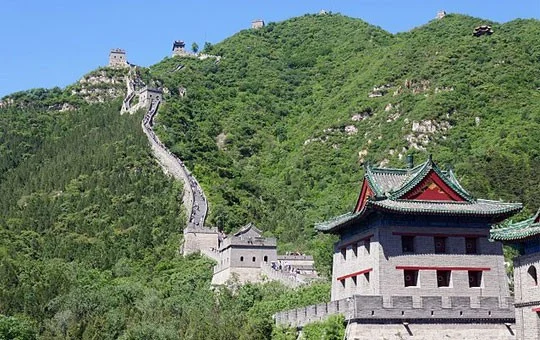
Fortified gate tower at Juyongguan, with the Great Wall climbing the green hillside behind it

Juyongguan: A Pass with Six Scripts in Stone

Juyongguan offers a different view of the Great Wall: a fortified mountain pass with walls climbing the slopes on either side. Visitors arrive at the pass and can explore its lower area before deciding whether to take on the steep steps up the walls. Parking is available, but there is no cable car to carry visitors to the upper route.

The reason to pause here is the Cloud Platform, a stone monument from the Yuan dynasty. Its carved Buddhist figures and inscriptions in six languages and scripts tell a story of the people and cultures connected through this pass. You can appreciate this historic feature without committing to a strenuous climb. Exploring the lower fort area may also be more practical for someone with limited mobility than attempting the walls above, although individual surfaces and access arrangements still need checking.

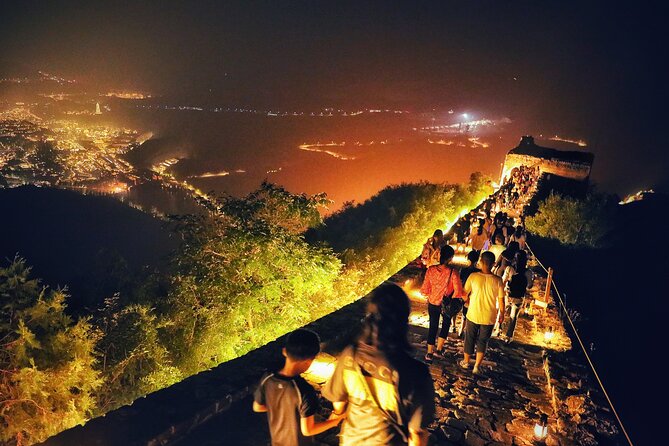
Visitors walking along an illuminated section of the Great Wall at night


Simatai: Ming Bricks Above a Lit-Up Town

Simatai is known for its dramatic, less heavily restored appearance. Some of its Ming-era bricks bear inscriptions identifying the teams and dates involved in their production, a trace of how construction quality was monitored.

Most visitors approach through Gubei Water Town, which has parking, restaurants, shops and activities at the foot of the wall. A cable car takes visitors part of the way up, but walking remains between its upper station and the wall. The terrain is steep, so the cable car should not be mistaken for step-free access.

An evening visit can pair the illuminated wall with a meal or stroll in Gubei Water Town. Check the current night route, cable car operation and ticket arrangements before setting out: an evening tour may cover a shorter stretch than a daytime visit.

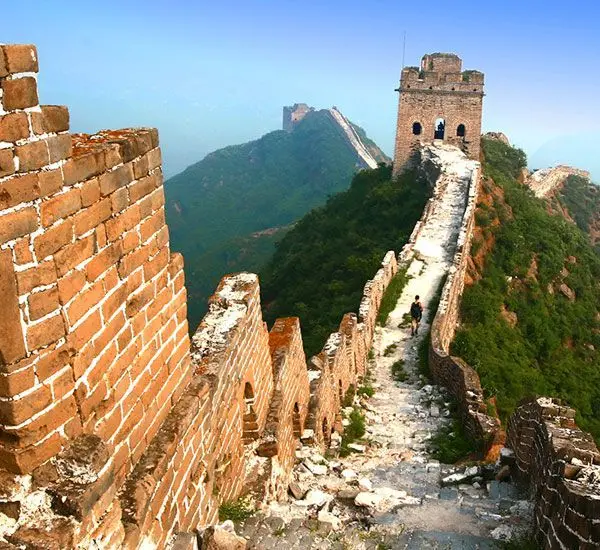
Weathered Great Wall path leading to a watchtower on a steep mountain ridge

Jiankou: The Story of a Fragile Wall

Jiankou is striking because its unrestored walls follow sharp mountain ridges. One famously steep feature is known as “Eagle Flies Facing Upward”. It is easy to understand why photographers are drawn to the landscape, but its appeal is inseparable from the difficulty and vulnerability of the site.

Jiankou should not be approached like a visitor complex with a parking area, ticket gate and lift to the wall. Access to unrestored sections can be restricted, and conservation work is ongoing. Anyone considering a hike should establish which route is officially open at the time and assess the terrain with an experienced, legitimate local operator. For most travellers seeking a straightforward Great Wall day trip, one of the established visitor sections is a better choice.

Plan the Journey Beyond the Entrance

A Beijing day tour may include transport to the wall, a stop at a village-style shopping area and a group lunch afterwards. Ours did: after Mutianyu, we ate together near the visitor area. Other tours may include lunch without a shopping stop, or allow more time to explore independently. Before booking, check the exact wall section, transport to its entrance, shuttle arrangements, ascent ticket, lunch and shopping stops. “Great Wall tour” alone does not tell you how you will get onto the wall.

Allow a full day if you can. Queues, the distance between a car park and the actual entrance, time spent on the wall and traffic back to Beijing can all add to the outing. Wear shoes with good grip, carry water and choose a route that suits the least mobile person in your group. Our strongest advice is simple: plan the climb as carefully as the drive. The right choice is the section whose history and scenery interest you and whose route onto the wall you can enjoy. If you are continuing through Beijing, our guide to the Forbidden City explores another landmark where understanding the visitor route makes a substantial difference.

Related posts

The Forbidden City in Beijing

Beijing’s Forbidden City was the ceremonial centre of imperial China. Follow its south-to-north visitor route, understand the spaces beyond the main courtyards, and prepare for advance booking, queues and a substantial walk.
Read More »

Ancient Khmer Legacy

Angkor Wat is part of a much wider temple landscape near Siem Reap. Choose between Angkor’s major sites and plan for transport, temple etiquette, heat and the walking conditions visitors with limited mobility should consider.

Read More »
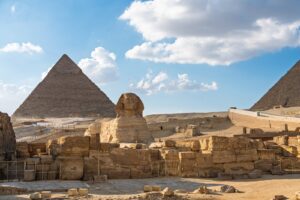
The Great Sphinx with two of the Pyramids of Giza in the background

Giza: Ancient World Wonders

The Pyramids of Giza extend beyond the familiar skyline. Learn what to see across the plateau, how to get there from Cairo, and what uneven ground, pyramid interiors and persistent on-site offers mean for your visit.

Read More »
anoramic view of the Roman Forum in Rome

Timeless Journey Rome

Rome’s historic centre layers ancient ruins, churches, Renaissance streets and Baroque squares into a walkable city. This guide connects familiar landmarks with the history around them and helps you make sense of the UNESCO-listed area.

Read More »
Wadden Sea salt marshes with lighthouse and tidal channel

The Wadden Sea

The Wadden Sea changes with every tide, revealing broad mudflats that support migratory birds and coastal wildlife. Discover why this North Sea landscape is protected and what visitors should understand before exploring it.

Read More »

Swiss Mountain Tracks

The Bernina Express crosses the Alps through high mountain scenery and remarkable railway engineering. This guide follows the changing landscape from glaciers to valleys and helps you decide how to experience the route.

Read More »

Darjeeling Himalayan Railway

The Darjeeling Himalayan Railway climbs through West Bengal on a historic narrow-gauge line. Learn what makes its engineering distinctive, where Batasia Loop and Ghoom fit into the route, and how to choose a train journey.

Read More »
Cologne World Heritage skyline with Cologne Cathedral and the Rhine

Cologne’s World Heritage

Cologne Cathedral is only one part of the region’s World Heritage story. Discover how the Roman frontier and the Rococo palaces of Brühl add different chapters, with practical guidance for visiting them.

Read More »
St Peter’s Square viewed from the dome in Vatican City

Vatican City

Vatican City brings St Peter’s Basilica, the Vatican Museums and the Sistine Chapel into a remarkable historic setting. Our guide looks at its art, continuing religious life and the work involved in preserving its collections.

Read More »
Scroll to Top