Not All Must-See Attractions Are Right for You
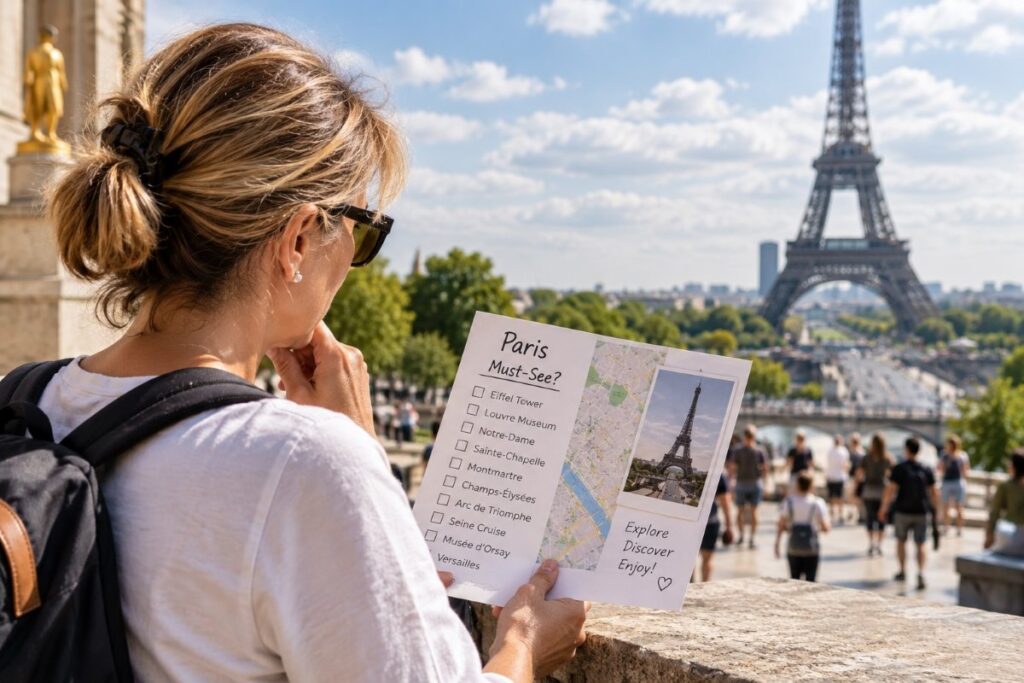
A place can be historically important, architecturally extraordinary and loved by millions — and still not deserve half a day of your trip. We have learned to separate two questions: Is this an interesting or important place? And is this how we want to spend our time?
Someone fascinated by engineering may happily spend hours inside a car factory, while a football supporter may consider a stadium tour the highlight of a city break. Their partners may have very different ideas, and neither is travelling incorrectly.
A good itinerary should reflect the people actually taking the trip. It shouldn’t feel like preparation for an imaginary examination at the end of the holiday.
Your Most Expensive Travel Currency Is Time
Admission prices are easy to compare, but time is harder. We learned that very clearly at Beijing’s Forbidden City. We expected a queue, but certainly did not expect to spend almost three hours waiting in the blazing sun before getting inside.
By then, turning back hardly felt like an option, and at one point simply getting out of the queue was difficult. Was the Forbidden City worth seeing? For us, yes. We would have regretted missing it.
But those three hours were part of the price. The wait changed the rest of our plans, left us far more tired than expected and took time we could have spent somewhere else.
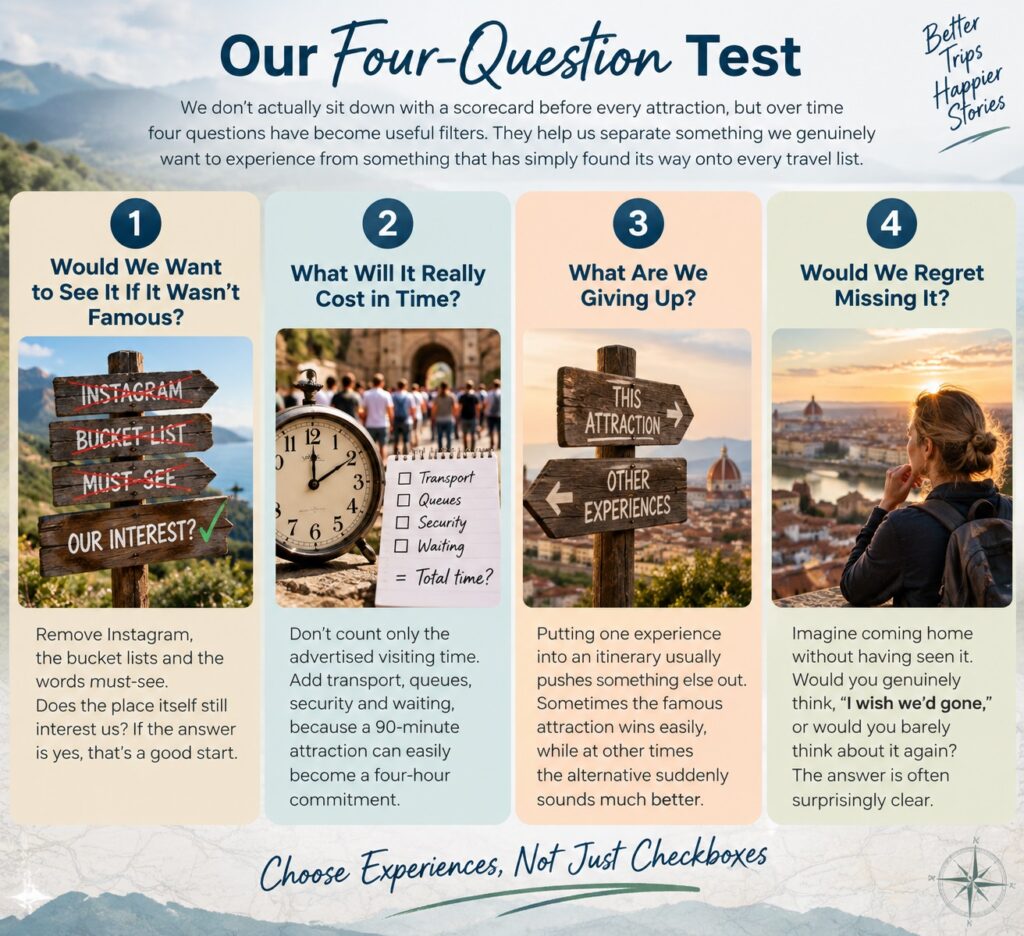
That is the cost that never appears beside the ticket price. Transport, queues, security checks and timed entry can turn a seemingly short attraction into a half-day commitment. On a three-day city break, four hours is expensive, so it is worth spending those hours deliberately.
Research the Experience, Not Just the Attraction
Beautiful travel photographs show us what we will see, but they rarely show us what seeing it requires. The photograph shows the monument but not the queue, the viewpoint but not the climb, and the historic centre but not the cobblestones.
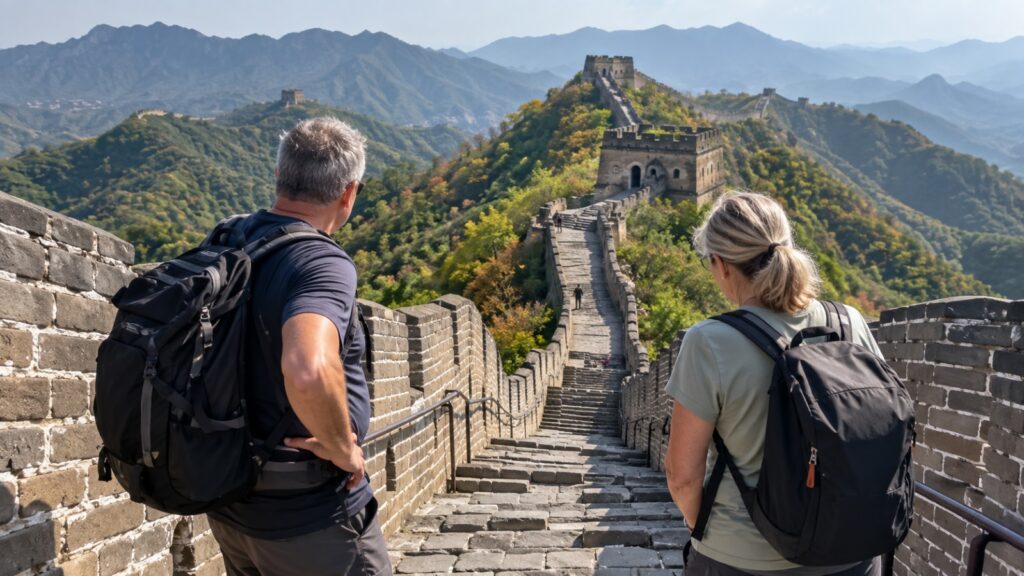
None of these things makes an attraction bad, but they are part of the experience. So now we try to research more than the attraction itself: how we get there, how much walking is involved, whether there are difficult stairs or terrain, how crowded it becomes, whether we need to book ahead, whether alternative routes exist and whether there is somewhere to sit. Official visitor information can reveal options you might otherwise miss — exactly as we discovered at the Great Wall.
Accessibility matters here too. An accessibility symbol tells only part of the story; what matters is whether the actual journey from the entrance to the places we want to see works for us. This is also why we look beyond simple “accessible/not accessible” labels in our Wheelchair Accessible Travel guides.
When accessibility or mobility could affect a visit, it is always worth checking the attraction’s current official information before travelling. Conditions, routes and available assistance can change, and individual needs are different.
Good planning isn’t about eliminating every surprise. It is about avoiding the surprises that could unnecessarily spoil an experience.