
Why September Might Be the Best Month to Travel in Europe After 50

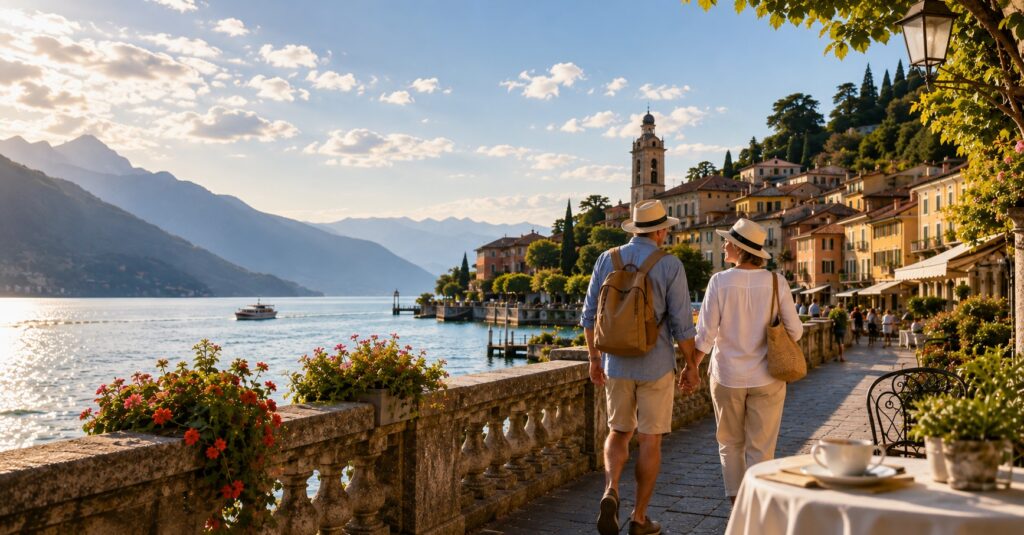
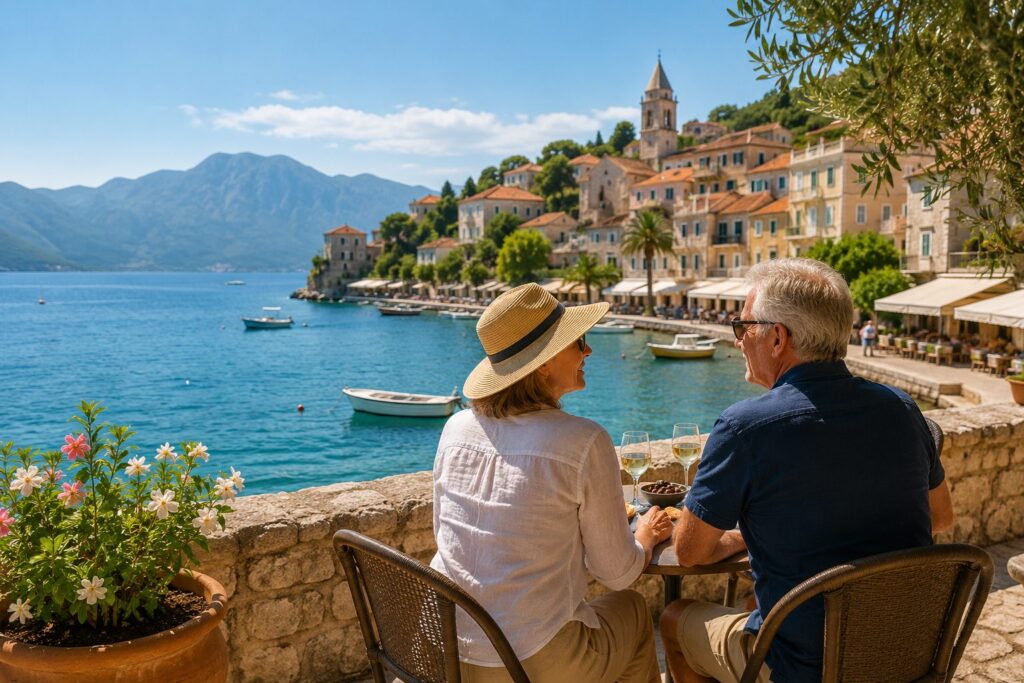
Mature couple enjoying a September trip by a European lake

For years, summer travel in Europe has meant July and August. School holidays, packed beaches, crowded city centres and long queues were simply accepted as part of the experience. But perhaps we have been travelling at the wrong time.

September offers something increasingly difficult to find during the European summer: space. There is more room to walk through an old town without constantly navigating around tour groups, to find a table at a café, or simply to stop and look around instead of rushing from one attraction to another. For travellers who prefer experiencing a destination rather than racing through it, that can make a surprisingly big difference.

And we are apparently not the only travellers discovering this. September travel has been growing quickly enough to earn its own nickname: “Super September.” Travellers are increasingly moving their trips away from the traditional summer peak in search of more comfortable weather, fewer crowds and better value. For travellers over 50, those advantages can be particularly appealing.

Europe Is Simply Easier to Explore

There is a huge difference between walking through Rome at 35°C and exploring it when temperatures are several degrees cooler. The same applies to Athens, Dubrovnik, Seville or Lisbon. These are cities made for walking, but doing that during the hottest part of summer can turn sightseeing into an endurance exercise.

Travel after 50 doesn’t mean slowing down because we have to. Many of us simply become more selective about where we spend our energy. Standing for an hour in the blazing sun to enter an attraction isn’t an experience we particularly need to collect, especially when the same place can be far more enjoyable a few weeks later.

September often provides more comfortable conditions for walking, sightseeing and eating outdoors. Extreme summer heat has also become an increasingly important factor in European travel planning, making the shoulder months more attractive to visitors who have flexibility over when they travel.

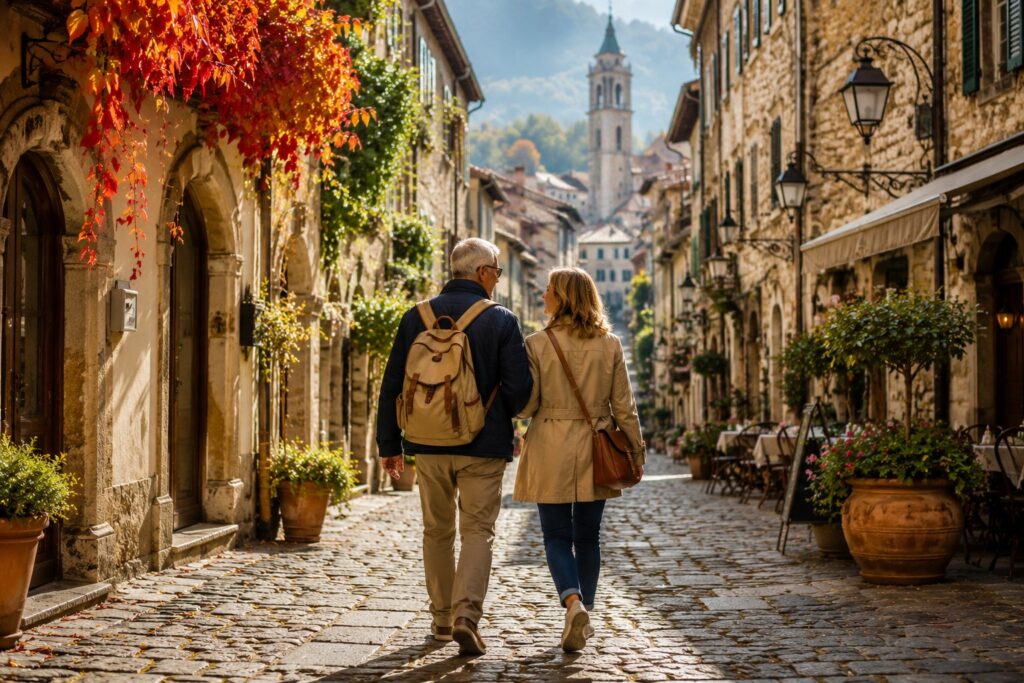
Exploring a European Old Town in Early Autumn

Fewer Crowds Can Change the Experience Completely

Visit a famous European destination in August and sometimes the crowd becomes part of the attraction. At places such as the Trevi Fountain, Dubrovnik’s Old Town, Venice, Barcelona or Santorini, you can find yourself experiencing the destination through hundreds of phones being held in the air around you.

September doesn’t magically empty Europe’s most popular places. Shoulder-season travel has become increasingly popular, so we shouldn’t expect deserted streets or empty museums. Once the main European school holidays finish, however, many destinations become noticeably easier to explore.

That matters especially to the kind of travel we enjoy: slow enough to notice where we are. A quieter museum, an available café table or simply being able to stop in a narrow street without blocking a stream of people can completely change how a city feels. The sights may be exactly the same, but the experience isn’t.

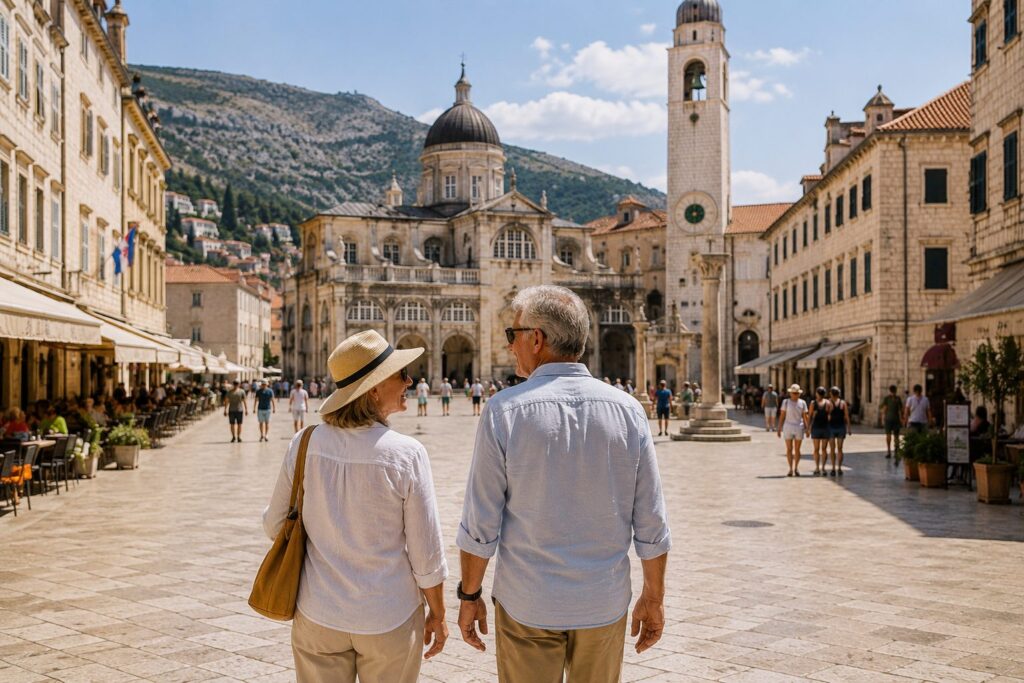
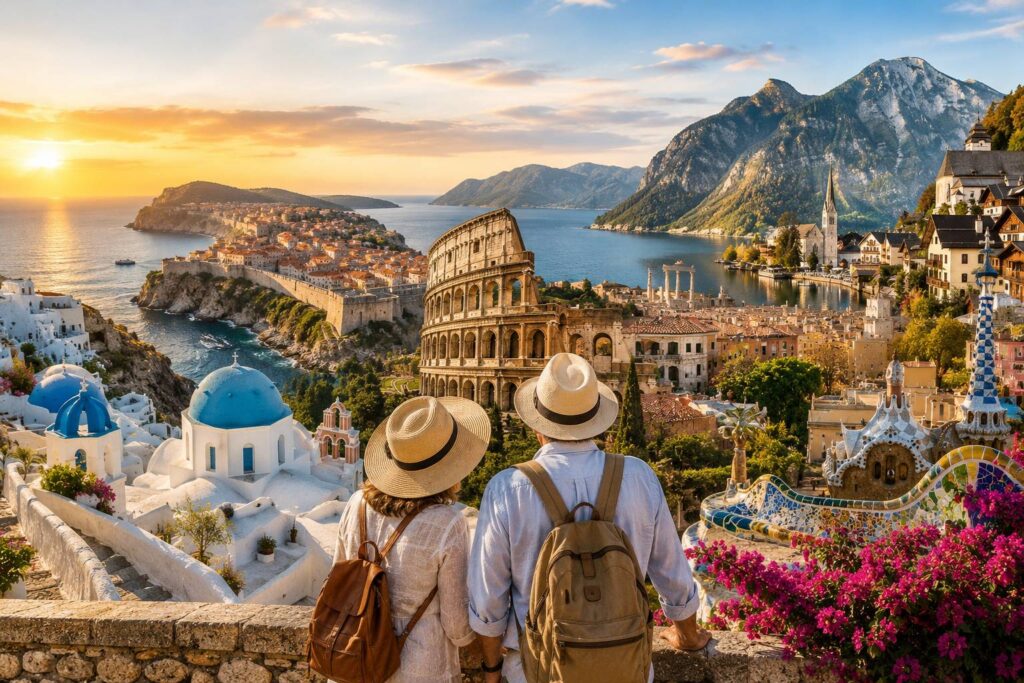
Mature couple exploring a European historic square with fewer crowds in September

Summer Isn’t Necessarily Over

September doesn’t automatically mean autumn coats. Across much of southern Europe, summer conditions can continue well into the month, making it possible to combine sightseeing with beaches, outdoor restaurants and evenings spent outside.

There is another advantage that is easy to overlook. The Mediterranean and Adriatic have spent the entire summer warming up, so sea temperatures can remain inviting even after the peak holiday season has ended. For travellers who enjoy swimming but don’t necessarily enjoy extreme summer heat, this can be an excellent combination.

That makes September particularly interesting if you don’t want to choose between a city break and a beach holiday. Destinations in Greece, Italy, Croatia and Spain can offer both, especially during the first half of the month.

Mature couple enjoying a sunny September day in a Mediterranean coastal town

Better Value — But Don’t Assume Everything Is Cheaper

September can be cheaper than July and August, particularly when it comes to flights. Once the peak summer rush ends, fares on some European routes fall, and travellers with flexible dates can sometimes find much better options.

Hotels are a different matter. Shoulder season has become popular enough that accommodation is no longer automatically a bargain, particularly in major European cities. September is also a busy month for conferences, festivals and cultural events, which can push hotel prices surprisingly high on particular dates.

So we wouldn’t travel in September simply because we assume it will be cheap. We’d choose it because the overall experience can offer better value. A slightly cheaper flight is welcome, but a destination that is considerably more enjoyable is worth even more.

Five Places We’d Consider in September

Italy

September gives travellers an enormous range of choices in Italy. Cities such as Rome and Florence gradually become more comfortable as the most intense summer heat begins to ease, while regions such as Tuscany and Puglia offer a combination of historic towns, countryside and food.

September also begins to introduce one of Italy’s great seasonal experiences: harvest time. Vineyards and agricultural regions start moving into a different rhythm, making this an especially appealing period for slower journeys through the countryside rather than simply ticking off famous cities.

Italy in September is difficult to beat.

Spain

Spain is an appealing choice for September, especially for travellers who want variety. Barcelona, Madrid and Seville are obvious possibilities, but the country rewards those willing to explore beyond its most famous cities.

Valencia combines beaches with culture, while Asturias and Galicia offer greener landscapes and a completely different atmosphere. September can also make walking and sightseeing more comfortable. With excellent rail connections and many distinct regions to choose from,

Spain is ideal for a slower journey combining major sights with less familiar places along the way.

Croatia

Dubrovnik is spectacular, but it is also a perfect example of a destination where when you visit matters almost as much as what you visit. During the busiest summer weeks, crowds can dominate the experience.

September offers a chance to combine Dubrovnik or Split with the Adriatic coast while the weather is still suitable for outdoor activities and swimming. Croatia also works particularly well for travellers who enjoy variety. Historic towns, coastal drives, islands and national parks are relatively close together, making it easy to combine several experiences in one relaxed early-autumn journey.

Greece

If we wanted to extend summer, Greece would be high on our list. September works beautifully for combining historical sites, islands and swimming without committing yourself to the height of the July and August season.

Athens followed by a few days on an island makes an excellent combination. The archaeological sites remain the same, the Aegean is still warm, but the experience can become considerably more comfortable as the most intense summer period begins to pass. September also makes it easier to enjoy outdoor cafés, coastal walks and evenings by the sea without organising the entire day around the heat.

Austria

Austria offers a completely different September experience. Instead of Mediterranean beaches, think Vienna cafés, museums, palaces, vineyards, lakes and excursions into smaller towns and the countryside.

Early autumn is particularly pleasant for exploring cities on foot while still spending plenty of time outdoors. Vienna makes an excellent base thanks to its public transport, while Salzburg, the Wachau Valley and Austria’s lake districts add scenery and variety. It is easy to combine culture, history and nature without rushing, making Austria particularly well suited to a relaxed September journey.

There Is One Catch: Everyone Else Is Discovering September Too

Shoulder season isn’t quite as secret as it used to be. As more travellers gain flexibility over when they travel and become increasingly conscious of summer heat and overcrowding, September is gradually developing into an important travel season of its own. For many travellers, it is no longer simply an alternative to summer, but a preferred time to explore Europe.

That means popular destinations won’t suddenly become empty on September 1. In some places, the traditional distinction between peak season and shoulder season is becoming much less obvious. Destination choice therefore matters just as much as timing, especially if avoiding the busiest tourist areas is part of the plan.

Instead of asking “Where does everyone go in September?”, we think there is a more useful question: “Where will travelling in September actually make the experience better?” That question can lead away from the most obvious places and often towards the more interesting ones.

Why September Fits the Way We Want to Travel

At this stage of our lives, we’re not particularly interested in seeing how many attractions we can squeeze into a single day. We still want to see new places — a lot of them — but we’d rather have enough time for the unexpected café, the local market we didn’t know existed, a train journey through the countryside or simply another hour wandering through an interesting neighbourhood.

That’s why September appeals to us. It isn’t really about travelling less or even necessarily travelling more slowly. It’s about choosing conditions that allow us to enjoy more of the journey instead of spending our energy dealing with heat, queues and crowds.

Perhaps that’s the real appeal of travelling Europe in September: summer isn’t necessarily over, but the worst parts of peak summer travel might be.

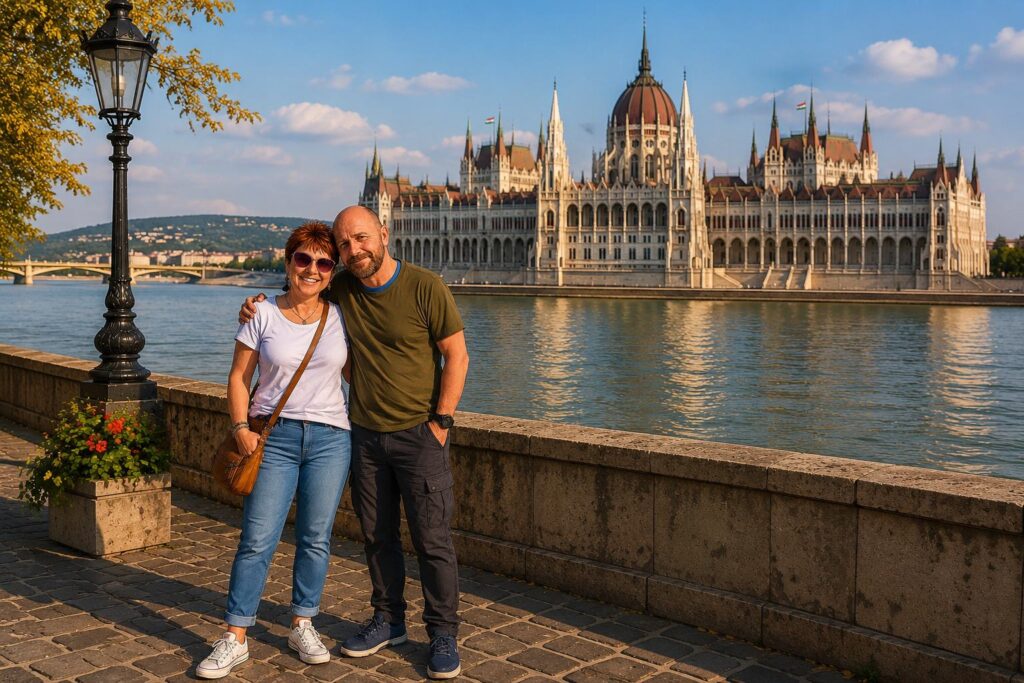
Couple enjoying a September trip in Budapest with the Hungarian Parliament across the Danube

Related posts

Land of Futuristic Skylines, Ancient Deserts

The United Arab Emirates offers a fascinating mix of futuristic cities, rich traditions, desert landscapes, and beautiful beaches. Explore iconic architecture, vibrant souks, world-class museums, and Bedouin heritage. From Dubai’s spectacular skyline to Abu Dhabi’s cultural treasures and peaceful desert oases, the UAE delivers unforgettable experiences for every curious traveler.

Read More »

Vienna’s Urban Oasis

The Haus des Meeres is one of Vienna’s most compelling attractions because it masterfully combines rich history, vibrant biodiversity, and striking architectural design. Walking into this venue means stepping inside a towering WWII concrete flak fortress that has been transformed from a monument of war into a vertical sanctuary for over 10,000 animals.

Read More »

The Accessible UK

Traveling by wheelchair in the UK is highly manageable with preparation. Equality laws ensure public buildings, modern hotels, and museums offer ramp or elevator access. London’s iconic black cabs feature built-in ramps, and most urban buses are fully accessible. National rail services provide dedicated boarding assistance if booked in advance.

Read More »

Land of Samba, Rainforests, and Carnival

Brazil is a vibrant South American nation famous for its breathtaking natural wonders, including the Amazon Rainforest and Iguazu Falls. Its rich cultural tapestry shines through energetic samba rhythms, world-renowned Carnival celebrations, and diverse cuisine. Boasting stunning beaches and warm hospitality, it offers an unforgettable experience for every traveler.

Read More »
Blue and yellow Boca Juniors mural featuring Diego Maradona inside the club museum

The La Bombonera Stadium Tour

Discover one of South America’s most distinctive football stadiums in the heart of Buenos Aires. A visit to La Bombonera introduces you to Boca Juniors, the club’s history and the intense football culture of the La Boca neighborhood. The stadium’s steep stands and compact design make it an experience unlike almost any other ground.

Read More »

Majestic Serenity

Cruising the Norwegian fjords offers an unforgettable journey through dramatic landscapes. Giant emerald cliffs rise sharply from deep, sapphire-blue waters, while magnificent waterfalls cascade down mountain faces. Traveling by ship provides comfort and a front-row seat to pristine glaciers, peaceful coastal villages, and Norway’s majestic, untouched wilderness.

Read More »
Scroll to Top