The Beating Heart of Gotham

The Beating Heart of Gotham: The Majestic Grand Central Terminal

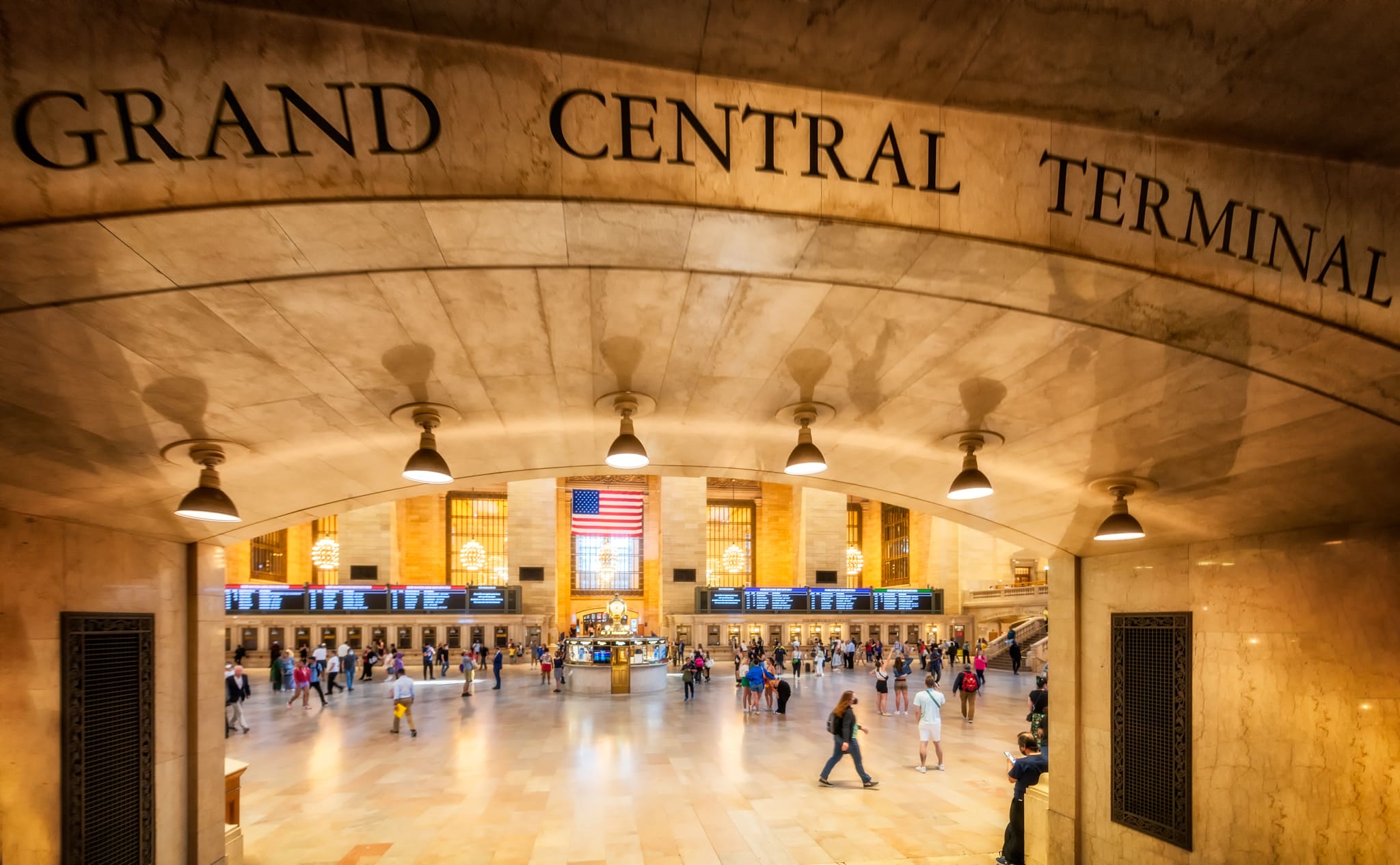
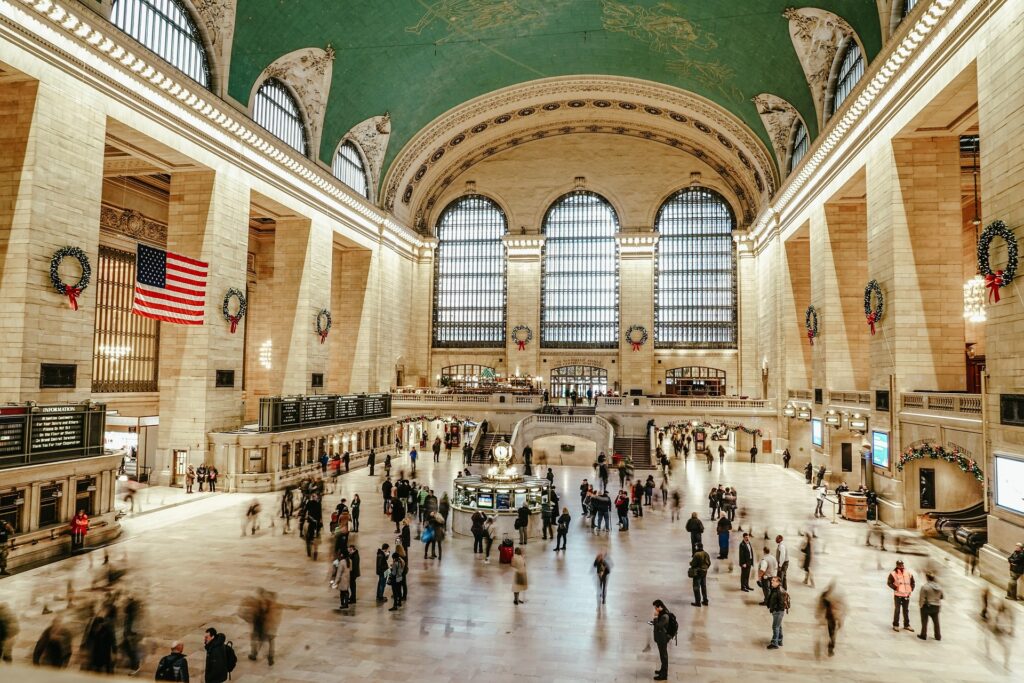
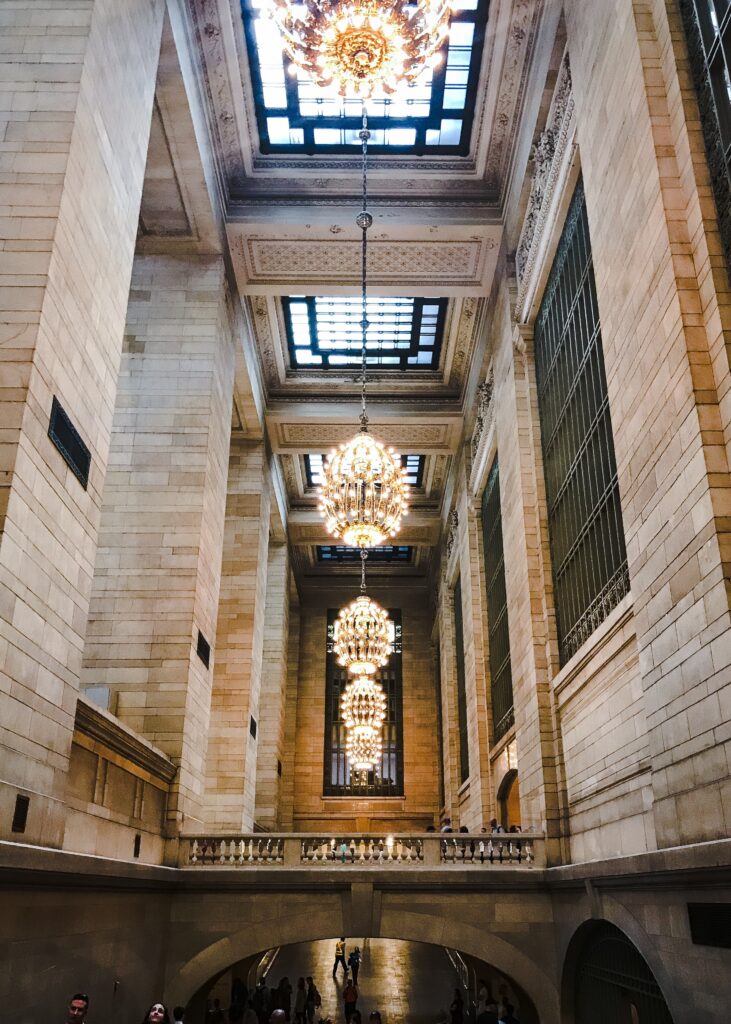
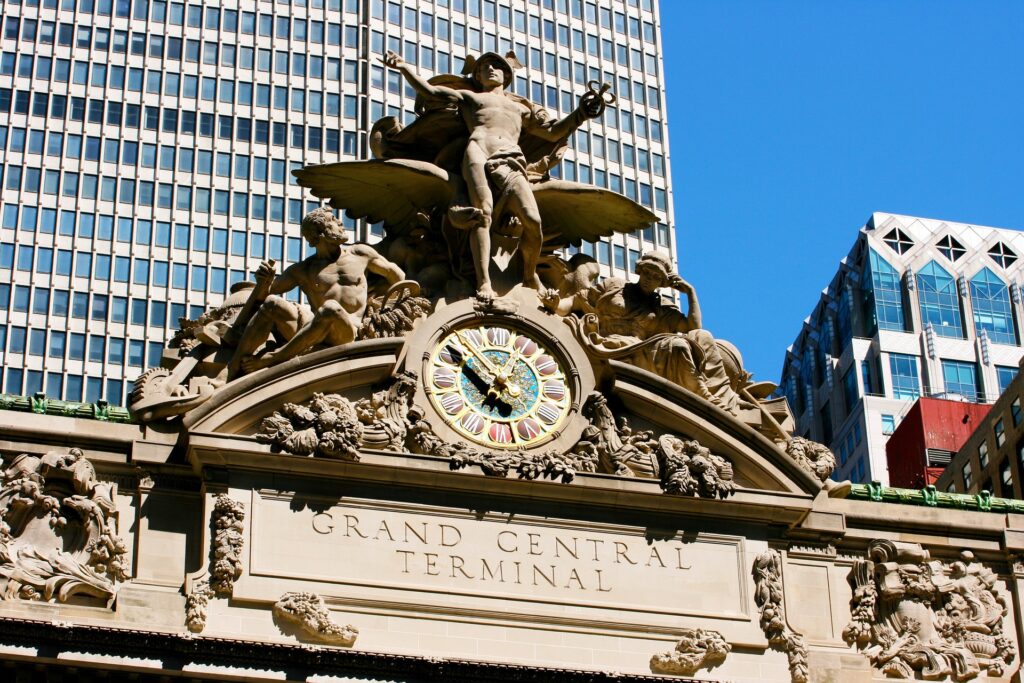
In the relentless rush of New York City, there exists a sanctuary of timeless elegance. Standing at the intersection of 42nd Street and Park Avenue, Grand Central Terminal is more than just a transit hub. It is a masterpiece of Beaux-Arts architecture and the undisputed emotional center of Manhattan. The Grand Central isn’t a museum frozen in time; it is a living, breathing organism. While it is not a UNESCO World Heritage Site, but was awarded UNESCO’s 2024 Prix Versailles as the “World’s Most Beautiful Passenger Station.” Even in its modern additions, the terminal refuses to settle for anything less than breathtaking.

Pro Tip: Try to visit between 10:00 AM and 11:00 AM on a sunny day. The way the sunlight streams through the massive arched windows creates dramatic “cathedral beams” of light that are perfect for photography.

A Phoenix from the Steam

The story of Grand Central is one of technological revolution. After a tragic train collision in 1902 caused by steam-obscured vision, the city banned steam locomotives. This forced the New York Central Railroad to shift to electricity and bury the tracks underground. The current terminal, which opened in 1913, allowed the development of Park Avenue above the hidden tracks, transforming the city’s real estate forever. 

Architectural Splendor and Recognition

While Grand Central Terminal is not a UNESCO World Heritage Site, it holds several of the highest honors in the United States. It was designated a National Historic Landmark in 1976 and is a protected New York City landmark. 

The terminal’s interior is a secular temple of movement. The Main Concourse features a celestial ceiling mural with 2,500 stars and an iconic four-faced opal clock valued at over $10 million. Recently, the terminal’s legacy of beauty was extended to its modern expansion. In December 2024, the new Grand Central Madison terminal was awarded UNESCO’s Prix Versailles as the “World’s Most Beautiful Passenger Station” in the interior category. This prestigious global prize recognizes the station’s innovative design, which features mosaic artworks by Yayoi Kusama and Kiki Smith. 

The Battle for Survival

The Grand Central we see today almost didn’t survive the 20th century. In the late 1960s, developers proposed building a 55-story office tower directly on top of the terminal, which would have destroyed its magnificent concourse. A fierce preservation campaign, spearheaded by Jacqueline Kennedy Onassis, led to a pivotal 1978 U.S. Supreme Court case. The Court’s decision to uphold the terminal’s landmark status was a landmark victory for historic preservation across America, ensuring that New York’s soul would not be lost to modern development. 


A Cultural Icon

Grand Central serves over 750,000 people daily, but it is also a stage for the city’s culture. From the famous Whispering Gallery outside the Oyster Bar—where the acoustic arches let you hear a whisper from across the hall—to its starring roles in legendary films, the terminal is a living organism. It remains a place where grandeur meets the daily hustle, inviting every visitor to join the rhythm of the greatest city on Earth.


The Grand Central Terminal “Insider” Checklist 
  1. The “Dark Patch” on the Ceiling
    When the massive celestial mural was restored in the 1990s, workers left a tiny, dark rectangle untouched near the constellation of Cancer. This small patch shows exactly how black the entire ceiling once was, stained by decades of nicotine and coal dust before the restoration.
  2. The Whispering Gallery
    Located on the lower level in the archway outside the Oyster Bar, this acoustic marvel is a must-try. Stand in one corner and have a friend stand in the far diagonal corner. If you whisper into the wall, your voice will travel across the ceiling, and they will hear you perfectly over the roar of the crowds.
  3. The $10 Million Clock
    The iconic four-faced clock atop the Information Booth in the Main Concourse is the terminal’s crown jewel. Its faces are made of real opal, and it is estimated to be worth between $10 and $20 million. It remains the most famous meeting point in all of New York City. Beyond its beauty, the clock is a masterpiece of precision, synchronized with the U.S. Naval Observatory’s atomic clock. Its brass casting and golden finish define the terminal’s timeless architectural elegance.
  1. The Backward Zodiac
    Take a close look at the constellations on the ceiling. You’ll notice the zodiac is actually painted backward! When the error was discovered, the Vanderbilt family reportedly claimed it was intentional—representing “God’s perspective” looking down from the heavens.
  2. The Hidden Tennis Club
    Hidden away on the 4th floor is the Vanderbilt Tennis Club. It is a fully functional court where anyone can book a game. The entrance is discreet—look for the elevators near the Campbell Apartment to find this unexpected athletic sanctuary.
  3. The Secret Track 61
    Deep beneath the terminal lies Track 61, a private siding that leads directly to a secret elevator under the Waldorf Astoria hotel. It was famously used by President Franklin D. Rooseveltto enter the city discreetly, allowing his armored train to transport him directly into the hotel away from the public eye.
  4. The Grand Central Madison Mosaics
    Head down to the new, award-winning Grand Central Madisonlevel to see the stunning floor-to-ceiling glass mosaics by world-renowned artists Yayoi Kusamaand Kiki Smith. It is a breathtaking fusion of modern art and transit infrastructure.

Related posts

The Beating Heart of Gotham
Grand Central Terminal is a world-famous landmark in Midtown Manhattan. Beyond its role as a transportation hub, it features a breathtaking celestial ceiling and the iconic Whisper Gallery. This architectural masterpiece serves as a bustling cultural center, welcoming millions of visitors who admire its historic charm and grand Beaux-Arts design.

Read More »

The Hoover Dam

The Hoover Dam is a bucket-list marvel that captivates visitors, offering awe-inspiring scale for children and rich, Depression-era history for enthusiasts. Its dramatic contrast between turquoise water and dark canyon walls provides endless inspiration for photographers . As a powerful symbol of engineering, it offers an impressive experience for all.

Read More »

Circuit of the Americas

For travelers who value engineering, atmosphere, and storytelling, a visit to the Circuit of the Americas is a highlight worth planning around. Whether you explore it through guided tours, VIP access, or immersive fan zones, COTA offers a rare opportunity to step inside the world of top-tier motorsport. It is truly an unforgettable Texan experience.

Read More »

The Beating Heart of Gotham Read More »
The Forbidden City in Beijing

A Journey Into the Heart of Imperial China

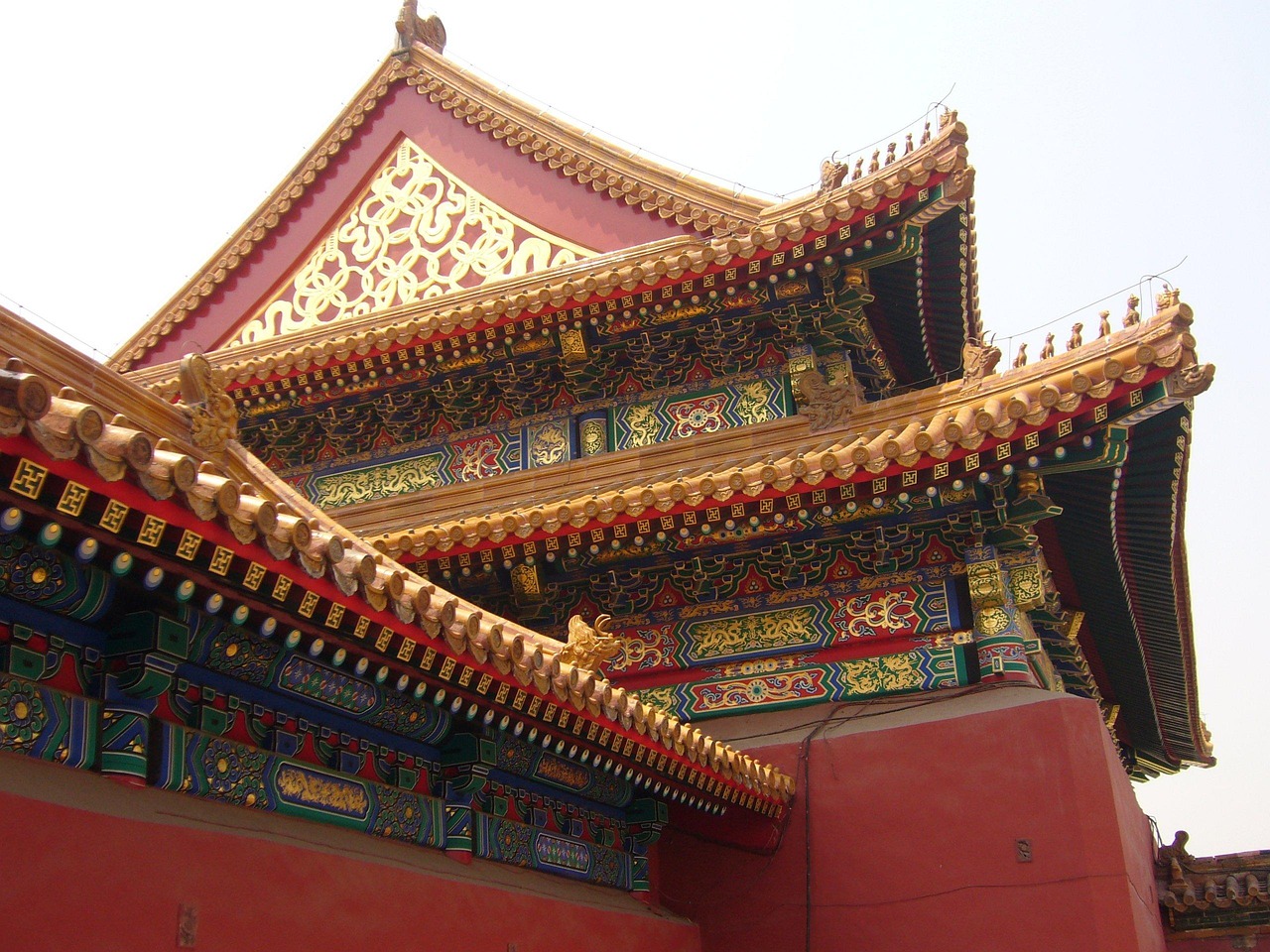
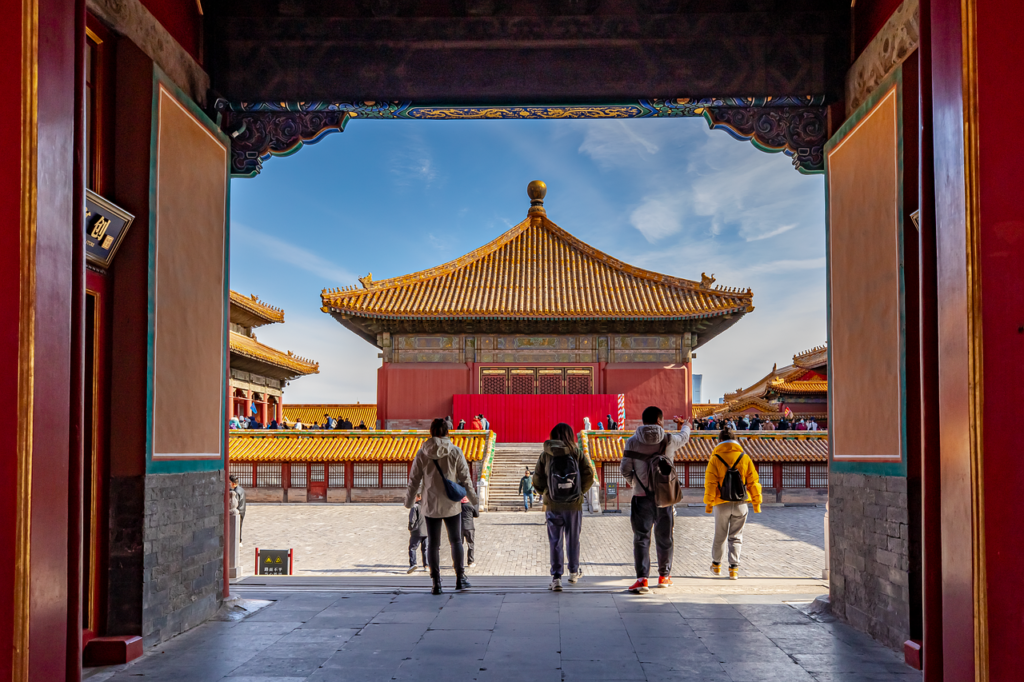
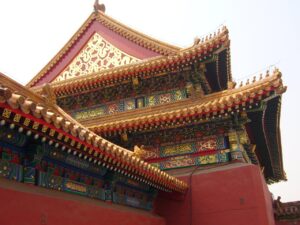
Standing as the world’s largest and best-preserved ancient wooden palace complex, the Forbidden City in Beijing is more than just a tourist attraction; it is a profound testament to China’s imperial grandeur and architectural genius. Inscribed as a UNESCO World Heritage Site in 1987, this sprawling “city within a city” served as the ceremonial and political center of the Ming and Qing dynasties for over 500 years. Covering 72 hectares and housing over 8,700 rooms, it remains a bucket-list destination for travelers seeking to walk in the footsteps of 24 emperors.

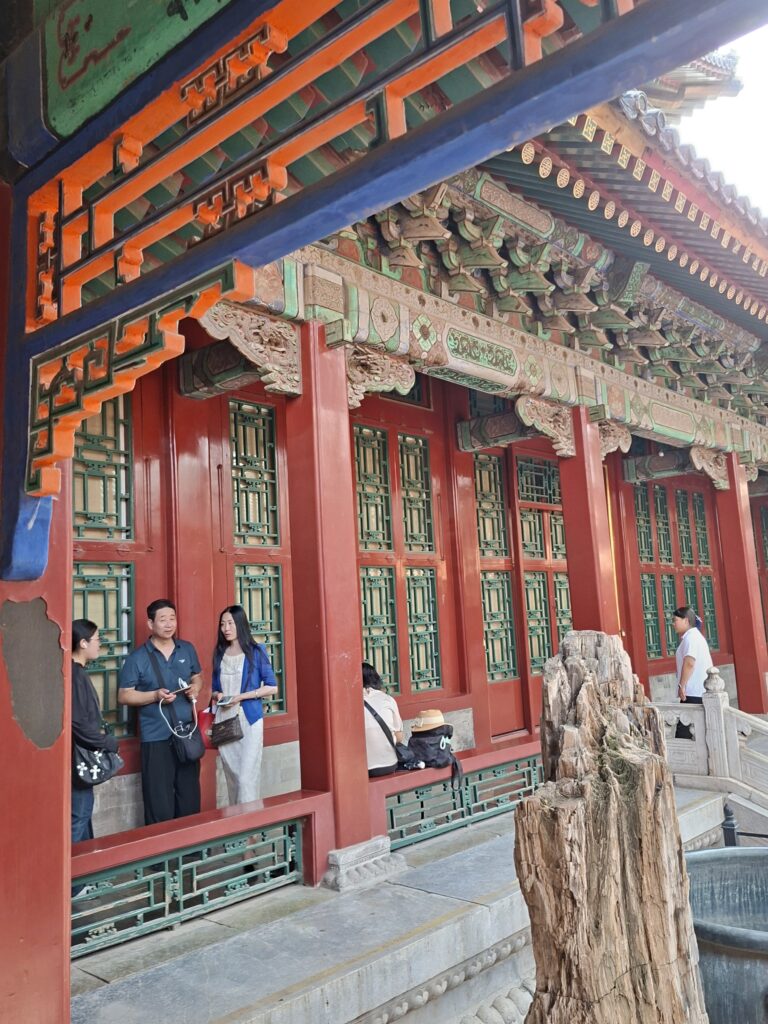
The Forbidden City houses a staggering 980 buildings, dominated by the Hall of Supreme Harmony, where emperors were enthroned. The complex is divided into the Outer Court, used for grand ceremonial purposes, and the Inner Court, where the imperial family resided. Each palace features symbolic yellow-glazed roof tiles and intricate wooden carvings. Visitors often explore the Palace of Heavenly Purity and the Six Western Palaces, which offer a glimpse into the opulent, secluded lives of China. 
Preparing for Your Visit: The Reservation Requirement

In recent years, the management of the Palace Museum (the official name of the Forbidden City) has implemented strict visitor controls to protect the delicate wooden structures. Spontaneous visits are no longer possible; advance booking is mandatory.

  • Ticket Booking: Tickets must be reserved online through the official WeChat mini-program or authorized platforms like Trip.com.
  • Daily Limits: The site currently limits visitors to 40,000 per day. During peak seasons—such as the National Day holiday in October or the Lunar New Year—tickets often sell out weeks in advance.
  • Entrance Fees: The standard adult entry fee is approximately 60 RMB during the peak season (April–October) and 40 RMB during the low season (November–March). Additional fees apply for the Treasure Gallery and the Clock Gallery.
The Logistics: Passports and Patience

Entering the Forbidden City is a multi-stage process that requires both a valid identification document and patience.

  • Passport Checks: For international travelers, your original passport is your ticket. There are no physical paper tickets; instead, your passport number is linked to your digital reservation. Expect multiple passport checks and security screenings, starting at the approach to Tiananmen Square and continuing at the Meridian Gate (Wumen), the main entrance to the palace.
  • Long Queues: Despite the daily cap, the sheer volume of visitors means that long queues are common, especially at the security checkpoints and the main entrance gates. Arriving early in your allotted time slot is essential to navigate these crowds.
When to Go and What to See

To truly appreciate the architectural harmony of the site, timing is everything.

  • Recommended Visit Time: The best months to visit are late spring (May) and autumn (September to October) when the weather is mild and the skies are often clear. Avoid the sweltering heat of July and August or the freezing winds of January if possible.
  • The Route: Most visitors follow the Central Axis, which leads through the most important structures: the Hall of Supreme Harmony, the Hall of Central Harmony, and the Hall of Preserving Harmony. For a quieter experience, wander into the smaller courtyards of the Eastern and Western Six Palaces, where the emperors’ consorts once lived.
A Living Museum: The Costume Phenomenon

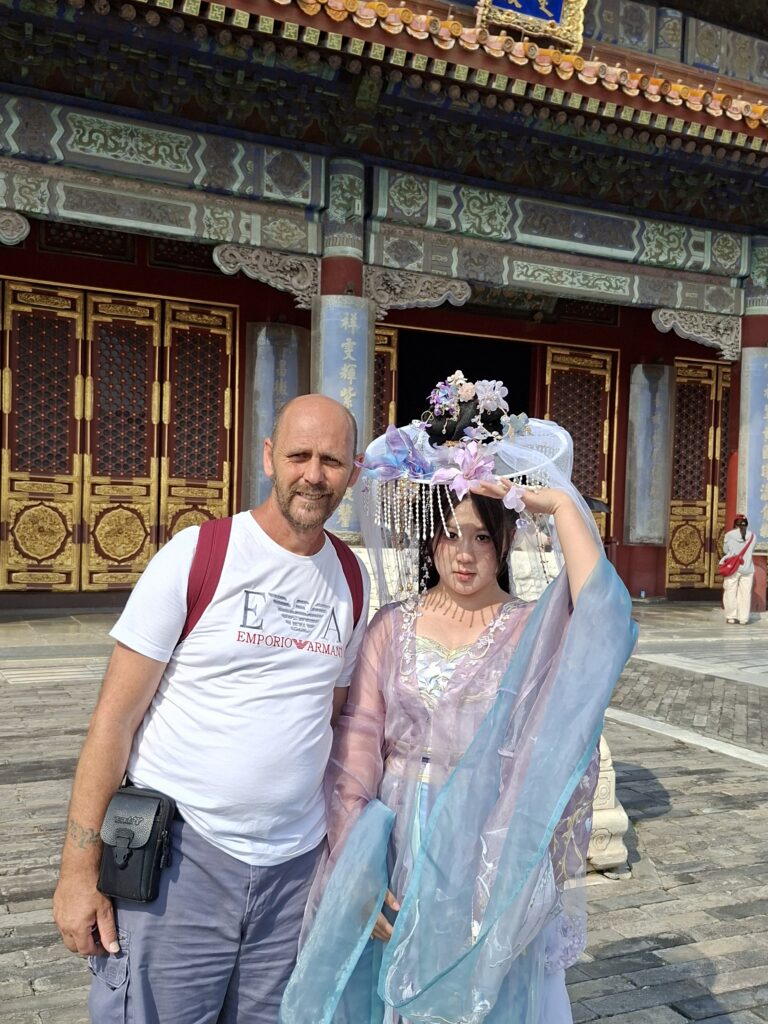
One of the most striking sights for modern visitors is the vibrant sea of “royalty” wandering the courtyards. A massive trend has emerged where tourists—both domestic and international—rent elaborate traditional Chinese costumes for their visit.

You will see “empresses” in heavy Qing Dynasty silk robes and “princesses” wearing intricate Hanfu from the Ming era, complete with ornate headpieces and traditional makeup. Dozens of photography studios near the East and West gates offer full transformation packages, allowing visitors to capture stunning social media content against the backdrop of the iconic red walls and yellow glazed tiles.

Related posts

The Forbidden City in Beijing

Exploring the Forbidden City is an exhausting yet rewarding odyssey into China’s imperial past. Despite the daunting bureaucracy of advanced bookings and heavy crowds, the sight of sunlight reflecting off the iconic golden roofs justifies every security check. It is a profound, must-see experience for any historical traveler.

Read More »

Mekong: Soul of Southeast Asia

In 2026, a Mekong River cruise offers an intimate journey through the heart of Southeast Asia, connecting the ancient temples of Cambodia with Vietnam’s vibrant delta. Travelers experience floating markets, remote monasteries, and lush landscapes from luxury vessels, providing a profound look at the region’s rich cultural heritage.

Read More »

China: Global Power Dynamics

China offers a profound travel experience where ancient history meets futuristic innovation. In 2026, visitors can explore diverse landscapes, sample the “Eight Great Cuisines,” and travel efficiently using the world’s largest high-speed rail network. It remains an affordable destination, promising unforgettable experiences from the Great Wall to the Shanghai skyline.

Read More »

Journey Through Time and Stone

The Great Wall of China is a majestic 13,171-mile fortification spanning 2,700 years of history. In 2026, the Mutianyu section remains a top choice for its scenic views and thrilling toboggan ride, while Badaling offers high-speed train access. Visitors must book tickets in advance through official platforms to manage daily caps.

Read More »

The Forbidden City in Beijing Read More »

Beyond the Spires

Cologne’s Heritage: Spires & Secrets

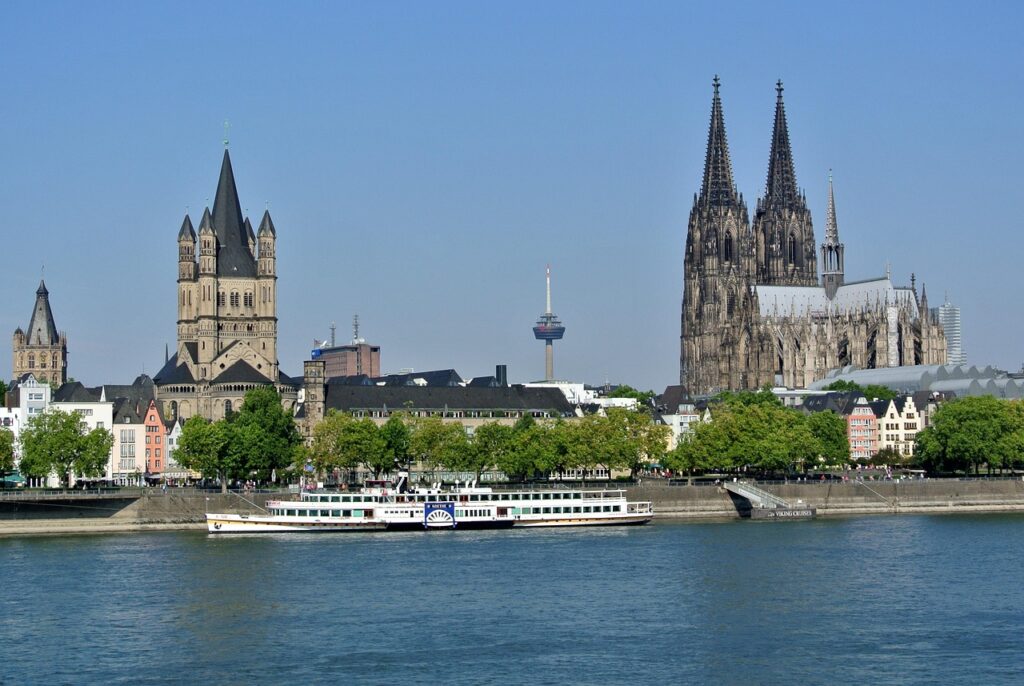
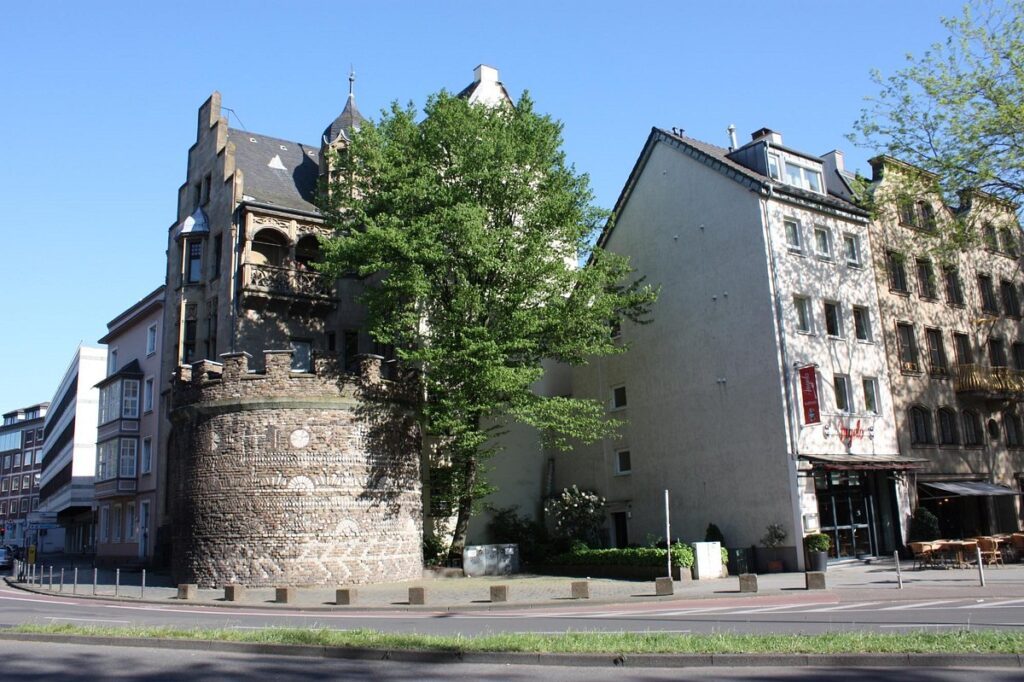
Cologne (Köln) is a city where history is not just preserved in museums but lives in the very stones of its streets. While most travelers arrive with their eyes fixed on the sky, searching for the blackened twin spires of the cathedral, the city and its surroundings offer a much deeper narrative. From the frontier of the Roman Empire to the opulent halls of Rococo royalty, this guide explores the essential historical landmarks of the Cologne region: the Cologne Cathedral, the Lower Germanic Limes, St. Severin Basilica, and the Palaces of Brühl.

Cologne isn’t just about Gothic spires; it is one of Germany’s most vibrant hubs for street art. The city treats its walls like an open-air gallery, blending gritty urban vibes with high-end murals. Cologne’s street art isn’t a World Heritage site just yet, but the standout masterpieces from the annual CityLeaks Urban Art Festival might just earn that title one day! If you’re in Cologne, it’s definitely worth exploring this too.

Fun Fact: Kölsch is the only language in the world that you can actually drink. It is the name of both the local dialect and the specific light beer brewed only in the city.

The Crown Jewel: Cologne Cathedral (Kölner Dom)

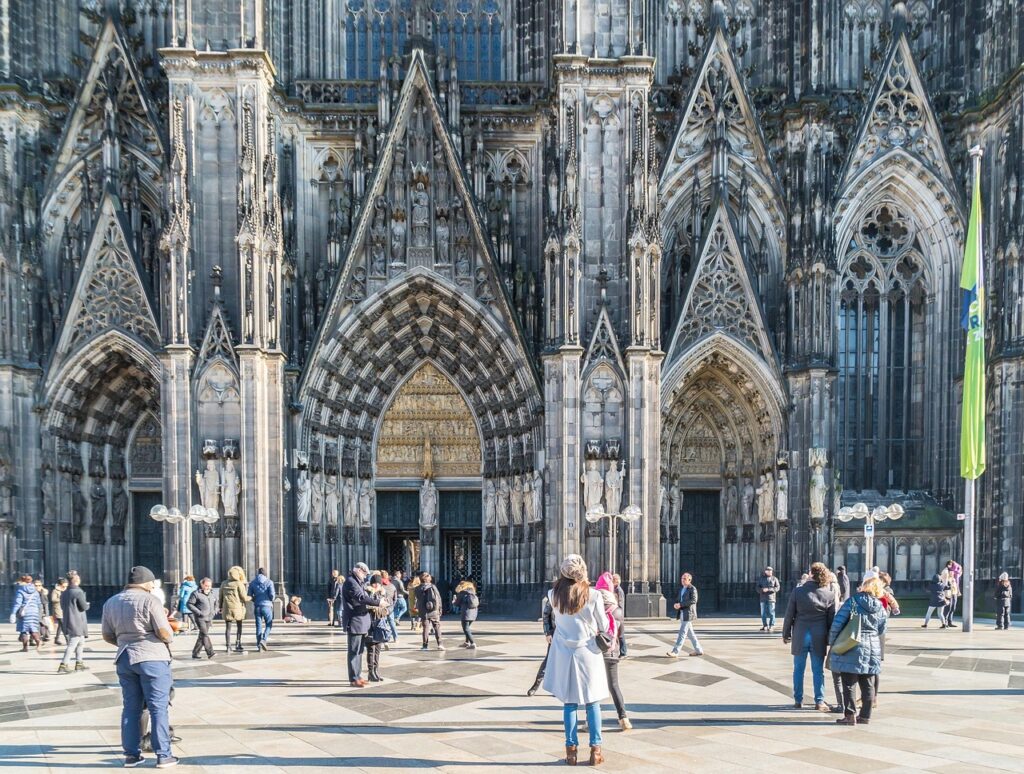
No visit to the Rhineland is complete without the Cologne Cathedral. The Cologne Cathedral is Germany’s most popular landmark, attracting an average of 20,000 visitors every single day. A masterpiece of High Gothic architecture, it was the world’s tallest building from 1880 to 1890. Its construction began in 1248 but took over 600 years to finish, surviving the bombings of WWII as a symbol of resilience. Inside, the Shrine of the Three Kings makes it one of the most important pilgrimage sites in Europe.

  • How to get there: It is located directly next to the Köln Hauptbahnhof (Central Station). If you arrive by train, you are literally steps away from the entrance.
  • Cost: Entrance to the main nave is free. To climb the 533 steps of the South Tower, the fee is approximately €6, and the Treasury costs €6. A combined ticket is available for €9.
  • Best time to visit: Early morning (around 8:00 AM) to avoid the crowds, or during a choral mass to experience the incredible acoustics.
The Frontier: The Lower Germanic Limes

In 2021, UNESCO officially inscribed the Lower Germanic Limes as a World Heritage site. This was the border of the Roman Empire, stretching along the Rhine. Cologne, then known as Colonia Claudia Ara Agrippinensium, served as the provincial capital. Traces of this Roman “Great Wall” are integrated into the city’s modern layout.

  • Where to see it: Visit the Römisch-Germanisches Museum (currently undergoing renovation, but highlights are in the Belgisches Haus) and the Ubiermonument, the oldest stone monument in Germany.
  • How to get there: The Roman ruins are scattered throughout the Old Town (Altstadt), easily reachable on foot from the Cathedral.
  • Cost: Exploring the outdoor ruins is free. Museum entry fees vary but typically range from €3 to €6.
  • Best time to visit: Spring or Autumn, when the walking tours of the Roman city walls are most pleasant.
Romanesque Elegance: St. Severin Basilica

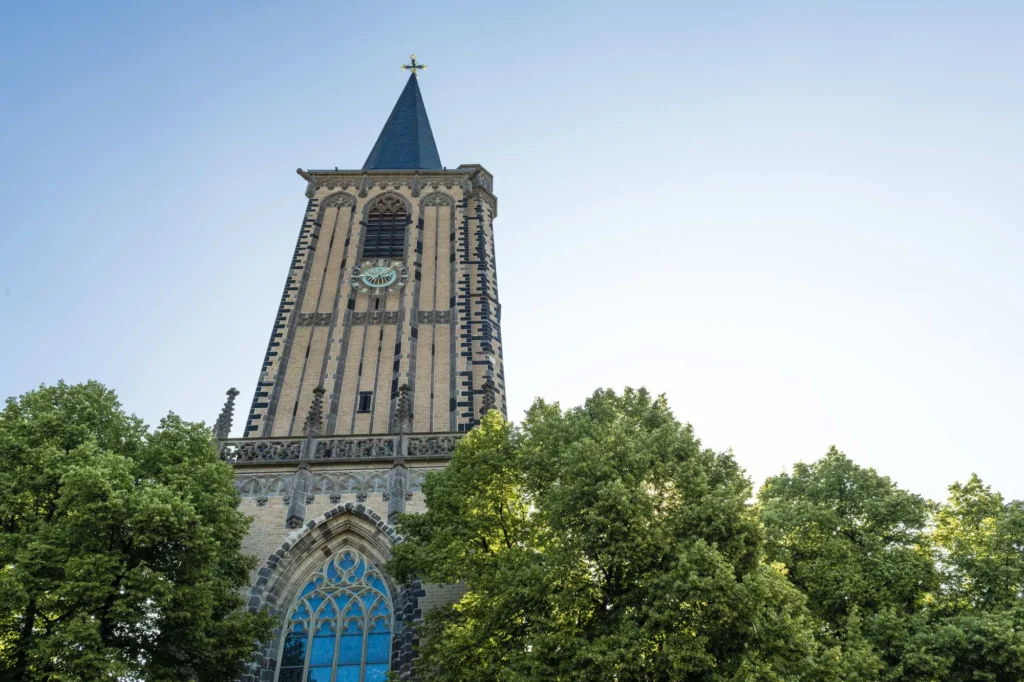
While the Cathedral is Gothic, Cologne is famous for its twelve Romanesque churches. St. Severin Basilica, located in the vibrant Südstadt district, is perhaps the most soulful. Dedicated to the third Bishop of Cologne, this church sits atop an ancient Roman cemetery. Its excavations reveal a layer-cake of history dating back to the 4th century.

  • How to get there: Take Tram lines 15, 16, or 17 to the Chlodwigplatz stop. It’s a short walk from the iconic Severinstorburg gate.
  • Cost: Entrance is free. Guided tours of the excavations below the church usually require a small donation or a fee of €5–€10.
  • Best time to visit: Late afternoon when the sun hits the stained glass, or during the Severinus Festival in October.
Rococo Splendor: Augustusburg and Falkenlust in Brühl

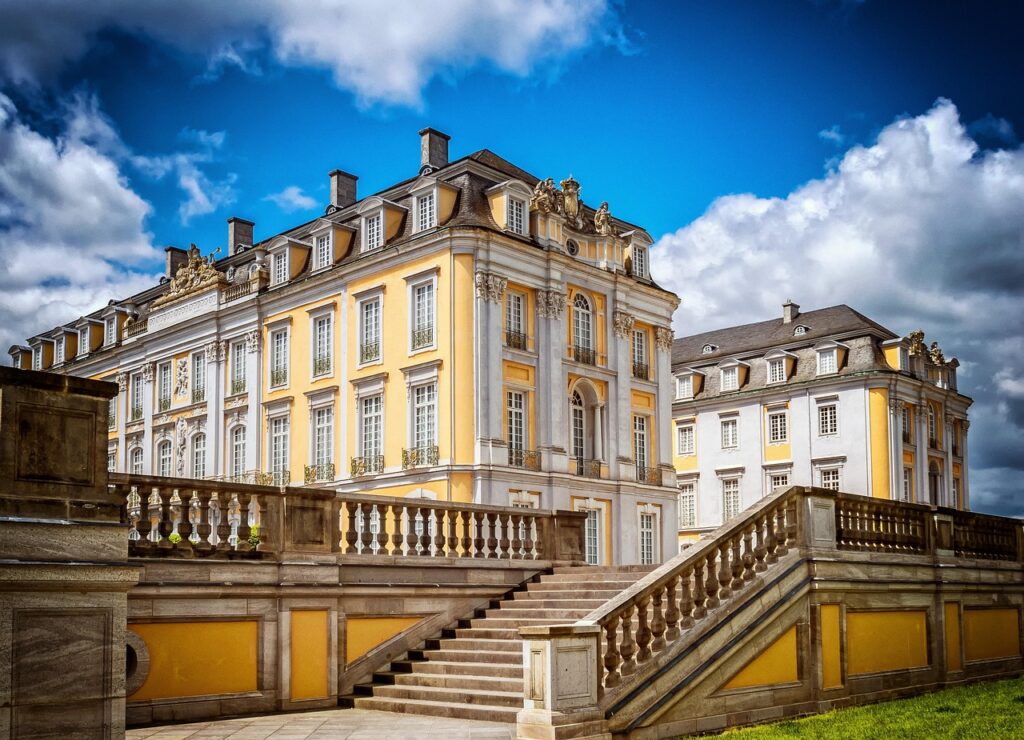
Just a short hop from the city lies the Palaces of Brühl, a UNESCO site since 1984. The Augustusburg Palace was the favorite residence of the Prince-Archbishops of Cologne. Its staircase, designed by Balthasar Neumann, is a riot of marble, stucco, and frescoes. A short walk through the manicured French gardens leads to Falkenlust, a more intimate hunting lodge.

  • How to get there: Take the RB26 or RE5 train from Cologne Central Station to Brühl Station. The palace is directly across from the station (a 15-minute ride). Alternatively, Tram Line 18 goes to Brühl center.
  • Cost: A guided tour of Augustusburg costs €10. A combined ticket for both palaces is €15. Students and families receive discounts. The gardens are free to enter.
  • Best time to visit: From April to October, when the gardens are in full bloom and the palaces are open for the main tourist season.
Travel Logistics & Practical Tips

The most cost-effective way to navigate these sites is the KölnerCard. It offers free public transport within the city and discounts for many museums and attractions. For the trip to Brühl, ensure your ticket covers Zone 2. You can find schedules and buy digital tickets on the KVB App.

Estimated Daily Budget

  • Budget: €50 (Free churches, street food like Currywurst, and public transport).
  • Mid-range: €100 (Palace tours, tower climbs, and a sit-down dinner with Rhine views).
When to Plan Your Trip

Cologne is a year-round destination, but the experience changes drastically with the seasons:

  1. Carnival (February): The city turns into a giant party. Great for atmosphere, but bad for quiet sightseeing as many sites have restricted hours.
  2. Christmas (December): The Christmas market at the foot of the Cathedral is world-famous.
  3. Summer (June–August): Perfect for the gardens in Brühl and sitting in a traditional brewery (Brauhaus) with a glass of Kölsch.
Conclusion

Cologne is a city of layers. You can start your day at the Cathedral admiring medieval faith, walk the Limes to touch the edges of the Roman world, find peace in the ancient crypts of St. Severin, and end your journey in the royal luxury of Brühl. Whether you are a history buff or a casual traveler, these sites provide a comprehensive look at the heart of European civilization.

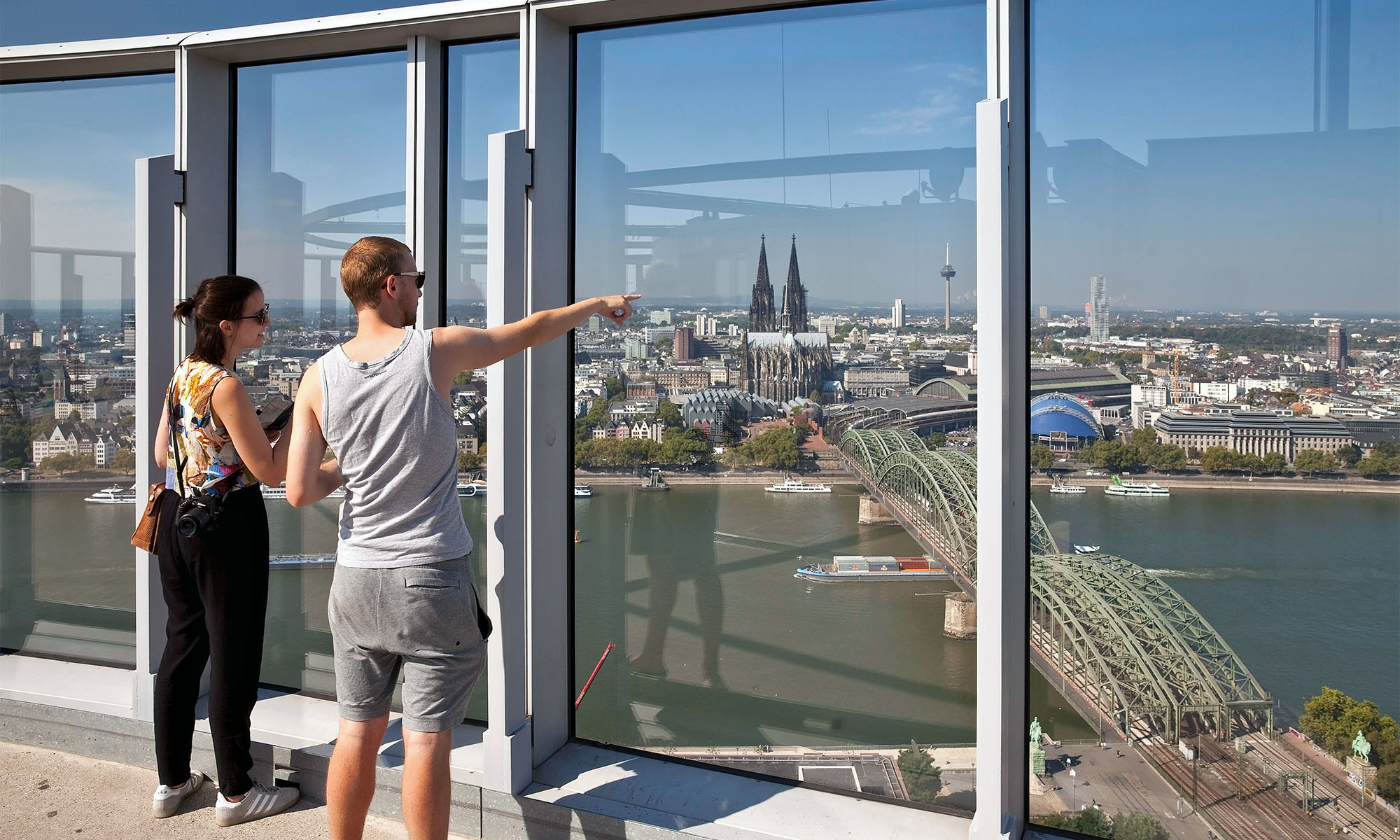
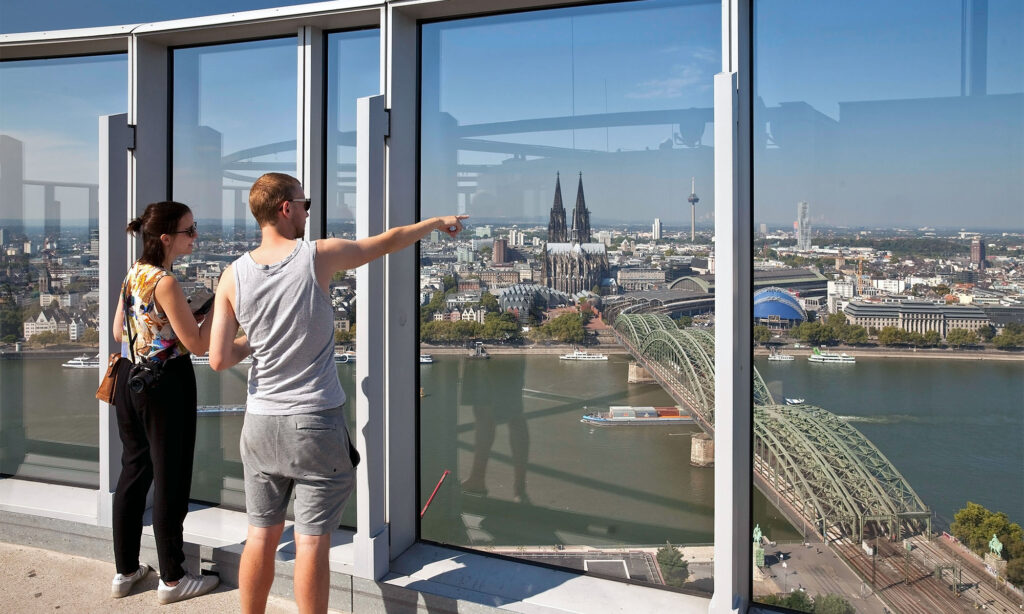
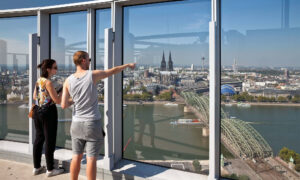
Pro Tip for your Instagram: For the best shot of the Cathedral and the Hohenzollern Bridge together, cross the Rhine to the KölnTriangle viewing platform. The entry fee is only €5, and the view is unmatched.

Related posts

From Fairytale Castles to Modern Marvels

Germany offers a perfect mix of historic charm and modern efficiency. You can explore fairytale castles, world-class museums, and vibrant beer gardens while enjoying a highly reliable transport system. Whether you seek the scenic beauty of the Bavarian Alps or the creative energy of Berlin, Germany delivers a truly diverse European experience.

Read More »

The Heart of the Werkself

Discover the BayArena, home of Bayer Leverkusen and one of Germany’s most modern football stadiums. A stadium tour offers a closer look at the club’s distinctive history, its connection to the city of Leverkusen, and the facilities behind the matchday experience. Its compact design makes the BayArena feel very different from Europe’s huge football arenas.

Read More »

Beyond the Spires

Discover the architectural wonders of the Rhineland! From the awe-inspiring Cologne Cathedral, a Gothic masterpiece dominating the skyline, to the nearby Rococo elegance of Augustusburg and Falkenlust Palaces, this region offers a journey through history. Explore these UNESCO World Heritage sites and witness centuries of artistic brilliance firsthand.

Read More »

Natural Wonder Between Land and Tides

The Wadden Sea is the world’s largest unbroken system of intertidal sand and mud flats, stretching along the coasts of the Netherlands, Germany, and Denmark. This UNESCO World Heritage site supports over 10,000 species and serves as a vital stopover for millions of migratory birds each year.

Read More »

Nürburgring Experience

Experience the ultimate motorsport pilgrimage with a Nürburgring guided tour. Explore the “Green Hell,” from the historic paddocks to the winner’s podium. Discover the 20.8-kilometer Nordschleife’s legendary history and modern engineering. It is a must-visit destination for car enthusiasts seeking a behind-the-scenes look at the world’s most iconic racetrack.

Read More »

The City of Cars

The Volkswagen Autostadt in Wolfsburg is a premier automotive theme park and museum. Visitors can explore various brand pavilions, the iconic glass Car Towers, and take an immersive factory tour to witness high-tech vehicle production firsthand. It is an essential experience combining history, modern architecture, and cutting-edge German engineering.

Read More »

Beyond the Spires Read More »

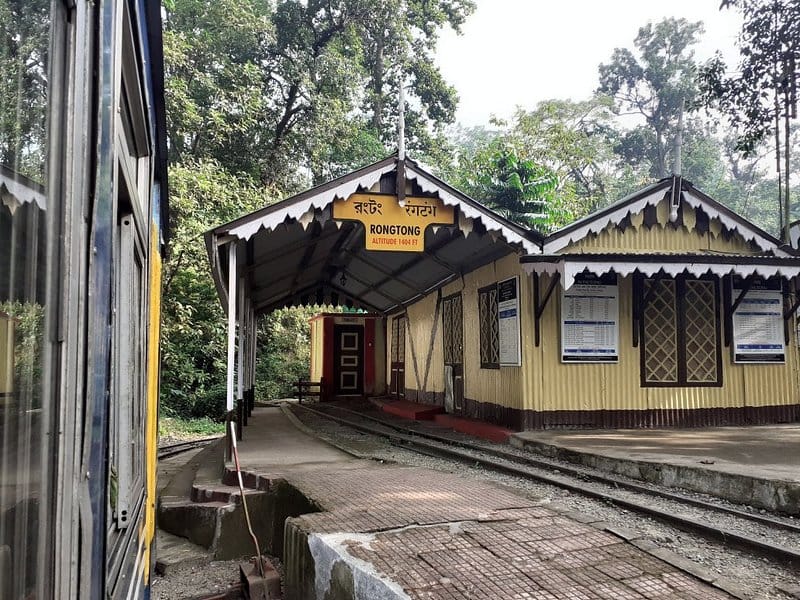
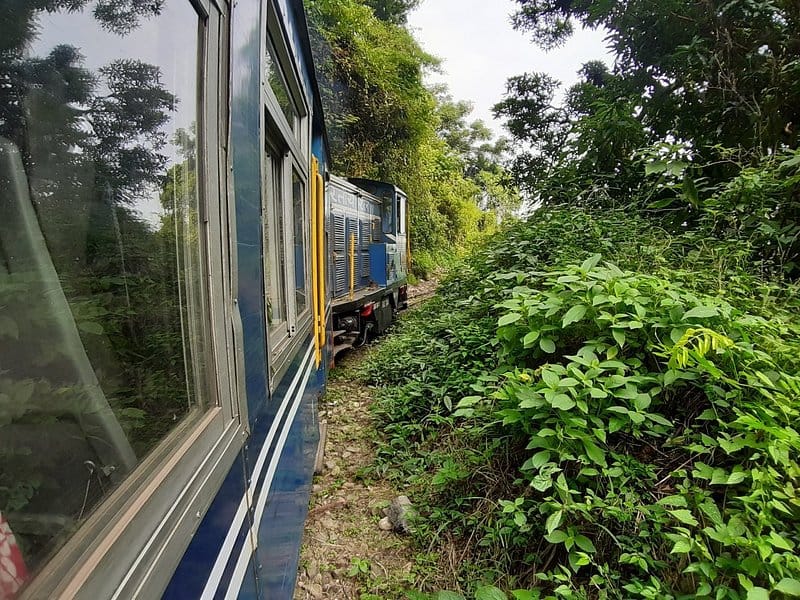
Darjeeling Himalayan Railway

Darjeeling Himalayan Railway – The Iconic “Toy Train” Journey Through India’s Hills

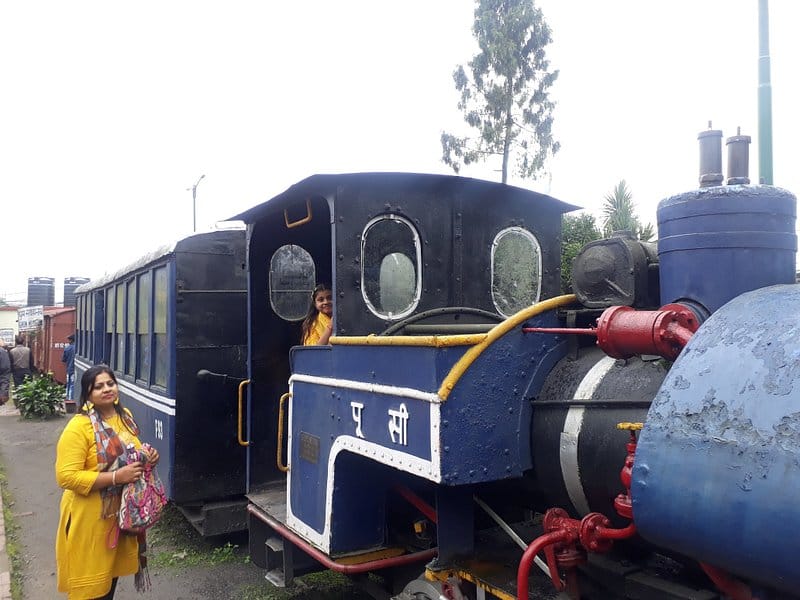
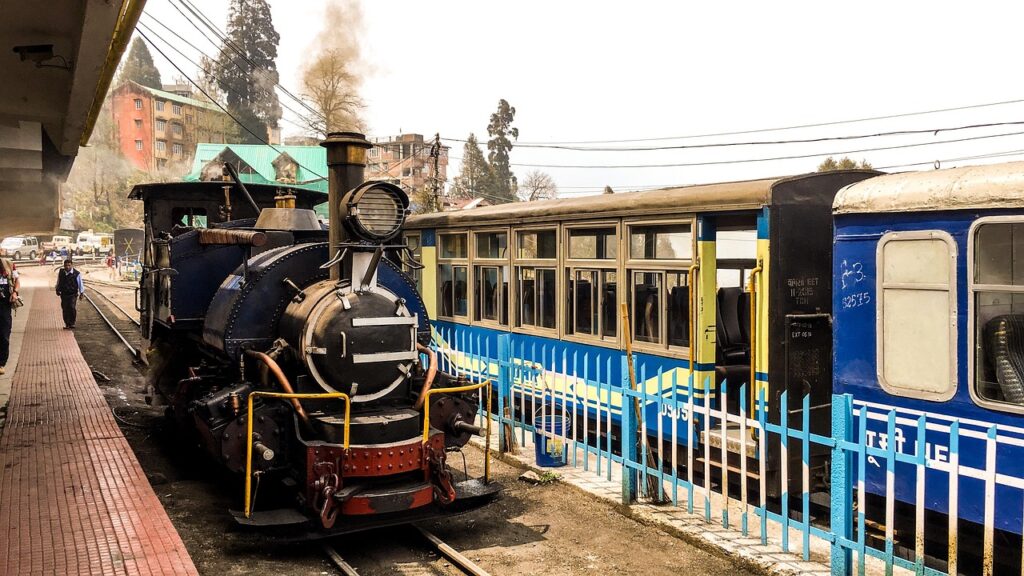
The Darjeeling Himalayan Railway (DHR), affectionately called the “Toy Train,” is one of India’s most iconic and scenic rail journeys. Traversing the picturesque hills of West Bengal, it connects New Jalpaiguri in the plains with the hill town of Darjeeling, offering travelers a unique combination of history, culture, and breathtaking landscapes. The Darjeeling Himalayan Railway is more than a scenic ride; it is a living piece of history. Built in 1881, it showcases colonial-era engineering and early mountain railway techniques. Stations such as Ghum and Kurseong highlight local architecture and heritage. Traveling the DHR provides insight into the daily lives of hill communities and tea garden workers.  This journey combines natural beauty with cultural heritage, offering a deeply enriching experience for travelers. Recognized as a UNESCO World Heritage Site, the Darjeeling Himalayan Railway is renowned for its narrow-gauge tracks, charming steam engines, and dramatic hairpin bends, making it a must-do experience for train enthusiasts, photographers, and adventure travelers alike. 

The Route

The DHR covers approximately 88 kilometers (55 miles) from New Jalpaiguri to Darjeeling, ascending from the plains to an altitude of 2,200 meters (7,200 feet). Highlights along the route include:

  • Tea gardens and plantations – the iconic rolling tea fields of Darjeeling
  • Ghum, India’s highest railway station, offering panoramic Himalayan views
  • River valleys and forests – serene landscapes along the mountainsides
  • Heritage stations and colonial architecture – reflecting the railway’s history

The journey typically takes 6–7 hours, traveling at a leisurely pace to allow passengers to fully absorb the scenic and cultural richness.

Scenic Highlights

The Darjeeling Himalayan Railway offers stunning views at every turn:

  • Himalayan peaks, including Kanchenjunga on clear days
  • Terraced tea gardens and lush forests along the slopes
  • Steep zig-zag loops and sharp curves showcasing engineering brilliance
  • Rivers and streams sparkling under the sun

Every mile offers amazing photography opportunities, making the journey ideal for both casual tourists and rail enthusiasts.

Train Experience

Travelers can enjoy the DHR in several ways:

  • Heritage steam engines for a nostalgic experience (availability may vary)
  • Diesel-powered trains for regular service
  • Open-air carriages on some trains, perfect for photography and enjoying the mountain air

The narrow-gauge train moves slowly, providing passengers with a relaxing and immersive experience while winding through hairpin turns and viaducts.

Where to Buy Tickets

1. Online via IRCTC

  • Visit the Indian Railways / IRCTC website and search for the Darjeeling Himalayan Railway toy train. You can book the joy ride or passenger seat online before your visit. Foreign cards are usually accepted.

2. At the Station Ticket Counters

  • You can buy tickets directly at Darjeeling, Kurseong, or New Jalpaiguri (NJP) railway stations from the computerized reservation counters on the day of travel, subject to availability.

3. Authorized Travel Agents / Apps

  • Some train booking apps (like RedRail, RailYatri, etc.) also allow online reservations and provide real-time availability and bookings through the official network.

Tip: During high tourist season it’s best to book online in advance to secure the scenic toy train rides, especially steam heritage services.

Cost

The Darjeeling Himalayan Railway runs from New Jalpaiguri (NJP) in the plains to Darjeeling in the hills, with the popular heritage joy ride operating between Darjeeling and Ghum, India’s highest railway station. Diesel First Class fares are around ₹1,000, while steam heritage rides cost ₹1,500–₹1,600. Short local First Class segments start at approximately ₹185.


Best Time to Travel
  • Spring (March–May): mild temperatures, blooming flowers, clear skies
  • Autumn (September–November): crisp air, vibrant foliage, and ideal views of the Himalayas
  • Winter (December–February): cooler temperatures, fewer tourists, serene landscapes
  • Monsoon (June–August): lush greenery and dramatic waterfalls, though delays may occur

Choosing the right season enhances both the comfort and visual appeal of the journey.


Why the Darjeeling Himalayan Railway Is Unmissable
  • Ride one of India’s most famous UNESCO World Heritage railways
  • Witness tea gardens, Himalayan peaks, rivers, and forests
  • Experience heritage steam engines and open-air carriages for a full sensory adventure
  • Unique combination of natural beauty, history, and culture
  • Perfect for slow travel, photography, and immersive exploration

Related posts

Darjeeling Himalayan Railway

The charming “Toy Train”—offers a unique and unforgettable way to explore India’s hill country. From the plains of New Jalpaiguri to the colonial charm of Darjeeling, this journey combines scenic vistas, cultural experiences, and historical significance. For anyone visiting northern India, a ride on the DHR is a must-do experience.

Read More »

Darjeeling Himalayan Railway Read More »

Swiss Mountain Tracks

Bernina Express – One of the World’s Most Scenic Train Journeys Through the Swiss Alps

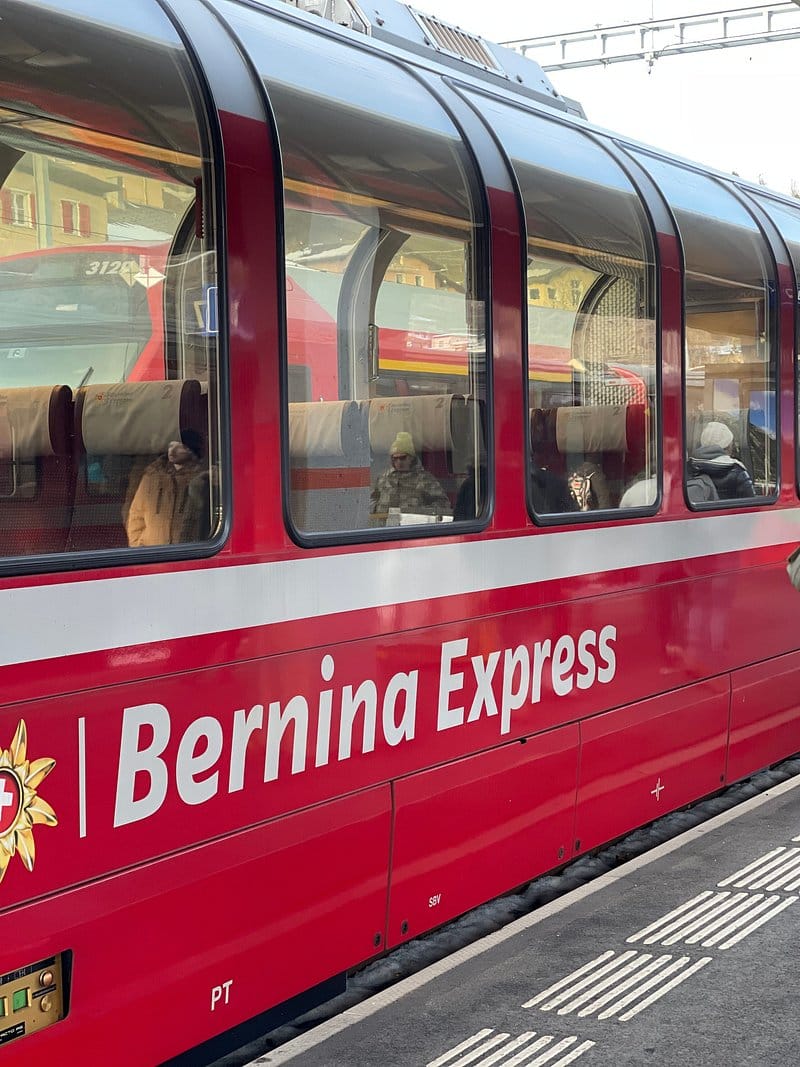
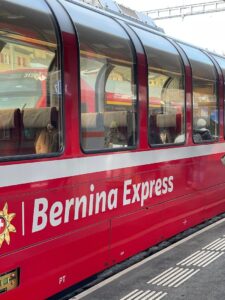
The Bernina Express is widely considered one of the most spectacular panoramic train journeys in the world. Connecting Switzerland and Italy, this iconic red train offers an unforgettable experience through the heart of the Alps, combining breathtaking natural scenery with outstanding railway engineering. Unlike classic luxury trains focused on onboard extravagance, the Bernina Express delivers luxury through views, altitude, and atmosphere, making it a must-do experience for rail enthusiasts and nature lovers alike.

The Bernina Express Route

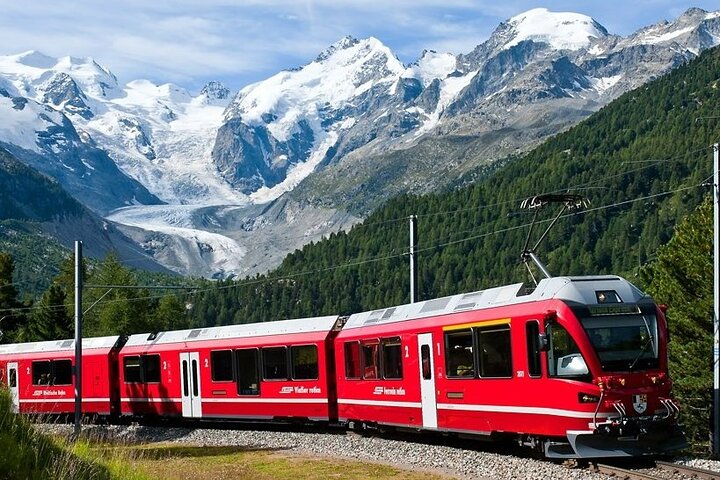
The Bernina Express operates between Chur or St. Moritz in Switzerland and Tirano in Italy. During the journey, the train crosses 196 bridges and passes through 55 tunnels, climbing to an altitude of 2,253 meters (7,392 feet) at the Bernina Pass—one of the highest railway crossings in Europe without the use of cogwheels.

Passengers experience a dramatic change in landscapes:

  • snow-covered mountains and glaciers
  • turquoise alpine lakes
  • lush valleys and Mediterranean-style scenery near Tirano

This remarkable contrast is one of the reasons the Bernina Express is so popular among international travelers.

A UNESCO World Heritage Railway

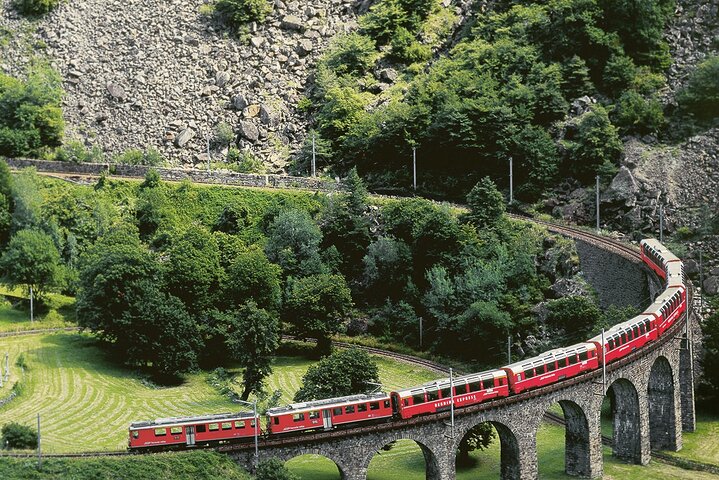
The train runs along the Albula and Bernina lines of the Rhaetian Railway, both recognized as UNESCO World Heritage Sites. This distinction highlights the exceptional harmony between engineering and nature, as the railway blends seamlessly into the rugged alpine environment.

Landmarks such as the Landwasser Viaduct, where the train crosses a curved stone bridge before disappearing into a tunnel, are engineering masterpieces and iconic symbols of Swiss rail travel.

Panoramic Carriages and Comfort

One of the defining features of the Bernina Express is its panoramic carriages. Large floor-to-ceiling windows provide unobstructed views of the surrounding mountains, making every seat a prime viewing spot.

Important to note:

  • The Bernina Express is a daytime panoramic train, not a sleeper train
  • Seat reservations are mandatory
  • No luxury cabins or private suites are offered

The experience is all about relaxing, slowing down, and enjoying the journey itself.

Highlights Along the Way

Some of the most memorable sights include:

  • Morteratsch Glacier, one of the largest glaciers in the Eastern Alps
  • Lago Bianco, a striking alpine lake near the Bernina Pass
  • Alp Grüm, a remote mountain stop with dramatic views
  • Landwasser Viaduct, one of the most photographed railway bridges in the world

Each section of the route offers new photo opportunities, making the Bernina Express especially popular with photographers and travel bloggers.

To ride the iconic Bernina Express, you need both a valid ticket and a mandatory seat reservation for the panorama coaches.

2026 Ticket Prices & Reservation Fees

Ticket costs vary by distance, but the mandatory reservation fee is fixed based on the season.

Route

2nd Class (CHF)

1st Class (CHF)

Reservation Fee (2026)

Chur – Tirano

From 66.00

From 113.00

Winter: 40 CHF / Summer: 44 CHF

St. Moritz – Tirano

From 33.00

From 57.00

Year-round: 32 CHF

  • Discounts: If you hold a Swiss Travel Pass, the ticket is free, and you only pay the reservation fee.
  • Peak Season: Higher reservation fees apply during the summer schedule, running from May 2 to October 25, 2026.
2026 Schedule Highlights

The train operates year-round, traversing the UNESCO World Heritage route daily.

  • North to South (From Chur/St. Moritz):
    • Departure from Chur: Typically 08:17 (Train 951), arriving in Tirano at 12:49.
    • Summer Addition: An afternoon departure from Chur at 13:34 is available from May to October.
  • South to North (From Tirano):
    • Departure from Tirano: 14:24 (Train 952), arriving in Chur at 18:31.
  • Bernina Express Bus: The connecting bus from Tirano to Lugano operates daily from March 23 to October 25, 2026.

Pro Tip: To save money, you can ride the regional trains on the same tracks. They lack the ceiling-high windows but allow you to open the windows for photos and require no reservation fee.

Best Time to Travel on the Bernina Express

The Bernina Express operates year-round, and each season offers a unique perspective:

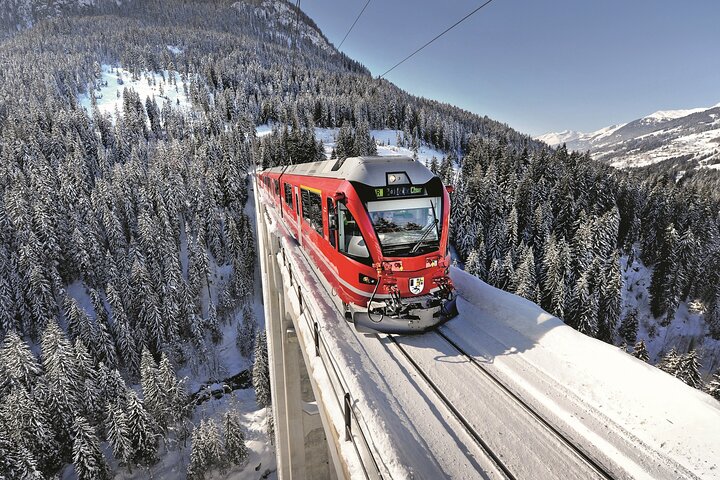
  • Winter: snow-covered peaks and frozen landscapes
  • Spring: melting snow and emerging greenery
  • Summer: clear skies, vibrant alpine meadows
  • Autumn: golden forests and crisp mountain air

The Bernina Express is ideal for travelers seeking a slow travel experience centered on landscapes rather than onboard luxury.


Why You Should Experience the Bernina Express
  • One of the most scenic train journeys in Europe
  • UNESCO World Heritage railway
  • Seamless Switzerland–Italy connection
  • Perfect for nature lovers, photographers, and rail enthusiasts
  • Easy to combine with Swiss and Italian city breaks
Conclusion

The Bernina Express proves that true luxury in travel doesn’t always come from chandeliers and champagne. Sometimes, it comes from gliding silently through snow-capped mountains, crossing soaring viaducts, and watching the Alps unfold through panoramic windows. For anyone planning a European rail adventure, the Bernina Express is not just a train ride—it’s a once-in-a-lifetime journey.

Related posts

The Art of Living Well

Italy is a timeless destination that rewards travellers with unforgettable experiences, rich culture, and exceptional cuisine. Whether visiting for the first time or returning again, it remains one of the most satisfying countries to explore in the world. From high-speed rail to coastal drives, every journey reveals breathtaking, historic wonders.

Read More »

The Heart of Venetian Glass Art

Murano’s 700-year glassmaking tradition is a pinnacle of European craftsmanship. More than a tourist hub, the island hosts active furnaces where masters use ancestral techniques to transform molten glass into intricate sculptures and vessels. This living heritage preserves a legacy of artistic excellence passed down through centuries of Venetian history.

Read More »

Swiss Mountain Tracks

While the Orient Express emphasizes opulence and formal elegance, the Bernina Express prioritizes natural splendor and engineering marvels. Trading fine dining for panoramic views, it offers a premier “slow travel” experience. It is perfect for adventurers valuing immersive Alpine landscapes and historic viadcuts over traditional onboard luxury.

Read More »

The Cradle of Civilization

A Mediterranean cruise is a celebration of life (La Dolce Vita). It is the perfect symphony of culture, history, and world-class cuisine. Whether you are sipping wine in a Spanish vineyard or watching the sunset over the Acropolis, this journey is guaranteed to nourish both your soul and your palate.

Read More »

The Nestle Verdict

If you go with managed expectations—seeking entertainment and insight rather than a rugged factory floor—you will likely find these visits to be a highlight of your journey through the Lake Geneva region. If you truly crave a raw, non-commercial experience, your time might be better spent at a traditional mountain dairy.

Read More »

Temple of Speed Monza

The Autodromo Nazionale Monza is one of the most hallowed venues in motorsport, home to the Italian Grand Prix and often referred to as the “Temple of Speed” (Tempio della Velocità). The circuit tour allows fans to literally follow in the footsteps of legends.

Read More »

Swiss Mountain Tracks Read More »

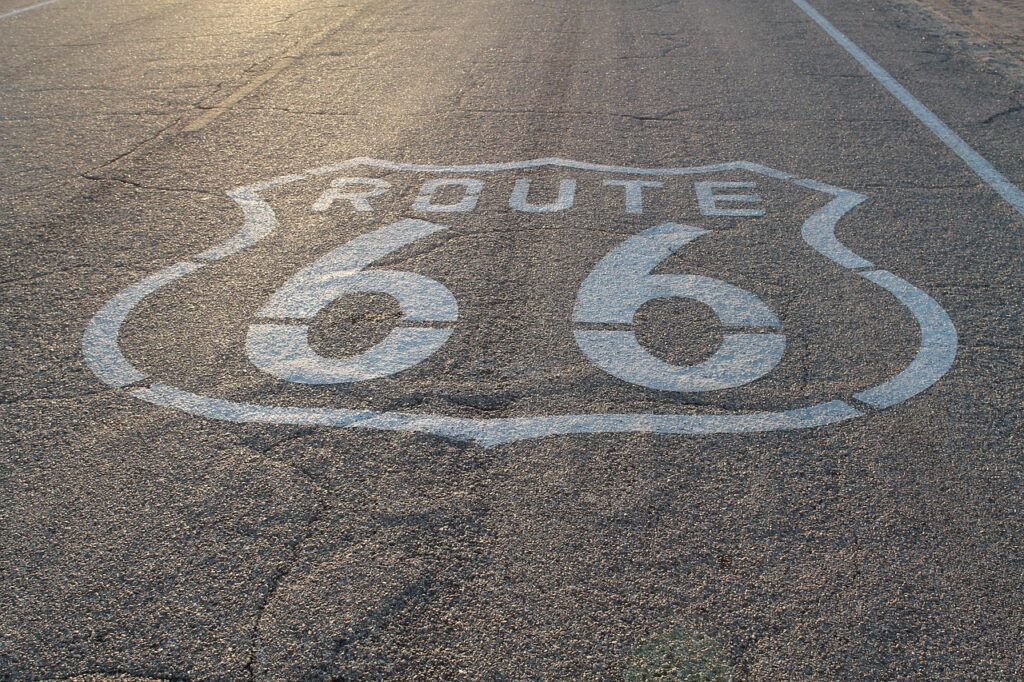
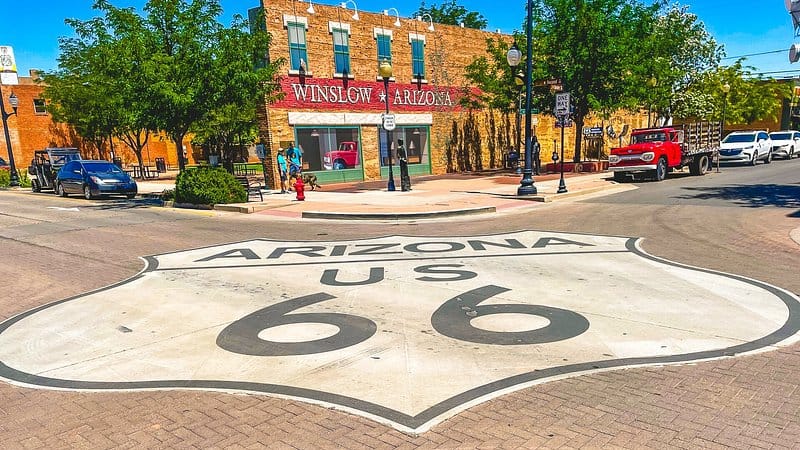
The Ultimate American Road Trip

Route 66: The Mother Road – America’s Ultimate Road Trip

Known as the “Mother Road” or the “Main Street of America,” Route 66 is the quintessential symbol of American freedom and adventure.

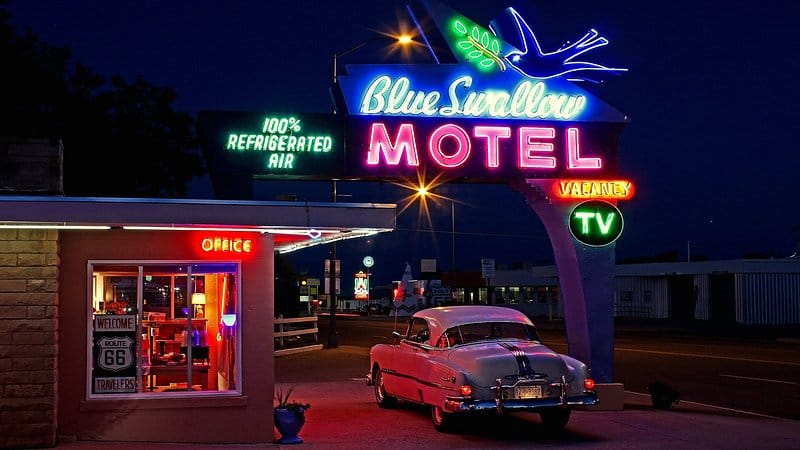
Route 66 was established in 1926 as one of the original highways in the U.S. Highway System. It played a crucial role during the Great Depression, serving as an escape route for families migrating west in search of work and opportunity. In 1938, Route 66 became the first highway in the U.S. to be completely pavedLater, it became a symbol of post-war prosperity, road trips, and classic Americana.  Stretching 2,448 miles from the shores of Lake Michigan in Chicago to the Pacific coast in Santa Monica, this historic highway traverses eight states and three time zones. Today, large portions of the original road are preserved as Historic Route 66, offering travelers a chance to step back in time. In 2026, the road celebrates its Centennial (100th Anniversary), making it the perfect year for travelers to experience its neon-lit motels, retro diners, and quirky roadside attractions. Many classic stops—like the Meteor City Dino Drive-Thru—offer immersive prehistoric adventures for families.

Fun Fact: The term “The Mother Road” was coined by the famous author John Steinbeck in his 1939 novel The Grapes of Wrath.

States Along Route 66

One of the highlights of traveling Route 66 is the diversity of landscapes and cultures along the way. The route passes through eight states, each with its own character:

  • Illinois – The official starting point in Chicago
  • Missouri – Historic bridges and charming small towns
  • Kansas – The shortest stretch, packed with nostalgia
  • Oklahoma – Home to the most Route 66 landmarks
  • Texas – Wide-open plains and quirky roadside art
  • New Mexico – Desert scenery and Native American heritage
  • Arizona – Petrified Forest, Grand Canyon access
  • California – Mojave Desert and the iconic Santa Monica Pier
Must-See Attractions on Route 66

Route 66 is famous for its vintage roadside attractions, neon signs, classic diners, and retro motels. Some stops are legendary and should not be missed:

  • Cadillac Ranch (Texas) – A colorful public art installation
  • Wigwam Motels (Arizona & California) – Sleep in a concrete teepee
  • Petrified Forest National Park (Arizona)
  • Oatman, Arizona – A Wild West town with roaming donkeys
  • Santa Monica Pier (California) – The official end of Route 66

These attractions make Route 66 a dream destination for photographers and nostalgia lovers alike.

Best Time to Travel Route 66

The ideal time for a Route 66 road trip is spring (April to June) or fall (September to October). During these seasons, temperatures are more comfortable and attractions are fully open. Summer can bring extreme heat in desert areas, while winter weather may affect certain mountain sections.


Practical Route 66 Travel Tips

  • Rent a car or motorcycle for the authentic Route 66 experience
  • Allow at least 2 to 3 weeks to explore the full route
  • Follow signs marked “Historic Route 66” instead of major interstates
  • Book accommodations early in popular towns
  • Take time to explore local diners, museums, and small towns

Related posts

The Beating Heart of Gotham
Grand Central Terminal is a world-famous landmark in Midtown Manhattan. Beyond its role as a transportation hub, it features a breathtaking celestial ceiling and the iconic Whisper Gallery. This architectural masterpiece serves as a bustling cultural center, welcoming millions of visitors who admire its historic charm and grand Beaux-Arts design.

Read More »

The Hoover Dam

The Hoover Dam is a bucket-list marvel that captivates visitors, offering awe-inspiring scale for children and rich, Depression-era history for enthusiasts. Its dramatic contrast between turquoise water and dark canyon walls provides endless inspiration for photographers . As a powerful symbol of engineering, it offers an impressive experience for all.

Read More »
Circuit of the Americas

For travelers who value engineering, atmosphere, and storytelling, a visit to the Circuit of the Americas is a highlight worth planning around. Whether you explore it through guided tours, VIP access, or immersive fan zones, COTA offers a rare opportunity to step inside the world of top-tier motorsport. It is truly an unforgettable Texan experience.

Read More »
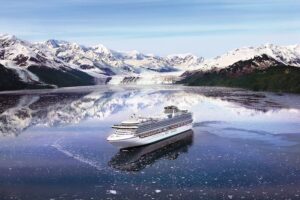
The Last Frontier: Alaskan Cruises

An Alaskan cruise is a seamless way to explore a rugged wilderness that is otherwise difficult to access. By choosing a 7-day itinerary, packing the right waterproof layers, and budgeting for a balcony, you ensure a comfortable and awe-inspiring adventure through the majestic North. Bon voyage!

Read More »
The Ultimate American Road Trip

Route 66 is not about speed, it’s about the journey. It offers a rare opportunity to experience classic Americana, from friendly roadside cafes to vast desert landscapes and timeless small towns. It’s more than a highway—it’s a story that unfolds mile by mile.

Read More »
Journey to One of the World’s Wonders

The Grand Canyon Railway is more than just transportation—it’s a journey through history and nature to one of the world’s greatest natural wonders. From the historic Route 66 town of Williams to the breathtaking South Rim, passengers experience scenic beauty, comfort, and a touch of nostalgia. Is is an unforgettable and must-do experience!

Read More »
The Ultimate American Road Trip Read More »
Natural Wonder Between Land and Tides

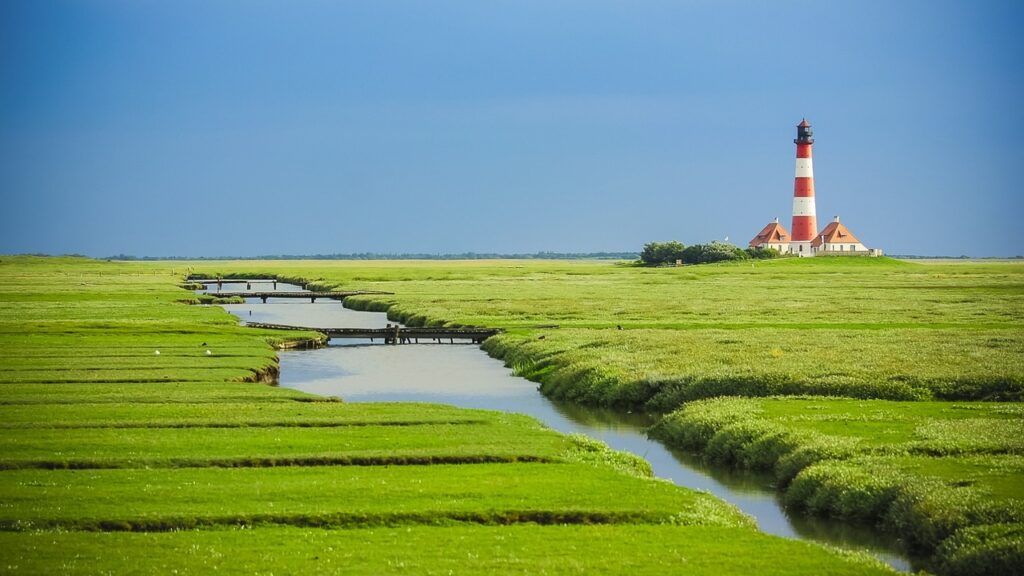
The Wadden Sea: A Natural Wonder Between Land and Tides

The Wadden Sea is a world-class natural phenomenon stretching along the coasts of the Netherlands, Germany, and Denmark. As the largest unbroken system of intertidal sand and mudflats in the world, this UNESCO World Heritage site is a place where the horizon seems endless and the ground beneath your feet disappears twice a day. In 2026, it remains one of Europe’s most vital ecological sanctuaries and a paradise for nature lovers.

A Living Landscape
What makes the Wadden Sea unique is its dynamic ecosystem. The tides move massive amounts of water every six hours, revealing a hidden world of salt marshes, dunes, and mudflats. It is a crucial pit stop for millions of migratory birds and home to iconic species like the grey seal and harbor porpoise. For humans, it offers the rare opportunity to “walk on the sea floor” during low tide.

Traveler’s Tip: Always check the tide tables! The Wadden Sea is beautiful but can be dangerous for those who venture out alone without knowing when the water will return. A guided tour is the best way to discover the “Big Five” of the mudflats in safety.

Must-Visit Destinations
  • Texel, The Netherlands: The largest Dutch Wadden Island, famous for its vast beaches and the Ecomare sanctuary.
  • Sankt Peter-Ording, Germany: Known for its stilt houses and expansive sandy flats, it’s a hotspot for windsurfing and wellness.
  • The Halligen, Germany: Small islands without dikes that are occasionally flooded, offering a truly unique living experience.
  • Rømø, Denmark: Home to some of the widest beaches in Europe, where you can even drive your car onto the sand.
How to Get There
  • Train: Excellent rail connections exist to coastal hubs like Den Helder (NL), Esbjerg (DK), or Norddeich (DE). From there, ferries regularly depart for the islands.
  • Ferry: Each country has its own ferry lines (e.g., TESO in the Netherlands, WDR in Germany). In 2026, many of these vessels are fully electric, supporting sustainable tourism.
  • By Foot: One of the most authentic ways to reach certain islands is through a guided Mudflat Hike (Wattwandern) from the mainland.
Entrance Fees and Costs

The Wadden Sea National Park itself does not have a general entrance fee, but there are specific costs associated with the experience:

  • Mudflat Tours: Guided hikes are essential for safety and usually cost between €15 and €25.
  • Ferry Tickets: Depending on the distance and whether you bring a car, prices range from €10 to €150 for a return trip.
  • Visitor Centers: Major centers like the Multimar Wattforum in Germany have an entry fee of approximately €12–€15.

Related posts

From Fairytale Castles to Modern Marvels

Germany offers a perfect mix of historic charm and modern efficiency. You can explore fairytale castles, world-class museums, and vibrant beer gardens while enjoying a highly reliable transport system. Whether you seek the scenic beauty of the Bavarian Alps or the creative energy of Berlin, Germany delivers a truly diverse European experience.

Read More »

The Heart of the Werkself

Discover the BayArena, home of Bayer Leverkusen and one of Germany’s most modern football stadiums. A stadium tour offers a closer look at the club’s distinctive history, its connection to the city of Leverkusen, and the facilities behind the matchday experience. Its compact design makes the BayArena feel very different from Europe’s huge football arenas.

Read More »
Beyond the Spires

Discover the architectural wonders of the Rhineland! From the awe-inspiring Cologne Cathedral, a Gothic masterpiece dominating the skyline, to the nearby Rococo elegance of Augustusburg and Falkenlust Palaces, this region offers a journey through history. Explore these UNESCO World Heritage sites and witness centuries of artistic brilliance firsthand.

Read More »

Denmark: Land of Fairy Tales, Hygge, and Coastal Charm

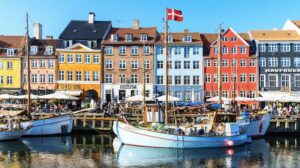
Danes consistently rank among the happiest people in the world, thanks to a high standard of living and strong social welfare system. Beyond Copenhagen’s iconic Nyhavn harbor and Tivoli Gardens, Denmark’s flat terrain and safe, efficient infrastructure make it ideal for cycling through fairytale villages, visiting Viking ruins, or exploring LEGOLAND in Billund.

Read More »
Natural Wonder Between Land and Tides

The Wadden Sea is the world’s largest unbroken system of intertidal sand and mud flats, stretching along the coasts of the Netherlands, Germany, and Denmark. This UNESCO World Heritage site supports over 10,000 species and serves as a vital stopover for millions of migratory birds each year.

Read More »
Nürburgring Experience

Experience the ultimate motorsport pilgrimage with a Nürburgring guided tour. Explore the “Green Hell,” from the historic paddocks to the winner’s podium. Discover the 20.8-kilometer Nordschleife’s legendary history and modern engineering. It is a must-visit destination for car enthusiasts seeking a behind-the-scenes look at the world’s most iconic racetrack.

Read More »

Natural Wonder Between Land and Tides Read More »

Timeless Journey

Rome's Historic Center: A Timeless Journey Through the Eternal City

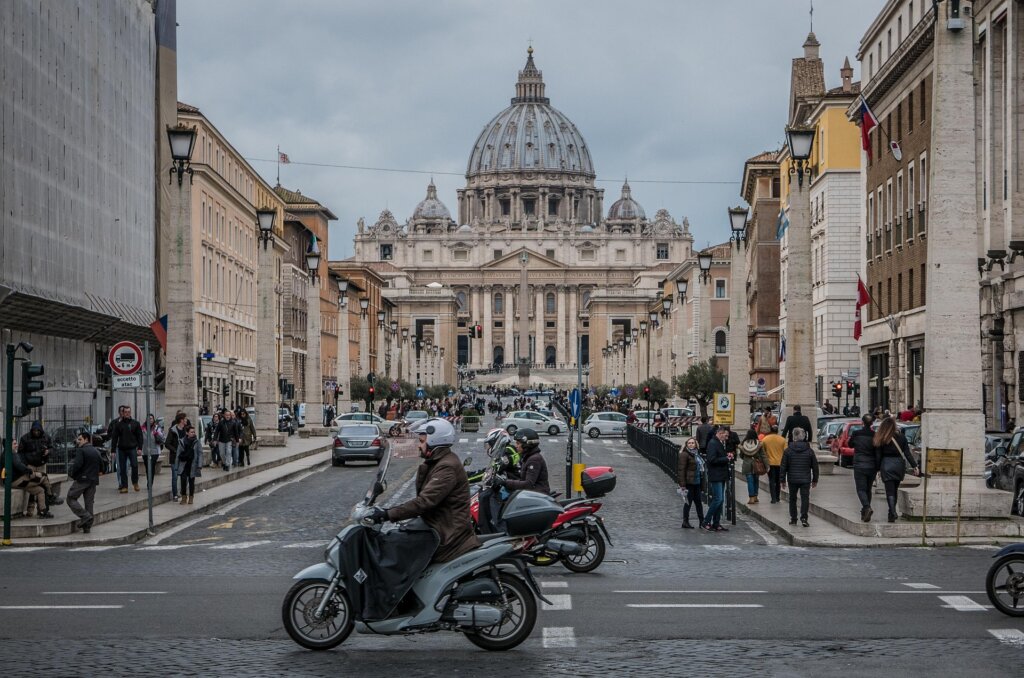
Welcome to the Centro Storico, where the past isn’t just displayed in museums; it’s the very foundation beneath your feet. Rome’s historic center, a UNESCO World Heritage site, is a living, breathing testament to millennia of art, architecture, and human drama. From the legendary founding by Romulus and Remus in 753 BC to its reign as the heart of a vast empire and the capital of the Christian world, the “Eternal City” has influenced art, culture, and governance across the globe. Strolling through its peach, pink, and terracotta-hued buildings and winding streets, you’ll feel like a character in a classic film, walking in the footsteps of emperors, popes, and artists.


The Five Essential Wonders

1. The Colosseum & Roman Forum/Palatine Hill
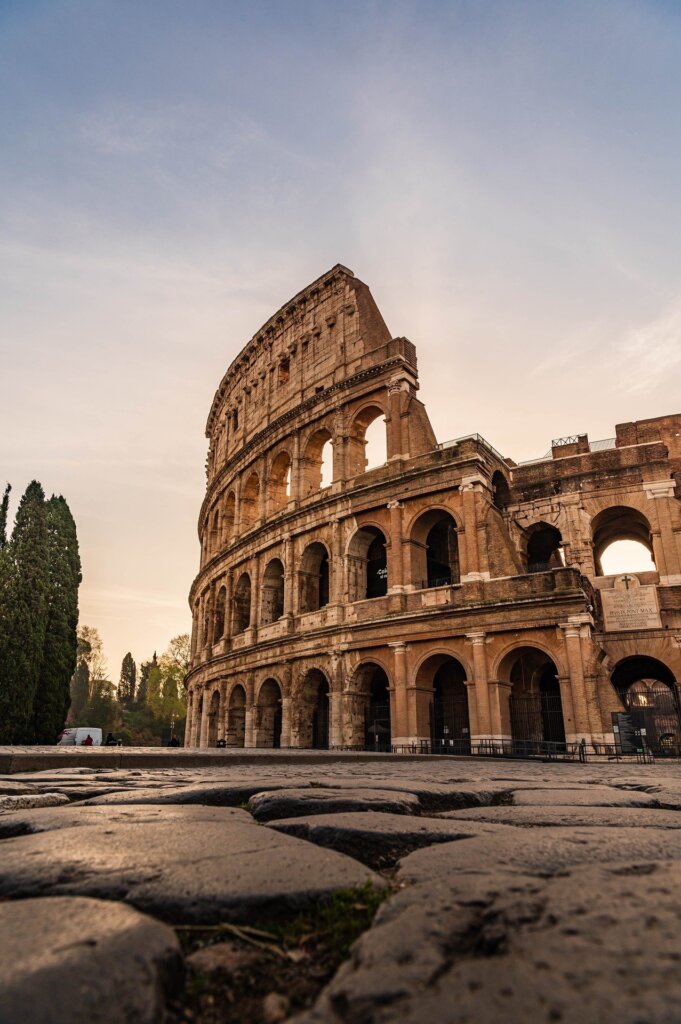
The iconic symbol of Imperial Rome. The Colosseum, the largest ancient amphitheater ever built, hosted gladiatorial contests and public spectacles. Adjacent lies the Roman Forum, the bustling ancient heart of the city where commerce, politics, and religion intertwined, and the Palatine Hill, where Rome’s founders are fabled to have lived. Entry Fee (2026):A standard 24-hour ticket for all three sites is around €18 (includes a mandatory €2 online booking fee). Free entry for those under 18.

2. The Vatican Museums & Sistine Chapel
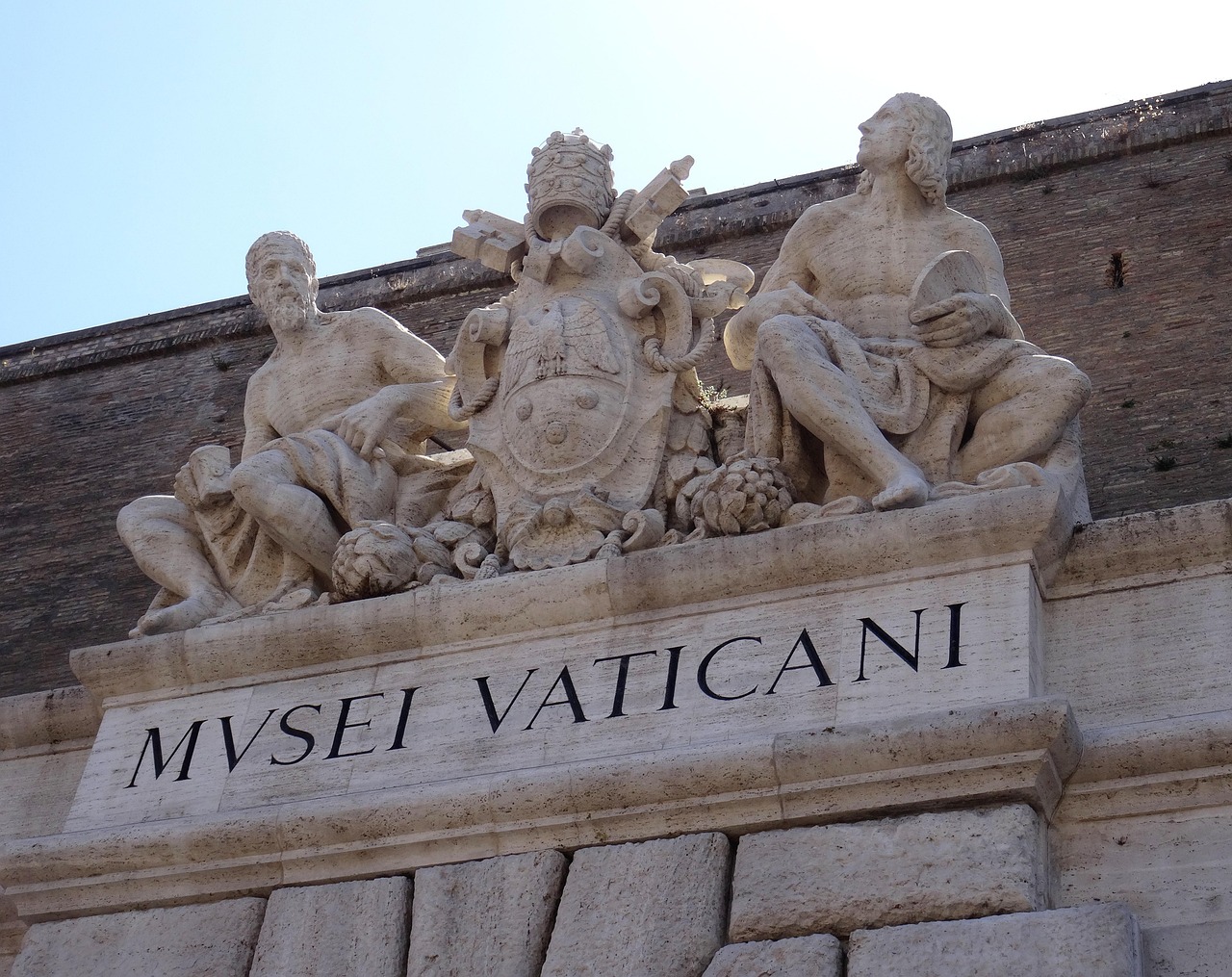
Home to one of the world’s greatest art collections, the Vatican Museums lead you through galleries of maps and tapestries before culminating in Michelangelo’s masterpiece, the Sistine Chapel ceiling.  The intricate ciphers and secret passageways in Dan Brown’s book,  Angels & Demons bring the Vatican’s history to life. 

Entry Fee (2026):Full entry is €20 at the door, but €25 with a “skip-the-line” online reservation (highly recommended to avoid long queues).

3. The Pantheon
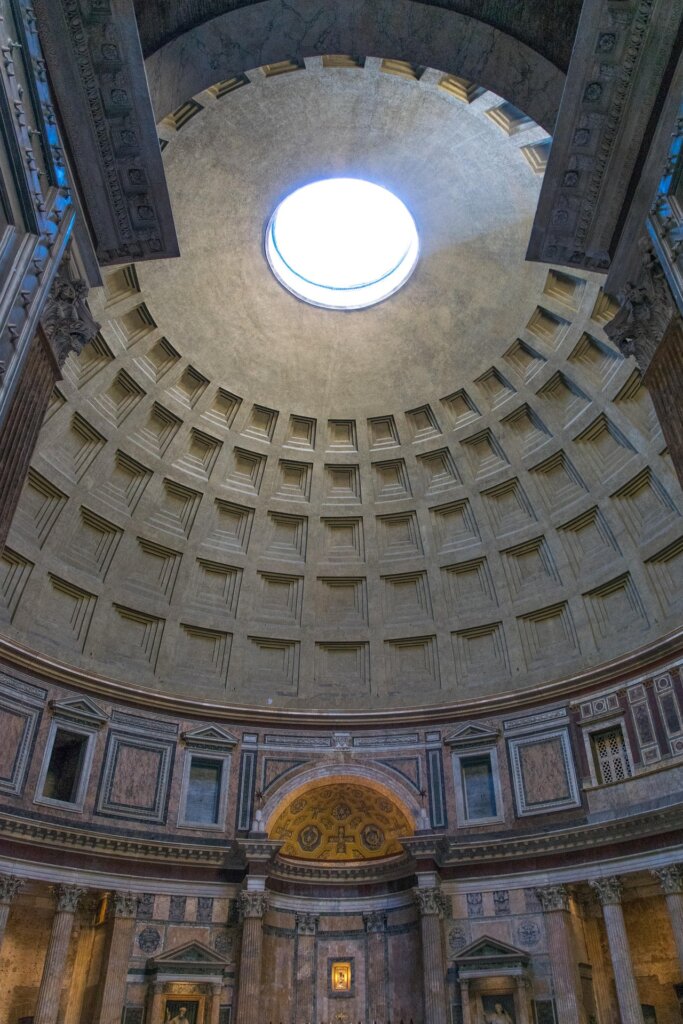
The best-preserved monument of Ancient Rome. Originally a temple to all gods, its magnificent dome with the central oculus remains an engineering marvel. It is now a basilica housing tombs of Italian kings and the painter Raphael. Funny Fact: The oculus is the Pantheon’s only source of natural light—and rain! There are small drains on the floor to manage the weather.

Entry Fee (2026): As of early 2026, general admission is still often free, but check local updates as a small fee may be introduced.

4. The Trevi Fountain
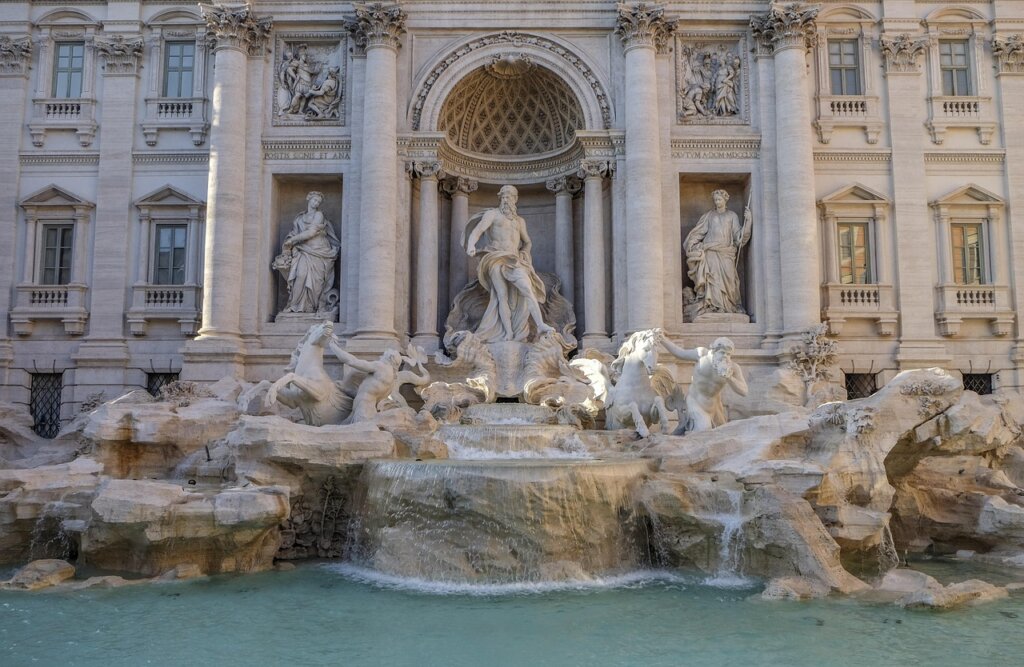
The most monumental and famous fountain in the world, a Baroque masterpiece that dominates its small piazza. The iconic scene in Federico Fellini’s La Dolce Vita, where Anita Ekberg wades into the fountain’s waters, cemented its place in pop culture.

Funny Tradition: Throw a coin over your shoulder into the fountain: one coin guarantees your return to Rome, two coins mean a new romance, and three coins guarantee marriage! The city collects the thousands of euros tossed in daily and donates them to charity.

5. The Spanish Steps (Piazza di Spagna)
The monumental staircase of 135 steps linking the Piazza di Spagna with the Trinità dei Monti church at the top. It’s a prime spot for a classic Roman moment, though sitting on the steps has been officially banned since 2019 to preserve them.

Getting Around Rome: La Dolce Via

The beauty of Rome’s historic center (Centro Storico) is that most key sites are within walking distance of each other. The 2.5km distance between the Colosseum and the Spanish Steps is easily manageable on foot.

For longer distances, Rome’s public transport (ATAC) system is efficient. Children under 10 travel for free on public transport when accompanied by an adult.

  • Single Ticket (BIT): €1.50, valid for 100 minutes and one metro ride.
  • 24-Hour Pass: €8.50.
  • 48-Hour Pass: €15.00.
  • 72-Hour Pass: €22.00.
  • Metro: Lines A, B, and C connect major areas.
  • Buses/Trams: Extensive network, but traffic can cause delays. Remember to stamp your ticket on the bus/tram!
Traveler’s Tip: 
Rome is a “living museum” that continues to offer an unforgettable experience, where 2,000 years of history meet a vibrant, modern lifestyle. To truly enjoy the city, it is worth starting the day early at the Colosseum or the Vatican Museums to avoid the crowds, and in the afternoon, getting lost in the winding alleys of Trastevere.
The ideal times are spring (April-May) and autumn (September-October). During these seasons, the weather is pleasantly warm, perfect for walking tours, and you can avoid the peak summer crowds and heat.
The Roman experience should be savored slowly: sip an espresso while standing at a local bar, or enjoy a gelato by the Trevi Fountain at night. Accessibility has improved significantly, with more pedestrianized zones around the Pantheon. Whether you are indulging in authentic carbonara at a hidden trattoria or marveling at Baroque fountains, Rome’s timeless charm remains unparalleled in Europe.

Related posts

The Art of Living Well

Italy is a timeless destination that rewards travellers with unforgettable experiences, rich culture, and exceptional cuisine. Whether visiting for the first time or returning again, it remains one of the most satisfying countries to explore in the world. From high-speed rail to coastal drives, every journey reveals breathtaking, historic wonders.

Read More »

The Heart of Venetian Glass Art

Murano’s 700-year glassmaking tradition is a pinnacle of European craftsmanship. More than a tourist hub, the island hosts active furnaces where masters use ancestral techniques to transform molten glass into intricate sculptures and vessels. This living heritage preserves a legacy of artistic excellence passed down through centuries of Venetian history.

Read More »

Swiss Mountain Tracks

While the Orient Express emphasizes opulence and formal elegance, the Bernina Express prioritizes natural splendor and engineering marvels. Trading fine dining for panoramic views, it offers a premier “slow travel” experience. It is perfect for adventurers valuing immersive Alpine landscapes and historic viadcuts over traditional onboard luxury.

Read More »

The Cradle of Civilization

A Mediterranean cruise is a celebration of life (La Dolce Vita). It is the perfect symphony of culture, history, and world-class cuisine. Whether you are sipping wine in a Spanish vineyard or watching the sunset over the Acropolis, this journey is guaranteed to nourish both your soul and your palate.

Read More »

Temple of Speed Monza

The Autodromo Nazionale Monza is one of the most hallowed venues in motorsport, home to the Italian Grand Prix and often referred to as the “Temple of Speed” (Tempio della Velocità). The circuit tour allows fans to literally follow in the footsteps of legends.

Read More »

Timeless Journey

Rome’s historic center (Centro Storico) is a living, breathing museum. It is home to iconic landmarks like the Pantheon and the Trevi Fountain. Narrow, cobblestone streets lead from Renaissance palaces to Baroque piazzas. As of 2026, the center is largely a pedestrianized zone, successfully preserving its timeless, authentic atmosphere.

Read More »

Timeless Journey Read More »

Journey Through Time and Stone

The Great Wall of China: A Journey Through Time and Stone

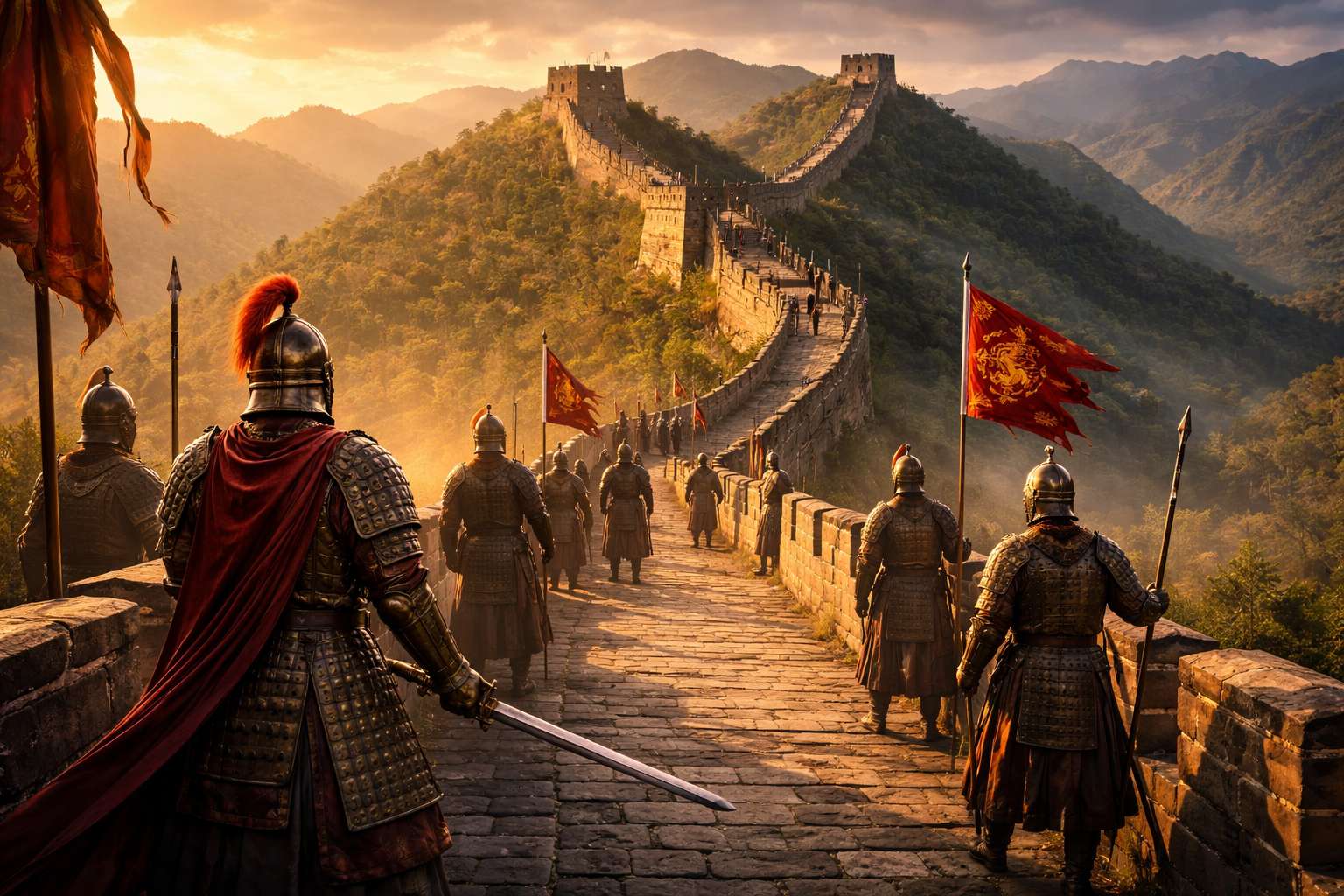
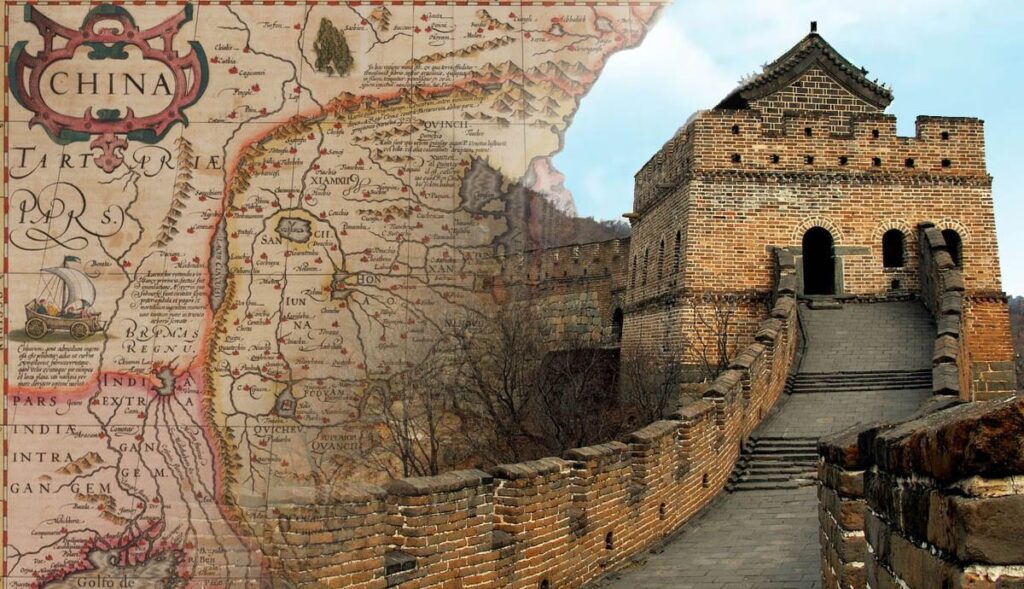
The Great Wall of China, a UNESCO World Heritage site and one of the New Seven Wonders of the World, stands as an eternal symbol of China’s historical resilience and engineering prowess. Stretching over 21,000 kilometers across the northern borders, it is not a single continuous wall but a vast network of fortifications, watchtowers, and barriers built over two millennia.


A Glimpse into History

The history of the Great Wall began as early as the 7th century BC, when various states built individual walls for protection. However, it was Qin Shi Huang, the first Emperor of China, who famously unified these sections around 221 BC. Most of the well-preserved structures we see today were constructed during the Ming Dynasty (1368–1644) to defend the empire against nomadic invasions from the north. Beyond defense, the wall served as a vital corridor for the Silk Road, allowing for trade regulation and communication.

Popular Sections to Visit

Depending on your fitness level and interest, there are several key sections to explore from Beijing:

  • Badaling: The most famous and restored section. It is highly accessible, featuring cable cars and handrails, making it ideal for families. However, it is often very crowded. Starting from April 30, 2025, a Night Tour will be available, allowing visitors to experience the illuminated Great Wall from 7:00 PM to 10:00 PM. This offers a unique perspective of the wall against the night sky.
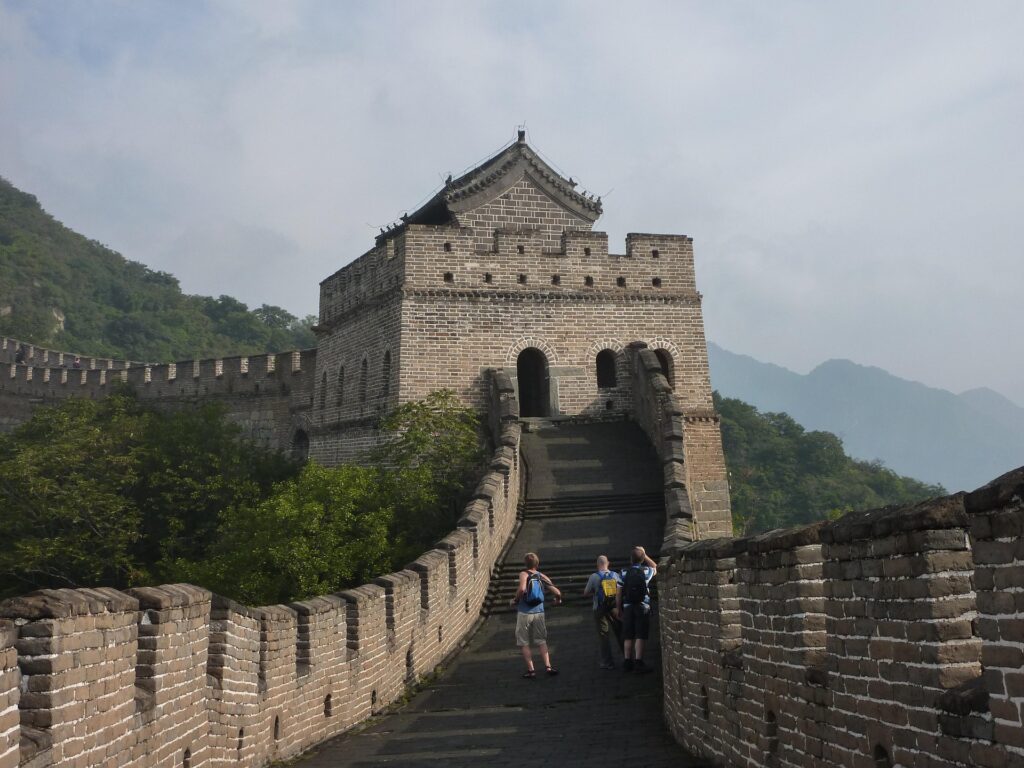
  • Mutianyu: A fantastic alternative to Badaling. It offers breathtaking views, is surrounded by lush forests, and features a fun toboggan ride to descend from the wall.
  • Jiankou: For the adventurous hiker, this “wild” section remains unrestored. It is steep and challenging but offers the most authentic and photogenic experience.
  • Simatai: Known for its unique architecture and the fact that it is open for night tours, beautifully illuminated against the dark sky.
How to Get There

Most travelers use Beijing as their base.


  • By Train: High-speed trains run from Beijing North or Qinghe Railway Station to Badaling in just 20–30 minutes.
  • By Bus: The 877 non-stop bus from Deshengmen is a popular budget option for reaching Badaling. For Mutianyu, many tourists opt for private shuttles or the “Mubus” service.
  • Private Car: Hiring a driver for the day is the most flexible way to visit more remote sections like Jiankou or Simatai.
Entrance Fees and Planning

In 2026, visitors must use real-name registration and book tickets online in advance via official platforms or apps like WeChat.

  • Entrance Fees: Generally range from 40 to 60 RMB (approx. $6–$9 USD) depending on the section and season.
Optional Costs: 

Cable cars or chairlifts usually cost an additional 120–140 RMB for a round trip.

Traveler’s Tip: 

The best times to visit are spring (April–May) for blossoms or autumn (September–October) for the vibrant foliage and crisp air. Always bring sturdy walking shoes and plenty of water to conquer this legendary dragon of stone. Many local guides organizing trips from the hotels to the Great Wall creatively connect the main attraction with visits to nearby tourist villages, authentic local restaurants, and small shops. It is highly recommended to dedicate a full day to this experience, as significant traffic jams can form not only at the various sections of the Wall but also on the return journey to Beijing. 

Our guide was particularly pleased to receive payment in cash, accepting either Euros or US Dollars. However, the commonly used Chinese digital payment methods, Alipay and WeChat Pay, also worked perfectly fine.

Related posts

The Forbidden City in Beijing

Exploring the Forbidden City is an exhausting yet rewarding odyssey into China’s imperial past. Despite the daunting bureaucracy of advanced bookings and heavy crowds, the sight of sunlight reflecting off the iconic golden roofs justifies every security check. It is a profound, must-see experience for any historical traveler.

Read More »

Mekong: Soul of Southeast Asia

In 2026, a Mekong River cruise offers an intimate journey through the heart of Southeast Asia, connecting the ancient temples of Cambodia with Vietnam’s vibrant delta. Travelers experience floating markets, remote monasteries, and lush landscapes from luxury vessels, providing a profound look at the region’s rich cultural heritage.

Read More »

China: Global Power Dynamics

China offers a profound travel experience where ancient history meets futuristic innovation. In 2026, visitors can explore diverse landscapes, sample the “Eight Great Cuisines,” and travel efficiently using the world’s largest high-speed rail network. It remains an affordable destination, promising unforgettable experiences from the Great Wall to the Shanghai skyline.

Read More »

Journey Through Time and Stone Read More »

Giza: Ancient World Wonders

The Pyramids of Giza: Walking Among the Wonders of the Ancient World

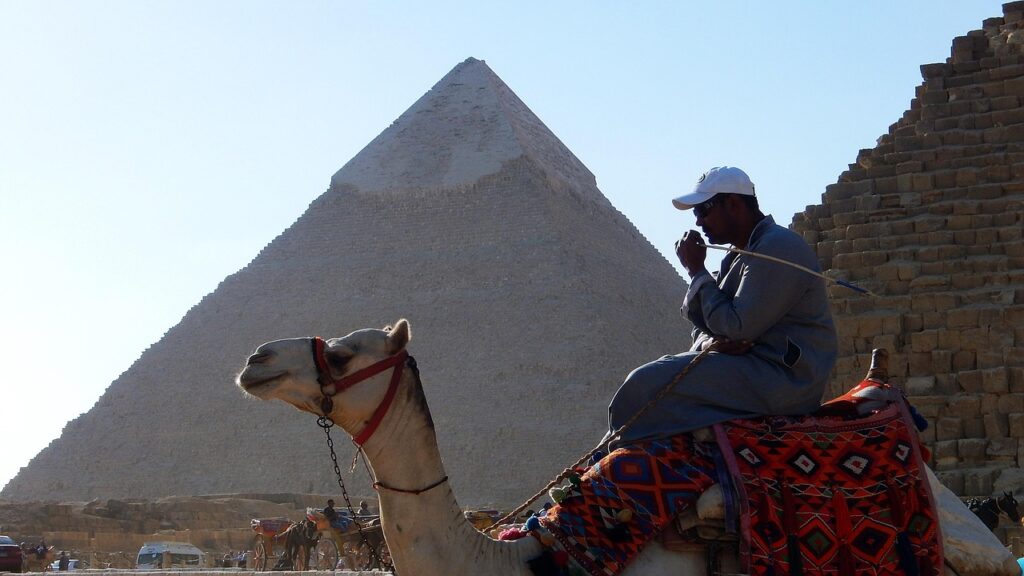
Standing on the edge of the Sahara Desert, the Giza Plateau is home to the most iconic structures ever built by human hands. The Pyramids of Giza, a UNESCO World Heritage site, have captivated travelers, archaeologists, and dreamers for over 4,500 years. As the only surviving wonder of the original Ancient World, they remain a “must-see” destination for anyone visiting Egypt in 2026.


A Legacy Carved in Stone

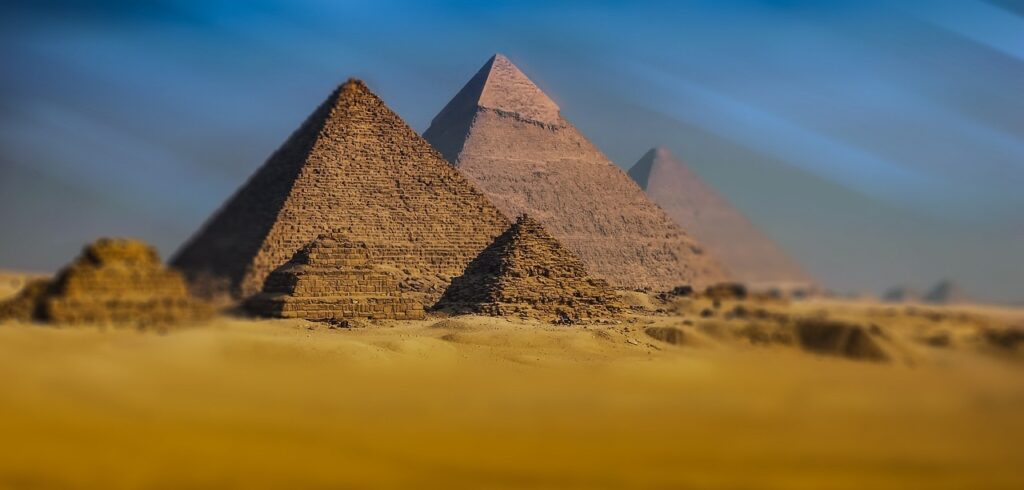
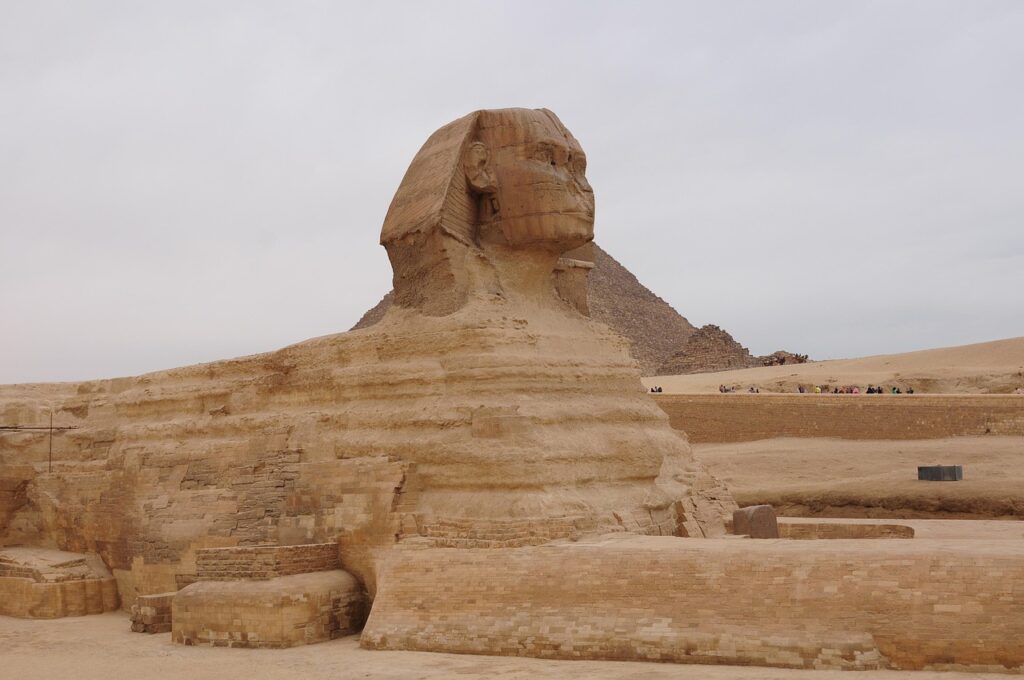
The Giza complex was constructed during the Fourth Dynasty of the Old Kingdom. The largest of the three, the Great Pyramid, was built for Pharaoh Khufu around 2560 BC. For over 3,800 years, it was the tallest man-made structure in the world. Its neighbors, the pyramids of Khafre and Menkaure, along with the enigmatic Great Sphinx, form a funerary complex designed to guide the pharaohs into the afterlife. These structures were not built by slaves, as once believed, but by a highly organized workforce of skilled laborers and farmers.

The Great Pyramid of Giza is that it originally sparkled like a jewel because it was covered in highly polished white Tura limestone that reflected the sun’s rays. 

What to See and Do
  1. The Great Pyramid (Khufu): You can enter the narrow, steep tunnels to reach the King’s Chamber. It is a claustrophobic but awe-inspiring experience.
  2. The Great Sphinx: The colossal limestone statue with the body of a lion and the head of a pharaoh. The best view is from the viewing platform next to the Valley Temple.
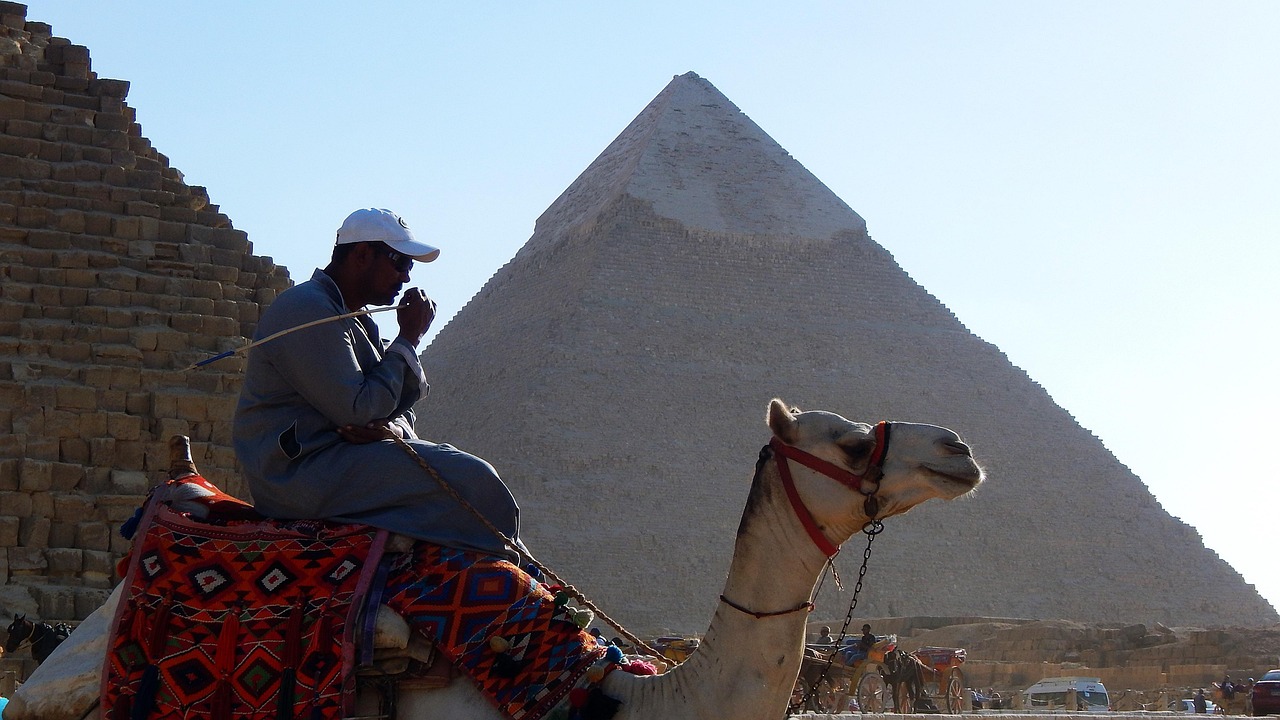
  3. The Panoramic Point: A short drive or camel ride further into the desert offers the perfect vantage point to see all three main pyramids lined up together—the ultimate photo spot.
  4. The Grand Egyptian Museum (GEM): Located just outside the plateau, this world-class museum (fully operational in 2026) houses the complete Tutankhamun collection and offers stunning views of the pyramids through its giant glass walls.
How to Get There

Giza is located on the west bank of the Nile, about 15–20 km from central Cairo.

  • Uber/Careem: The most reliable and stress-free way to reach the site from Cairo or Heliopolis.
  • Metro: Take Line 2 to Giza Station, followed by a short bus or taxi ride.
  • Private Tours: Many hotels offer guided tours that include air-conditioned transport and an Egyptologist guide.
Entrance Fees (2026 Estimates)

Prices have seen adjustments to support site conservation. Tickets are now primarily sold via credit card or online platforms.


  • Giza Plateau Area: 540 EGP (approx. $17 USD)
  • Inside the Great Pyramid: 900 EGP (approx. $29 USD)
  • Grand Egyptian Museum (GEM): 1,200 EGP (approx. $38 USD)
  • Note: Student discounts (with valid ISIC card) usually offer a 50% reduction.
Avoiding Tourist Traps

Giza is notorious for persistent “helpers.” To enjoy your visit, keep these tips in mind:

  • The “Free” Camel Ride: Nothing is free. Always agree on a price before mounting a camel or horse, and clarify if the price is for the whole ride or per person.
  • Official Guides: Only hire guides with official Ministry of Tourism badges.
  • Ticket Scams: People may tell you the main gate is closed or that you need a “special” ticket to walk through. Ignore them and head straight to the official ticket office.
  • Photo “Gifts”: If someone offers to take your photo or hands you a headscarf as a “gift,” they will expect a tip (baksheesh).

Related posts

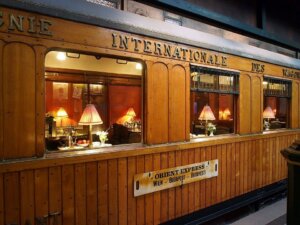
The World’s Most Legendary Luxury Train

Orient Express offers a once-in-a-lifetime experience where the romance of pre-war Europe truly comes to life. The unparalleled gastronomy, private steward service, and breathtaking landscapes transform the journey into an unforgettable adventure that goes far beyond mere transportation.

Read More »

Journey Through the Nile

A Nile cruise is the ultimate journey of “slow travel,” offering a serene rhythm where the ancient landscape unfolds slowly, punctuated by spectacular archaeological stops. In 2026, enhanced visitor facilities and digital guides at major sites make these ancient wonders more accessible than ever before.

Read More »

Giza: Ancient World Wonders

The Pyramids of Giza, the last surviving Ancient Wonder, remain an architectural marvel in 2026. Visitors can explore the Great Pyramid for approximately EGP 1,500. Adjacent to the plateau, the newly fully-opened Grand Egyptian Museum now houses the complete Tutankhamun collection, offering a world-class cultural experience.

Read More »

Giza: Ancient World Wonders Read More »

Ancient Khmer Legacy

Angkor Wat: The Heart of the Khmer Empire

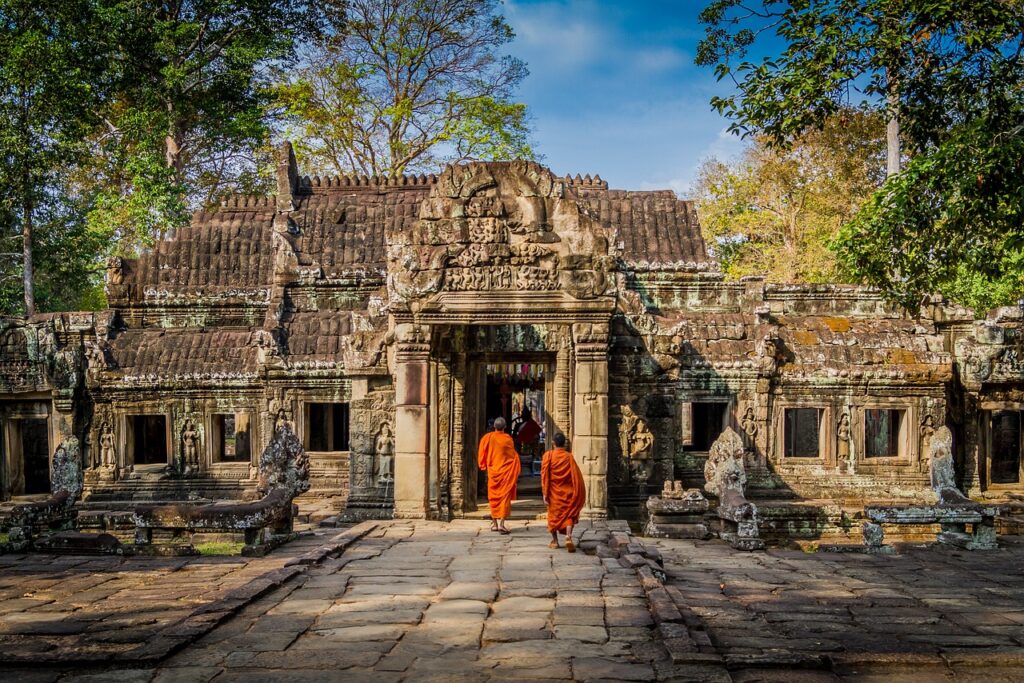
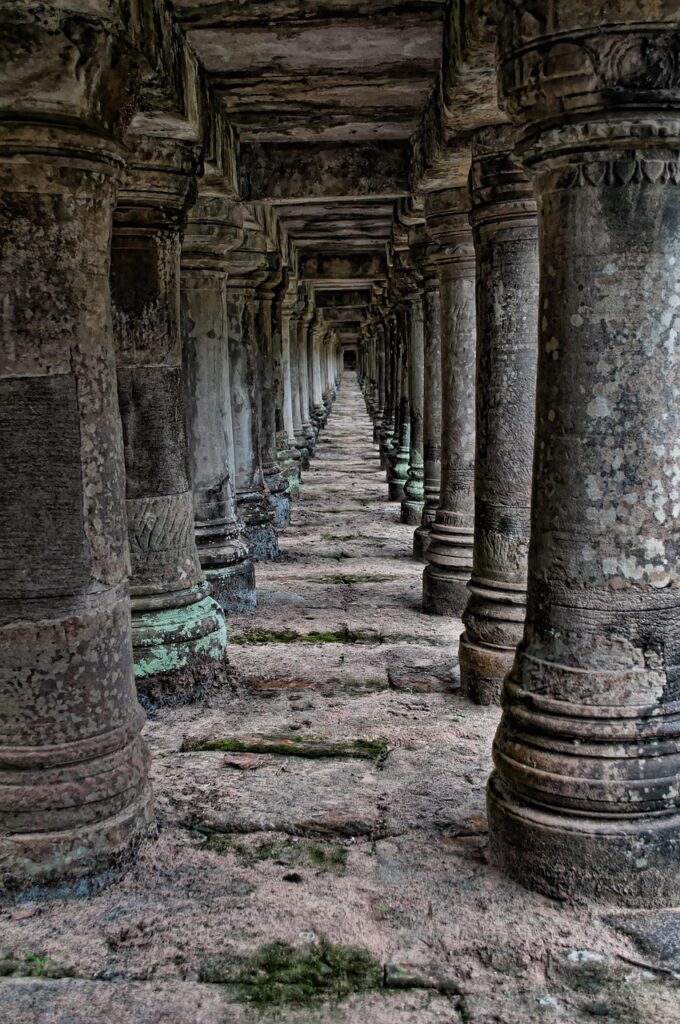
Angkor, located in northern Cambodia, is one of the most important archaeological sites in Southeast Asia. Stretching over 400 square kilometers, the Angkor Archaeological Park contains the magnificent remains of the different capitals of the Khmer Empire, from the 9th to the 15th century. It is not just a collection of ruins but a profound symbol of Cambodian soul and a masterpiece of human creativity.


A Journey Through History

The city of Angkor was the center of a powerful Hindu-Buddhist empire. Construction reached its peak in the 12th century under King Suryavarman II, who built Angkor Wat as a funerary temple dedicated to the god Vishnu. Later, King Jayavarman VII expanded the empire’s architectural glory by building the walled city of Angkor Thom. After the fall of the empire in the 15th century, the site was largely reclaimed by the jungle until it gained international fame in the late 19th century.

When to Visit

The best time to visit is during the cool, dry season (November to February), when temperatures are pleasant for walking. However, this is also peak tourist season. For those who don’t mind the humidity, the rainy season (June to October) offers lush green landscapes and fewer crowds, making the temples look even more mystical. Regardless of the season, aim to arrive at the gates by 5:00 AM to catch the sunrise—it is an experience you will never forget.


Must-Visit Temples
  • Angkor Wat: The crown jewel. Famous for its five lotus-like towers and incredible bas-reliefs. It is the best spot to witness a breathtaking sunrise.
  • The Bayon (Angkor Thom): Known for the hundreds of massive, serene stone faces carved into its towers.
  • Ta Prohm: Often called the “Tomb Raider Temple,” it has been left largely as it was found, with massive tree roots entwined around the ancient stone walls.
  • Banteay Srei: A bit further away, this “Citadel of Women” is famous for its intricate, pink sandstone carvings.
How to Get There

The gateway to Angkor is the city of Siem Reap.

  • By Plane: Siem Reap-Angkor International Airport (SAI) connects the city with major Asian hubs.
  • Local Transport: From Siem Reap, the most popular way to reach the temples is by tuk-tuk (around $15–$25 for a full day). You can also rent bicycles or hire a private air-conditioned car for more comfort.
Entrance Fees (2026)

The “Angkor Pass” is required for all visitors (except Cambodians). Travelers can purchase passes online through the official Angkor Enterprise website or at self-service kiosks in Siem Reap, which now provide instant digital QR codes to skip long morning ticket lines.

  • 1-Day Pass: $37
  • 3-Day Pass: $62 (valid for 10 days)
  • 7-Day Pass: $72 (valid for one month)

Related posts

Mekong: Soul of Southeast Asia

In 2026, a Mekong River cruise offers an intimate journey through the heart of Southeast Asia, connecting the ancient temples of Cambodia with Vietnam’s vibrant delta. Travelers experience floating markets, remote monasteries, and lush landscapes from luxury vessels, providing a profound look at the region’s rich cultural heritage.

Read More »

Ancient Khmer Legacy

Angkor Wat, the world’s largest religious monument, is a 12th-century masterpiece of Khmer architecture. In 2026, it remains a top global cultural destination. Visitors can purchase passes at the official Angkor Enterprise website to explore its iconic spires and intricate bas-reliefs during spectacular sunrises.

Read More »

Ancient Khmer Legacy Read More »

Scroll to Top